
Marble vs Travertine: Which Natural Stone Reigns Supreme for Your Home in 2026?

Thinking about updating your home in 2026? You’ve probably seen gorgeous marble and maybe some cool travertine tiles. Both are natural stones, which is pretty neat. But which one is actually better for your place? It’s not always an easy choice. We’re going to break down Marble vs Travertine: Which One Is Better for Your Home in 2026? to help you figure it out. We'll look at how they look, how tough they are, and what it takes to keep them looking good. Plus, we’ll talk about how much they cost and where they work best. Let’s get started!
Key Takeaways
- Marble offers a luxurious look with unique veining, ideal for making a statement but requires more careful maintenance. It's great for areas that aren't constantly busy.
- Travertine has a more natural, earthy feel with its textured surface and is generally more forgiving with everyday wear and tear. It's a good all-around choice for many parts of the house.
- When it comes to durability, travertine often holds up a bit better against scratches and stains compared to marble, especially in busy spots like kitchens or entryways.
- Maintenance for marble involves more attention to sealing and cleaning to prevent etching and staining, while travertine is a bit more low-maintenance but still needs proper care.
- The price point can vary for both, but travertine is often seen as a more budget-friendly option that still delivers natural beauty and adds value to your home.
Understanding Marble and Travertine: Core Characteristics
When you're thinking about upgrading your home, natural stone is a fantastic choice. It brings a unique beauty that manufactured materials just can't match. Two of the most popular options are marble and travertine, and they each have their own special qualities. Let's break down what makes them tick.
The Enduring Allure of Marble
Marble is basically a rock star in the design world. Think ancient Greek statues and grand palaces – that's the vibe marble brings. It's known for its elegant look, often featuring dramatic veining that can be swirly or straight, in colors from pure white to deep greens and blacks. It's a material that screams luxury and sophistication. If you want your home to feel truly special, marble is definitely worth considering. You can find beautiful marble tiles online in the USA for that high-end touch.
Case Study: The historic Biltmore Estate in North Carolina features extensive use of marble, showcasing its timeless elegance and durability through decades of public admiration.
The Rustic Charm of Travertine
Travertine offers a different kind of beauty – think more earthy, natural, and relaxed. It's a type of limestone formed in hot springs, which gives it a unique, slightly porous texture with natural holes and pits. These aren't flaws; they're part of its character! Travertine usually comes in warm, neutral tones like beige, cream, and tan, making it super versatile for different design styles. It's a great choice if you're going for a cozy, natural, or Mediterranean feel. It's also a popular choice for flooring and outdoor spaces.
Case Study: Many Mediterranean villas and haciendas utilize travertine for their flooring and exterior patios, creating a warm, inviting atmosphere that stands up to the elements.
Key Differences in Composition and Appearance
So, what's really different between them? It comes down to how they're made and what they look like.
- Composition: Marble is a metamorphic rock, recrystallized from limestone. Travertine is a sedimentary rock, a form of limestone deposited by mineral springs.
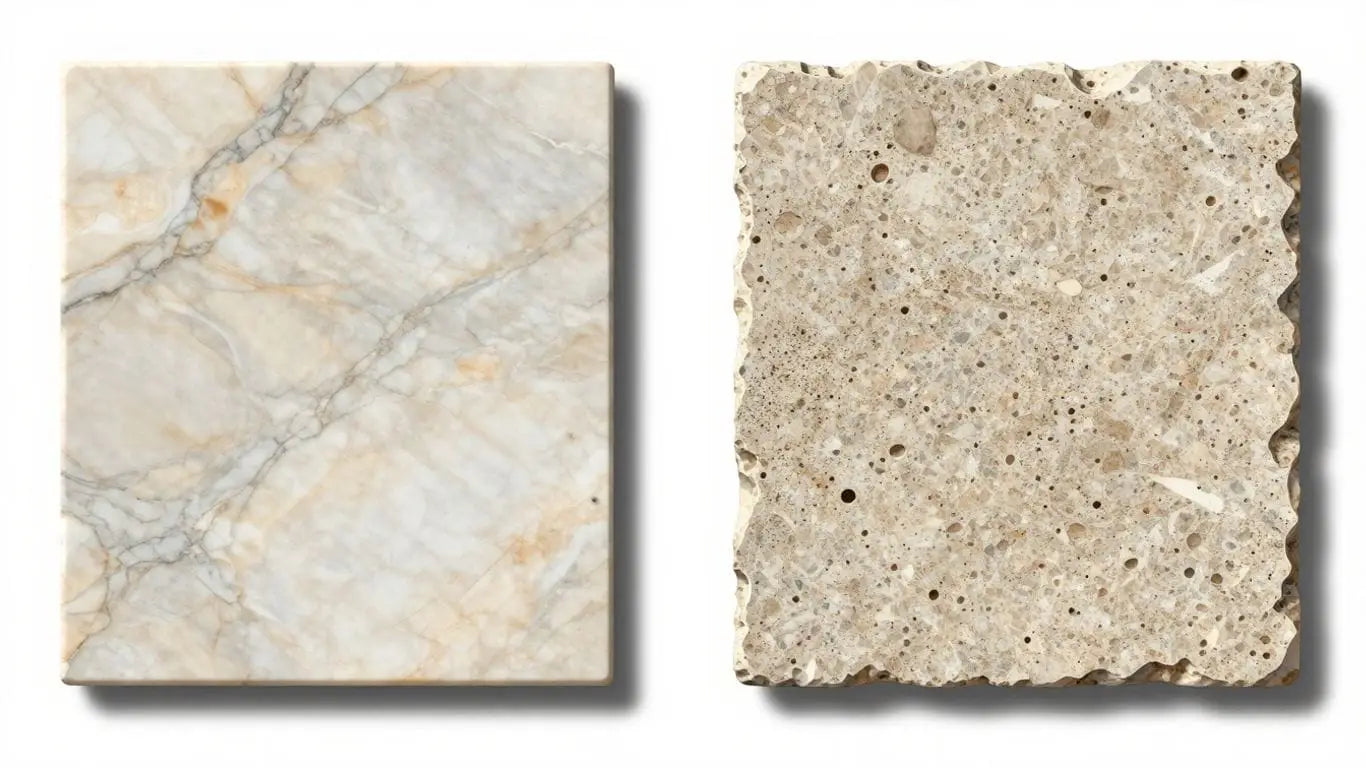
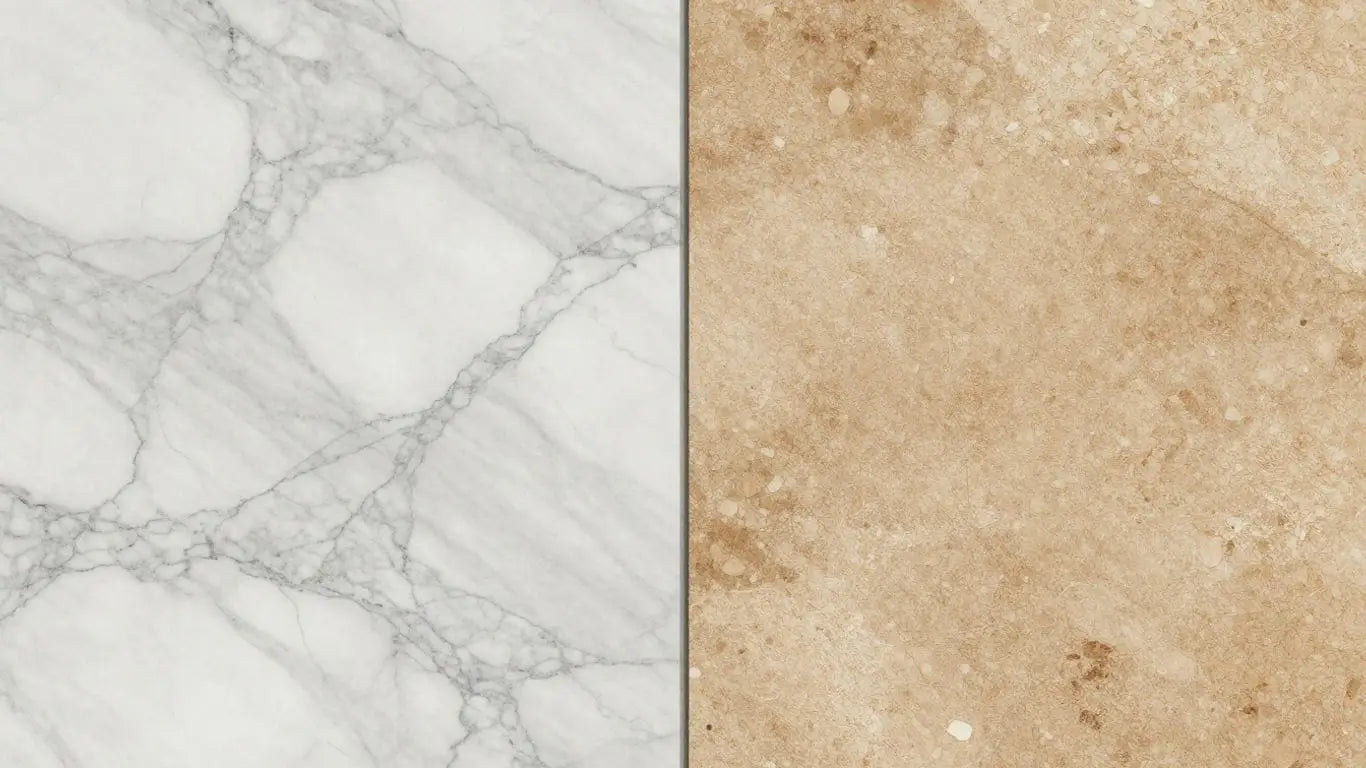
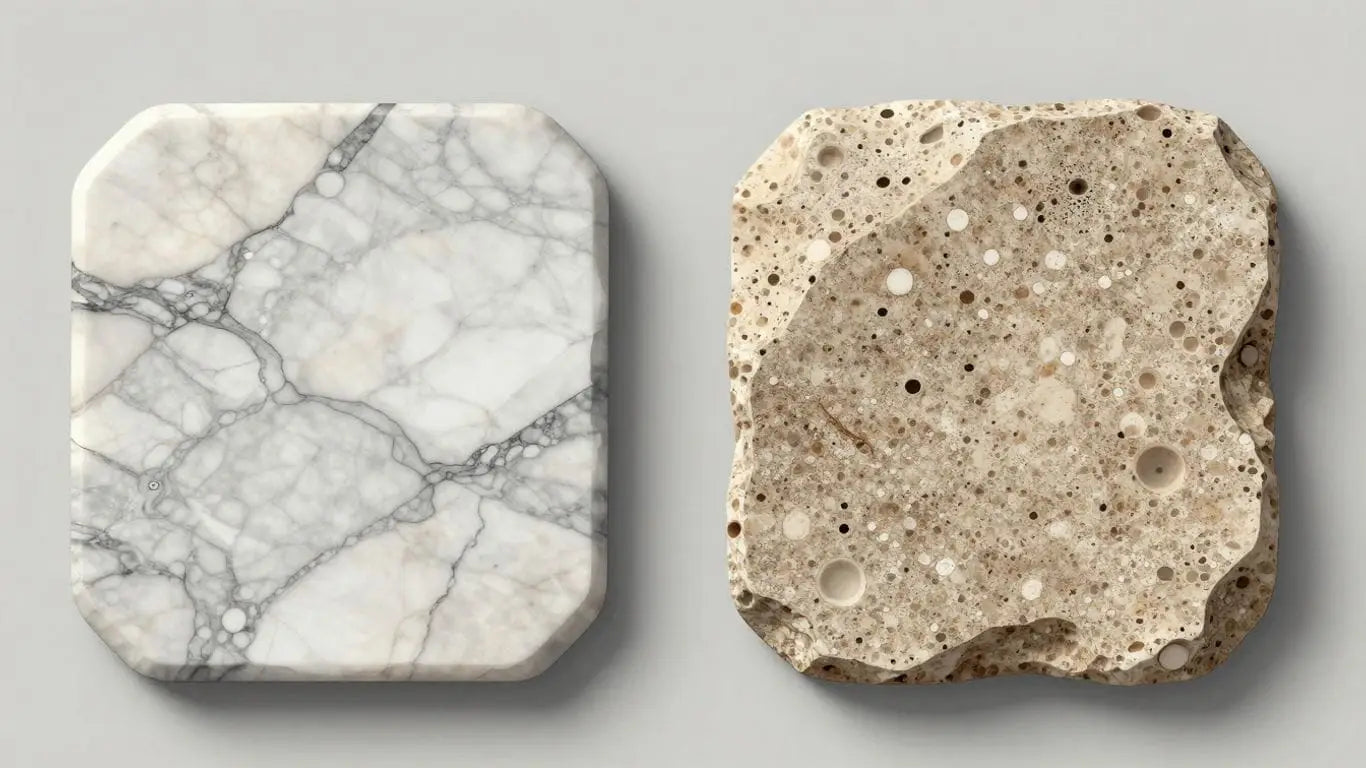
- Appearance: Marble is known for its distinct, often bold veining and a wide range of colors. Travertine has a more uniform, earthy color palette and a characteristic pitted texture.
- Porosity: Travertine is generally more porous than marble, meaning it can absorb liquids more easily if not properly sealed. This affects how they handle spills and stains.
| Feature | Marble | Travertine |
|---|---|---|
| Origin | Metamorphic (recrystallized limestone) | Sedimentary (deposited by mineral springs) |
| Appearance | Dramatic veining, varied colors | Earthy tones, pitted texture |
| Texture | Smooth, can be polished to a high sheen | Naturally textured, can be filled/honed |
| Typical Use | Countertops, accents, low-traffic floors | Flooring, walls, outdoor spaces |
Understanding these core differences is the first step to choosing the right stone for your home. It's not just about looks; it's about how the stone will perform in your daily life.
Aesthetic Considerations: Visual Appeal for Your Home
When you're thinking about natural stone for your home, the look is a huge part of the decision. It's what you see every day, after all. Both marble and travertine bring their own special kind of beauty to the table, but they do it in very different ways. Let's break down what makes each one so visually appealing and how they can transform your living spaces.
Marble's Luxurious Veining and Color Palettes
Marble is the undisputed champion of luxury. Its defining feature is its dramatic veining, which can range from subtle wisps to bold, sweeping lines. These natural patterns create a unique, one-of-a-kind look for every slab and tile. Think of it as nature's artwork. The color palette for marble is also quite diverse, though it often leans towards sophisticated neutrals. You'll find classic whites like Carrara and Statuario, elegant grays like Atlantic Gray Marble, and even deeper tones like Emperador Dark Marble. This variety means you can achieve a look that's both grand and personal. If you're aiming for a high-end feel, marble is your go-to. It's perfect for making a statement in entryways, living rooms, or even as a stunning kitchen backsplash. Many homeowners choose to buy marble tiles online in the USA for their projects, seeking that touch of opulence.
Travertine's Earthy Tones and Natural Texture
Travertine offers a more grounded, rustic charm. Its beauty lies in its natural texture and warm, earthy color palette. Unlike the dramatic veining of marble, travertine often features a more subtle, natural pattern with characteristic pits and pores. These natural variations give it a unique character and a cozy, inviting feel. The colors typically range from creamy beiges and warm ivories to richer tans and browns, like those found in Noce Travertine. This makes it incredibly versatile for creating a relaxed yet sophisticated atmosphere. Travertine is fantastic for creating a sense of warmth and bringing the outdoors in. It's a popular choice for flooring, walls, and even outdoor living spaces. Its natural texture can be left as-is for a more rustic look or honed for a smoother finish, offering flexibility in design.
Matching Stone Aesthetics to Interior Design Styles
Choosing between marble and travertine often comes down to the overall design vision for your home. Marble, with its inherent elegance and dramatic veining, is a natural fit for styles like:
- Classic & Traditional: Think formal dining rooms, grand foyers, and luxurious bathrooms.
- Modern & Minimalist: Clean white marble with subtle veining can add a touch of sophistication without overwhelming a minimalist space.
- Art Deco & Glam: Bold marble patterns and rich colors can enhance the dramatic flair of these styles.
Travertine, on the other hand, excels in creating spaces that feel warm, inviting, and natural. It pairs beautifully with:
- Rustic & Farmhouse: Its earthy tones and natural texture complement wood elements and a cozy aesthetic.
- Mediterranean & Tuscan: The warm hues and natural feel evoke the charm of these regions.
- Transitional & Bohemian: It adds a touch of natural elegance and texture that works well with eclectic decor.
Case Study: A homeowner in Scottsdale, Arizona, wanted to create a spa-like bathroom. They opted for honed Ivory Travertine tiles for the floor and shower walls, complemented by a small marble mosaic accent strip. The travertine provided the desired warmth and natural texture, while the marble added a touch of subtle luxury. The result was a serene and elegant space that felt both grounded and sophisticated.
Another homeowner in New England sought to update their kitchen. They chose polished Carrara marble for the countertops and a simple white subway tile backsplash. The marble instantly elevated the kitchen, giving it a timeless, high-end feel that perfectly matched their traditional cabinetry. This demonstrates how the distinct visual characteristics of each stone can be leveraged to achieve vastly different, yet equally stunning, design outcomes. When you're ready to explore these beautiful options, remember that you can often buy marble tiles online in the USA, making it easier than ever to bring these aesthetics into your home.
Durability and Performance in High-Traffic Areas
When it comes to the stones that can handle the hustle and bustle of daily life, both marble and travertine bring their own strengths to the table. Think about your kitchen, your entryway, or even your living room floor – these are the spots that see the most action. You need a material that not only looks fantastic but can also stand up to the test of time and foot traffic.
Marble's Suitability for Various Home Applications
Marble, with its classic elegance, can absolutely grace high-traffic areas, but it requires a bit more consideration. While it's a durable natural stone, its softer composition means it can be more susceptible to etching from acids (like lemon juice or vinegar) and scratching compared to harder stones. For this reason, many homeowners choose marble for areas with less intense daily wear, such as fireplace surrounds, accent walls, or even bathroom vanities where spills can be wiped up quickly. If you're set on marble floors in a busy entryway, opting for a honed finish can help mask minor wear and tear better than a high-gloss polished surface. It's about understanding its nature and placing it where its beauty can be admired without undue stress. You can find stunning marble tiles online in the USA for these decorative applications.
Travertine's Resilience for Floors and Walls
Travertine, on the other hand, is often celebrated for its robust nature, making it a fantastic choice for floors and walls that endure constant use. Its natural texture, often characterized by small pits and pores, can actually provide a bit of slip resistance, which is a huge plus for busy households. This makes it a go-to for entryways, hallways, and even kitchen floors. Travertine's earthy tones and natural variations also mean that minor scuffs or imperfections are less noticeable than they might be on a uniform surface. It's a stone that truly embraces a lived-in, natural look while holding up remarkably well. Many homes incorporate travertine for its comfort and resilience, creating spaces that feel both grounded and enduring.
Comparing Scratch and Stain Resistance
Let's break down how these two stones stack up against daily wear and tear. Marble, while beautiful, generally has lower scratch and stain resistance compared to travertine. Its porosity means spills need to be addressed promptly to avoid staining, and acidic substances can etch the surface, leaving dull spots. Travertine is also porous and benefits greatly from sealing, but its natural texture can sometimes hide minor scratches better. However, for ultimate resistance to both scratches and stains, especially in kitchens or areas prone to spills, a well-sealed travertine often has an edge over marble.
Ultimately, both stones offer incredible beauty, but travertine often takes the lead for sheer resilience in high-traffic zones.
Here's a quick comparison:
| Feature | Marble | Travertine |
|---|---|---|
| Scratch Resistance | Medium (can scratch more easily) | Medium-High (texture can hide minor marks) |
| Stain Resistance | Medium (requires prompt cleanup, sealing) | Medium-High (requires sealing) |
| Etching Resistance | Low (sensitive to acids) | Medium (less sensitive than marble) |
| Porosity | High | High |
| Best For | Low-traffic, decorative areas | High-traffic floors, walls, patios |
Case Study: The Busy Family Kitchen
The Miller family, with two active children and a dog, wanted a kitchen that was both stylish and practical. They initially fell in love with a dramatic white marble countertop. However, after discussing their lifestyle, they opted for a honed travertine floor instead. The travertine's natural texture and warm tones provided a forgiving surface that could handle dropped toys and muddy paw prints. They sealed it thoroughly, and it has held up beautifully, offering a timeless look without the constant worry associated with marble in such a high-use area. This choice allowed them to achieve a natural aesthetic while prioritizing durability for their busy family life.
Maintenance Requirements for Longevity
Keeping your natural stone looking its best is simpler than you might think. With the right approach, both marble and travertine can maintain their stunning appearance for years to come. It’s all about understanding their unique needs and giving them a little TLC.
Essential Care for Marble Surfaces
Marble, with its elegant veining, is a softer stone. This means it needs a bit more attention to keep it looking pristine. The key is gentle, consistent care.
- Daily Cleaning: Wipe down surfaces with a soft, damp cloth. For tougher spots, use a pH-neutral cleaner specifically designed for natural stone. Avoid acidic or abrasive cleaners at all costs – they can etch and dull the surface.
- Spill Management: Act fast! Blot up spills immediately. Marble is porous and can absorb liquids, leading to stains if left unattended.
- Protect Your Investment: Use coasters under glasses and trivets under hot dishes. This simple step prevents water rings and heat damage.
Marble's natural beauty is undeniable, but its susceptibility to etching from acidic substances means you need to be mindful of what comes into contact with it. Think of it like caring for fine jewelry – it requires a gentle touch and the right products.
Routine Maintenance for Travertine
Travertine offers a more forgiving surface, thanks to its natural texture and inherent durability. It’s a fantastic choice for busy homes. Travertine is more forgiving for daily use due to its natural porosity and textured surface, which hides minor scratches and wear. In contrast, marble has a smooth, polished finish that can show imperfections more readily. This makes travertine a more practical choice for high-traffic areas where durability and ease of maintenance are priorities.
- Regular Sweeping/Vacuuming: Keep floors free of grit and debris that can scratch the surface over time. Use a soft brush attachment for vacuums.
- Damp Mopping: Use a pH-neutral stone cleaner and a damp mop. Avoid excessive water, as it can seep into the pores.
- Addressing Pits: Travertine often has natural pits. If you prefer a completely smooth surface, these can be filled during installation or periodically. For most, these natural characteristics add to its charm.
Sealing and Cleaning Best Practices
Sealing is your best friend for both marble and travertine. It creates a barrier against stains and moisture.
| Stone Type | Recommended Sealing Frequency | Best Cleaner Type |
|---|---|---|
| Marble | Every 6-12 months | pH-neutral stone cleaner |
| Travertine | Every 12-18 months | pH-neutral stone cleaner |
- Choose the Right Sealer: Opt for a high-quality impregnating sealer. Some sealers can slightly darken the stone, giving it a richer, 'wet' look, while others maintain the original appearance. Always test in an inconspicuous area first.
- Application: Ensure the stone is clean and dry before applying the sealer. Follow the manufacturer's instructions carefully for application and drying times. You can buy marble tiles online USA and ensure you have the right sealing products on hand.
- Avoid Harsh Chemicals: Never use ammonia, bleach, vinegar, or abrasive cleaners. These can damage the stone's surface and compromise the sealer.
Case Study: The Miller Residence
The Millers installed travertine flooring throughout their main living areas and marble countertops in their kitchen. Initially, they were concerned about maintenance. However, by following a simple routine – daily sweeping, weekly damp mopping with a stone cleaner, and annual sealing – their travertine floors still look brand new after five years. Their marble countertops, while showing a few minor signs of etching from an accidental lemon spill, are easily maintained with prompt cleaning and a yearly reseal, proving that with the right care, both stones can endure beautifully.
Installation Nuances for Marble and Travertine
Pre-Installation Tile Inspection and Layout Planning
Before you even think about adhesive, take a good, long look at your tiles. Natural stone, whether it's marble or travertine, is a product of nature, meaning no two pieces are exactly alike. You'll see variations in color, pattern, and sometimes even slight imperfections. It's super important to inspect each tile for cracks, chips, or warping. Laying a tile is pretty much your sign-off on its quality, so if something looks off, set it aside or chat with your supplier. Don't just wing it!
Planning your layout is just as critical. Do a dry run – lay out your tiles on the floor without any glue. This lets you see how the colors and patterns play together and helps you avoid those awkward, tiny cuts at the edges. Mixing tiles from different boxes during this dry layout is key to blending those natural variations for the best overall look. It’s like putting together a puzzle, but way more rewarding when it’s done right.
Grout Joint Spacing and Adhesive Considerations
When it comes to grout lines, precision matters. For marble, you often see tighter joints, maybe around 1/16 to 1/8 inch, but always check the manufacturer's recommendations. For travertine, the spacing might vary depending on the finish and desired look. The adhesive you choose is also a big deal. You absolutely must use setting materials specifically rated for natural stone. Forget those generic premixed mastics; they just won't cut it. Opt for a high-quality thin-set mortar. If you're working with lighter-colored stone, a white thin-set is a must to prevent any discoloration from showing through. Always, always follow the product instructions to the letter.
Ensuring a Flawless Finish
Your substrate – that's the surface underneath your tiles – needs to be perfect. It has to be clean, flat, dry, and super stable. Any dirt, dust, or old adhesive can mess with the bond, leading to loose tiles down the road. Uneven surfaces are a big no-no; natural stone tiles are often thinner and can crack if they don't have solid support everywhere. Think of it as building a house – a strong foundation is everything. For wood subfloors, proper underlayment like cement backer board is non-negotiable. And for concrete slabs, a crack-isolation membrane can save you headaches later by preventing substrate cracks from showing up in your beautiful stone. Taking the time for proper substrate prep is an investment in the longevity and beauty of your marble or travertine installation. It’s the difference between a floor that wows for years and one that starts to look tired way too soon. If you're looking to buy marble tiles online in the USA, remember that proper installation is key to enjoying their beauty. Travertine is a more affordable option, but installation care is still paramount.
Case Study: The Miller Residence
The Millers wanted a luxurious bathroom retreat. They opted for Calacatta marble tiles. During the dry layout, they discovered a few tiles with significant veining that clashed with their desired aesthetic. By carefully rearranging and setting aside those specific tiles, they achieved a cohesive, high-end look. They also ensured their installer used white thin-set mortar to maintain the marble's pristine white background, preventing any gray bleed-through. The result? A stunning, spa-like bathroom that exceeded their expectations.
Case Study: The Chen Family Patio
The Chens decided on tumbled travertine pavers for their outdoor patio. They were meticulous about ensuring the sub-base was perfectly level and compacted. They also chose a permeable grout designed for outdoor use, which is vital for drainage and preventing water damage in freeze-thaw cycles. Their attention to detail meant a patio that not only looks fantastic but will also withstand the elements for years to come, providing a beautiful space for family gatherings.
Budgetary Factors: Investment Value
Understanding the Price Spectrum of Marble
Marble, the classic choice for luxury, often comes with a higher price tag. This is due to its exquisite beauty, unique veining, and the careful quarrying and processing required. When you buy marble tiles online in the USA, you're investing in a material that has graced palaces and museums for centuries. While some marbles, like the popular Carrara, might be more accessible, rarer varieties such as Calacatta or Statuario can represent a significant investment. Think of it as acquiring a piece of art for your home. The cost reflects its inherent elegance and the timeless appeal it brings. For those seeking the ultimate in sophisticated design, marble offers an unparalleled aesthetic that can justify the expenditure.
Travertine as a Cost-Effective Alternative
Travertine presents a fantastic option for homeowners looking for natural stone's beauty without the premium price of marble. It offers a warm, earthy charm that's incredibly versatile. You can find beautiful travertine tiles that mimic the look of more expensive stones, making it a smart choice for budget-conscious renovations. Its natural texture and range of neutral tones make it adaptable to many interior styles. While it's more affordable, it doesn't skimp on quality or visual appeal. It's a practical yet beautiful material that adds significant value to your home. Consider it a savvy investment in style and substance.
Long-Term Value and Home Appreciation
Both marble and travertine are natural stones, and their inclusion in your home is a smart move for long-term value. Homes featuring natural stone finishes often command higher prices on the resale market. Buyers recognize the durability, timeless beauty, and inherent quality that these materials bring. Investing in marble or travertine isn't just about immediate aesthetics; it's about enhancing your property's overall appeal and increasing its market value for years to come. It's a decision that pays dividends, both in enjoyment and in financial return.
Case Study: The Miller Residence
The Miller family wanted to update their kitchen and bathroom. They were torn between the luxurious look of marble and the more budget-friendly travertine. After consulting with designers, they opted for honed Ivory Travertine for their kitchen backsplash and bathroom floors, and selected a beautiful, subtly veined Calacatta marble for their master bathroom vanity top. The result was stunning. The travertine provided a warm, durable foundation for their high-traffic kitchen and a practical, elegant finish for the bathroom. The marble vanity top became a true focal point, adding a touch of opulence. When they decided to sell their home two years later, real estate agents specifically highlighted the natural stone features, contributing to a quick sale and a price that exceeded their expectations. This blend of practicality and luxury proved to be a winning combination.
Choosing natural stone, whether marble or travertine, is an investment in your home's future. It's about selecting a material that offers lasting beauty, durability, and an undeniable sense of quality that buyers appreciate. This decision can significantly impact your home's perceived value and its appeal on the market.
Specific Applications: Where Each Stone Shines
Finding the ideal natural stone for every space comes down to understanding where marble and travertine truly thrive. Each stone brings its strengths to the table, and choosing wisely can turn ordinary rooms into showpieces that last.
Ideal Uses for Marble in Residential Design
Marble stands as the first choice for anyone wanting to create a luxe, striking look, especially in areas where elegance matters most. From bathroom vanities to living room fireplace surrounds and dramatic feature walls, marble delivers a spectrum of colors and veins that can't be mimicked. It's often seen in:
- Bathrooms: Flooring, shower walls, and countertops. Classic Carrara or bold Emperador Dark set a serene, high-end mood.
- Foyers and Entrance Halls: Marble tiles create instant impact and a sense of grandeur.
- Fireplaces: Makes a living room centerpiece and adds sophistication.
- Backsplashes and Table Tops: Polished marble gives kitchens and dining nooks a designer edge.
Case Study: The Fisher Residence in Atlanta opted to buy marble tiles online USA for their en suite bath and foyer. The result? Increased home value and jaw-dropping visual appeal, prompting compliments from guests—and an envy-inducing Zillow listing.
Travertine's Versatility in Indoor and Outdoor Spaces
Travertine makes its mark subtly but powerfully, seamlessly transitioning between indoor coziness and outdoor relaxation zones. Its earthy colors and natural grip are perfect for busy, lived-in spaces and weather-exposed patios.
Key applications include:
- Outdoor Patios and Pool Decks: Tumbled travertine is slip-resistant and stays cool, ideal for bare feet in summer.
- Kitchen Floors & Backsplashes: Easy to integrate, especially in Mediterranean or rustic-style spaces.
- Shower Stalls: Noce travertine tiles bring spa-like warmth and are easy to maintain with periodic sealing.
- Accent Walls & Firepits: Scabos travertine injects color and texture—a bold accent that's both practical and stylish.
Case Study: The Weston family used Scabos travertine for their outdoor living area, connecting pool, grilling, and lounge zones. "The stone's natural feel made it perfect for both wet and dry areas, and maintenance is a breeze," they noted.
For those weighing budget, travertine also makes a strong case as a more affordable natural stone option that fits a wide range of needs.
Choosing Stone for Bathrooms, Kitchens, and Living Areas
Selecting between these two stones? Consider the setting:
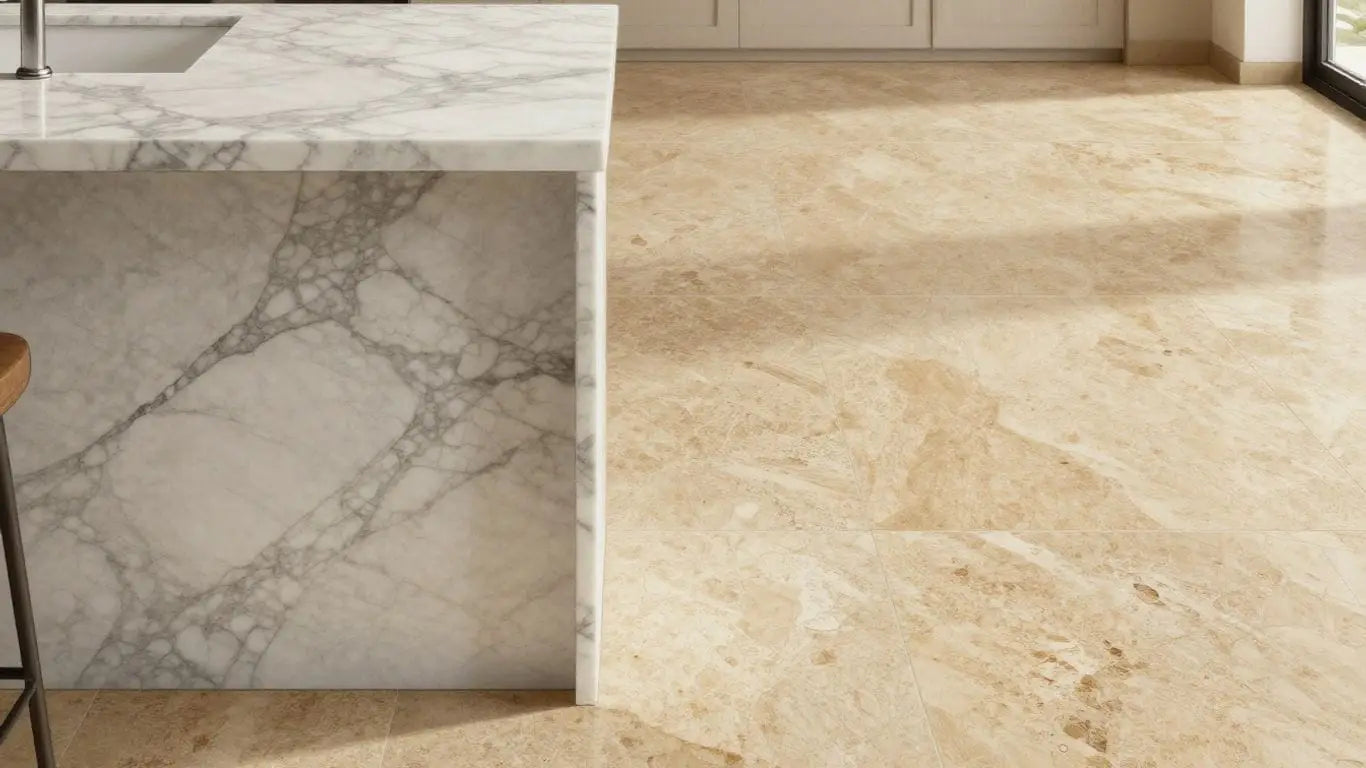
| Area | Best Choice | Why |
|---|---|---|
| Bathroom Counters | Marble | Smooth, cool surface, luxury appeal |
| Kitchen Flooring | Travertine | Durable, easier upkeep, less prone to visible damage |
| Outdoor Patios | Travertine | Handles weather, slip-resistant surface |
| Fireplace Surround | Marble | Statement piece, tolerates heat, visually stunning |
| Entry Hallways | Marble/Trav. | Depends on design—opulence (marble) vs. rustic (trav.) |
- Pick marble for refined, quieter zones where drama and polish count.
- Reach for travertine in high-traffic or outdoor spots that demand resilience and a welcoming vibe.
- If you're renovating on a strict budget, travertine maximizes your spend without sacrificing authenticity.
When you match the right stone to the right spot, your home doesn’t just look better—it functions better, too. The perfect choice blends style, comfort, and durability seamlessly.
Ready to take the next step? Consider how each stone's qualities fit your favorite rooms before you start to buy marble tiles online USA or select the ideal travertine for your patio project.
Exploring Popular Collections and Finishes
Signature Marble Collections: Carrara, Calacatta, and Statuario
When you think of marble, you're probably picturing those iconic Italian quarries. We're talking about the classics – Carrara, Calacatta, and Statuario. These aren't just names; they're benchmarks for luxury and timeless design.
- Carrara Marble: This is your go-to for understated elegance. Think soft, grayish-white tones with delicate, feathery veining. It’s like the little black dress of natural stone – always in style and incredibly versatile. Perfect for creating a serene bathroom or a sophisticated kitchen backsplash. If you're looking to buy marble tiles online in the USA for a classic look, Carrara is a solid choice.
- Calacatta Marble: Calacatta is bolder. It boasts a brighter white background with dramatic, thick veining, often in shades of gold or deep gray. This stone makes a statement. Imagine it as a stunning fireplace surround or a show-stopping kitchen island. It screams luxury and is ideal for spaces where you want to create a real 'wow' factor.
- Statuario Marble: Often considered the rarest and most prized of the three, Statuario features a pure white base with striking, yet refined, gray veining. It has a clean, crisp appearance that lends itself to high-end residential and commercial projects. It’s the choice for those who appreciate purity and dramatic contrast.
Case Study: A homeowner in Beverly Hills wanted to renovate their master bathroom. They opted for Statuario marble for the floor and shower walls, creating a spa-like retreat. The dramatic veining against the pure white provided a luxurious, yet clean aesthetic that significantly boosted the home's appeal.
Featured Travertine Lines: Ivory, Noce, and Scabos
Travertine brings a different kind of beauty to the table – think earthy, warm, and full of natural character. It’s a fantastic option if you love a more rustic or Mediterranean vibe.
- Ivory Travertine: This is a light, creamy beige travertine that’s incredibly popular. It’s warm and inviting, making it perfect for flooring in living areas or creating a cozy kitchen. Its neutral tone makes it easy to pair with almost any decor. If you're searching for travertine tiles for sale, Ivory is a consistent bestseller.
- Noce Travertine: Noce means 'walnut' in Italian, and this travertine lives up to its name with rich, darker brown tones. It offers a deeper, more dramatic look than Ivory, often featuring swirls of lighter and darker browns. It’s excellent for creating a warm, grounded atmosphere, perhaps in a dining room or a study.
- Scabos Travertine: Scabos is known for its vibrant, multi-colored appearance. You'll find a mix of earthy reds, browns, golds, and even some grays all blended together. This gives it a unique, almost mosaic-like look straight from the quarry. It’s perfect for adding a lot of personality and texture to an outdoor patio or an eclectic interior space.
Case Study: A restaurant owner wanted to give their patio a warm, inviting feel. They chose Scabos travertine pavers for the flooring. The natural variation in color and texture created a rustic, charming ambiance that perfectly complemented the outdoor dining experience, drawing in customers with its unique character.
Understanding Finishes: Polished, Honed, and Tumbled
The finish you choose can dramatically change how a stone looks and feels. It's not just about color; it's about texture and light reflection.
- Polished: This is the high-gloss finish. It reflects light beautifully, making colors appear richer and deeper. It gives a very luxurious, sleek look, often seen with marble. However, it can be more prone to showing scratches and water spots.
- Honed: A honed finish is matte. It’s smooth but doesn't have the shine of polished. This gives a more subdued, elegant look and is generally more forgiving when it comes to minor scratches and stains. It’s a popular choice for both marble and travertine, especially for floors.
- Tumbled: This finish mimics the look of aged stone. The edges and surfaces are softened and slightly worn, giving a rustic, antique feel. It’s very common with travertine and gives a relaxed, old-world charm. It’s also quite durable and less prone to showing wear and tear.
Choosing the right collection and finish is key to bringing your design vision to life. Whether you're drawn to the classic luxury of Italian marble or the earthy warmth of travertine, there's a perfect option waiting for you.
Making the Informed Decision: Marble vs Travertine
So, you've explored the beauty of marble and the earthy charm of travertine. Now comes the big question: which one is the supreme stone for your home in 2026? It's not just about picking a pretty surface; it's about choosing a material that fits your lifestyle, your design vision, and your budget. Let's break it down to help you make the best choice.
Weighing Aesthetics Against Practicality
Marble brings that undeniable wow factor. Think luxurious veining, a cool, smooth feel, and a sense of timeless elegance. It’s perfect for making a statement in entryways, living rooms, or as a stunning fireplace surround. However, its softer nature means it can be more susceptible to etching and staining from acidic substances like lemon juice or wine. If you're aiming for a high-end, sophisticated look and are prepared for a bit more careful handling, marble is a fantastic option. You can even buy marble tiles online in the USA for your next project.
Travertine, on the other hand, offers a more relaxed, natural vibe. Its characteristic pits and natural texture give it a warm, inviting feel that works beautifully in both rustic and modern settings. It’s incredibly versatile, looking great on floors, walls, and even outdoor patios. While it’s durable, it is also porous and requires sealing to protect against stains. If you prefer a stone with more character and are okay with a slightly more hands-on maintenance routine, travertine is a winner. It's often a more cost-effective choice, making it a great way to get that natural stone look without breaking the bank. For bathroom floors, honed travertine is an excellent choice, offering a good mix of aesthetics and resilience [1279].
Considering Your Lifestyle and Maintenance Commitment
Your daily life plays a huge role in this decision. Are you a busy family with kids and pets constantly on the go? Or do you prefer a more serene, less high-traffic environment?
- High-Traffic Homes: Travertine often holds up better in busy households due to its natural texture, which can mask minor wear and tear. Its durability makes it a solid choice for floors and walls that see a lot of action.
- Low-Traffic & Decorative Areas: Marble truly shines where it can be admired without constant heavy use. Think accent walls, low-traffic bathroom vanities, or elegant dining room floors.
- Kitchen Countertops: Both can work, but with caveats. Marble requires diligent sealing and immediate cleanup of spills. Travertine, especially when filled and sealed, is also a good option, but again, vigilance is key.
Case Study: The Miller Family's Kitchen Refresh
The Millers wanted a kitchen that felt both luxurious and livable. They opted for a honed travertine for their flooring, loving its warm tones and durability for their two active children and golden retriever. For their island countertop, they chose a striking white marble, understanding the need for extra care but loving the dramatic contrast it provided. This hybrid approach allowed them to enjoy the best of both worlds.
Selecting the Supreme Stone for Your 2026 Home
Ultimately, the 'supreme' stone is the one that best suits your needs.
- For Unmatched Luxury & Statement Pieces: Marble is your go-to. Its elegance is unparalleled.
- For Earthy Charm & Everyday Resilience: Travertine offers a beautiful, natural look that’s often more forgiving for daily life.
Don't forget to consider the finish. Polished surfaces offer a high sheen but can show scratches more easily, while honed or tumbled finishes provide a softer look and better slip resistance. When you're ready to buy, remember that quality matters. Look for reputable suppliers who can guide you through the nuances of each stone. Travertine, for instance, is known for its exceptional durability and versatility, making it a suitable choice for various applications [a3bb].
Choosing between marble and travertine is a personal journey. It's about balancing the dream aesthetic with the practical realities of your home and lifestyle. Both stones offer timeless beauty and will add significant value to your property. The key is to select the one that you'll love living with for years to come.
Choosing between marble and travertine can be tough. Both are beautiful natural stones, but they have different looks and needs. Marble is known for its elegant veining and luxurious feel, making it a top pick for fancy spaces. Travertine, on the other hand, has a more rustic charm with its natural holes and earthy tones, perfect for a cozy vibe. Thinking about which one fits your style best? Visit our website to see stunning examples of both and find the perfect stone for your home.
Making Your Final Choice
So, marble or travertine? It really comes down to what you're going for in your home. Marble brings that classic, high-end feel, perfect for spaces where you want a touch of pure luxury. Travertine, on the other hand, offers a more relaxed, earthy vibe that works great for creating a warm and inviting atmosphere. Both are fantastic natural stones, and honestly, you can't go wrong with either. Think about the look you want, how you use the space, and what kind of maintenance you're comfortable with. No matter what you decide, choosing natural stone from a supplier like Surfaces Galore means you're getting a beautiful, durable material that will add lasting value and style to your home for years to come. Ready to see what's available? Reach out to us for a quote or to check out our current stock!
Frequently Asked Questions
What's the main difference between marble and travertine?
Think of marble as the elegant, fancy cousin and travertine as the down-to-earth, rustic friend. Marble is known for its smooth, often dramatic veining and luxurious feel, like you see in fancy buildings. Travertine has a more natural, earthy look with little holes and textures, making it feel warm and inviting, great for a cozy vibe.
Which stone is tougher for busy areas like kitchens?
Travertine is generally a bit tougher and more resistant to scratches and stains than marble, making it a better choice for busy spots like kitchen floors or busy hallways. Marble, while beautiful, can be softer and might show wear and tear more easily in high-traffic zones.
How do I keep my marble and travertine looking good?
Both stones need a little TLC! You'll want to clean them with gentle, pH-neutral cleaners – no harsh stuff! It's also a good idea to seal them every so often. Sealing helps protect them from spills and stains, kind of like putting a shield on them.
Can I use these stones outside?
Yes, you definitely can! Travertine is super popular for patios and pool decks because it has a nice texture that can be less slippery. Some types of marble can also be used outdoors, but you'll need to make sure they're sealed properly to handle the weather.
Does marble or travertine cost more?
Generally, marble tends to be a bit more expensive than travertine. This is because of its unique look and sometimes more complex quarrying process. Travertine often offers a beautiful natural stone look at a more budget-friendly price point.
What kind of look do these stones give my home?
Marble brings a sense of classic elegance and luxury. It's perfect if you want your home to feel sophisticated and grand. Travertine offers a more relaxed, natural, and earthy feel. It's great for creating a warm, inviting atmosphere, whether your style is rustic, Mediterranean, or casually chic.
Can I install these stones myself?
While some DIYers do install tile, natural stone like marble and travertine can be tricky. It's best to have them installed by professionals to ensure they look perfect and last a long time. They know how to handle the weight, cut the pieces just right, and get the best finish.
Where can I see examples of marble and travertine?
You can check out collections like Carrara and Calacatta for marble, which are known for their distinct veining. For travertine, popular choices include Ivory, Noce, and Scabos, each offering different earthy tones and textures. Surfaces Galore has a great selection of these and more!

Leave a comment