
Travertine Maintenance Tips: A 2026 Care Guide

TL;DR:
- Travertine is a porous natural stone that requires careful maintenance, including pH-neutral cleaning and regular sealing. Proper care prevents damage from acids, stains, and wear, extending its lifespan significantly. Routine habits like blotting spills immediately and using protective pads are key to preserving its beauty and integrity.
Travertine is a porous, calcium carbonate natural stone that requires specific care to stay beautiful and structurally sound. Unlike ceramic or porcelain tile, travertine reacts chemically to acids and absorbs liquids quickly, making routine maintenance non-negotiable. The best travertine maintenance tips center on three pillars: pH-neutral cleaning, regular sealing, and fast spill response. Surfacesgalore works with homeowners, interior designers, and property managers across the country and consistently finds that informed, consistent care prevents the vast majority of surface damage. This guide covers every step of a complete travertine care guide, from daily habits to professional restoration.
1. What are the safest cleaning practices for travertine?
Safe cleaning is the foundation of any travertine care routine. Because travertine is composed of calcium carbonate, it reacts with acids and alkaline chemicals, causing a dull, pitted surface condition called etching. Etching is permanent without professional intervention, so prevention through correct cleaning products is the first line of defense.
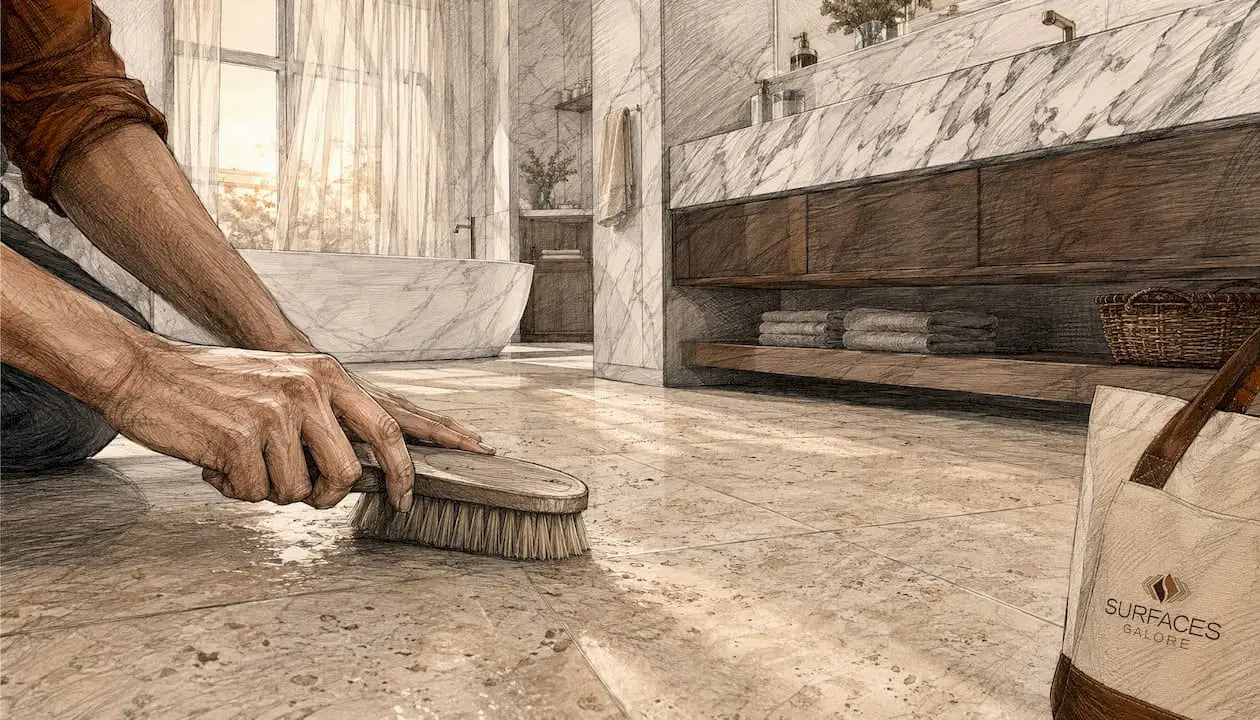
Use only pH-neutral cleaners. Acidic substances like vinegar, lemon juice, and many common bathroom cleaners cause irreversible etching on travertine. A pH-neutral solution, rated at pH 7, is the only safe choice for routine cleaning on natural stone. Products labeled specifically for natural stone are your best option.
The right tools matter as much as the right cleaner. Use microfiber mops, soft cloths, and soft-bristle brushes for grout lines. Abrasive scrubbers, steel wool, and stiff brushes scratch the surface and open up the stone’s pores to deeper contamination.
Avoid over-wetting the surface. Over-wetting travertine during cleaning leads to moisture damage, including efflorescence (a white mineral salt buildup) and mold growth beneath the surface. Always use a damp, not soaking, mop or cloth, and dry the surface immediately after cleaning.
Here is a quick travertine cleaning checklist for daily and weekly use:
- Dust mop or dry sweep daily to remove grit before it scratches the surface.
- Damp mop with a pH-neutral stone cleaner diluted in warm water for weekly cleaning.
- Use soft-bristle brushes on grout lines only, never on the tile face.
- Dry the floor or surface with a clean cloth immediately after mopping.
- Never use vinegar, bleach, ammonia, or citrus-based cleaners on travertine.
Pro Tip: Dilute your pH-neutral stone cleaner to the lower end of the recommended ratio. A weaker solution cleans effectively and leaves less residue, which can attract dirt if not fully rinsed.
2. How and when should you seal travertine tiles?
Sealing is the single most protective step in any travertine upkeep routine. A quality penetrating sealer soaks into the stone’s pores and forms a barrier that slows moisture and stain absorption. Without a sealer, spills reach the stone within seconds.
Interior travertine surfaces need resealing every 12–24 months, while outdoor installations and wet areas like showers require annual resealing. High-traffic floors wear through sealers faster than low-traffic areas, so location and use determine the exact interval. A simple water-bead test tells you when it is time to reseal.
The water-bead test: Pour a small amount of water onto the travertine surface. If the water beads up and sits on top, the sealer is still active. If the water soaks into the stone within 5–10 minutes, the sealer has broken down and resealing is needed immediately.
Knowing when to seal is only half the equation. Applying the sealer correctly determines how well it performs. Follow these steps for a proper application:
- Clean the surface thoroughly. Remove all dirt, grease, and old cleaner residue with a pH-neutral stone cleaner. Any contamination trapped under the sealer will be locked in permanently.
- Let the stone dry completely. Moisture in the stone prevents the sealer from penetrating. Allow at least 24 hours of drying time after cleaning before applying sealer.
- Apply a penetrating sealer thinly and evenly. Use a clean cloth or applicator pad. Work in small sections and avoid pooling. Thin, even coats penetrate better than thick ones.
- Wipe away excess sealer. Any sealer left sitting on the surface will dry into a hazy film. Buff it off within the time window listed on the product label.
- Allow full cure time before use. Most penetrating sealers require 24–48 hours before the surface sees foot traffic or water exposure.
Surfacesgalore’s detailed step-by-step sealing workflow walks through each stage with product-specific guidance for both residential and commercial applications. For a deeper look at why sealing matters long-term, the benefits of sealing travertine resource covers protection levels and finish options.
3. What routine habits protect travertine from wear?
Daily habits do more to protect travertine than any single product or treatment. Physical prevention methods like walk-off mats and felt furniture pads significantly extend travertine’s lifespan by reducing micro-scratches. Experts consider physical prevention more impactful than chemical routines alone for long-term durability. That finding should shift how you think about your maintenance budget and daily routine.
Here are the core habits that protect travertine from everyday wear:
- Place walk-off mats at every entrance. Grit tracked in from outside is the leading cause of surface scratches on travertine floors. A mat at each door stops the problem before it starts.
- Apply felt pads under all furniture legs. Chairs, tables, and decorative pieces drag across travertine and leave fine scratches that dull the finish over time.
- Blot spills immediately, never wipe. Immediate blotting of spills such as coffee, wine, and oils reduces staining risk significantly. Wiping spreads the liquid and pushes it deeper into the stone’s pores. Blot gently, then follow with a pH-neutral cleaner.
- Rotate rugs and furniture in high-traffic areas. Concentrated foot traffic in one spot wears through the sealer unevenly. Rotating rugs distributes wear across the full surface.
- Monitor grout-fill in travertine’s natural pits. Loss of grout-fill in travertine’s natural pits leads to dirt buildup and a worn appearance. Check filled areas periodically and address any loss before dirt becomes embedded.
Pro Tip: Keep a spray bottle of diluted pH-neutral stone cleaner near high-use areas like kitchen counters and bathroom vanities. A quick spray and blot after each use takes seconds and prevents stains from setting.
4. How to handle spills and acidic substances on travertine
Spill response speed is the difference between a clean surface and a permanent stain. Travertine’s porous structure means liquids begin absorbing within seconds of contact. Coffee, red wine, citrus juice, and cooking oils are the most common culprits in kitchens and dining areas.
The correct response is always to blot first. Press a clean, dry cloth firmly onto the spill and lift straight up. Repeat with a fresh section of cloth until the liquid is absorbed. Then clean the area with a pH-neutral stone cleaner and dry the surface completely.
Acidic spills require extra attention because they do not just stain. They etch. Citrus juice, tomato sauce, and vinegar-based dressings all react with calcium carbonate and leave a dull, rough patch on the surface. If etching occurs, buffing minor etching with fine diamond pads and water can improve the appearance. Deeper etching requires professional polishing to restore the original finish.
One misconception worth addressing directly: “natural” cleaners are not automatically safe for travertine. Lemon juice, white vinegar, and baking soda are all popular DIY cleaning agents, but each one damages travertine. Only products labeled pH-neutral and safe for natural stone belong on this surface.
5. What products are best for travertine care?
The best products for travertine share one quality: they are formulated specifically for natural stone. Generic household cleaners, even mild ones, often contain surfactants or pH levels that degrade travertine over time.
For daily and weekly cleaning, choose a pH-neutral stone cleaner from a reputable stone care brand. These are widely available at tile showrooms, home improvement stores, and online. Dilute according to the label and apply with a microfiber mop.
For sealing, use a penetrating (impregnating) sealer rather than a topical sealer. Penetrating sealers soak into the stone and protect from within without changing the surface appearance. Topical sealers sit on top of the stone and can peel, yellow, or trap moisture over time.
For polishing, fine diamond polishing pads used with water work well for light surface maintenance between professional visits. These pads are available in grits ranging from coarse to ultra-fine. Start with a fine grit and work progressively finer for the best result. Surfacesgalore’s guide on polishing travertine naturally covers the full process for maintaining a natural shine at home.
For grout-fill maintenance, color-matched grout or epoxy filler keeps travertine’s natural pits sealed against dirt. This is a specialized product category, and matching the color accurately to the existing fill is critical for a clean result. The Surfacesgalore resource on travertine fill options explains the difference between filled and unfilled travertine and how to maintain each type.
6. When should you seek professional travertine restoration?
Professional restoration addresses damage that routine cleaning and sealing cannot fix. Restoration is typically needed every 3–5 years, or sooner if you notice surface dullness that does not respond to cleaning, deep etching, worn grout-fill, or discoloration that persists after sealing.
The table below outlines the key differences between routine maintenance and professional restoration:
| Condition | Routine Maintenance | Professional Restoration |
|---|---|---|
| Light surface dirt | pH-neutral cleaning | Not required |
| Minor etching | Fine diamond pad buffing | Required for deep etching |
| Sealer worn through | DIY resealing | Not required |
| Deep stains | pH-neutral cleaner + blotting | Stain removal treatment |
| Worn or missing grout-fill | Color-matched filler (DIY) | Epoxy pit-filling by specialist |
| Surface dullness | Polishing pads | Honing and repolishing |
| Cracked or chipped tiles | Not addressable at home | Grinding and repair |
Professional restoration services typically include grinding, honing, deep cleaning, refilling pits with color-matched epoxy, stain removal, and full resealing. Refilling travertine’s natural pores with color-matched epoxy is a specialized process that separates routine maintenance from professional restoration. The result is a surface that looks as close to its original finish as possible.
Early intervention saves money. Addressing surface dullness or minor etching at the 3-year mark costs far less than a full replacement or emergency restoration after years of neglect. Restoration restores the stone’s original honed or polished finish and addresses deeper wear that daily maintenance simply cannot reach.
Key Takeaways
Consistent travertine care requires pH-neutral cleaning, resealing every 12–24 months, and immediate spill response to prevent permanent etching and staining.
| Point | Details |
|---|---|
| Use pH-neutral cleaners only | Acidic and alkaline cleaners etch travertine permanently; always choose products labeled safe for natural stone. |
| Reseal on a set schedule | Indoor travertine needs resealing every 12–24 months; wet areas and outdoor installations need annual resealing. |
| Blot spills immediately | Blot, never wipe, to prevent liquids from spreading into the stone’s pores and causing stains. |
| Physical prevention reduces wear | Walk-off mats and felt furniture pads protect the surface more effectively than cleaning alone. |
| Restore professionally every 3–5 years | Deep etching, worn grout-fill, and surface dullness require professional grinding, honing, and resealing. |
What I have learned from watching travertine age well and age badly
Most homeowners treat travertine like ceramic tile. That single mistake causes more damage than anything else I see. Ceramic is forgiving. Travertine is not. It reacts, absorbs, and shows every error in its finish.
The most common misconception I encounter is that “natural” cleaners are gentle. Lemon juice and vinegar are natural. They are also acids that dissolve calcium carbonate on contact. I have seen beautiful travertine floors in kitchens destroyed within two years because the owner used a vinegar-and-water spray as a daily cleaner. The etching was irreversible without professional restoration.
What actually works is boring but consistent. A pH-neutral cleaner, a damp microfiber mop, felt pads under every chair, and a reseal every year or two. That routine, applied without exception, keeps travertine looking like new for decades. The homeowners who get the best results are not the ones who spend the most on restoration. They are the ones who never need it.
Physical protection is underrated. A quality walk-off mat at the front door does more for a travertine floor than any cleaning product. Grit is the enemy. It acts like sandpaper under foot traffic and strips the sealer and surface finish faster than any chemical. Surfacesgalore’s team sees this pattern repeatedly across residential and commercial projects: the floors that age best are the ones where someone thought about prevention before the stone was even installed.
My honest advice is to treat your first reseal as a learning experience. Do the water-bead test yourself. Watch how the sealer absorbs. Feel the difference in the surface before and after. Once you understand how the stone behaves, maintenance stops feeling like a chore and starts feeling like stewardship of something genuinely worth protecting.
— cihan
Premium travertine from Surfacesgalore, backed by real expertise
Surfacesgalore is a direct importer of premium natural stone, including travertine tiles, mosaics, and custom cuts for residential and commercial projects. Every product ships nationwide from Anaheim, California, to designers, contractors, and homeowners who want authentic stone at honest prices.

Beyond the products, Surfacesgalore offers detailed maintenance guides, sealing tutorials, and expert resources to help you protect your investment from day one. Whether you are selecting travertine for a new installation or maintaining an existing floor, the travertine tile collections at Surfacesgalore give you quality stone and the knowledge to care for it properly. Browse the full selection and find the right tile for your next project.
FAQ
What cleaning products are safe for travertine floors?
Only pH-neutral cleaners labeled safe for natural stone are appropriate for cleaning travertine floors. Avoid vinegar, bleach, ammonia, and citrus-based products, as all of these cause permanent etching on calcium carbonate stone.
How often should you reseal travertine tile?
Indoor travertine needs resealing every 12–24 months, while outdoor surfaces and wet areas like showers require annual resealing. Use the water-bead test: if water soaks into the stone within 5–10 minutes, reseal immediately.
Can you remove etching from travertine at home?
Minor etching can be improved by buffing with fine diamond polishing pads and water. Deep etching requires professional honing and repolishing to restore the original surface finish.
What causes travertine to look dull over time?
Surface dullness results from sealer breakdown, micro-scratches from grit and furniture, acid etching, and loss of grout-fill in the stone’s natural pits. Regular sealing, physical protection, and periodic professional restoration address each of these causes.
How do you handle a spill on travertine quickly?
Blot the spill immediately with a clean, dry cloth. Never wipe, as wiping spreads the liquid into the stone’s pores. Follow with a pH-neutral stone cleaner and dry the surface completely to prevent moisture damage.

Leave a comment