

Types of stone mosaics: guide for upscale kitchen & bath

Many designers assume all stone mosaics work equally well on bathroom floors, only to discover slippery surfaces compromise safety. Choosing the right stone type, finish, and pattern transforms upscale kitchens and bathrooms into stunning, functional spaces. This guide clarifies materials, finishes, patterns, and applications so you can confidently specify mosaics that balance luxury with performance.
Table of Contents
- Types Of Stone Mosaics By Material
- Stone Mosaic Finishes And Their Functional Impact
- Popular Mosaic Tile Patterns And Styles For Kitchens And Bathrooms
- Mosaics In Moisture-Prone Areas: Selection And Care
- Common Misconceptions About Stone Mosaics
- Sourcing And Availability Of Premium Stone Mosaics In The U.S.
- Conclusion: Elevating Spaces With Stone Mosaics
- Explore Premium Stone Mosaics For Your Next Remodel
- Frequently Asked Questions About Stone Mosaics
Key takeaways
| Point | Details |
|---|---|
| Material selection | Marble, travertine, limestone, and dolomite each offer distinct aesthetics and durability for different applications. |
| Finish matters | Polished surfaces shine but slip; honed and tumbled finishes provide safer traction in wet areas. |
| Pattern impact | Geometric and nature-inspired designs elevate visual appeal while influencing perceived space and luxury. |
| Maintenance essentials | Proper sealing and care extend mosaic life in moisture-prone kitchens and bathrooms. |
| Avoid misconceptions | Not all stone mosaics suit wet floors; informed choices prevent costly design mistakes. |
Types of stone mosaics by material
Selecting the right stone sets the foundation for your project’s success. Each natural stone brings unique color palettes, textures, and performance characteristics that influence both aesthetics and durability in upscale renovations.
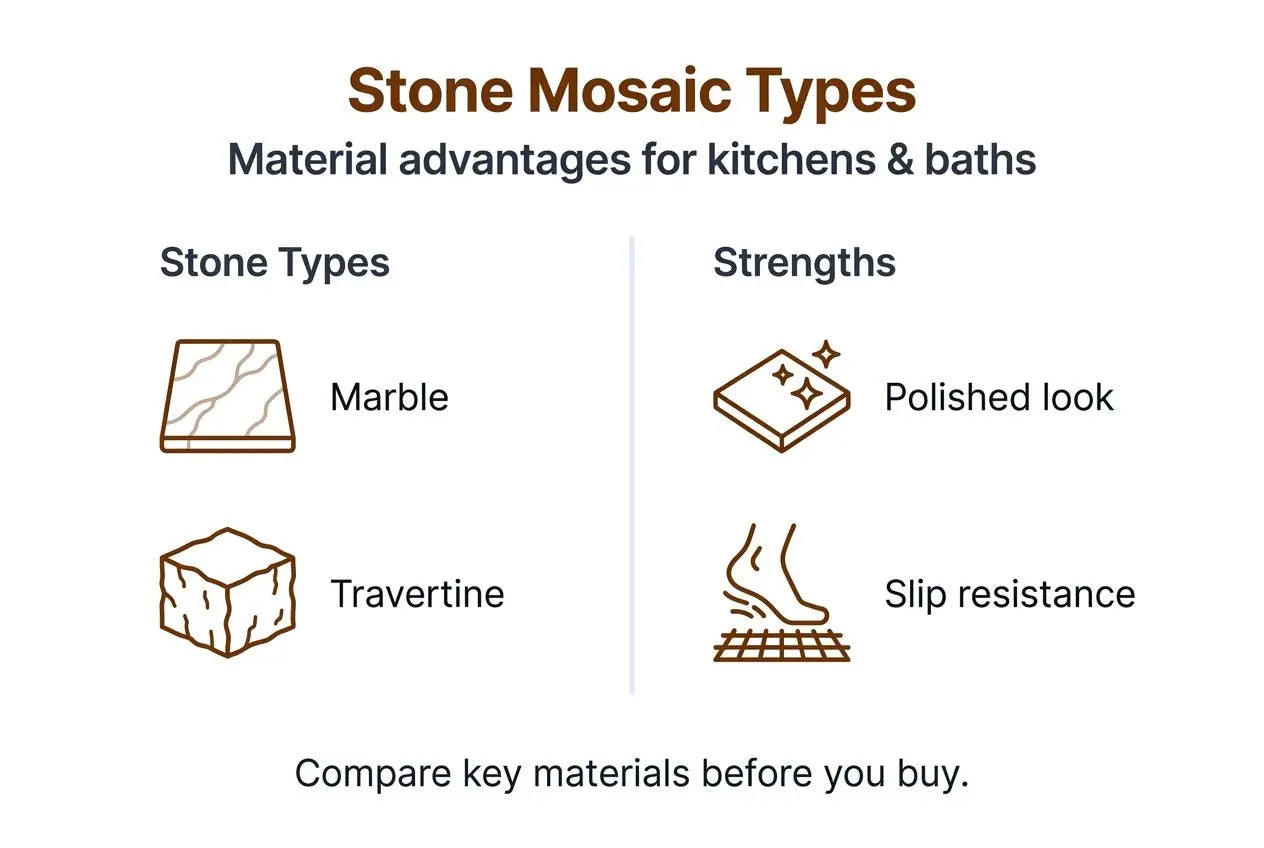
Marble delivers luxurious veining and high polish potential, making it ideal for feature walls and backsplashes. Travertine provides rustic texture and better slip resistance when tumbled, perfect for shower floors and transitional spaces. Limestone offers subtle earth tones and matte finishes that complement contemporary designs. Dolomite resembles marble but withstands etching better, suited for kitchen zones exposed to acidic foods. Onyx creates dramatic translucent effects with backlighting but requires careful handling due to fragility.
Consider these material characteristics when specifying mosaics:
| Stone Type | Best Applications | Key Advantages | Considerations |
|---|---|---|---|
| Marble | Backsplashes, accent walls | Elegant veining, polishes beautifully | Requires sealing, etches with acids |
| Travertine | Shower floors, bath walls | Natural slip resistance, warm tones | Porous, needs regular maintenance |
| Limestone | Floors, wall cladding | Subtle texture, versatile neutrals | Softer, scratches more easily |
| Dolomite | Kitchen backsplashes | Marble-like beauty, acid resistant | Limited color range |
| Onyx | Feature walls, niches | Translucent drama with lighting | Fragile, premium cost |
Each stone performs differently in moisture and traffic conditions. Marble excels in low-traffic vertical applications. Travertine handles bathroom humidity naturally. Limestone suits moderate-use floors when sealed properly. Understanding these distinctions helps you match materials to client expectations and project demands.
Pro Tip: Always request samples in your project’s actual lighting conditions. Natural stone varies batch to batch, and what looks stunning in a showroom may read differently under your client’s bathroom fixtures.
For comprehensive guidance on stone selection, explore choosing stone for bathrooms upscale results to understand performance factors beyond aesthetics.
Stone mosaic finishes and their functional impact
Surface treatment dramatically alters how stone performs and appears in kitchens and bathrooms. The finish you specify determines slip resistance, light reflection, and maintenance requirements just as much as the stone type itself.
Polished finishes create glossy, mirror-like surfaces that maximize color depth and veining drama. They reflect light beautifully in backsplashes and accent walls. However, polished finishes offer lower slip resistance, making them unsafe for shower floors or high-moisture areas. Water beads on polished surfaces, creating hazardous conditions.
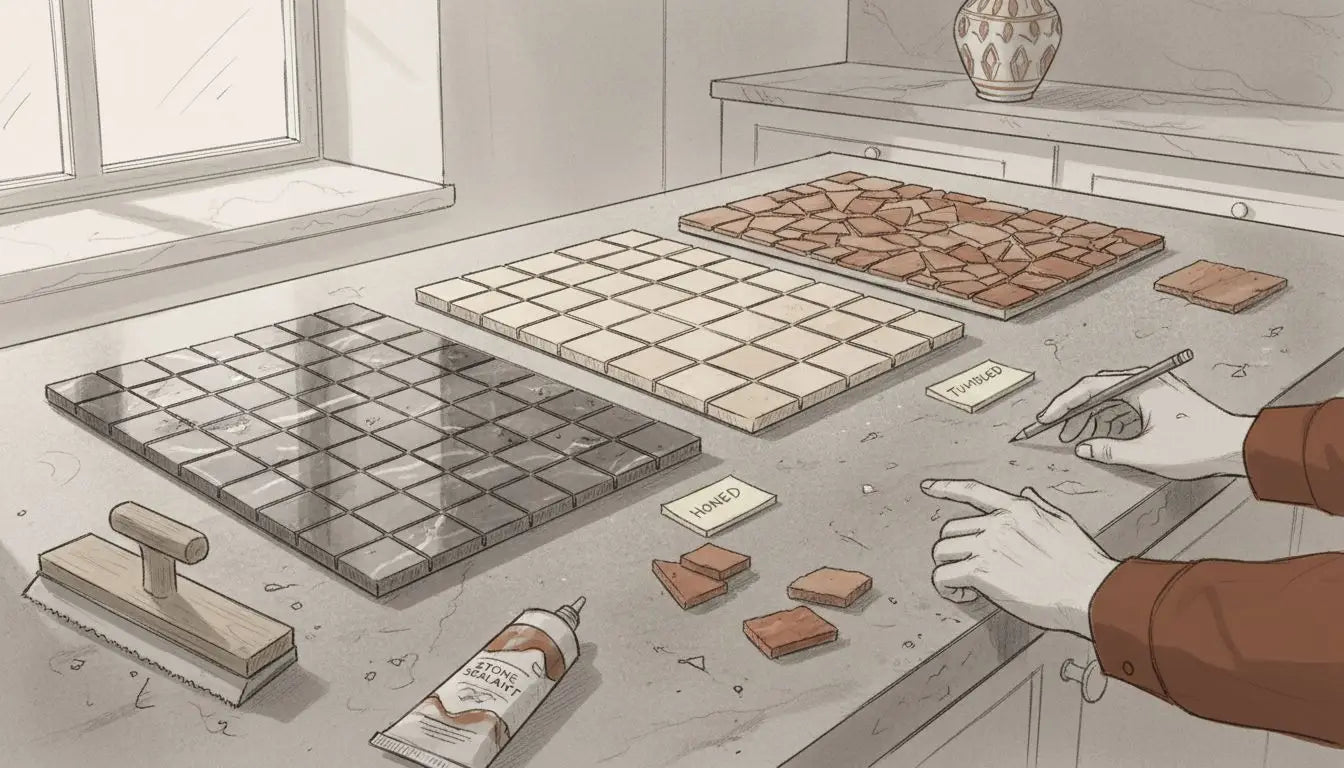
Honed finishes provide matte or satin surfaces with subtle sheen. They minimize glare while maintaining color richness. Honed stone offers moderate slip resistance, suitable for bathroom floors with proper installation. This finish hides water spots better than polished surfaces, reducing visible maintenance needs.
Tumbled finishes create textured, aged appearances with rounded edges and varied surface planes. Tumbled stone improves grip substantially, making it the safest choice for wet areas. The rustic aesthetic suits Mediterranean, farmhouse, and transitional designs. Surface irregularities may trap dirt, requiring more frequent cleaning.
| Finish Type | Slip Resistance | Best Uses | Aesthetic Impact |
|---|---|---|---|
| Polished | Low | Backsplashes, dry walls | High gloss, dramatic veining |
| Honed | Moderate | Bathroom floors, counters | Soft matte, elegant subtlety |
| Tumbled | High | Shower floors, wet areas | Textured, aged character |
Match finishes to specific zones within projects. Specify polished marble for kitchen backsplashes where slip is not a concern. Use honed travertine on bathroom floors for safety without sacrificing sophistication. Reserve tumbled finishes for shower pans and steam room floors where traction is critical.
Pro Tip: Combine finishes strategically within one bathroom. Polished mosaics on walls create visual interest, while honed or tumbled surfaces on floors provide necessary safety. This layered approach maximizes both beauty and function.
Popular mosaic tile patterns and styles for kitchens and bathrooms
Pattern selection shapes how spaces feel and function. The right design creates visual flow, influences perceived room size, and establishes the project’s aesthetic signature.
Geometric patterns dominate upscale renovations. Hexagon mosaics add modern sophistication to floors and walls. Herringbone arrangements create dynamic movement on backsplashes. Arabesque patterns deliver Moroccan-inspired elegance perfect for accent walls and niches. These structured designs work across style preferences from contemporary to traditional.
Classic patterns maintain timeless appeal. Basket weave arrangements suit transitional kitchens. Subway-style stacked or offset layouts provide clean simplicity. Greek key borders frame shower niches elegantly. These traditional choices ensure designs age gracefully.
Interior designers increasingly favor nature-inspired mosaic patterns mixing organic shapes with geometric precision. Flowing leaf motifs, wave patterns, and river rock arrangements bring natural elements indoors. Combining multiple stone types and finishes elevates functional spaces into artistic statements.
Consider these pattern impacts:
- Small-scale mosaics (1 inch or smaller) add texture and visual interest without overwhelming compact bathrooms
- Large geometric patterns make bold statements in spacious master baths and open kitchens
- Linear patterns like herringbone elongate narrow spaces visually
- Mixed-material mosaics incorporating glass or metal accents create focal points
- Artistic murals and medallions serve as permanent artwork in luxury renovations
Pattern scale affects both aesthetics and practicality. Tiny mosaics require more grout lines, increasing installation time and maintenance. Larger format pieces install faster but may limit design flexibility. Balance your client’s vision with project realities.
Color blending within patterns adds depth. Gradients from light to dark create dimension. Mixing warm and cool tones within one mosaic design prevents monotony. Metallic accents in otherwise neutral stone patterns catch light dynamically.
Mosaics in moisture-prone areas: selection and care
Kitchens and bathrooms challenge stone with constant moisture, temperature fluctuations, and cleaning chemicals. Proper material selection and maintenance protocols protect your investment and ensure client satisfaction.
Sealing porous stones after installation is non-negotiable. Penetrating sealers fill microscopic pores without altering appearance. This barrier prevents water absorption, staining, and mold growth. Reapply sealers annually in high-use showers, every two years elsewhere.
For wet area installations, follow this process:
- Specify honed or tumbled finishes for all horizontal surfaces exposed to water
- Use waterproof membranes beneath all shower and tub surrounds
- Apply penetrating sealer 48 hours after grout cures completely
- Install with slight slope toward drains to prevent standing water
- Detail grout joints consistently at 1/16 inch for uniform appearance and water resistance
Regular maintenance preserves beauty and function. Clean with pH-neutral stone cleaners weekly. Avoid acidic or abrasive products that damage surfaces and sealers. Squeegee shower walls after use to minimize water spot buildup. Address any grout cracks immediately to prevent water infiltration behind tiles.
Pro Tip: Create a maintenance guide for clients documenting recommended products, sealing schedule, and cleaning techniques. This simple addition prevents premature wear and protects your reputation.
Proper installation matters as much as material choice. Work with experienced tile setters familiar with natural stone. Thinset mortar must be appropriate for stone weight and porosity. Back-buttering larger mosaic sheets ensures full adhesion. Lippage-free installations prevent water pooling.
For detailed installation guidance, review kitchen backsplash step process elegant stone and backsplash mosaic workflow diy install guide. When planning custom designs, consult custom mosaic design guide stone projects for technical specifications.
Common misconceptions about stone mosaics
Misunderstandings about natural stone lead to poor specifications and disappointed clients. Addressing these myths upfront ensures realistic expectations and successful outcomes.
Myth: All stone mosaics work on bathroom floors. Reality: Polished stone mosaics may be unsafe for bathroom floors due to slip risk. Finish selection determines safety. Honed and tumbled surfaces provide necessary traction in wet conditions. Never specify polished marble or travertine for shower pans.
Myth: Natural stone requires excessive maintenance. Reality: Proper sealing makes natural stone practical for kitchen and bathroom use. Sealed stone needs only pH-neutral cleaning and occasional resealing. Maintenance demands are comparable to porcelain when installed correctly.
Myth: Smaller tiles always suit small bathrooms. Reality: Tile scale should relate to design goals, not just room size. Large-format mosaics can make compact spaces feel more expansive by reducing visual clutter. Small mosaics work in any size room when pattern and color are balanced.
Myth: All natural stone looks traditional. Reality: Contemporary mosaic patterns in marble, travertine, and limestone suit modern aesthetics perfectly. Clean geometric arrangements, monochromatic palettes, and mixed-material combinations create sleek, current designs.
Additional clarifications:
- Stone color deepens when wet, affecting how shower mosaics appear during use versus when dry
- Grout color dramatically impacts overall appearance; test samples with actual stone before committing
- Natural variation between stone batches is expected and adds character, not a defect
- Mesh-backed mosaic sheets simplify installation but require proper thinset coverage to prevent hollow spots
For pattern-specific guidance, explore stone mosaic patterns explained to understand how layout choices affect visual and functional outcomes.
Sourcing and availability of premium stone mosaics in the U.S.
Reliable suppliers make the difference between smooth project execution and frustrating delays. Knowing where to source quality mosaics ensures you deliver on design promises.
Direct importers offer the best combination of quality and value. Companies specializing in natural stone maintain consistent inventory and understand product performance. Look for suppliers with:
- Extensive selections in marble, travertine, limestone, and specialty stones
- Multiple finish options including polished, honed, and tumbled surfaces
- Custom fabrication capabilities for unique pattern requests
- Nationwide shipping with experienced freight handling
- Knowledgeable staff who understand design applications and technical requirements
Regional tile distributors stock popular mosaic styles for immediate pickup. This works well for smaller projects or urgent needs. However, selection may be limited compared to specialized stone importers.
Online ordering expands access to premium products regardless of location. Reputable suppliers provide detailed product specifications, high-resolution images, and sample programs. Request samples before committing to large orders, especially when color matching matters.
Quality indicators include:
- Transparent sourcing information about quarry origins
- Consistent sizing and thickness within mosaic sheets
- Secure mesh backing that prevents tiles from detaching during handling
- Clear care and installation instructions included with orders
- Responsive customer service for technical questions
Establish relationships with suppliers who support trade professionals. Volume discounts, job-site delivery, and flexible return policies benefit contractors and designers managing multiple projects. Warranty coverage and satisfaction guarantees protect against defective materials.
Conclusion: elevating spaces with stone mosaics
Understanding stone types, finishes, and patterns empowers you to create kitchens and bathrooms that balance luxury with lasting performance. Material knowledge prevents costly mistakes while expanding creative possibilities.
The right mosaic selection transforms ordinary renovations into extraordinary spaces. Marble adds timeless elegance. Travertine brings warmth and texture. Thoughtful finish choices ensure safety without compromising beauty. Pattern selection establishes visual identity and influences how occupants experience the space.
Leverage this guide when specifying mosaics for your next project. Consider how each decision impacts aesthetics, function, and maintenance. Your expertise in navigating these choices builds client trust and ensures satisfaction long after installation completes.
Explore premium stone mosaics for your next remodel
Ready to bring your upscale kitchen or bathroom vision to life? Surfaces Galore offers an extensive collection of marble, travertine, and limestone mosaics in diverse finishes and patterns. Our direct import model delivers authentic natural stone at competitive prices without compromising quality.
Browse our premium stone mosaics collection to discover options suited for luxury interiors. From classic subway arrangements to contemporary geometric designs, we stock materials that meet both aesthetic and performance demands. Our team ships nationwide and provides expert guidance to ensure your project succeeds. Contact us today to discuss your specific requirements and receive samples that showcase the beauty and quality of natural stone mosaics.
Frequently asked questions about stone mosaics
What stone mosaic types are best for bathroom floors?
Honed or tumbled travertine and limestone provide the best combination of slip resistance and aesthetic appeal for bathroom floors. Avoid polished finishes in wet areas due to safety concerns. The textured surfaces of tumbled stone offer superior traction while maintaining upscale appearance.
How should stone mosaics be maintained in kitchens?
Clean kitchen stone mosaics with pH-neutral cleaners weekly and reseal annually in high-use areas. Wipe spills immediately to prevent staining, especially acidic substances like lemon juice or vinegar. Avoid abrasive scrubbers that scratch surfaces and compromise sealers.
Which mosaic patterns create a luxurious feel in small bathrooms?
Hexagon and arabesque patterns add sophistication without overwhelming compact bathrooms. Light-colored stones in these geometric arrangements reflect light and create visual spaciousness. Vertical herringbone patterns draw the eye upward, making ceilings appear higher.
Can stone mosaics be mixed with other materials for visual impact?
Stone combines beautifully with glass, metal, and porcelain accents in mosaic designs. Mixed-material patterns create focal points on feature walls and backsplashes. Ensure all materials share similar thickness for flush installation and consistent grout lines.
How to ensure mosaics are installed correctly for durability?
Hire experienced tile setters familiar with natural stone installation. Proper surface preparation, appropriate thinset selection, and waterproof membranes in wet areas are essential. Back-butter mosaic sheets for full adhesion and seal grout joints after curing to prevent moisture infiltration.
Leave a comment