

What is Turkish travertine? Features and design uses

Many designers mistakenly dismiss travertine as too soft or maintenance intensive compared to granite or marble. Turkish travertine, however, offers a unique combination of warmth, texture, and versatility that makes it a standout choice for both interior and exterior projects. This guide explores its geological origins, durability nuances, finish options, and proven installation practices to help you confidently specify Turkish travertine in 2026.
Table of Contents
- What Is Turkish Travertine? Geological Formation And Composition
- Physical Properties And Durability Of Turkish Travertine
- Design Aesthetics: Cuts, Finishes, And Surface Qualities Of Turkish Travertine
- Practical Application And Installation Best Practices For Turkish Travertine
- Explore Premium Turkish Travertine Collections For Your Next Project
- FAQ
Key takeaways
| Point | Details |
|---|---|
| Natural formation | Turkish travertine forms from mineral deposits around hot springs, creating its characteristic porous texture and layered appearance. |
| Durability factors | Hardness ranges 3 to 4 on the Mohs scale; porosity and salt exposure significantly affect longevity, especially in humid or saline environments. |
| Finish options | Polished finishes deliver sleek aesthetics but can be slippery; honed and tumbled surfaces enhance slip resistance and tactile richness. |
| Installation essentials | Back-buttering tiles and preparing flat, structurally sound substrates prevent cracking and ensure decades of performance. |
What is Turkish travertine? Geological formation and composition
Turkish travertine is a sedimentary rock born from the mineral-rich hot springs that dot Turkey’s landscape. Over millennia, mineral deposits left by hot springs gradually accumulate calcium carbonate, the primary building block of travertine. As these layers compress and harden, they form the stone’s signature banded texture.
The porosity that defines travertine emerges during formation. When CO2 gas rapidly escapes from mineral-laden water, it creates tiny voids and holes throughout the stone. Organic matter trapped in these deposits also decays, leaving additional pockets. This interplay of mineral deposition and gas escape produces travertine’s distinctive open structure, which directly influences its visual appeal and performance characteristics.
Understanding this natural process helps you appreciate why Turkish travertine looks and behaves differently than igneous stones like granite. The sequential layering creates color bands and textural variation, while the porous structure offers both design opportunities and maintenance considerations. When selecting Turkish travertine, recognize that its composition reflects millions of years of geological activity, not industrial processing.
Pro Tip: Review samples under strong lighting to see how pore distribution and banding align with your design vision. This simple step reveals how light will interact with the stone in your finished space.
Key compositional elements:
- Calcium carbonate (CaCO3) forms the primary mineral matrix
- Iron oxides and other impurities create color variation from cream to rust
- Pore networks range from fine to coarse depending on formation conditions
- Layered structure results from sequential mineral deposition over time
“Travertine’s unique character emerges from the delicate balance between mineral concentration, water flow rate, and gas release during formation. No two deposits are identical.” — Geologist perspective from field studies in Turkey
For those exploring how travertine compares to other natural stones, our travertine selection criteria guide breaks down the factors that influence performance and aesthetics across different stone types.
Physical properties and durability of Turkish travertine
Turkish travertine’s physical characteristics directly determine where and how you can use it successfully. Hardness ranges between 3 and 4 on the Mohs scale, making it softer than granite (6 to 7) but comparable to marble. This moderate hardness means travertine resists everyday wear in residential settings but may show scratches over time in high-traffic commercial zones without proper maintenance.
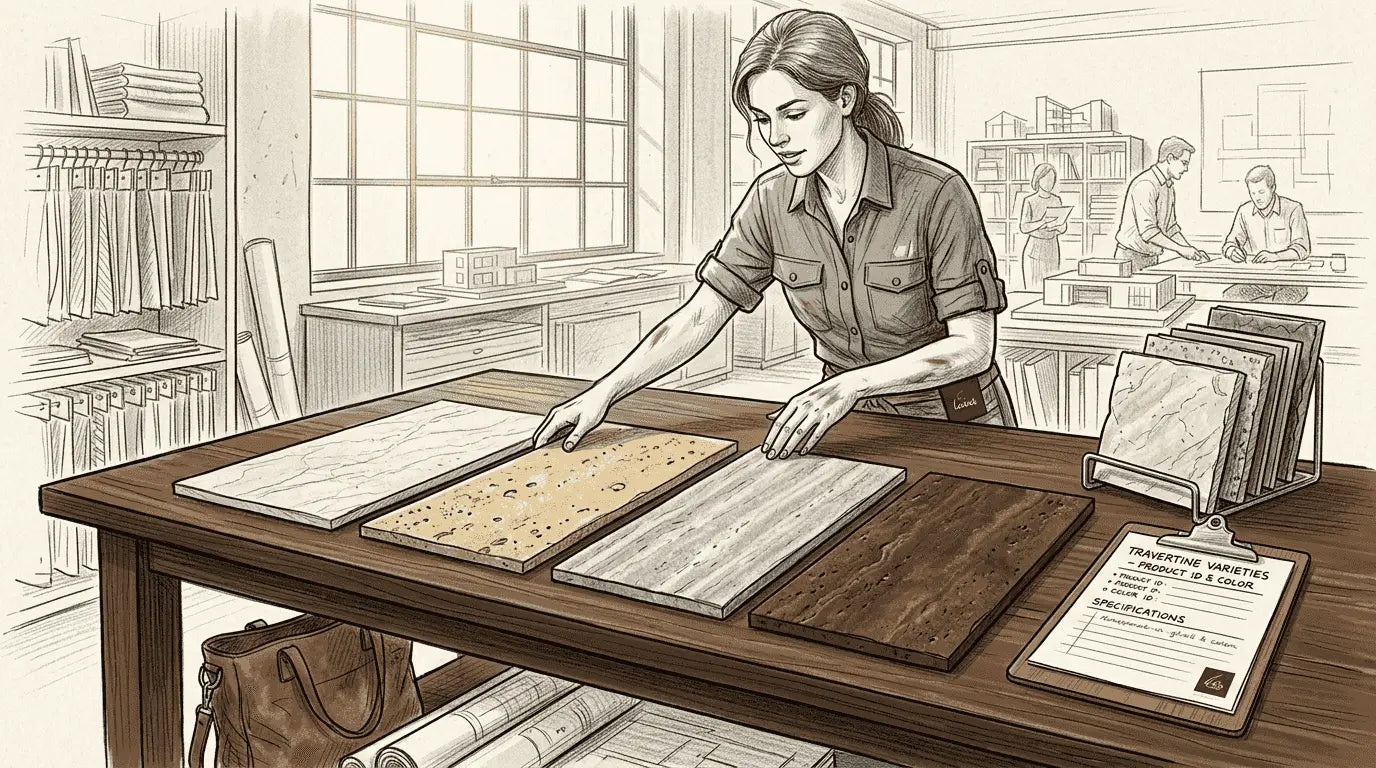
Color spectrum in Turkish travertine spans from near-white ivory to deep walnut brown. These variations arise from mineral impurities present during formation. Iron oxides produce warm beige and tan tones, while manganese and organic matter contribute gray and brown hues. You can specify color ranges to match project palettes, though natural variation within any batch adds organic character.
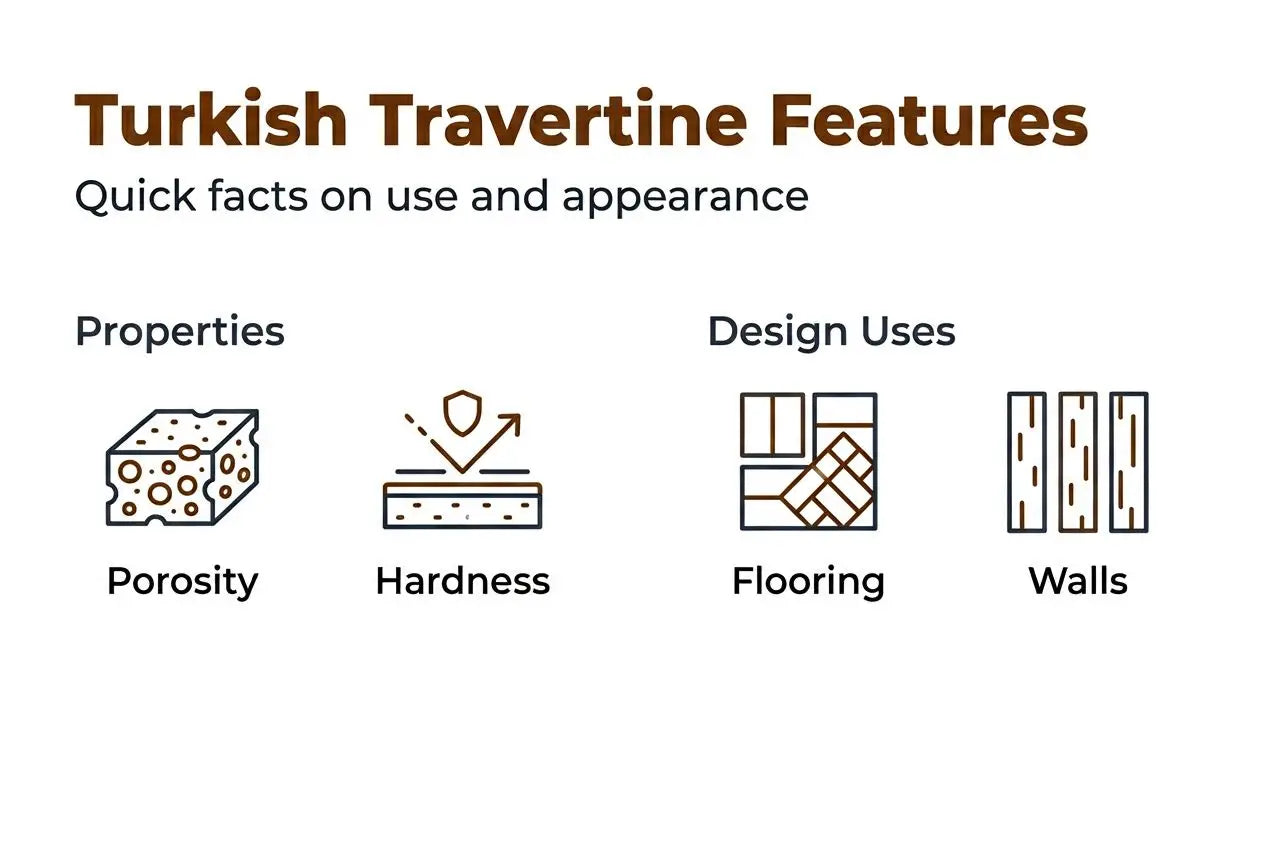
Porosity is the critical durability factor. Open pore structures allow moisture infiltration, which becomes problematic when salt crystallization occurs. Sulfates like sodium sulfate (Na₂SO₄) are especially damaging because they form crystals that expand within pores, creating internal stress that can crack or spall the stone. Chlorides and nitrates also cause deterioration, though typically less severe than sulfates.
In U.S. climates with freeze-thaw cycles or coastal salt spray, selecting lower-porosity Turkish travertine and applying appropriate sealers becomes essential. Regular sealing fills pores to block moisture and salt ingress, significantly extending service life. For projects near oceans or in areas using road salt, factor in more frequent maintenance.
| Property | Range | Design Implication |
|---|---|---|
| Mohs hardness | 3 to 4 | Suitable for most residential floors; use caution in high-traffic commercial |
| Porosity | 5% to 30% | Higher porosity requires more frequent sealing; affects stain resistance |
| Compressive strength | 50 to 150 MPa | Adequate for flooring and cladding when properly installed |
| Color spectrum | Ivory to deep brown | Wide palette supports diverse design schemes; natural variation expected |
Pro Tip: Request porosity test data from suppliers for projects in humid or saline environments. Lower porosity translates to better long-term performance with less intensive maintenance.
Our travertine vs limestone guide offers additional context on how pore structure affects performance across different sedimentary stones, helping you make informed material comparisons.
Design aesthetics: cuts, finishes, and surface qualities of Turkish travertine
How Turkish travertine is cut and finished transforms its visual impact and functional characteristics. Cut orientation determines pattern expression. Vein-cut travertine reveals graphic linear patterns because the saw blade slices parallel to the stone’s natural bedding planes. This approach emphasizes the horizontal banding created during formation, producing bold striations ideal for feature walls or fireplace surrounds.
Cross-cut travertine, by contrast, cuts perpendicular to bedding planes, exposing the porous structure in a softer, cloud-like pattern. This gentler aesthetic works well for large floor installations where you want visual interest without overwhelming graphic intensity. Cross-cut surfaces also tend to feel slightly smoother underfoot because the pore openings are smaller in cross-section.
Finish selection profoundly affects both aesthetics and safety. Polished finishes can become slick when wet, limiting their use in bathrooms, pool decks, or entryways exposed to rain. Polished travertine delivers a sleek, reflective surface that amplifies light and color depth, making it stunning for interior walls, backsplashes, and dry-area flooring.
Honed finishes offer a matte, smooth surface with minimal sheen. This finish enhances the stone’s natural color without gloss, creating a sophisticated, understated look. Honed travertine provides better slip resistance than polished while maintaining a refined appearance suitable for kitchens, bathrooms, and living areas.
Tumbled travertine undergoes mechanical abrasion that rounds edges and creates a textured, aged appearance. This rustic finish maximizes slip resistance and hides wear, making it perfect for outdoor patios, pool surrounds, and high-traffic zones. The tactile quality of tumbled travertine adds warmth and character to spaces seeking an old-world or Mediterranean aesthetic.
| Finish Type | Visual Quality | Slip Resistance | Best Applications |
|---|---|---|---|
| Polished | High gloss, reflective | Low (especially when wet) | Interior walls, backsplashes, dry-area floors |
| Honed | Matte, smooth | Moderate | Kitchens, bathrooms, living spaces |
| Tumbled | Textured, rustic | High | Pool decks, patios, outdoor walkways |
| Brushed | Subtle texture | Moderate to high | Versatile; both interior and exterior |
Choosing cut and finish combinations:
- Vein-cut + polished creates dramatic feature walls with bold pattern and sheen
- Cross-cut + honed delivers calm, organic flooring with practical slip resistance
- Cross-cut + tumbled produces relaxed, Mediterranean outdoor spaces with grip
- Vein-cut + brushed offers textural interest without excessive pattern dominance
Our travertine usage explained guide provides application-specific recommendations to help you match finish choices with project requirements and design intent.
Practical application and installation best practices for Turkish travertine
Proper installation separates decades of beauty from premature failure. Turkish travertine demands attention to substrate preparation, mortar selection, and application technique to perform as expected.
Start with a structurally sound, clean, and flat substrate. Concrete slabs must cure fully and achieve flatness within 1/4 inch over 10 feet. Flexing substrates cause tiles to crack along grout lines or at stress points. For wood subfloors, install an appropriate underlayment system that isolates movement, though Turkish travertine performs best over concrete or masonry.
Use polymer-modified thin-set mortar specifically formulated for natural stone. These mortars provide strong adhesion while remaining flexible enough to accommodate minor substrate movement. White or light-colored mortars are essential for lighter travertine to prevent show-through or discoloration at pores and translucent areas.
Achieving 95% mortar coverage through back-buttering is critical. Back-buttering means applying a thin layer of mortar to the tile back before pressing it into the troweled substrate mortar. This technique fills voids in the porous travertine back, distributes stress evenly, and prevents hollow spots that concentrate loads and cause cracking. Skipping this step is the most common installation failure.
Step-by-step installation sequence:
- Verify substrate flatness and structural integrity; repair defects before proceeding
- Apply polymer-modified thin-set mortar to substrate using notched trowel appropriate for tile size
- Back-butter each tile with a thin mortar layer, filling voids and ensuring complete coverage
- Press tile firmly into substrate mortar, twisting slightly to collapse trowel ridges
- Maintain consistent grout joint width using spacers; typical joints range 1/8 to 1/4 inch
- Allow mortar to cure per manufacturer specifications before grouting (usually 24 hours)
- Apply grout, clean excess promptly, and seal both tile and grout after curing
Grout selection matters. Sanded grout suits joints wider than 1/8 inch and matches travertine’s textural quality. Choose grout colors that complement the stone without creating harsh contrast, unless you intentionally want grout lines to define a geometric pattern. Epoxy grout offers superior stain resistance in kitchens and bathrooms but requires careful application on porous travertine to avoid hazing.
Pro Tip: Seal Turkish travertine before grouting to prevent grout haze from penetrating pores. This extra step simplifies cleanup and protects the stone surface during installation.
For finish-specific considerations, remember that polished travertine shows scratches more readily during construction. Protect finished surfaces with cardboard or plywood until project completion. Honed and tumbled finishes tolerate construction activity better but still benefit from protection against heavy impacts or chemical spills.
Explore our travertine application ideas for elegant spaces for inspiration on how proper installation techniques translate into stunning finished projects across diverse design styles.
Explore premium Turkish travertine collections for your next project
Now that you understand Turkish travertine’s formation, durability characteristics, finish options, and installation requirements, sourcing quality materials becomes your next step. Surfaces Galore imports premium Turkish travertine directly, offering designers, architects, contractors, and homeowners access to authentic stone at competitive prices. Our Anaheim showroom displays a curated selection of tiles, slabs, mosaics, and decorative pieces in various cuts and finishes.
Our team provides expert guidance to match your project requirements with the right Turkish travertine products. Whether you’re specifying vein-cut polished slabs for a luxury residential lobby or cross-cut tumbled tiles for a resort pool deck, we help you navigate color ranges, porosity levels, and finish options. We ship nationwide, bringing timeless Turkish travertine beauty to your location with the quality and service you expect. Visit our Turkish travertine collection to explore available options and request samples.
FAQ
Is Turkish travertine suitable for outdoor use in humid climates?
Turkish travertine can perform well outdoors in humid climates when properly selected and maintained. Salt crystallization and porosity affect durability, so choose lower-porosity varieties and apply penetrating sealers to block moisture and salt infiltration. Regular resealing every one to three years, depending on exposure, significantly extends service life. Avoid sulfate-rich environments without extra protection.
How do vein-cut and cross-cut Turkish travertine differ visually?
Vein-cut Turkish travertine displays bold, linear banding that creates dramatic graphic patterns on walls and vertical surfaces. Cross-cut travertine shows softer, cloud-like patterns with gentle color variation, ideal for flooring where you want visual interest without strong directional lines. Vein-cut anchors spaces with architectural presence, while cross-cut offers organic subtlety.
What installation methods ensure the longevity of Turkish travertine tiles?
Back-buttering and substrate preparation are essential for long-lasting Turkish travertine installations. Applying mortar to both the substrate and tile back achieves 95% coverage, filling pores and preventing hollow spots that concentrate stress. Ensure substrates are flat within 1/4 inch over 10 feet and structurally sound to avoid flexing that cracks tiles. Use polymer-modified thin-set mortar designed for natural stone.
Does Turkish travertine require more maintenance than granite or marble?
Turkish travertine generally requires more frequent sealing than granite due to higher porosity, but maintenance is comparable to marble. Seal travertine every one to three years depending on traffic and exposure, using penetrating sealers that don’t alter appearance. Clean spills promptly to prevent staining, and avoid acidic cleaners that etch calcium carbonate. Routine care keeps Turkish travertine looking beautiful for decades.
Can I use Turkish travertine in a modern minimalist design?
Absolutely. Honed or polished Turkish travertine in lighter tones like ivory or beige fits seamlessly into modern minimalist interiors. The stone’s natural texture adds warmth without visual clutter, while clean grout lines and large-format tiles maintain the crisp geometry minimalism requires. Cross-cut orientations provide subtle pattern variation that enriches minimalist spaces without overwhelming simplicity.
Leave a comment