

Why Seal Travertine: Lasting Protection for Luxury Homes

Every luxury project demands materials that combine striking beauty with lasting performance. For interior designers across California, travertine stands out with its unique textures and natural elegance, but its signature porosity also brings challenges. Understanding travertine’s high natural porosity reveals both aesthetic opportunities and maintenance needs. This guide shows how professional sealing maximizes the stone’s durability, enhances its visual impact, and supports the elevated standards of California’s most exclusive residences.
Table of Contents
- Travertine Defined: Natural Beauty and Porosity
- How Sealing Protects Travertine Surfaces
- Types of Sealers and Application Methods
- Design Impact: Aesthetics, Maintenance, and Value
- Common Problems With Unsealed Travertine
- Sealing Compared to Other Stone Treatments
Key Takeaways
| Point | Details |
|---|---|
| Natural Characteristics of Travertine | Travertine is a unique stone with high porosity, lightweight structure, and excellent insulation, making it a favored choice for both aesthetics and functionality. |
| Importance of Sealing | Professional sealing is essential to protect travertine from stains, moisture damage, and wear, extending its lifespan and maintaining its beauty. |
| Sealer Types and Applications | Choose penetrating sealers for optimal protection; they maintain the natural look of the stone while providing deep, lasting defense against contaminants. |
| Risks of Unsealed Travertine | Unsealed travertine is susceptible to rapid staining, moisture retention, and structural deterioration, emphasizing the need for regular sealing to preserve its integrity. |
Travertine Defined: Natural Beauty and Porosity
Travertine is a remarkable natural stone formed through complex geological processes, characterized by its distinctive appearance and remarkable physical properties. This sedimentary rock emerges from mineral-rich springs and underground water sources, creating a material prized for its unique aesthetic and functional qualities.
Travertine’s formation involves intricate chemical precipitation, where calcium carbonate deposits accumulate over thousands of years. Hydrothermal spring deposits create a stone with remarkable structural characteristics that make it both lightweight and strong. The stone’s natural porosity is its most defining feature, resulting from its unique formation process.
Key characteristics of travertine include:
- High natural porosity
- Lightweight composition
- Excellent sound insulation properties
- Low thermal conductivity
- Easy to cut and shape
- Visually distinctive textures and patterns
The microscopic pores within travertine are not just a visual feature but a fundamental aspect of its structural integrity. These interconnected spaces vary in size and connectivity, directly influencing the stone’s durability and performance. Architects and designers appreciate travertine for its ability to combine aesthetic elegance with practical engineering properties.
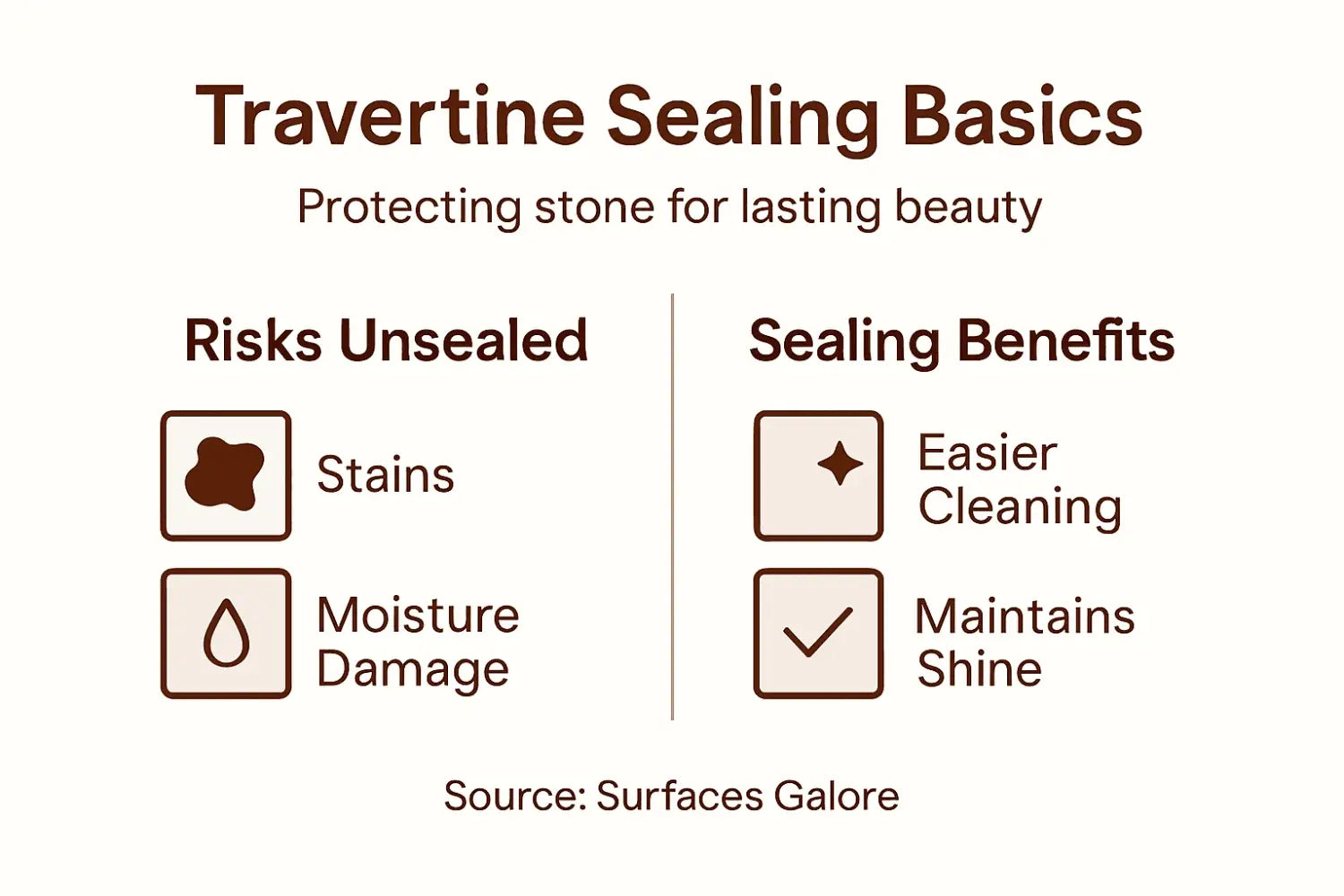
Pro tip: When selecting travertine for your luxury home project, carefully examine the stone’s pore structure and consider professional sealing to enhance its long-term performance and appearance.
How Sealing Protects Travertine Surfaces
Travertine’s natural porosity makes it vulnerable to damage, which is why professional sealing is crucial for maintaining its beauty and structural integrity. Protecting stone surfaces involves creating a protective barrier that prevents liquid penetration and potential staining, ensuring the stone remains pristine over time.
The sealing process addresses several key vulnerabilities in travertine’s structure:
- Blocks liquid absorption
- Prevents stain penetration
- Reduces surface wear
- Maintains natural stone appearance
- Simplifies future cleaning
- Extends overall surface lifespan
Professional-grade sealants work by filling the microscopic pores within travertine, creating an invisible protective layer that repels potential contaminants. This barrier is particularly important in high-traffic areas like kitchen countertops, bathroom floors, and outdoor installations where moisture and potential staining agents are most prevalent.
Travertine stone requires specific sealing techniques that differ from other natural stone materials. The uneven surface and intricate pore structure demand careful application to ensure complete coverage and maximum protection. Specialized penetrating sealants bond with the stone’s molecular structure, providing long-lasting defense without altering the stone’s natural aesthetic.
Pro tip: Choose a breathable, penetrating sealer specifically designed for travertine to ensure optimal protection and maintain the stone’s natural beauty.
Types of Sealers and Application Methods
Understanding the right sealer for travertine is critical to maintaining its natural beauty and protecting its delicate surface. Travertine sealer types vary based on their specific properties and intended protection levels, offering homeowners multiple options for preserving their natural stone surfaces.
The three primary sealer categories include:
- Penetrating Sealers: Absorb into stone, providing invisible protection
- Enhancing Sealers: Deepen stone color with subtle natural sheen
- Topical Sealers: Create glossy protective film on surface
Penetrating sealers represent the most recommended option for travertine, as they preserve the stone’s inherent characteristics while providing comprehensive protection. These impregnating sealers work by absorbing deep into the stone’s microscopic pores, creating a molecular barrier that repels liquids and prevents potential staining without altering the stone’s natural appearance.
Here is a comparison of common sealer types and their ideal applications:
| Sealer Type | Best Use Location | Impact on Appearance |
|---|---|---|
| Penetrating Sealer | Bathrooms, kitchens | Maintains natural look |
| Enhancing Sealer | Accent walls, fireplaces | Deepens color, slight sheen |
| Topical Sealer | Outdoor patios, showers | Glossy finish, more shine |
Application methods require meticulous preparation and precise technique. Professionals recommend a systematic approach that includes thorough surface cleaning, complete drying, and even sealer distribution. The goal is to achieve complete coverage without pooling or uneven application, which could compromise the stone’s aesthetic and protective qualities.
Pro tip: Test your chosen sealer on a small, inconspicuous area first to ensure color compatibility and desired finish before applying to the entire surface.
Design Impact: Aesthetics, Maintenance, and Value
Travertine represents more than just a flooring material; it’s an investment in aesthetic elegance and long-term home value. Residential stone sealing transforms travertine surfaces by enhancing their natural beauty while providing critical protective benefits that extend far beyond simple maintenance.
Key aesthetic and value enhancements include:
- Enriches natural stone color
- Prevents premature surface wear
- Maintains consistent visual appearance
- Reduces long-term maintenance costs
- Increases property market appeal
- Protects significant home investment
The visual transformation achieved through professional sealing goes beyond surface-level protection. Sealed travertine develops a subtle, refined luminosity that highlights the stone’s inherent variations and natural patterns, creating a sophisticated backdrop for luxury interior design. Each sealed surface becomes a testament to meticulous home care and design intentionality.
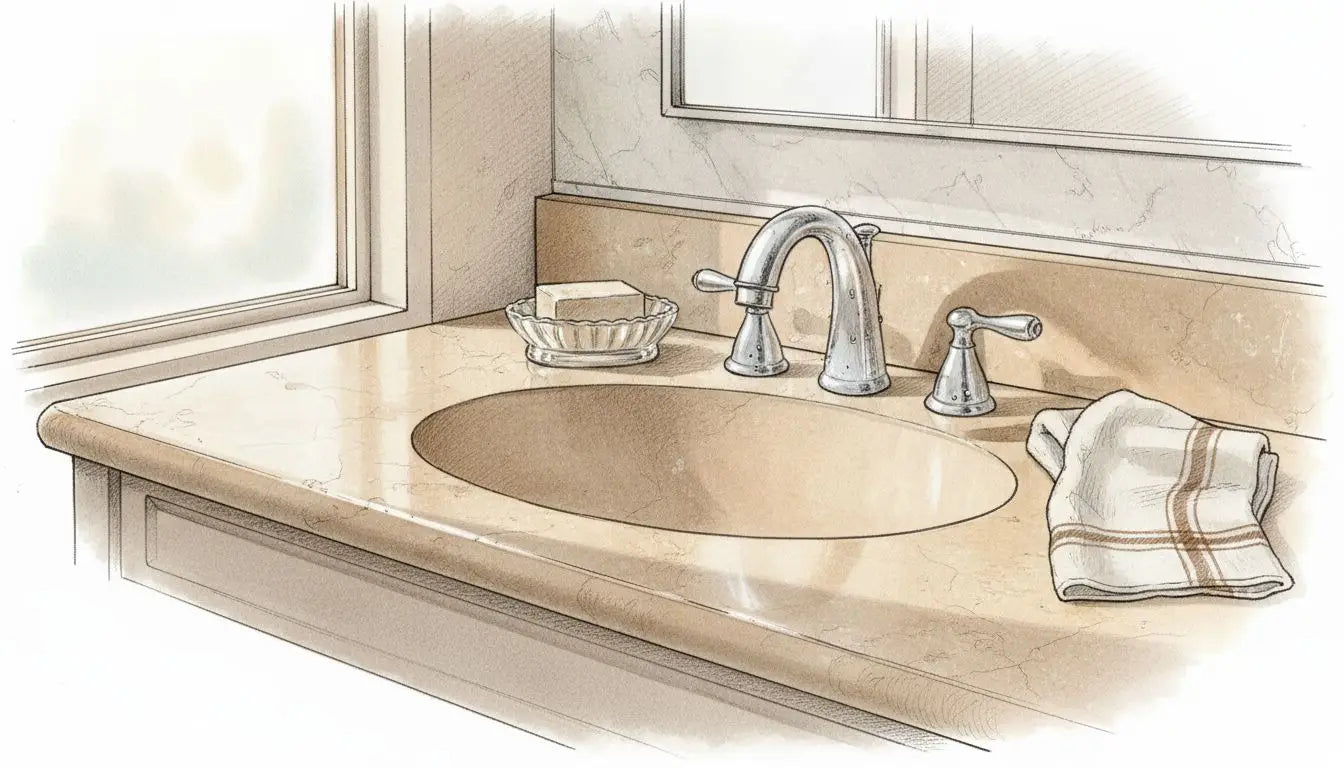
From a financial perspective, proper travertine maintenance represents a strategic investment. Well-preserved natural stone surfaces can significantly contribute to home valuation, with potential increases in property marketability and resale value. Professional sealing serves as a protective measure that preserves both the aesthetic and structural integrity of this premium natural stone.
Pro tip: Schedule professional travertine sealing every 3-5 years to maintain optimal protection and preserve your stone’s pristine appearance.
Common Problems With Unsealed Travertine
Travertine’s inherent porosity makes it exceptionally vulnerable to environmental damage when left unprotected. Stone surface vulnerability creates significant risks for homeowners who neglect proper sealing, exposing their investment to potential long-term degradation.
Critical problems with unsealed travertine include:
- Rapid stain absorption
- Increased surface erosion
- Permanent discoloration
- Moisture retention
- Higher risk of mold growth
- Accelerated structural deterioration
- Reduced mechanical strength
- Compromised aesthetic appeal
The microscopic pores in unsealed travertine act like tiny sponges, eagerly absorbing liquids, oils, and contaminants that can cause permanent damage. Wine, coffee, cooking oils, and even water can penetrate deeply, creating stubborn stains that become nearly impossible to remove completely. These absorption issues not only compromise the stone’s appearance but can also weaken its structural integrity over time.
Environmental factors pose additional threats to unsealed travertine. Moisture penetration can lead to internal stress, potentially causing cracking during freeze-thaw cycles. Mold and mildew can develop within the stone’s porous structure, creating health risks and further degrading the material’s appearance and strength.
Pro tip: Inspect unsealed travertine surfaces quarterly for early signs of staining or moisture damage to prevent long-term deterioration.
Sealing Compared to Other Stone Treatments
Travertine requires specialized treatment that goes beyond traditional stone maintenance approaches. Professional stone protection represents a critical investment in preserving the stone’s natural beauty and structural integrity, offering far more comprehensive protection than alternative treatments.
Key differences between sealing and other stone treatments include:
- Molecular-level protection
- Preservation of natural stone appearance
- Long-term durability
- Comprehensive damage prevention
- Breathable protective barrier
- Customizable protection levels
- Cost-effective maintenance strategy
- Reduced long-term restoration expenses
Polishing and surface coatings merely address aesthetic concerns, while professional sealing penetrates deep into travertine’s microscopic pores. This molecular-level protection creates an invisible shield that resists staining, reduces moisture absorption, and maintains the stone’s inherent visual characteristics. Unlike topical treatments that can create an artificial appearance, sealing works with the stone’s natural structure.
Consider how sealing travertine compares to other stone treatments:
| Treatment Method | Depth of Protection | Effect on Stone Appearance |
|---|---|---|
| Sealing | Deep, pore-level barrier | Preserves natural texture and color |
| Polishing | Surface level only | Increases shine, may alter texture |
| Surface Coating | Thin outer film | Adds gloss, can look artificial |
Environmental factors make sealing particularly crucial for travertine. In high-traffic areas or regions with extreme temperature variations, unsealed stone quickly deteriorates. Professional sealing provides a breathable barrier that allows the stone to maintain its natural properties while protecting against potential damage from moisture, chemicals, and physical wear.
Pro tip: Consult a professional stone specialist to determine the most appropriate sealing technique for your specific travertine installation and environmental conditions.
Protect Your Luxury Travertine with Expert Stone Solutions
Travertine’s natural porosity makes it vulnerable to stains and long-term damage without proper sealing and care. The article highlights how important it is to choose the right sealing method to preserve your stone’s natural elegance and durability. At Surfaces Galore, we understand these challenges and provide premium travertine tiles and mosaics alongside expert advice to help you maintain your investment with confidence.
Whether you are a designer, contractor, or homeowner, our authentic natural stone products are perfect for creating beautiful, lasting spaces. Explore durable options that pair well with professional sealing techniques to prevent discoloration and moisture damage. Learn why professional stone sealing is key and how our high-quality travertine elevates luxury home interiors while standing up to everyday wear.
Ready to elevate your project with travertine that combines timeless beauty and high performance?
Stay ahead of common problems like staining and surface erosion by choosing the right stone now.
Discover the difference that authentic travertine from Surfaces Galore can make. Visit us today to explore our exquisite natural stone collections and get expert guidance on sealing solutions that protect your luxury surfaces for years to come.
Frequently Asked Questions
What is the importance of sealing travertine?
Sealing travertine is crucial as it protects the stone from liquid absorption, staining, surface wear, and enhances its overall appearance, ensuring long-lasting beauty and structural integrity.
How often should I seal my travertine surfaces?
It is recommended to schedule professional sealing of travertine every 3-5 years to maintain optimal protection and preserve the stone’s natural appearance.
What type of sealer is best for travertine?
Penetrating sealers are the most recommended for travertine, as they provide invisible protection while preserving its natural color and texture, preventing stains without altering the stone’s appearance.
What problems can arise from unsealed travertine?
Unsealed travertine is prone to rapid stain absorption, moisture retention, mold growth, and permanent discoloration, which can lead to accelerated deterioration and compromised aesthetic appeal.
Leave a comment