

Marble Maintenance: Protecting Luxury Surfaces for Years

Maintaining marble surfaces often becomes a delicate balancing act for any luxury renovation in Southern California. The beauty of marble lies in its crystalline structure, yet this very feature makes it highly prone to damage from everyday acids and abrasion. For interior designers and contractors, understanding marble’s chemical vulnerabilities is essential to protect the investment and aesthetic value of high-end residential projects. This guide shares practical strategies for preserving the unique warmth and polish that only marble can provide.
Table of Contents
- What Marble Maintenance Involves and Why It Matters
- Different Types of Marble Surfaces Explained
- Essential Steps for Proper Marble Cleaning
- Sealing and Stain Prevention for Lasting Beauty
- Costly Mistakes to Avoid in Marble Care
Key Takeaways
| Point | Details |
|---|---|
| Regular maintenance is essential for marble preservation | Implement cleaning and sealing strategies to protect marble’s aesthetic and structural integrity. |
| Avoid damaging cleaning practices | Use pH-neutral solutions and soft tools to prevent etching and staining. |
| Different marble types require tailored care | Understand the unique properties of each marble type to select appropriate cleaning and sealing methods. |
| Proactive care can prevent costly mistakes | Immediate spill cleanup and adherence to specific care instructions are crucial for avoiding irreversible damage. |
What Marble Maintenance Involves and Why It Matters
Marble is more than just a luxurious surface - it’s a delicate natural material requiring specialized care to preserve its timeless beauty. Marble’s crystalline structure makes it exceptionally vulnerable to damage, requiring a strategic approach to maintenance and protection.
Proper marble maintenance encompasses several critical practices designed to protect this elegant stone from environmental and usage-related deterioration:
- Regular gentle cleaning with pH-neutral solutions
- Immediate spill cleanup to prevent staining
- Avoiding acidic substances that can etch the surface
- Using soft, non-abrasive cleaning tools
- Applying professional-grade stone sealants annually
- Protecting surfaces from direct impacts and scratches
Understanding marble’s inherent characteristics is fundamental to effective maintenance. Marble’s soft composition means it can easily absorb liquids, develop etching, and show wear faster than harder stone surfaces. Chemical vulnerabilities in marble make it particularly susceptible to damage from everyday household substances like wine, citrus juices, and cleaning products with harsh chemicals.
Professional designers recognize that marble maintenance is an ongoing commitment. Regular care not only preserves the stone’s aesthetic appeal but also protects the significant investment these luxurious surfaces represent. By implementing a consistent maintenance strategy, homeowners can ensure their marble surfaces remain stunning for decades.
Pro tip: Always test any new cleaning product on a small, inconspicuous area before applying it to the entire marble surface to prevent potential damage.
Different Types of Marble Surfaces Explained
Marble is a remarkably diverse natural stone with numerous regional and compositional variations that significantly impact its visual appeal and performance. Beyond its aesthetic beauty, each marble type represents a unique geological story, reflecting the complex mineral formations and geographical origins that create its distinctive characteristics.
The most common marble surface types include:
- Carrara Marble: Classic white marble from Italy, known for its soft gray veining
- Calacatta Marble: Bright white background with dramatic, bold veining patterns
- Statuario Marble: Highly prized Italian marble with striking gray veining
- Verde Antique: Deep green marble with intricate natural patterns
- Black and Gold Marble: Luxurious dark background with golden mineral streaks
Geological composition plays a crucial role in determining marble’s unique appearance and performance. Marble’s formation process involves metamorphic transformation, where limestone undergoes intense heat and pressure, creating its distinctive crystalline structure. This process introduces mineral impurities that contribute to the stone’s color variations - from pure whites to deep greens, blacks, and even rare red tones.
Professional designers and architects understand that marble’s diversity extends beyond color. Surface finishes like polished, honed, and leathered treatments dramatically alter the stone’s visual and tactile characteristics, offering versatile design possibilities for different architectural and interior applications.
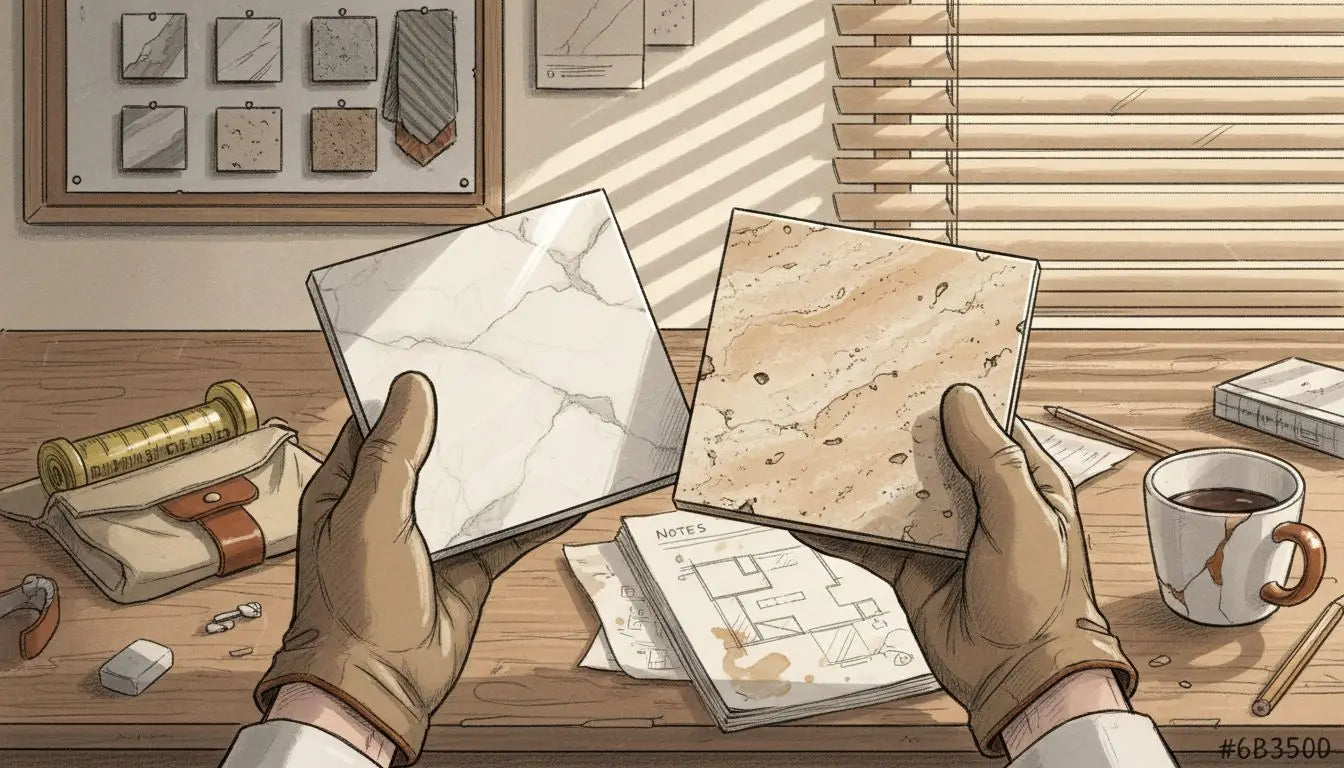
The following comparison highlights how finish choice influences marble’s appearance and performance:
| Finish Type | Visual Effect | Slip Resistance | Maintenance Level |
|---|---|---|---|
| Polished | Glossy, mirror-like | Low (slippery) | Highest, shows etches |
| Honed | Smooth, matte look | Higher than polished | Moderate, hides wear |
| Leathered | Textured, low sheen | Good grip | Easiest to maintain |
Here is a summary comparing popular marble surface types and their notable attributes:
| Marble Type | Origin | Typical Color/Pattern | Best Use Cases |
|---|---|---|---|
| Carrara | Italy | Soft gray veining on white | Bathrooms, flooring |
| Calacatta | Italy | Bold veining, bright white | Countertops, centerpieces |
| Statuario | Italy | Striking gray veins, white | Sculptures, high-end spaces |
| Verde Antique | Various | Rich green with patterns | Decorative accents, tables |
| Black and Gold | Various | Dark base with gold streaks | Luxury bars, feature walls |
Pro tip: When selecting marble, always view multiple slabs to understand the full range of natural variations and choose a piece that perfectly matches your design vision.
Essential Steps for Proper Marble Cleaning
Maintaining the pristine beauty of marble requires a nuanced approach to cleaning that goes beyond typical surface care. Proper marble cleaning involves strategic assessment of the surface condition, soil type, and appropriate cleaning techniques that preserve the stone’s delicate structure.
The essential steps for effective marble cleaning include:
- Identifying the specific type of marble surface
- Selecting pH-neutral cleaning solutions
- Using soft, non-abrasive cleaning tools
- Avoiding acidic or harsh chemical cleaners
- Wiping surfaces immediately after spills
- Drying surfaces thoroughly after cleaning
Stain removal requires a particularly gentle approach. Specialized marble poultice techniques can effectively extract deep-set stains without damaging the stone’s surface. These methods involve creating a paste that draws out stubborn discolorations by absorbing the staining material without aggressive scrubbing.
Professional marble care demands more than simple surface cleaning. Each cleaning session should be approached with precision, understanding that marble’s porous nature makes it vulnerable to permanent damage from incorrect cleaning methods. Designers and homeowners must invest time in learning proper techniques that protect their marble’s long-term aesthetic and structural integrity.
Pro tip: Always test any new cleaning solution on a small, inconspicuous area before applying it to the entire marble surface to prevent potential discoloration or damage.
Sealing and Stain Prevention for Lasting Beauty
Marble sealing represents a critical protective strategy that goes far beyond simple surface treatment. Impregnating sealers form a critical barrier against potential staining and moisture penetration, preserving the stone’s inherent beauty and structural integrity for years.
The key elements of effective marble sealing include:
- Understanding marble’s inherent porosity
- Selecting high-quality penetrating sealers
- Applying sealers with precise, even coverage
- Reapplying sealers at recommended intervals
- Testing sealers for compatibility with specific marble types
- Ensuring proper surface preparation before sealing
Stone protection requires a nuanced approach that considers multiple factors. Professional stone preservation techniques emphasize that sealing is not a one-time process but an ongoing maintenance strategy. Different marble surfaces demand unique sealing approaches based on their exposure, usage, and environmental conditions.
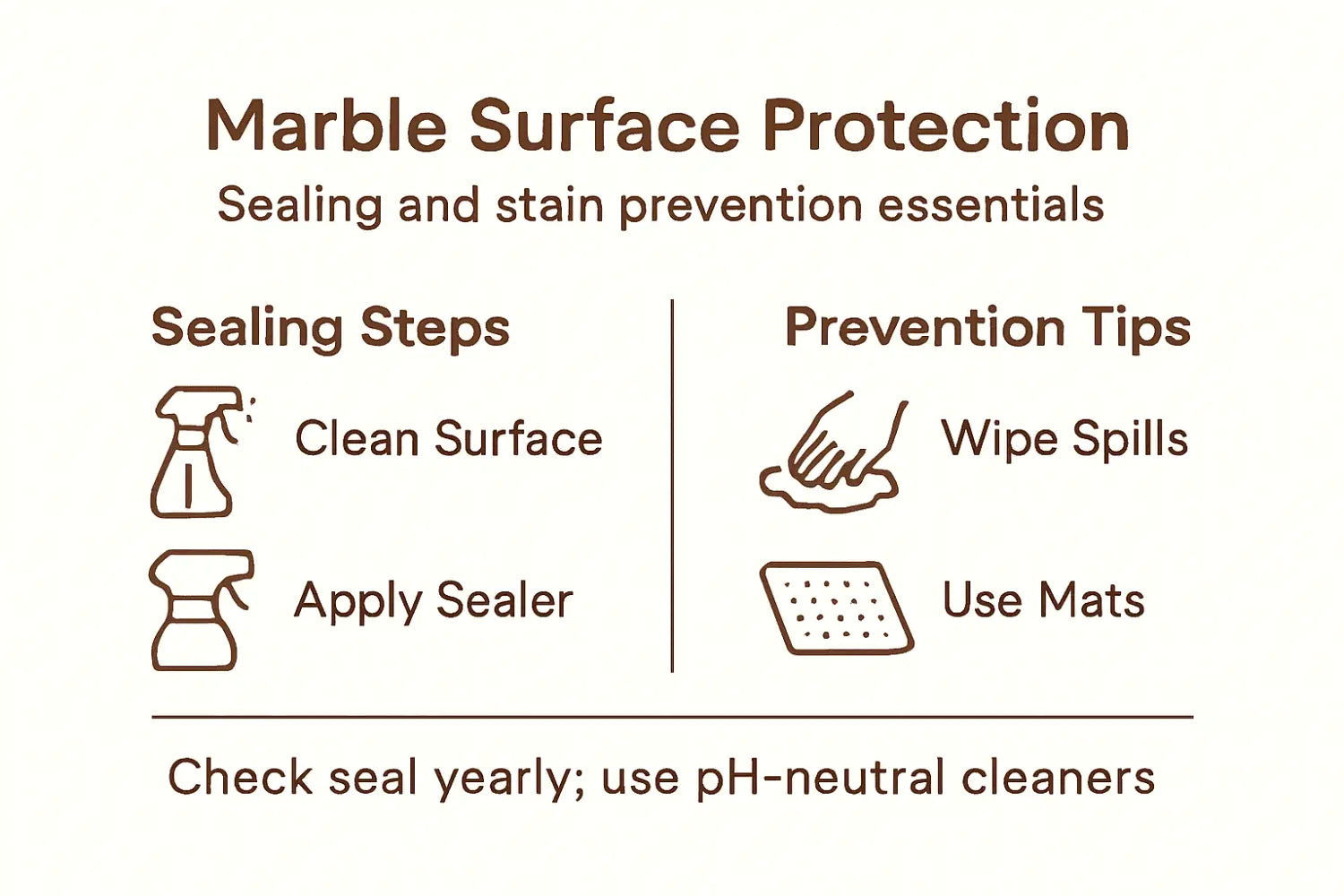
Professional designers recognize that sealing marble is an investment in long-term aesthetic and functional preservation. The right sealing strategy can dramatically extend a marble surface’s lifespan, protecting it from potential stains, moisture damage, and everyday wear while maintaining its luxurious appearance.
Pro tip: Conduct a water droplet test on your sealed marble surface every six months to verify the ongoing effectiveness of your protective sealant.
Costly Mistakes to Avoid in Marble Care
Marble surfaces demand meticulous care, and understanding potential vulnerabilities can prevent expensive and irreversible damage. Professional designers recognize that seemingly minor mistakes can compromise the stone’s structural integrity and aesthetic appeal.
The most critical marble maintenance mistakes include:
- Using acidic cleaning solutions
- Applying abrasive scrubbing tools
- Neglecting immediate spill cleanup
- Skipping regular sealing processes
- Ignoring manufacturer-specific care instructions
- Using generic cleaning products not designed for marble
- Allowing stains to set without prompt treatment
Surface protection requires a proactive approach. Occupational safety considerations highlight that improper handling and maintenance can lead to both aesthetic degradation and potential health risks during fabrication and long-term care. Understanding these nuanced challenges is crucial for preserving marble’s luxurious appearance and structural integrity.
Professional maintenance involves recognizing that marble is a delicate natural material requiring specialized, tailored care. Each marble surface has unique characteristics that demand individualized attention, making generic maintenance approaches potentially destructive and costly.
Pro tip: Always keep a marble-specific cleaning kit with pH-neutral solutions and soft microfiber cloths to address potential surface issues immediately.
Protect Your Marble Investment with Premium Natural Stone from Surfaces Galore
Marble maintenance demands precision and ongoing care to preserve its luxurious appearance and durability. The challenges of protecting delicate surfaces from stains, etching, and wear require not just proper cleaning and sealing but also selecting the right marble type that fits your lifestyle and design vision. At Surfaces Galore, we understand the importance of choosing high-quality natural stone that stands up to everyday use while maintaining timeless beauty.

Explore our extensive collection of authentic marble tiles, mosaics, and decorative pieces designed for architects, designers, contractors, and homeowners across the United States. We offer premium natural stone with varied finishes and unique colors that allow you to create stunning, lasting spaces with confidence. Visit Surfaces Galore today to find the perfect marble that complements your project and supports proper maintenance. Don’t wait to elevate your space with elegance that lasts—discover your ideal stone now at Surfaces Galore and take the first step toward beautiful, enduring surfaces.
Frequently Asked Questions
What are the essential steps for cleaning marble surfaces?
To clean marble surfaces effectively, identify the type of marble, use pH-neutral cleaning solutions, utilize soft, non-abrasive cleaning tools, avoid acidic or harsh chemical cleaners, wipe surfaces immediately after spills, and dry thoroughly after washing.
How often should I seal my marble surfaces?
Marble surfaces should typically be sealed annually, but the frequency may vary based on usage and environmental conditions. Regular tests, like a water droplet test, can help determine if resealing is necessary.
What cleaning products are safe for marble?
Only use pH-neutral cleaning solutions specifically designed for marble. Avoid any cleaning products that contain acidic ingredients as they can etch and damage the marble surface.
What are common mistakes to avoid in marble maintenance?
Common mistakes include using acidic cleaning solutions, applying abrasive tools, neglecting immediate spill cleanup, skipping regular sealing, ignoring manufacturer-maintenance instructions, and allowing stains to set without treatment.
Recommended
- Carrera Marble Elegance for Your Home
- Natural Stone Selection and Installation Tips
- Transform Your Bathroom with a Luxurious Marble Shower
- Luxurious Marble Showers: Design Options, Tiles, Mosaics &…
- Alcantara tisztítása és ápolása: A teljes útmutató luxus kárpitokhoz - Kárpittisztítás Budapesten és országosan | Do Pure Cleaning
Leave a comment