
Choosing the right material for your home


Choosing the right material for your home can feel overwhelming with so many options available. Travertine mosaic tile is a classic choice that adds natural texture and warmth to any room without looking outdated. In this guide, we will look at fifteen practical ways to use these tiles to improve your kitchen, bathroom, or entryway. You will learn how to pick the best patterns and finishes for your space.
1. Classic Basketweave Patterns in Small Bathrooms
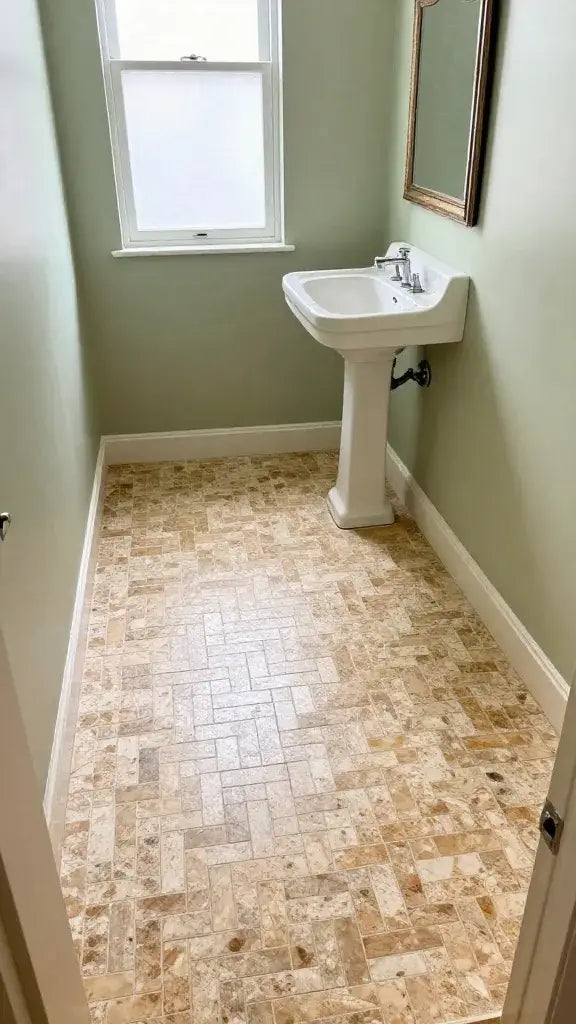
Small bathrooms often feel cramped because the floor space is so limited. A basketweave pattern solves this by creating a sense of movement that draws the eye across the room rather than focusing on the narrow walls.
Travertine brings a soft, organic texture to this traditional layout. The natural pits and color variations in the stone prevent the repetitive pattern from looking too rigid or sterile. It feels warm underfoot and adds a high end touch to a guest bath or powder room.
To get the best results, use a contrasting dot in the center of the weave. A dark walnut travertine or a small piece of marble creates a focal point that makes the floor pop. Stick to a light cream or beige base stone to keep the room feeling bright and open.
2. Herringbone Backsplashes for Modern Kitchens
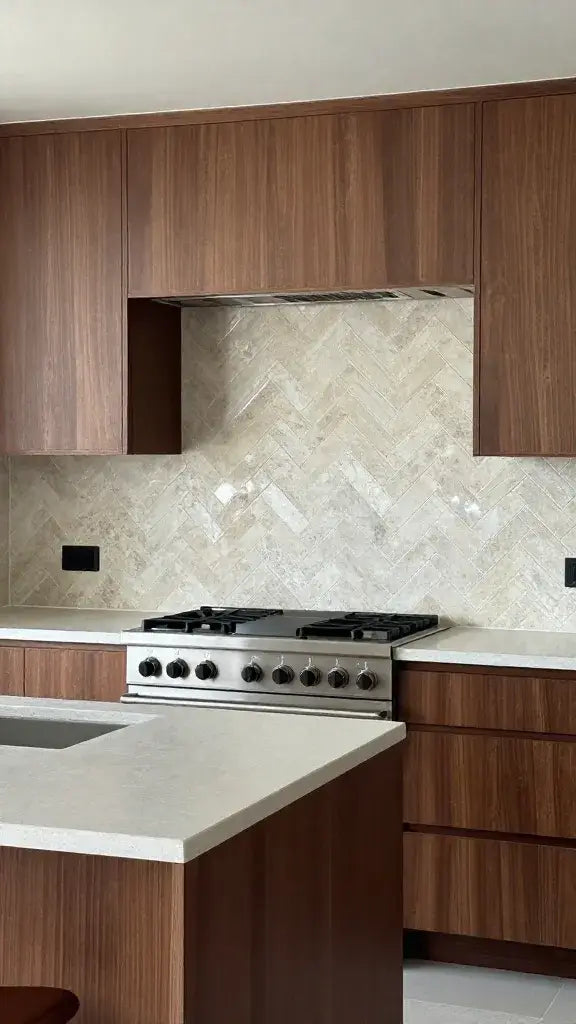
| Tile Orientation | Visual Effect | Vibe |
|---|---|---|
| Standard Brick Joint | Balanced and grounded | Traditional farmhouse |
| 90-Degree Herringbone | Movement and height | Modern organic |
Imagine walking into a kitchen where the soft, creamy tones of ivory travertine are set in a sharp "V" pattern behind a professional gas range. The natural pits and textures of the stone contrast beautifully against sleek, matte black hardware and flat-panel cabinets.
This layout works because it breaks up the predictable lines of a standard kitchen. While a basic horizontal brick pattern feels safe, the herringbone angle draws the eye upward and makes your ceilings feel significantly taller.
You should use a pre-mixed light grout to keep the focus on the stone's unique color variations rather than the grid lines. Since travertine is porous, applying a high-quality impregnating sealer before grouting will prevent the dark pigments from staining the tile face.
3. Tumbled Stone Textures for Walk-in Showers
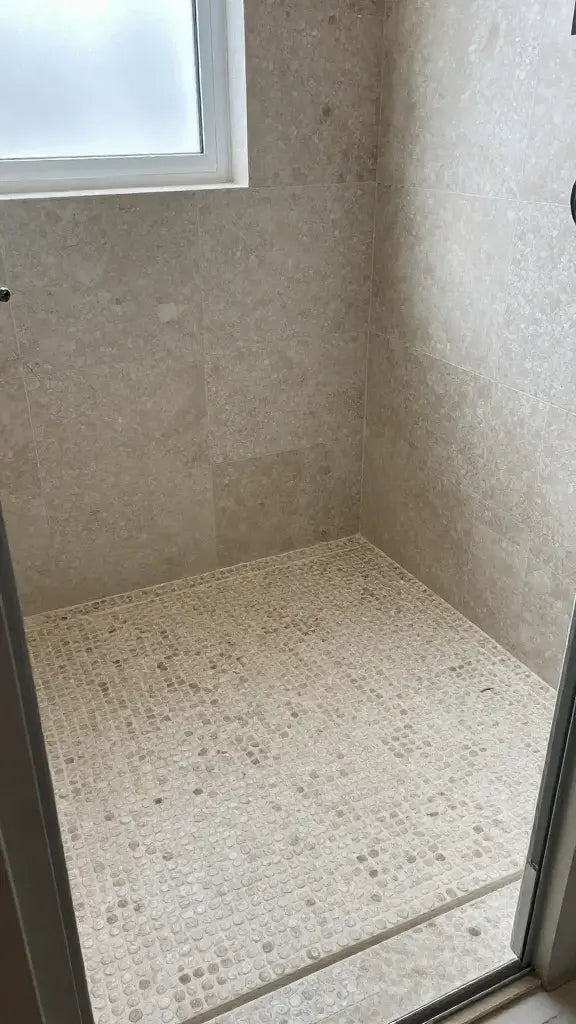
Tumbled travertine is the smartest choice you can make for a shower floor because it naturally prevents slips. The rounded edges and pitted surface create a high-traction grip that feels soft under your feet. Unlike polished slabs, these small mosaic pieces offer plenty of grout lines for extra stability.
The texture also hides water spots and soap scum much better than a flat, shiny surface. You won't spend your weekends scrubbing every tiny mineral deposit from the stone. The earthy, matte finish gives your bathroom a relaxed, spa-like feel that stays looking clean for weeks.
Pair these tiles with a linear drain to keep the floor slope consistent and comfortable. The organic variations in the stone hide the inevitable wear and tear of daily use. It's a practical way to get a high-end look without worrying about safety on wet surfaces.
4. Natural Stone Accents in Recessed Wall Niches
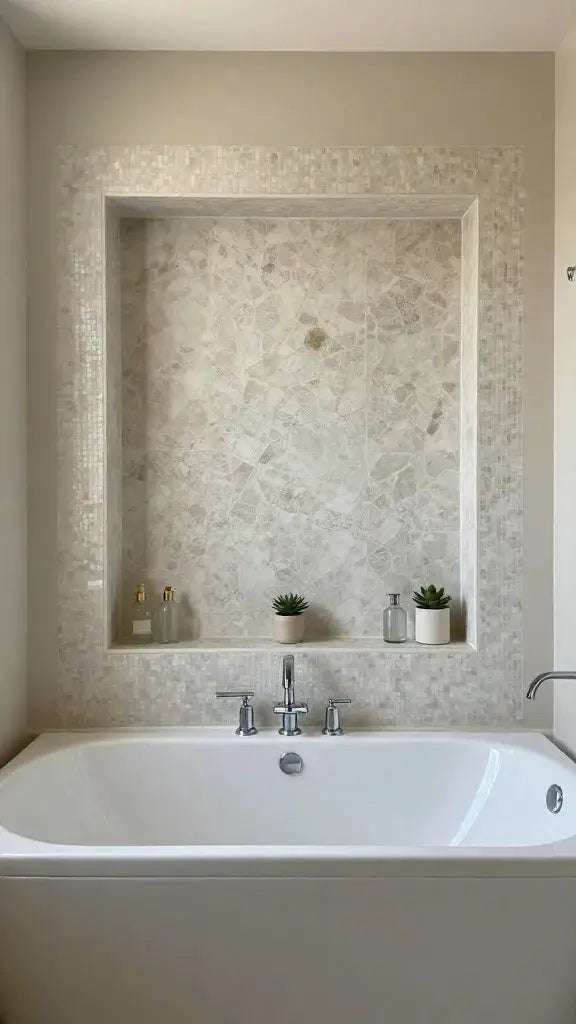
Tucking travertine mosaic tile into a recessed wall niche turns a basic storage spot into a focal point. It works especially well in showers or entryways where you want a textured backdrop for your soap bottles or decor pieces.
The small scale of the mosaics means you won't have to deal with awkward, bulky cuts in such a tight space. You can wrap the tile around the back of the shelf to create a sense of depth that plain painted drywall or standard large tiles just can't match.
- Choose a herringbone pattern to add a sense of movement inside a small shower cubby.
- Use a contrasting grout color to make the individual stones pop against the surrounding wall.
- Line the inner edges with a simple metal trim to hide the raw tile ends for a clean look.
- Mix tumbled and polished finishes within the niche to catch the light from different angles.
This small detail makes the whole room feel more intentional and custom without requiring a massive budget for materials.
5. Neutral Color Palettes for Entryway Floors
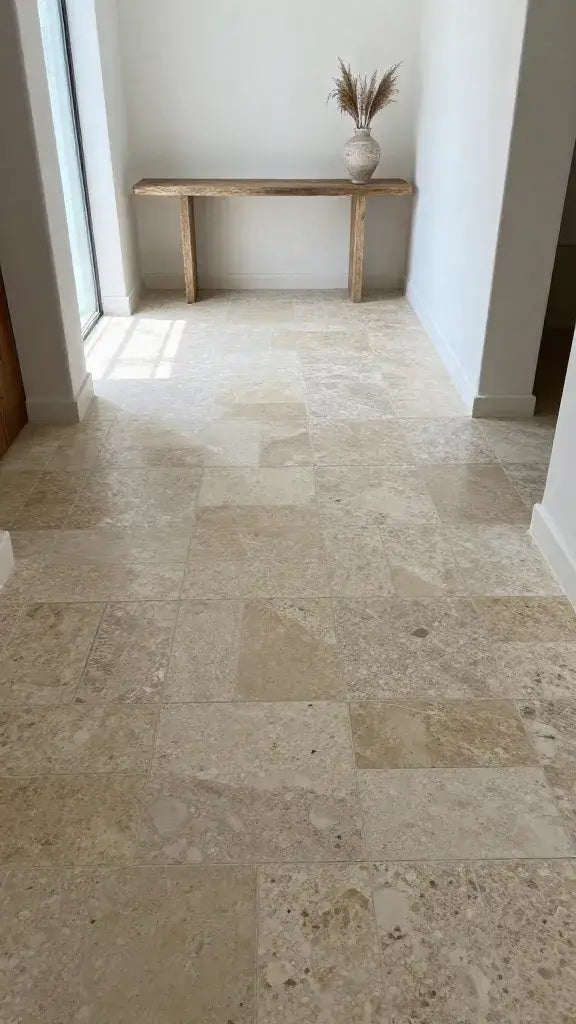
Most people worry that a neutral floor will look boring or flat when guests first walk in. That isn't the case with travertine mosaic tile because the natural pits and color shifts do all the work for you.
I usually recommend sticking to oatmeal, silver, or sandy beige tones for an entryway. These shades are incredibly forgiving when it comes to the inevitable dirt and salt people track inside from the driveway.
You can mix different finishes like tumbled and honed tiles to create a subtle texture without needing bright colors. A herringbone pattern in a soft cream looks expensive and grounded, even in a small space.
The beauty of these muted tones is how they bridge the gap between your outdoor porch and the rest of your home. It creates a calm transition that feels intentional rather than cold. Plus, a light neutral palette makes a narrow hallway feel twice as wide as it actually is.
6. Honed Finishes for a Matte Look
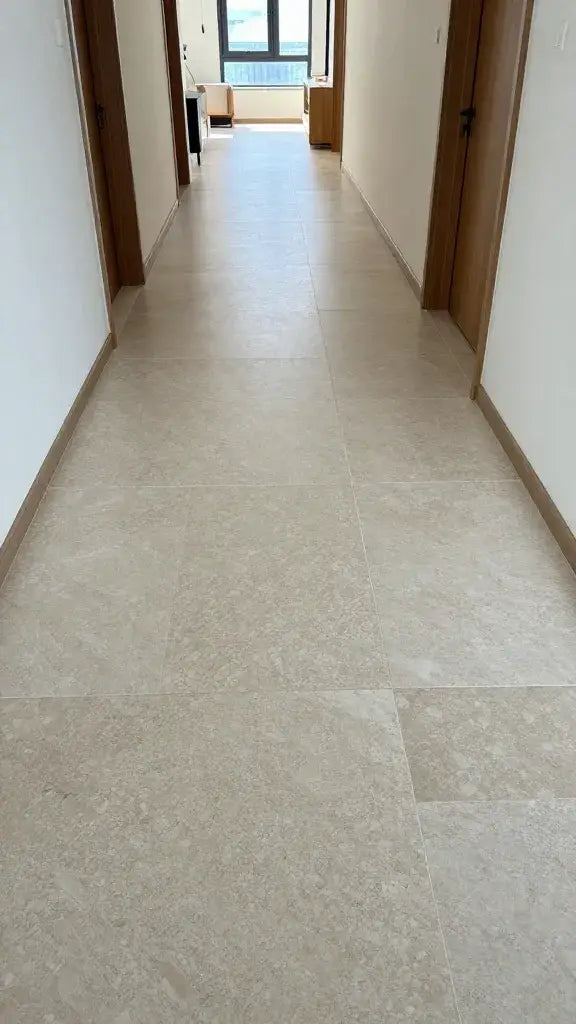
A honed finish is basically a stone surface that has been ground down to be perfectly flat and smooth without that mirror like shine. It gives the travertine a velvety texture that feels incredible under your feet, especially in a walk in shower or a high traffic hallway.
The real beauty of this matte look is how it handles light. Instead of bouncing harsh glares off the floor, it absorbs the sun to create a soft, warm glow that makes a room feel much more inviting. It also does a fantastic job of hiding those annoying water spots and dust bunnies that show up instantly on polished surfaces.
- Slip resistance is naturally higher because the matte surface provides better grip for bare feet in wet areas.
- The color depth stays consistent across the entire tile since there are no reflections to distort the natural beige and cream tones.
- Daily maintenance is easier because small scratches from sand or shoes blend right into the flat finish.
- The organic vibe of the stone feels more authentic and less like a sterile hotel lobby.
If you have kids or pets, this is usually the smartest way to go. You get all the luxury of natural stone without needing to buff out scuffs every single weekend.
7. Creative Borders Using Contrasting Stone Colors
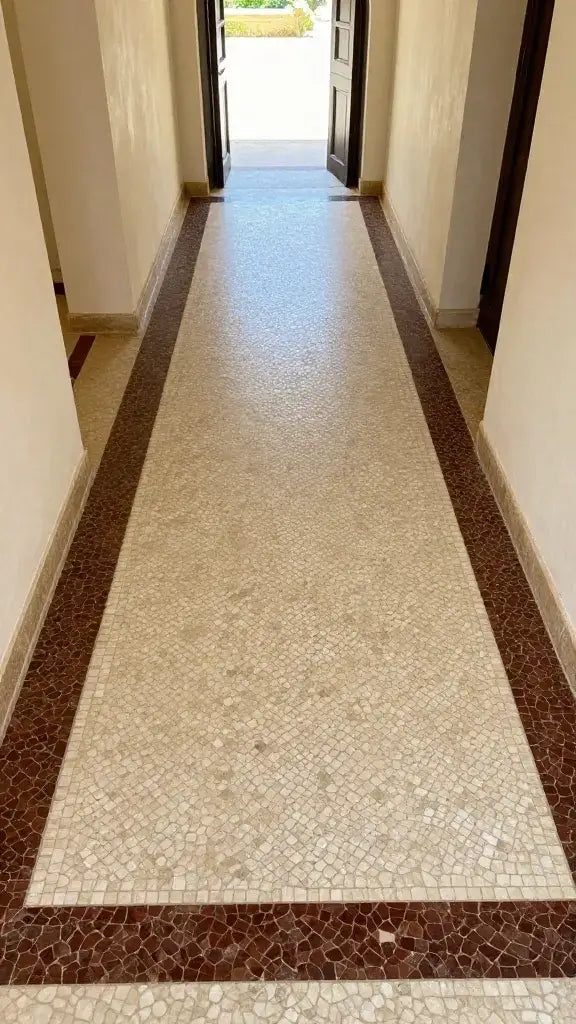
You can go for a subtle look by using a silver travertine border against a white field tile. This creates a soft transition that defines the room without cutting the space in half visually. It works well if you want the floor to feel like one continuous surface with just a bit of extra texture around the edges.
The other option is to lean into high contrast by pairing a dark noce travertine border with a light cream base. This creates a bold frame that acts like an architectural rug. It's a great way to ground a large bathroom or entryway that might otherwise feel a bit too open or empty.
I usually recommend the high contrast approach for most homes. It makes the natural variations in the stone pop and gives the room a custom, high end finish. Just make sure the grout color matches the darker stone so the border looks like a solid, intentional line.
8. Vertical Stacking to Make Ceilings Feel Higher
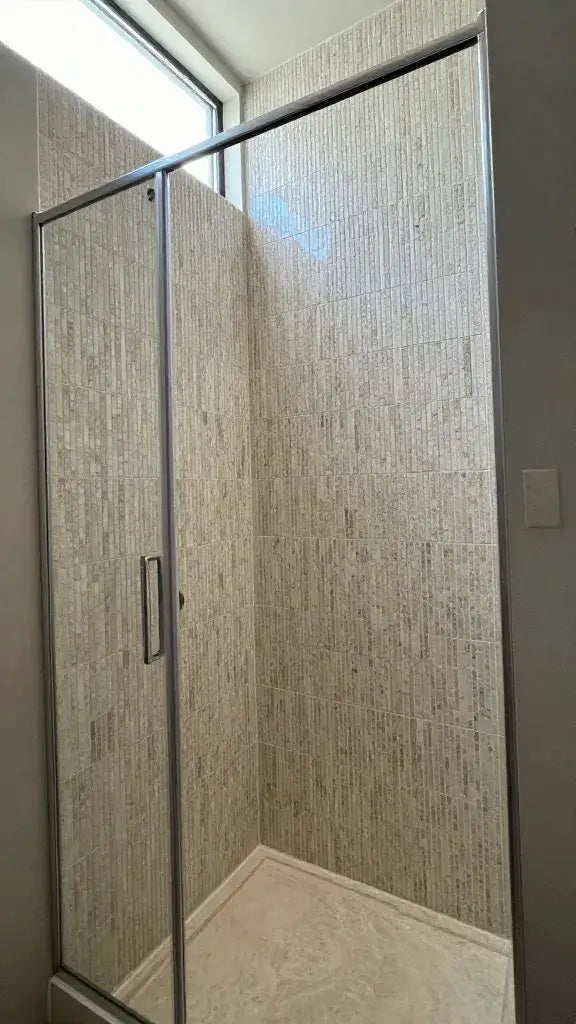
Most standard bathrooms feel cramped because the ceilings sit lower than we'd like. You can actually trick your eyes into seeing more height by changing the direction of your travertine mosaic strips.
Instead of laying rectangular tiles horizontally, turn them on their side so the long edges point toward the ceiling. This creates vertical lines that draw the gaze upward and make a small shower stall feel much more airy and open.
The natural color variations in travertine work perfectly for this because the subtle shifts in tan and cream create a soft pinstripe effect. It works best if you run the tile all the way from the floor to the very top of the wall without any breaks. This continuous path of stone forces the room to feel taller than it actually is.
9. Rustic Fireplace Surrounds with Mini Brick Tiles
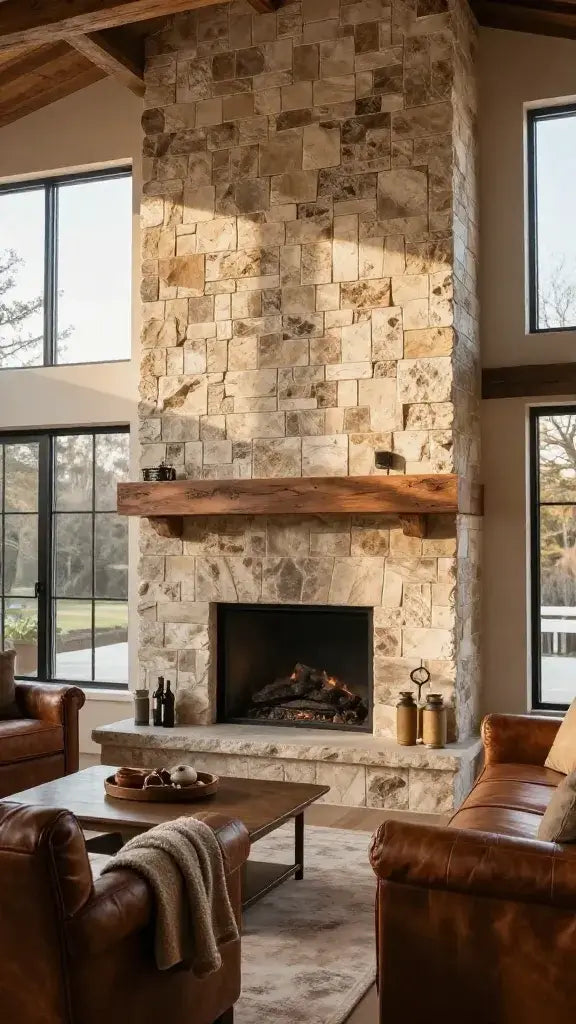
Imagine walking into a cabin where the fireplace is covered in tiny, weathered stones that look like they've been there for a century. Using mini brick travertine in a running bond pattern creates that exact lived in feel without the weight of full sized masonry.
| Feature | Travertine Mini Bricks | Standard Ceramic Tile |
|---|---|---|
| Texture | Pitted and naturally porous | Smooth and consistent |
| Edge Detail | Tumbled and softened | Sharp or rectified |
| Coloring | Earth tones and variations | Uniform and manufactured |
The key to making this work is choosing a tumbled finish for the mosaic sheets. These rough edges catch the light from the flames and hide soot or dust much better than a polished surface.
I usually recommend using a light tan grout that matches the stone to keep the focus on the texture. This setup makes a small living room feel grounded and cozy, especially if you pair it with a thick reclaimed wood mantel.
10. Slip-Resistant Surfaces for Wet Room Areas
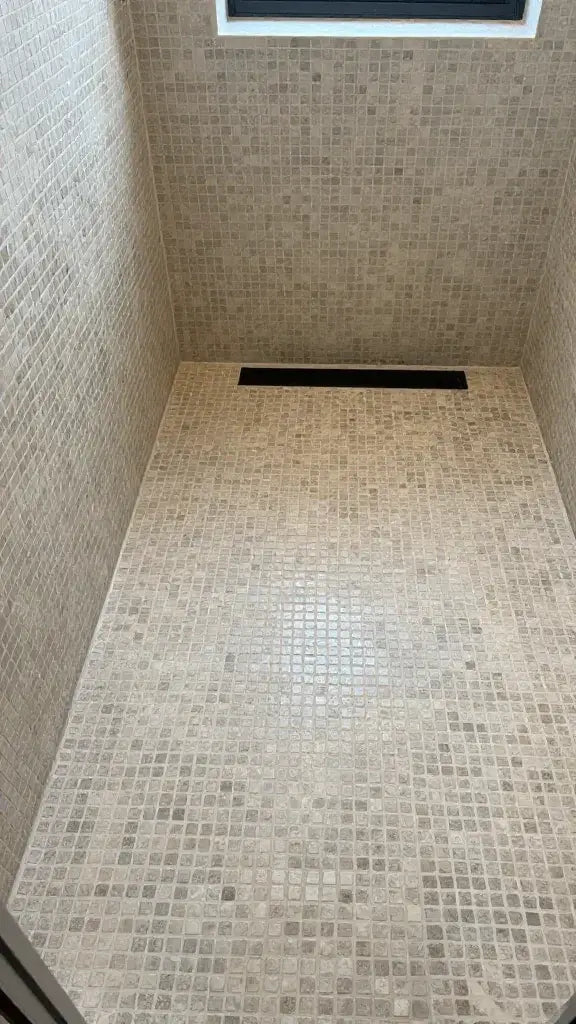
Small format travertine mosaics are the smartest choice for shower floors because the grout lines act like built-in treads. While a large slab of polished stone becomes a skating rink when soapy water hits it, these tiny tiles provide constant points of friction for your feet.
You should specifically look for tumbled finish travertine rather than honed or polished versions. The slightly roughened, pitted texture of tumbled stone grips your skin even in the middle of a heavy rinse.
This natural texture makes your bathroom significantly safer without forcing you to buy ugly rubber mats. The combination of the stone's organic porosity and the dense grid of grout creates a surface that feels secure underfoot.
It's a practical way to handle high-moisture zones like walk-in showers or drying areas near the tub. You get the high-end look of natural stone while keeping the space functional for daily use.
11. Mixing Metal Inlays with Travertine Pieces
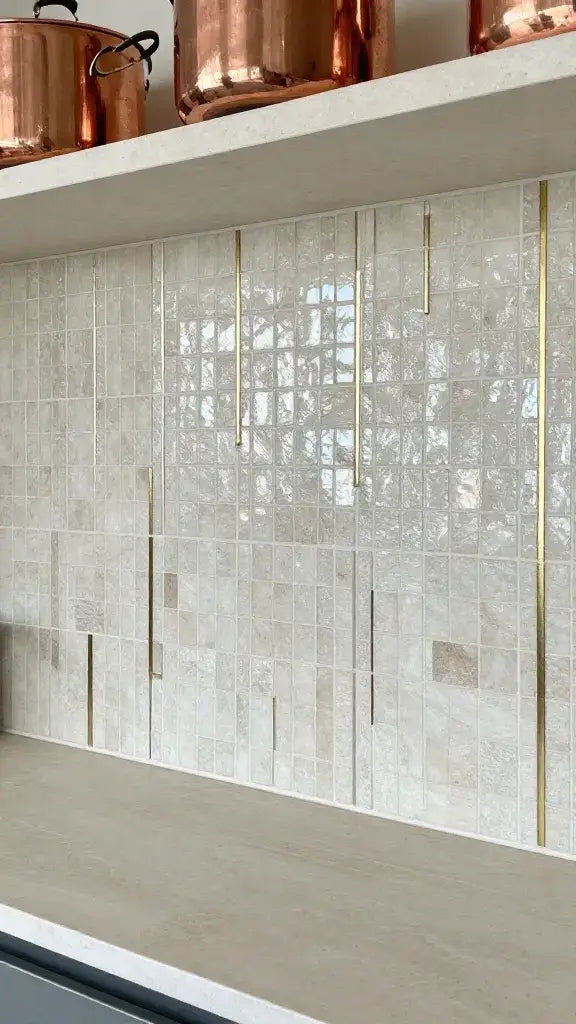
Try sliding thin brass or copper strips between your travertine mosaic tiles to break up the earthy monochrome look. The pitted, matte texture of the stone acts as a perfect foil for the polished sheen of the metal inserts.
This trick works best in kitchen backsplashes where the metal can catch the under-cabinet lighting. You don't need much to make an impact, just a few well-placed accents can make the whole wall look custom and high-end.
- Use warm metals like antique bronze to complement the beige undertones in the stone.
- Ensure your metal strips are the same thickness as the tile so the surface stays flush for cleaning.
- Apply a sealer to the travertine before installing the metal to prevent grout haze from sticking to the stone's pores.
The contrast between the ancient feel of the stone and the sharp lines of the metal creates a balanced, modern aesthetic. It's a simple way to add some visual weight without overcomplicating your color palette.
12. Chevron Layouts for a High-End Feel
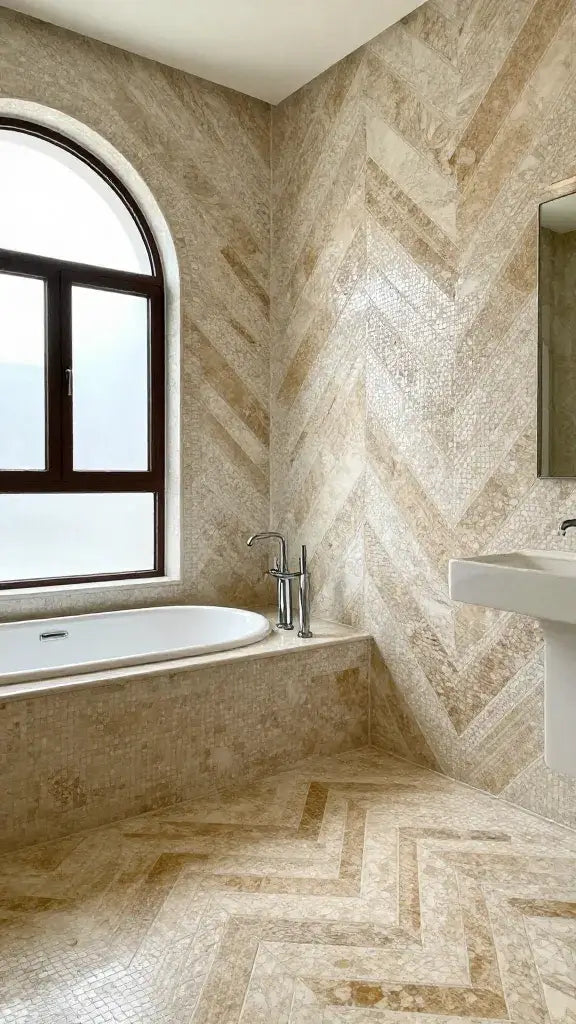
If you want your bathroom to look like a boutique hotel, you should definitely consider a chevron pattern. Most people default to standard brick joints, but the V-shape of a chevron creates a sense of movement that feels expensive.
Travertine is perfect for this because the natural color variations highlight the sharp angles. When those cream and tan tones meet at a point, it draws the eye upward and makes a small shower stall feel much taller than it actually is.
I usually recommend using a honed finish for this layout to keep things from looking too busy. A high gloss might reflect too much light and distract from the precision of the points. Stick with a grout color that matches the tile closely to keep the focus on the texture.
It takes a bit more time for the installer to get those 45 degree cuts exactly right. However, the result is a sophisticated look that mimics high-end parquet flooring. It is a simple way to make a basic material look like a custom architectural feature.
13. Earth Tones for Outdoor Kitchen Backsplashes
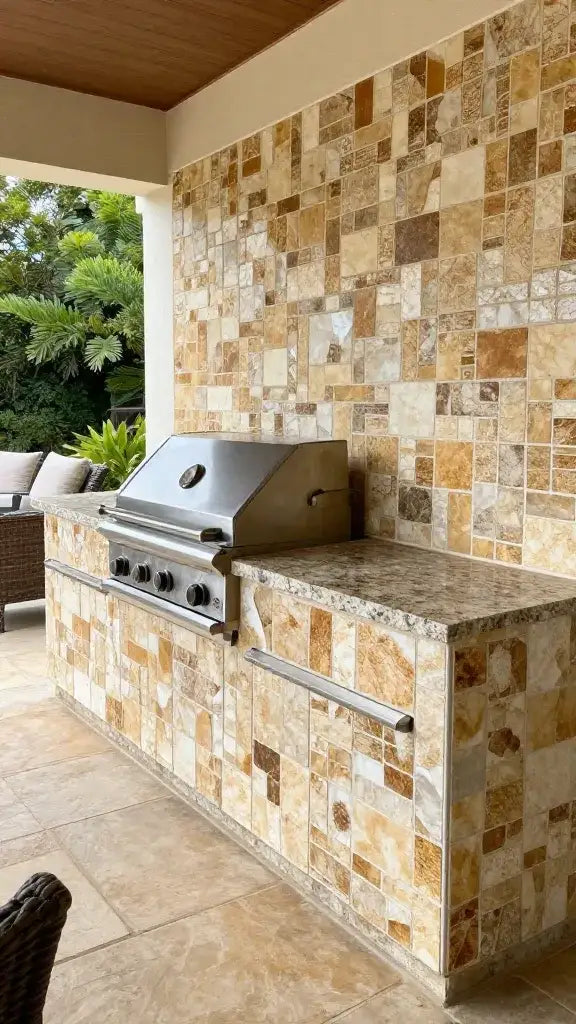
Travertine tile is a natural choice for an outdoor kitchen because it literally comes from the ground. The raw, porous texture of the stone mimics the look of high end resorts without feeling too stiff or artificial.
When you use earthy mosaics behind a grill or prep station, you create a backdrop that hides minor splatters and dust. The tan, cream, and walnut shades blend into the surrounding landscape, making the kitchen feel like a permanent part of the backyard.
- Neutral camouflage helps hide grease spots and hard water stains that show up instantly on glass or ceramic tiles.
- Tumbled finishes provide a matte surface that won't reflect the harsh midday sun into your eyes while you're cooking.
- Varied color palettes allow you to pull together different wood deck stains and stone pavers into one cohesive look.
- Small tile sizes in mosaic patterns handle the expansion and contraction of outdoor temperature shifts better than large slabs.
Focus on unfilled travertine if you want that rugged, Mediterranean vibe. Just make sure to apply a high quality sealer to keep the grout lines from absorbing too much charcoal smoke or red wine spills.
14. Hexagon Mosaics for a Geometric Twist
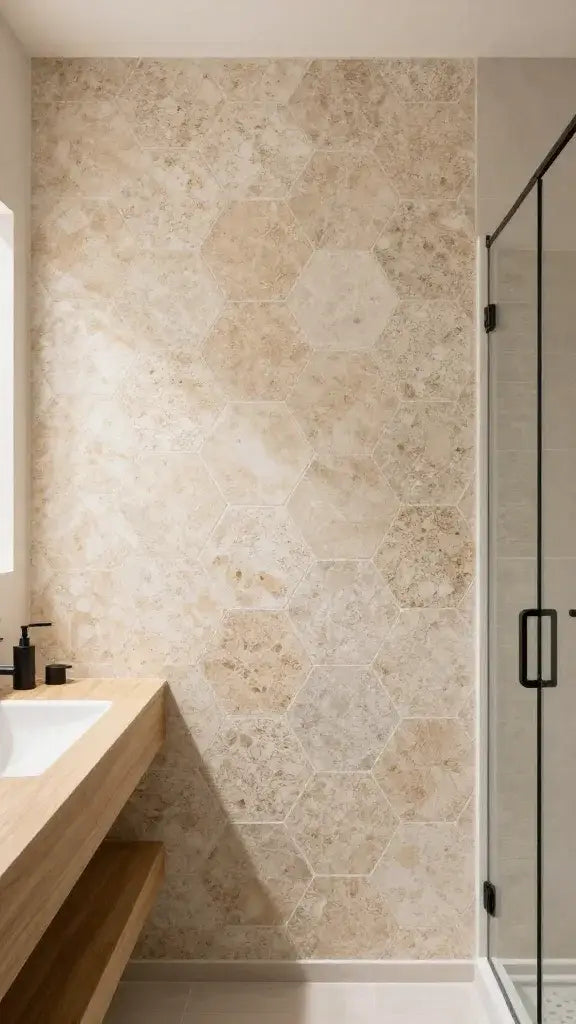
You can go with large honeycomb patterns to create a bold feature wall, or stick to tiny one inch hexagons for a traditional shower floor. The larger tiles feel modern and clean, but they sometimes hide the natural color shifts that make travertine special. Smaller mosaics show off every tan and cream variation, though they require significantly more grout maintenance over time.
I usually suggest picking a medium two inch size in a tumbled finish. This middle ground provides enough grip for wet feet without looking too busy in a small bathroom. It bridges the gap between old world stone and modern geometry perfectly.
Try using a grout color that sits just one shade lighter than the stone itself. This softens the sharp points of the hexagon shape and makes the floor feel like one cohesive texture. It avoids that harsh grid look that can sometimes make geometric patterns feel too aggressive in a relaxing space.
15. Seamless Transitions Between Different Tile Sizes
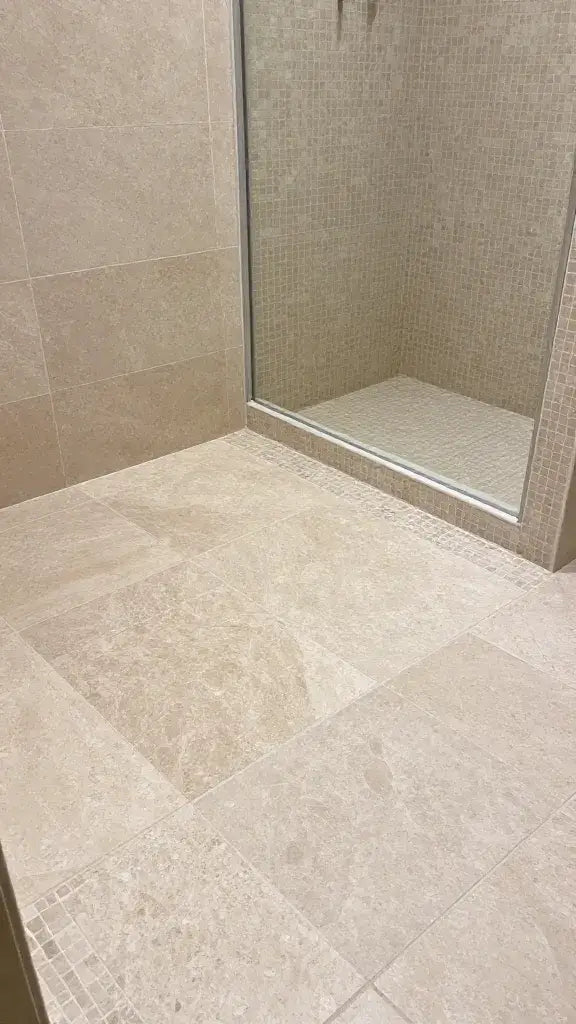
Nothing ruins a high end bathroom faster than a clumsy transition where the floor meets the wall. When you switch from large format 12x24 travertine slabs to small mosaics, the grout lines often clash and create a visual mess. Travertine mosaic tile acts as a perfect bridge because the natural color variations hide these shifts in scale.
You can use a mosaic border to separate a large tile floor from a different pattern on the shower walls. This creates a dedicated zone that resets the eye, so you don't have to worry about lining up every single grout joint perfectly. It's a clever way to handle awkward corners or sloped shower floors where full size tiles would require ugly diagonal cuts.
Try matching the honed finish of your large tiles with a tumbled mosaic to add subtle texture without changing the color palette. This keeps the room feeling cohesive while solving the technical headache of joining different thicknesses. It makes the entire space look like it was custom built by a master stone mason rather than pieced together from leftover boxes.
Wrapping Up
Travertine mosaic tile is a practical choice that adds a lot of character to any room. These fifteen ideas show how easy it is to mix classic stone with modern layouts. You now have the right tools to start your next renovation project with confidence. Pick your favorite style and see how much better your home looks with these simple changes.

Leave a comment