
Learn 15 practical tips and ideas for using stone mosaic tile effectively in your design projects.


Choosing the right stone mosaic tile can completely change the look of your kitchen or bathroom. It adds texture and personality to spaces that often feel cold or flat. These fifteen design insights will help you understand how to pick patterns and finishes that actually work in your home. Use these practical tips to make sure your next renovation project looks professional and stays stylish for years.
1. Natural Texture for Bathroom Walls
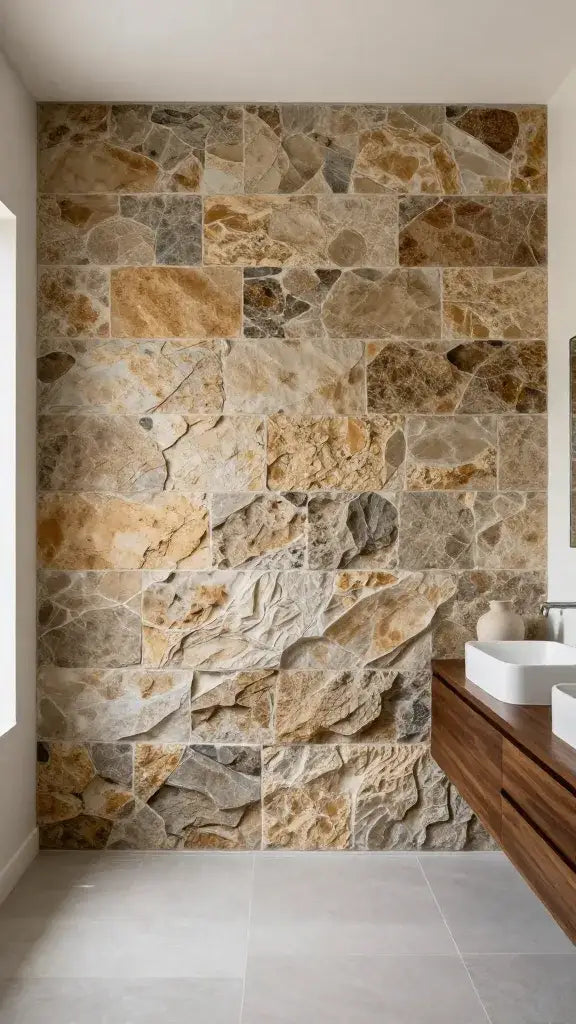
Bathrooms often feel cold and sterile because of all the smooth porcelain and glass. Bringing in natural texture through stone mosaic tiles fixes this by adding a tactile, organic layer that softens the space. It makes the room feel less like a clinical box and more like a private retreat.
Pebble mosaics or split-face travertine are excellent choices for a feature wall behind the vanity or inside a walk-in shower. These tiles have irregular surfaces that catch the light differently throughout the day. The uneven edges create shadows that give the wall depth you just can't get with flat ceramic tiles.
For the best results, try using a grout color that closely matches the stone to keep the focus on the physical relief and grain. This approach works especially well in small powder rooms where you want to make a big impact without cluttering the floor. It feels amazing under your hands and looks even better when paired with warm LED lighting.
2. Pebble Floors for Home Spas
| Feature | Flat Pebble Tile | Sliced Pebble Tile |
|---|---|---|
| Texture | Natural, rounded bumps | Smooth, leveled surface |
| Underfoot Feel | Massaging and tactile | Uniform and stable |
| Drainage | Requires more grout slope | Water flows quickly |
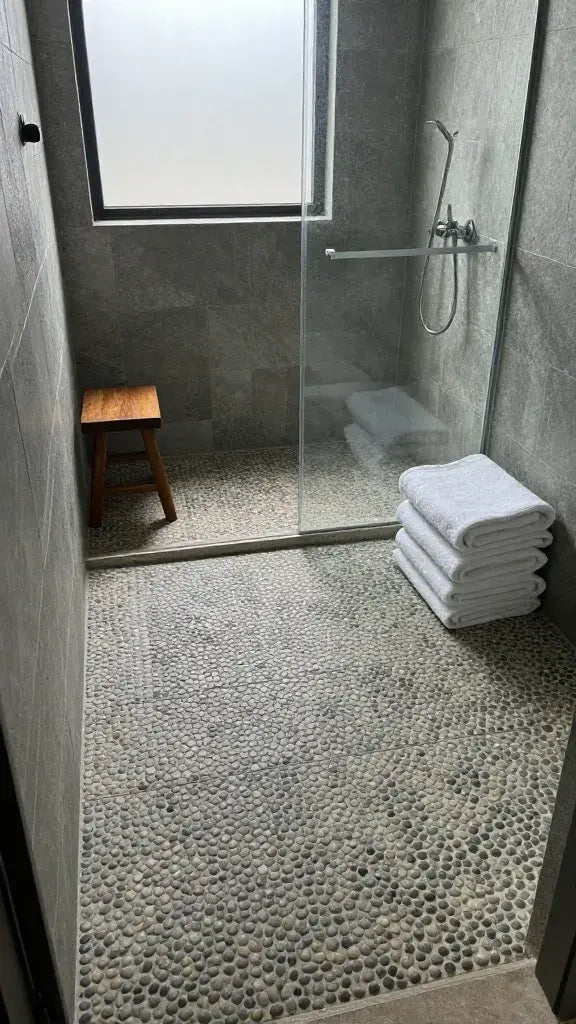
Imagine stepping into your shower after a long day and feeling the cool, rounded edges of river stones against your arches. Using natural pebble mosaics on a shower floor mimics the sensation of a mountain stream, providing a built in foot massage every morning.
For the best results, choose stones with a consistent height so you don't trip or stub a toe. You'll want to use a high quality sealer to keep the stones looking wet and vibrant while preventing soap scum from sticking to the grout lines.
Tan and grey stones create a classic coastal vibe, but black basalt pebbles offer a modern, high end look that feels very private. These tiles are also great for sloped floors because the small stones easily follow the curve toward the drain without needing awkward cuts.
3. Kitchen Backsplashes with Marble Details
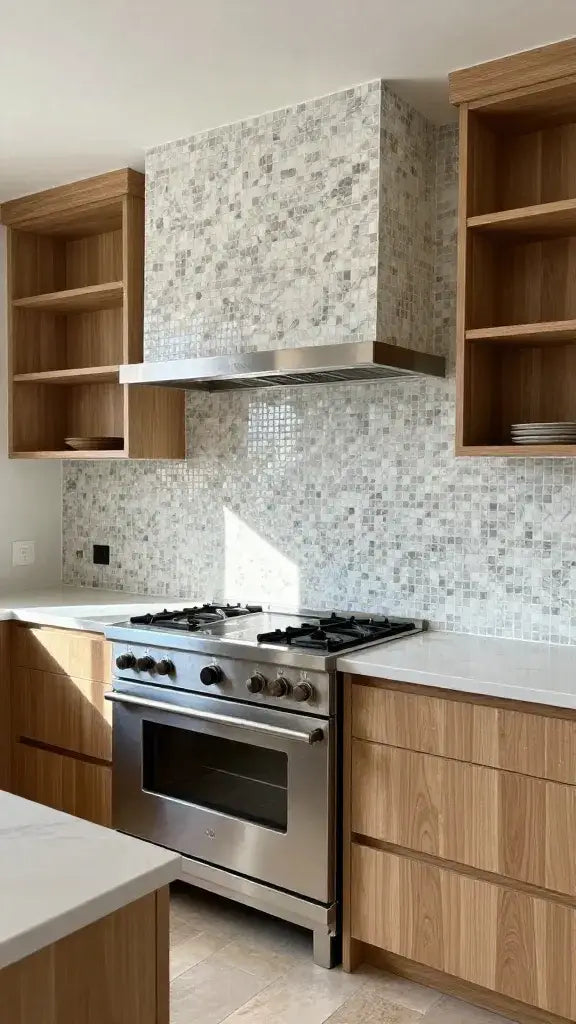
Marble mosaic tiles are the only way to get that high end stone look without the constant worry of staining a massive, expensive slab. When you use honed Carrara or Calacatta Gold in a small scale pattern, the grout lines actually provide extra grip and visual depth.
This setup works perfectly behind a pro style range where grease splatters are common. You can wipe down a textured mosaic much easier than a flat surface because the pattern hides those tiny imperfections that show up on polished stone.
Try mixing different finishes like tumbled and polished pieces to catch the light from your under cabinet LEDs. It creates a soft glow that makes your kitchen feel warm rather than clinical or cold.
Pairing these marble details with brass hardware pulls the warmer veins out of the stone beautifully. It is a classic choice that stays relevant even as kitchen trends shift toward more colorful cabinets.
4. Walk-in Showers with Non-Slip Stones
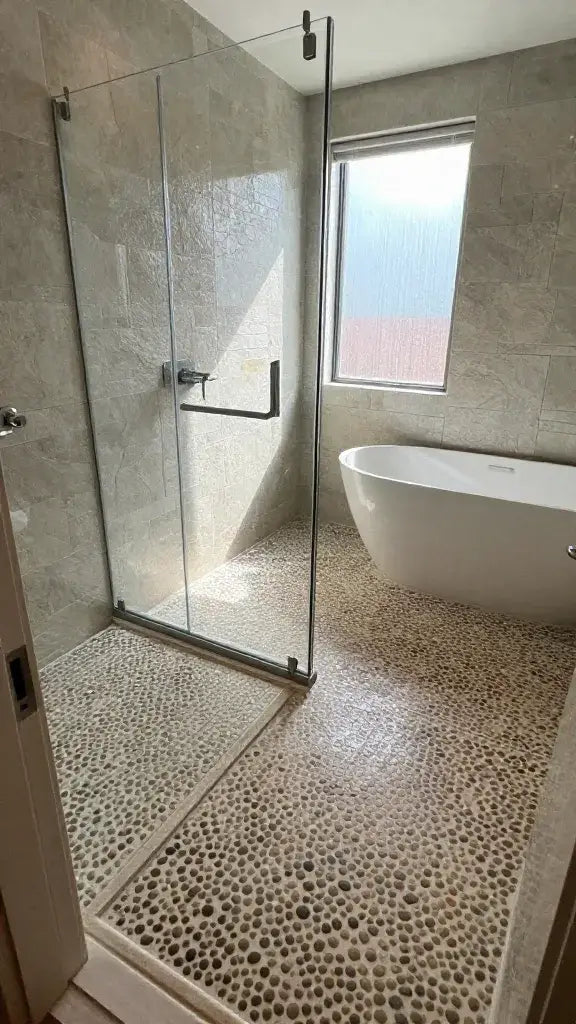
Installing a walk-in shower often leads to concerns about safety, especially when the floor gets wet and soapy. Pebble mosaics or tumbled stone tiles solve this by providing a naturally uneven surface that grips your feet.
The magic happens because of the high ratio of grout lines between each small stone. These recessed lines act like miniature tread patterns, giving your toes something to hold onto while you wash.
- Choose flat-top pebbles so you get the grip without feeling like you are walking on sharp rocks.
- Use a high quality penetrating sealer to keep the porous stones from soaking up hard water stains.
- Match your grout color to the stones to create a continuous, organic look that hides mineral deposits.
You get a spa aesthetic that actually keeps you from slipping when your eyes are closed. It is the smartest way to blend high-end style with a floor that feels solid under your feet.
5. Fireplace Surrounds Using Earthy Tones
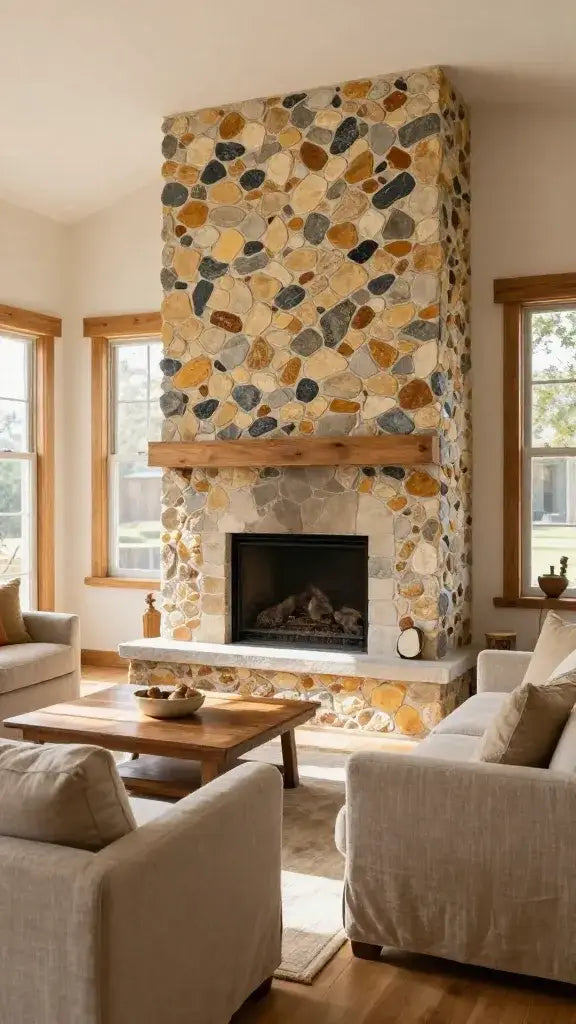
Most people default to stark white or cold grey for their living room, but that often makes a fireplace feel like a clinical backdrop rather than a cozy hearth. If you want that space to feel grounded, you should look at travertine or slate mosaics in sandy tans and muted ochre.
I recently saw a project where the designer used small, tumbled sandstone squares around a gas insert. The variation in the natural stone meant that no two tiles looked exactly the same, which gave the whole wall a rich, tactile quality. It feels much more inviting when the light from the flames hits those uneven, organic textures.
You can lean into this look by choosing a honed finish rather than something polished or shiny. High gloss stone can sometimes look a bit dated or plastic in a rustic setting. Matted earthy tones hide dust and soot much better too, which is a practical win if you actually use your fireplace during the winter months.
Pairing these warm stones with a thick wood mantle in a dark walnut or oak creates a really classic balance. It avoids that overly modern, sterile vibe that’s everywhere right now. You end up with a focal point that feels like it has been part of the house for decades.
6. Entryway Floors with Intricate Patterns
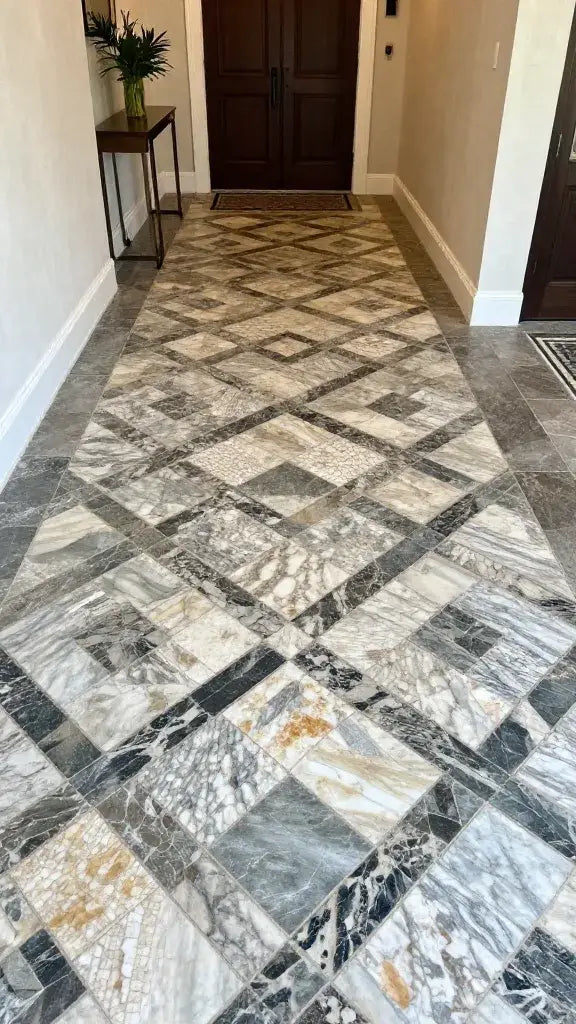
Your entryway is the first thing guests see, and a stone mosaic floor sets a high standard. Using marble or slate in a complex pattern creates the look of a custom rug that won't ever wear out or stain like fabric.
The real secret here is the scale of the pattern. Small, repetitive geometric shapes tend to hide dirt and salt better than large, solid tiles. This makes them a practical choice for high traffic zones where people are constantly kicking off muddy boots.
- Medallion focal points create a clear center for the room that draws the eye immediately.
- Contrasting borders frame the space and make even a small foyer feel like a deliberate architectural feature.
- Tumbled textures provide natural slip resistance which is vital when you come inside on a rainy day.
- Color variation in natural stone hides the inevitable dust and debris that gathers near the front door.
Stick with darker grout colors to keep the floor looking fresh over the years. Light grout in an entryway usually turns gray within months, ruining the crisp look of your intricate stonework.
7. Accent Walls for Modern Living Rooms
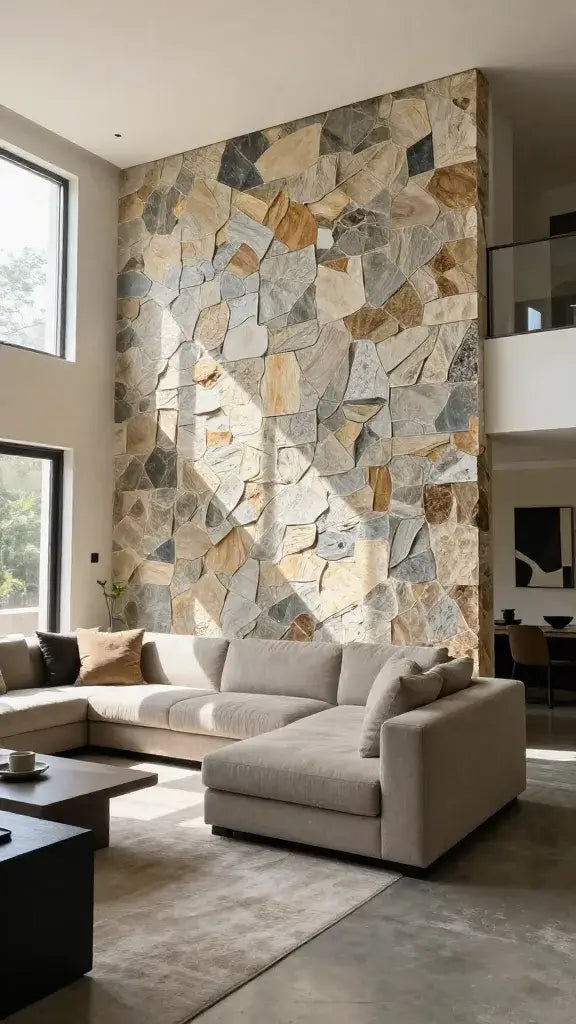
You can go one of two ways when adding stone mosaic to a living room wall. Some people prefer a floor to ceiling installation that covers the entire surface behind the sofa to create a massive texture shift. Others choose to frame a smaller section, like the area inside a recessed nook or behind a mounted television, to act more like a piece of permanent art.
The full wall approach feels grounded and expensive, but it can make a smaller room feel a bit heavy if the stone is dark. On the other hand, the framed inset method is much easier on your budget and lets you use more intricate marble patterns without overwhelming the space. If you have high ceilings, the full wall is hard to beat for that high end lodge feeling.
I usually recommend sticking to the full wall approach if you're using a light colored travertine or sandstone. These materials have enough natural variation to stay interesting without feeling like they're closing in on you. It creates a quiet backdrop that makes your furniture stand out instead of competing with it for attention.
8. Outdoor Patio Borders and Paths
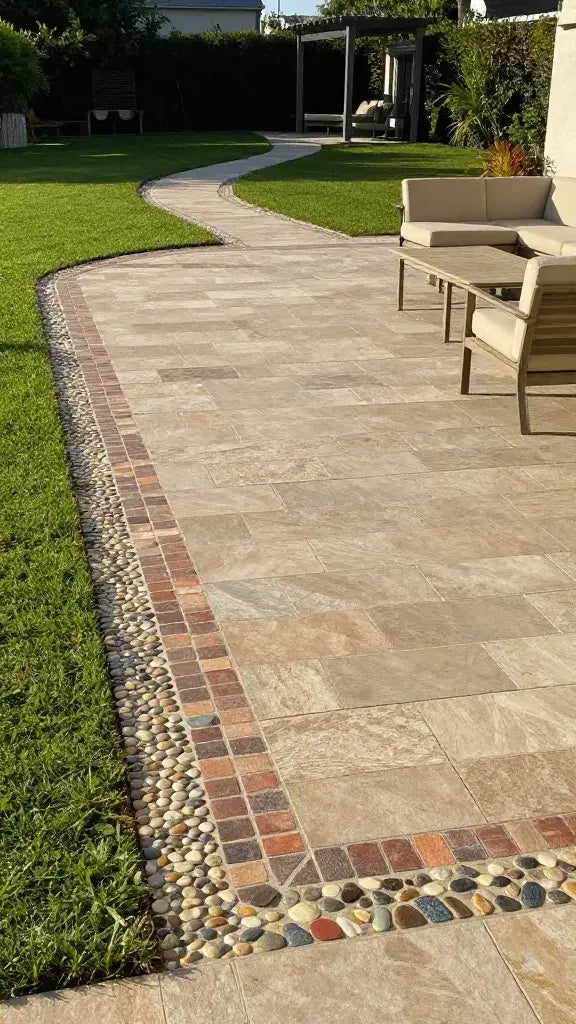
A plain concrete slab often feels cold and unfinished. Adding a stone mosaic border around your patio edges creates a visual frame that makes the entire space look intentional and custom.
You can use pebble mosaics or small slate squares to define the transition between your seating area and the lawn. These textures catch the light differently than flat pavers, giving your feet something interesting to feel while you walk to the garden.
For winding paths, try mixing larger flagstones with mosaic clusters in the gaps. This prevents the walkway from looking like a boring sidewalk. It also helps with drainage since the small stones allow water to seep into the ground naturally rather than pooling on the surface.
I recommend choosing a natural river rock or tumbled marble for these high traffic zones. These materials handle the rain and sun without fading, so your path stays looking vibrant for years. It's a simple way to make a basic backyard feel like a high end retreat without a full renovation.
9. Poolside Decks with Cool Surface Stones
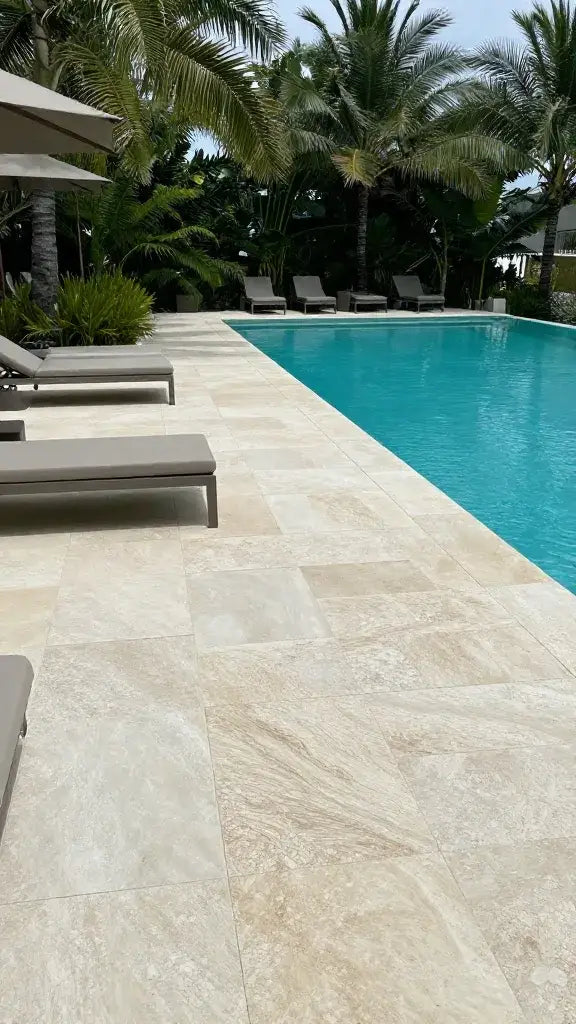
| Stone Type | Heat Retention | Safety Feature |
|---|---|---|
| Light Travertine | Very Low | Naturally Non-Slip |
| White Marble Mosaic | Low | High Visibility |
| Sandstone | Medium | Grip Texture |
Imagine stepping out of a refreshing pool onto a dark slate patio in the middle of July. You'd likely end up sprinting for the grass to keep your feet from burning. Using light colored stone mosaics around the water line prevents this painful mistake by reflecting sunlight instead of absorbing it.
Travertine and limestone are favorites for these high traffic areas because they stay remarkably chilled even on triple digit days. The small grout lines in a mosaic layout also provide extra traction for wet feet. This helps prevent those scary slips when kids are running around the deep end.
Tumbled finishes are your best bet here since they feel soft underfoot but offer plenty of grip. You can mix different shades of cream and beige to hide salt or chlorine spots that usually show up on solid surfaces. It keeps the area looking clean without needing a daily power wash.
10. Laundry Room Floors for Heavy Use
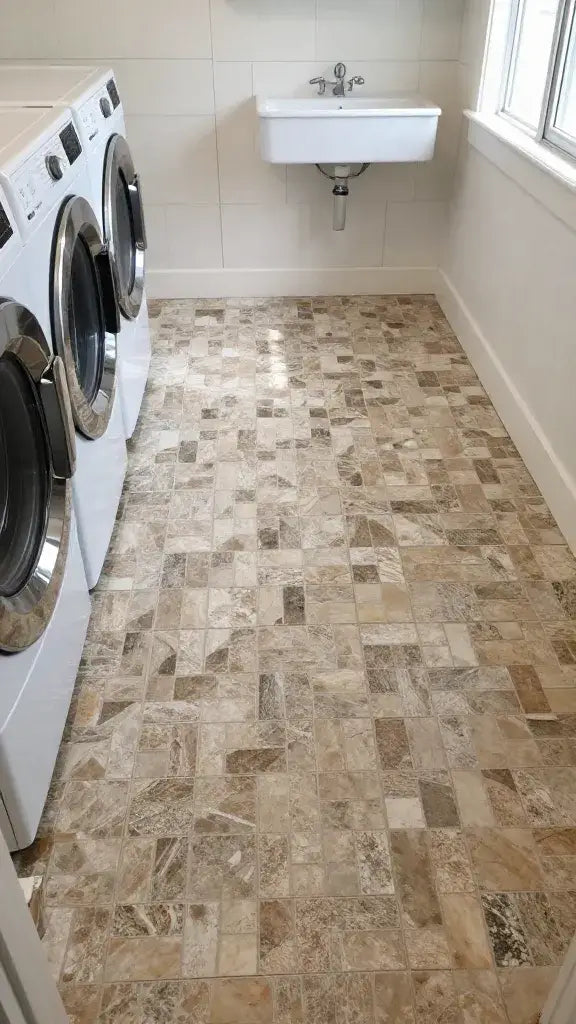
Stone mosaic tile is the only material that actually stands up to the constant abuse of a busy laundry room. Between heavy machines vibrating and the occasional detergent spill, you need a surface that won't crack or stain easily.
The high density of natural stone provides a stable foundation for your washer and dryer. Using smaller mosaic pieces also creates extra grout lines, which gives you much better traction on a wet floor.
Tumbled marble or slate mosaics hide scuffs and lint much better than a polished ceramic tile ever could. You can drag a heavy laundry basket across the floor without worrying about leaving permanent scratches.
Stick with a darker grout color to keep the room looking clean even when life gets messy. This setup handles heavy foot traffic and moisture for decades without needing a replacement.
11. Geometric Shapes for Contemporary Kitchens
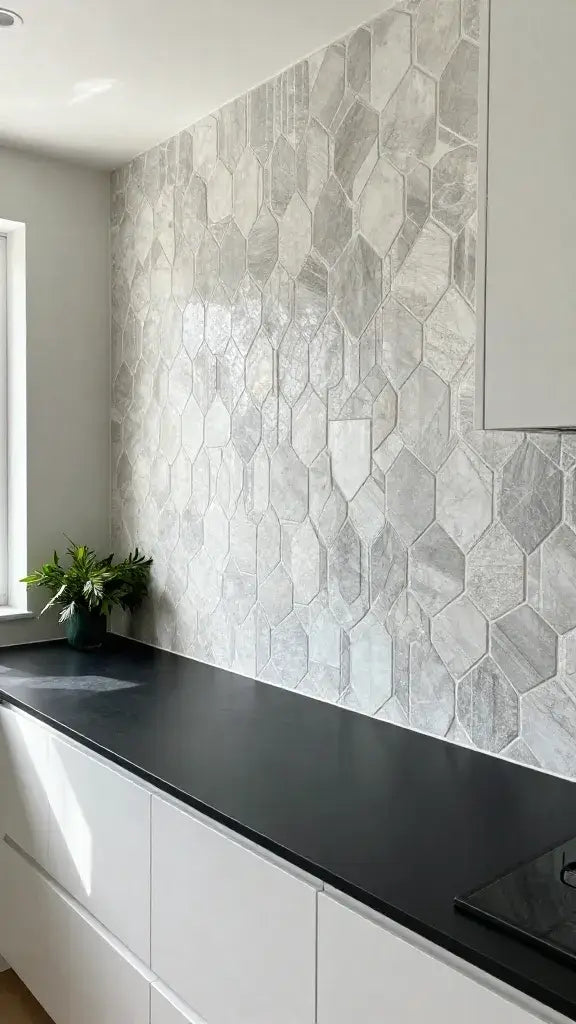
Try swapping out basic square tiles for hexagons or elongated pickets to instantly sharpen a modern kitchen. These sharp angles draw the eye across the backsplash, making a small prep area feel much wider and more intentional.
Natural stone adds a soft texture that keeps these rigid shapes from feeling too cold or industrial. It creates a balance where the precise lines of the tile layout meet the organic veining of the marble or limestone.
- Use a contrasting grout color to make the geometric outlines pop against the stone.
- Run chevron patterns vertically to create the illusion of higher ceilings in low kitchens.
- Mix matte and polished finishes within the same shape to add depth without adding clutter.
This approach works best when you let the pattern do the heavy lifting and keep the rest of your hardware simple.
12. Mixed Stone Types for Visual Depth
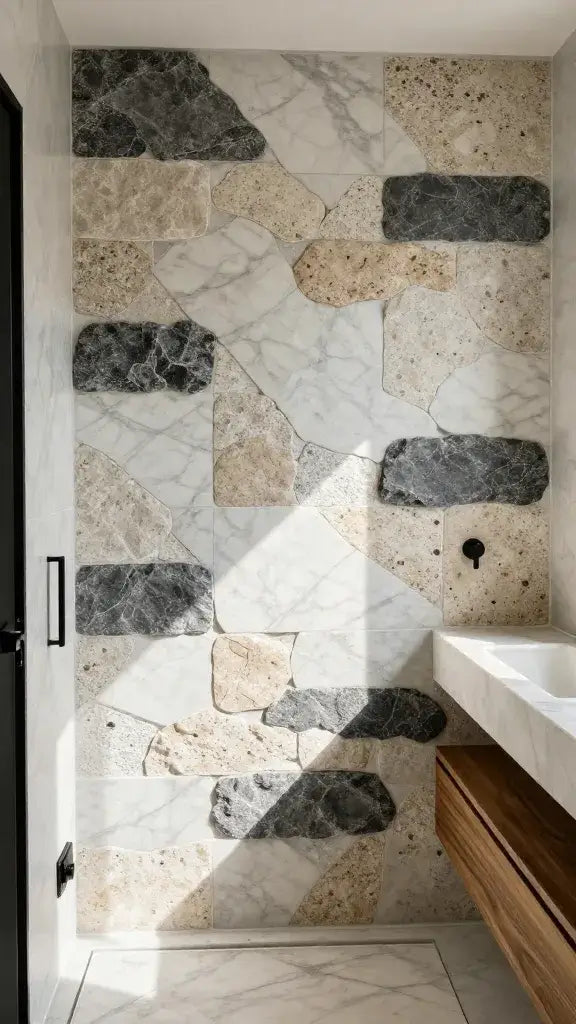
You might wonder why some stone walls look flat while others seem to pop right out at you. The secret usually lies in mixing different stone types like honed marble alongside textured travertine or slate.
When you combine a matte finish with something slightly porous or rugged, the light hits each piece differently. This creates a natural shadow play that makes a small bathroom or kitchen backsplash feel much larger than it actually is.
I usually suggest picking three distinct textures but keeping them within the same color family. For example, try pairing a smooth white Carrara with a tumbled Thassos marble to get that layered look without it feeling messy.
This approach works incredibly well in entryways where you want a bit of a statement. The subtle variation in the stones catches your eye as you walk past, giving the space a custom feel that a single material just can't match.
It’s a smart way to add character to a neutral room. You get all the visual interest of a bold pattern without having to commit to any wild colors that might go out of style next year.
13. Rustic Finishes in Farmhouse Bathrooms
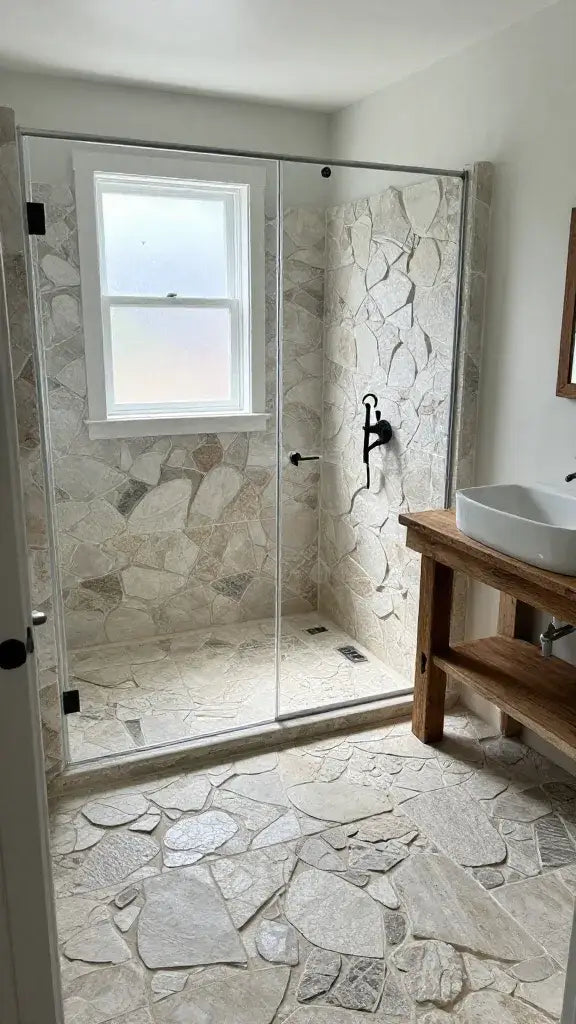
A farmhouse bathroom feels most authentic when you mix worn textures with clean lines. Using stone mosaic tile on the floor or in a shower niche grounds the room and stops it from looking too sterile or manufactured.
The real magic happens when you choose tumbled edges rather than perfectly straight ones. These softened corners mimic the look of stones gathered from a creek bed, which fits that lived in aesthetic perfectly. You want materials that look like they have a history even if they're brand new.
- Slate textures provide a dark, earthy base that hides water spots and dirt remarkably well.
- Unpolished marble offers a matte look that feels much more casual and approachable than shiny polished stone.
- Pebble mosaics create a tactile surface underfoot that mimics a natural outdoor spa environment.
- Neutral grout helps the individual stones stand out while keeping the overall floor looking cohesive.
Try pairing these mosaics with reclaimed wood vanities or matte black hardware. The contrast between the rugged stone and the sleek metal prevents the space from feeling too dated or heavy.
14. Subtle Border Trim for Plain Tile
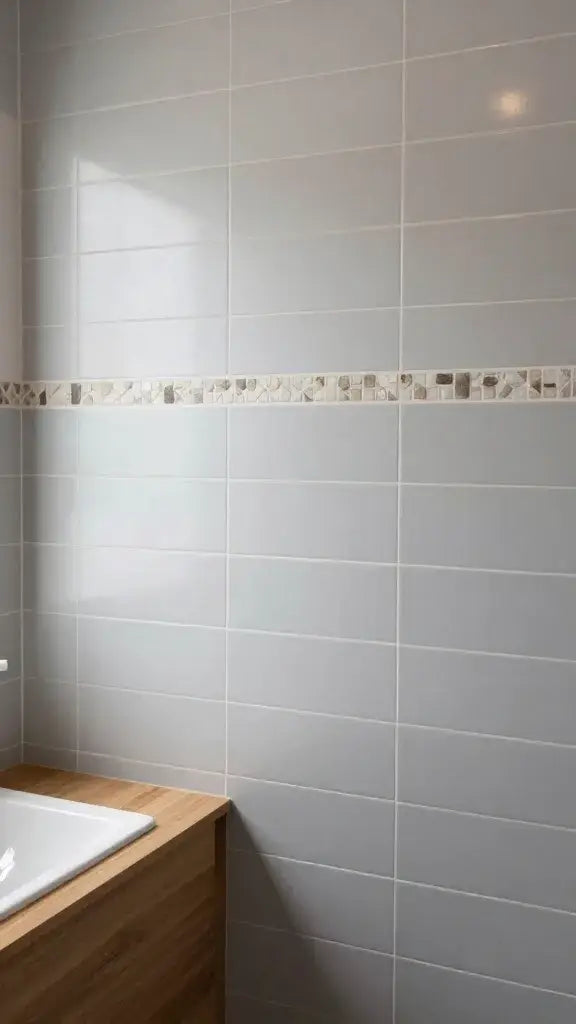
You might be tempted to run large format subway tiles from the floor all the way to the ceiling. While that looks clean, it often lacks a finished touch and can feel a bit sterile in a guest bathroom.
Contrast that with adding a thin strip of marble herringbone or mini pebble mosaic about eye level. This breaks up the visual weight of plain ceramic and makes the entire installation look custom rather than off the shelf.
I usually recommend picking a stone that has at least one vein matching your wall color. A linear glass and stone blend works wonders here because it creates a clear boundary without needing a bulky bullnose piece.
Stick to a width of two or three inches for the border. This size is substantial enough to notice but won't overwhelm the main tile pattern you've already invested in.
15. Matte Stone Surfaces for Minimalist Homes
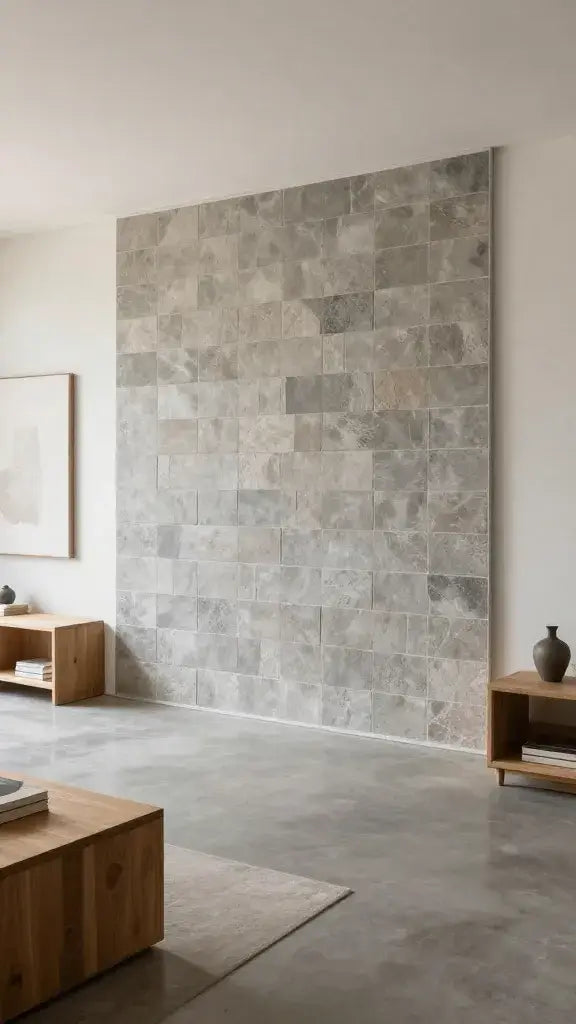
High gloss finishes often reflect too much light and make a room feel cold or clinical. Matte stone surfaces solve this by absorbing light, which creates a soft and grounded atmosphere that feels much more inviting. This flat finish hides fingerprints and water spots better than polished tile, making it a practical choice for busy areas.
You can use honed marble or basalt mosaics to lean into a quiet, monochromatic look. Try a stacked bond pattern in a bathroom or kitchen backsplash to keep the lines clean and simple. The lack of shine allows the natural texture of the stone to be the main focus rather than the overhead lighting.
Pair these flat tiles with light wood cabinets or brushed metal fixtures to add a bit of warmth. This combination keeps your home feeling modern without looking like a sterile showroom. It is an easy way to get that high end architectural look while keeping your daily maintenance to a minimum.
Wrapping Up
These fifteen ideas show how stone mosaic tile can transform a room from basic to beautiful. You now have a solid foundation for choosing the right textures and patterns for your next home project. Take these insights and start planning your renovation today. Adding a bit of natural stone is a simple way to make your space feel more personal and complete.

Leave a comment