
15 Crucial considerations before installing marble tile backsplash


A marble tile backsplash looks beautiful, but it requires more thought than a standard ceramic option. You need to know about sealing, maintenance, and how the stone reacts to stains before you start your kitchen renovation. This list covers the practical things you should consider so you can decide if marble is actually the right choice for your home and lifestyle.
1. Porosity and Liquid Absorption Risks
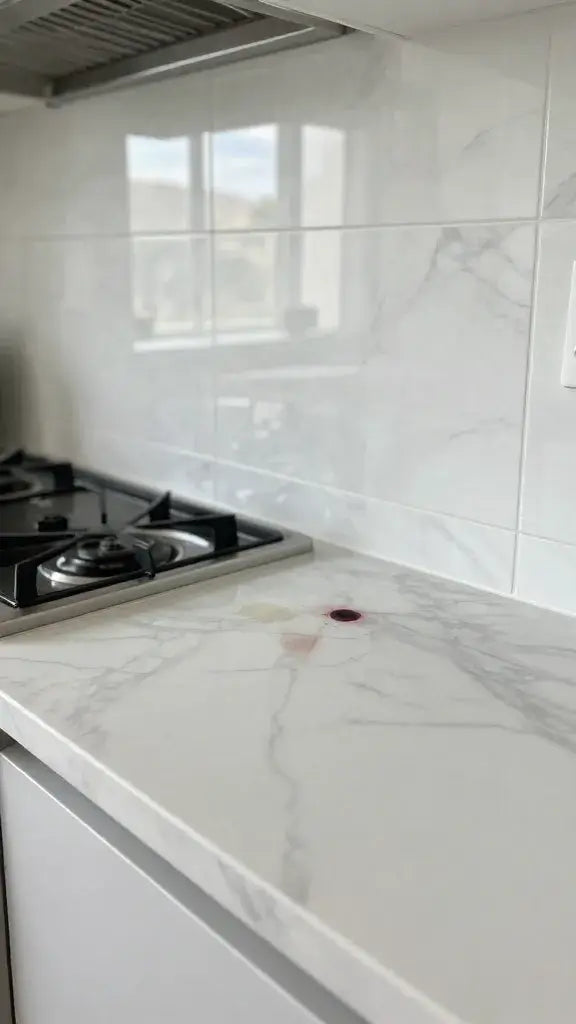
Marble is actually a porous metamorphic rock, which means it is filled with tiny, microscopic channels that act like straws. If you splash red wine or balsamic vinegar on an untreated surface, the stone will pull that liquid deep into its structure before you can even grab a paper towel. This often leads to permanent dark spots or cloudy patches that are nearly impossible to scrub away.
To keep your backsplash looking clean, you have to stay ahead of the absorption by applying a high quality impregnating sealer. This chemical barrier doesn't sit on top like plastic, but instead fills those tiny pores to repel liquids. You should test your sealer every few months by flicking a few drops of water onto the tile to see if they still bead up.
Even with the best sealants, marble remains sensitive to oils and acids that can cause etching or dulling of the finish. It is smart to keep a dedicated stone cleaner under the sink rather than using harsh dish soaps or lemon based sprays. If you do a lot of heavy frying or sauce work, be prepared to wipe down the area immediately after every meal.
2. Daily Sealing Requirements and Maintenance
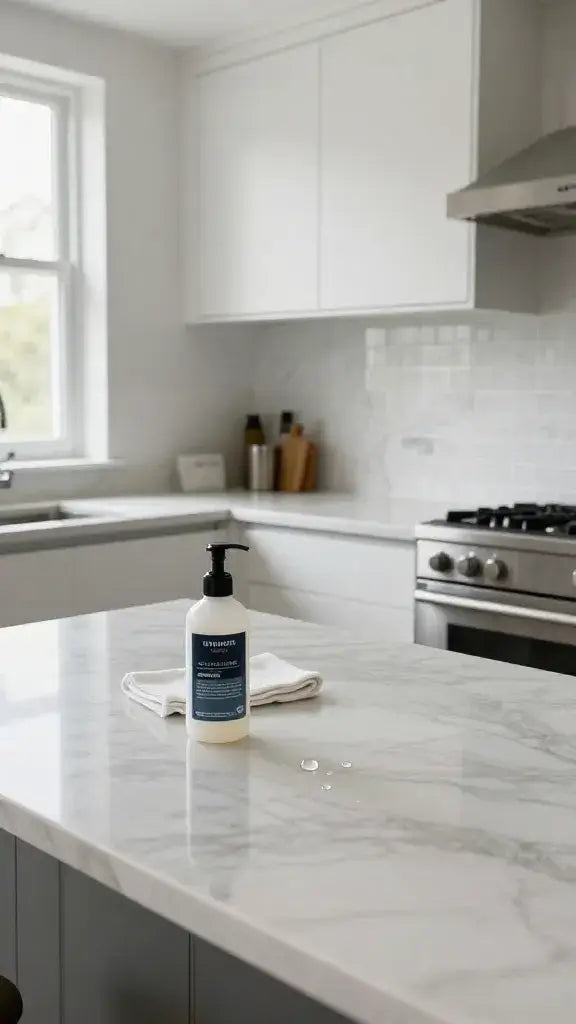
Imagine you're frying bacon and a stray drop of grease hits your new white marble. If that stone isn't sealed, the oil sinks into the pores instantly and leaves a permanent dark shadow.
| Action | Frequency | Goal |
|---|---|---|
| Water Test | Monthly | Check if water beads or sinks in. |
| Resealing | Every 6-12 Months | Rebuild the chemical barrier. |
| Daily Wipe | After Cooking | Remove acidic splatters immediately. |
You don't actually need to apply sealer every single day, but you do need to act like it's vulnerable. Marble is a calcite based stone, meaning lemon juice or tomato sauce will eat through the surface in minutes.
I always tell people to keep a high quality impregnating sealer in the cabinet. It won't make the tile waterproof, but it gives you a crucial window of time to wipe up a mess before it becomes a permanent part of your kitchen.
Check the area behind your stove most often since it takes the most heat and grease. If water stops beading up on the surface, it's time to reapply your protective layer.
3. Vulnerability to Acidic Food Stains
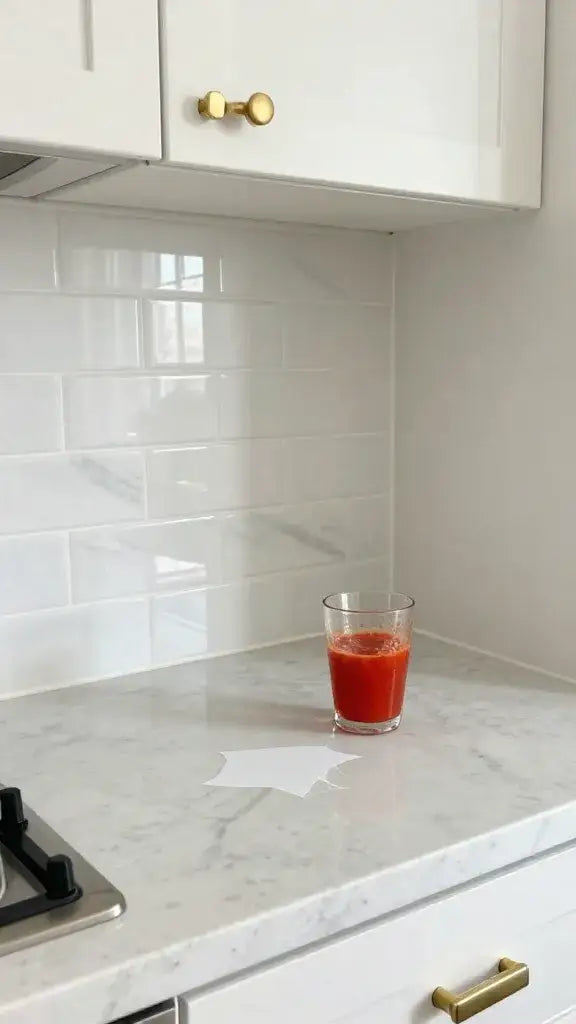
Your morning lemon water or evening spaghetti sauce can actually ruin the finish of your backsplash in seconds. Marble is primarily made of calcium carbonate, which reacts chemically when it touches acidic liquids like vinegar, citrus, or tomato juice.
This reaction creates a dull, whitish mark known as etching that sits on the surface of the stone. Unlike a surface stain that you can scrub away, etching is physical damage to the stone's texture that often requires professional polishing to fix.
Sealers won't save you here because they only protect against liquid absorption, not chemical burns from acids. If you do a lot of heavy cooking with lemons or balsamic vinegar, you'll likely notice these permanent cloudy spots appearing right behind your stove.
You have to be ready to wipe up every single splatter the moment it happens. If you're the type of cook who leaves the cleaning until the next morning, marble will show every mistake you've ever made.
4. Natural Color and Veining Variations
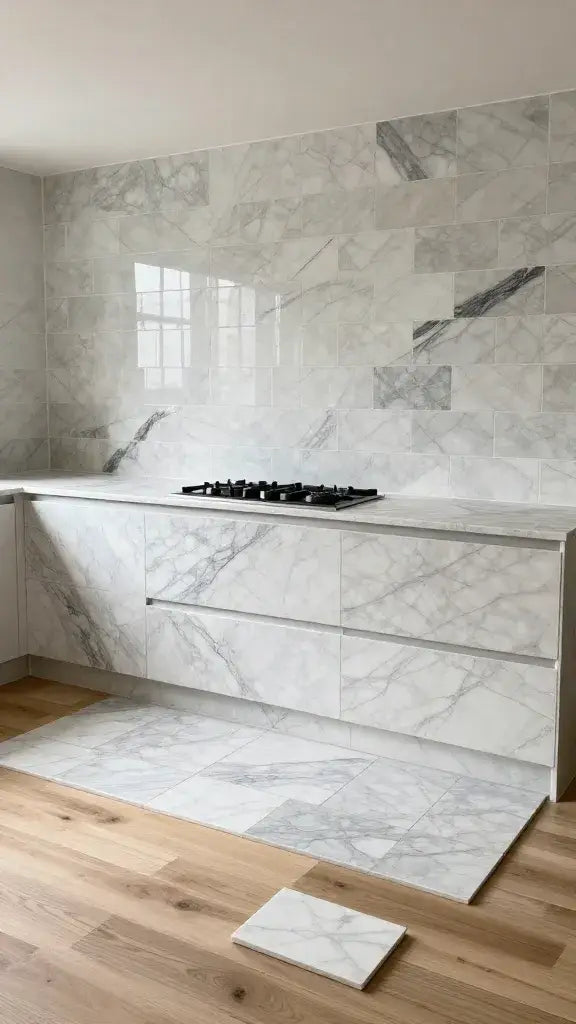
You need to open every single box of tile as soon as they arrive at your house. Lay them all out on your kitchen floor to see how the patterns flow together before the installer touches a drop of thinset.
Marble is a raw stone pulled from the earth, so one box might have heavy charcoal streaks while the next looks almost pure white. If you don't dry lay the pieces first, you might end up with a dark cluster of veins right behind your stove that looks like a giant smudge.
- Pull tiles from multiple boxes at once to mix the different shades evenly across the wall.
- Check for yellowing or iron spots that can sometimes appear in lower grades of Carrara.
- Set aside tiles with distracting patterns and save them for small cuts or hidden corners.
Checking the variation early ensures your backsplash looks like an intentional piece of art rather than a patchy DIY project.
5. Scratch Sensitivity From Kitchen Tools
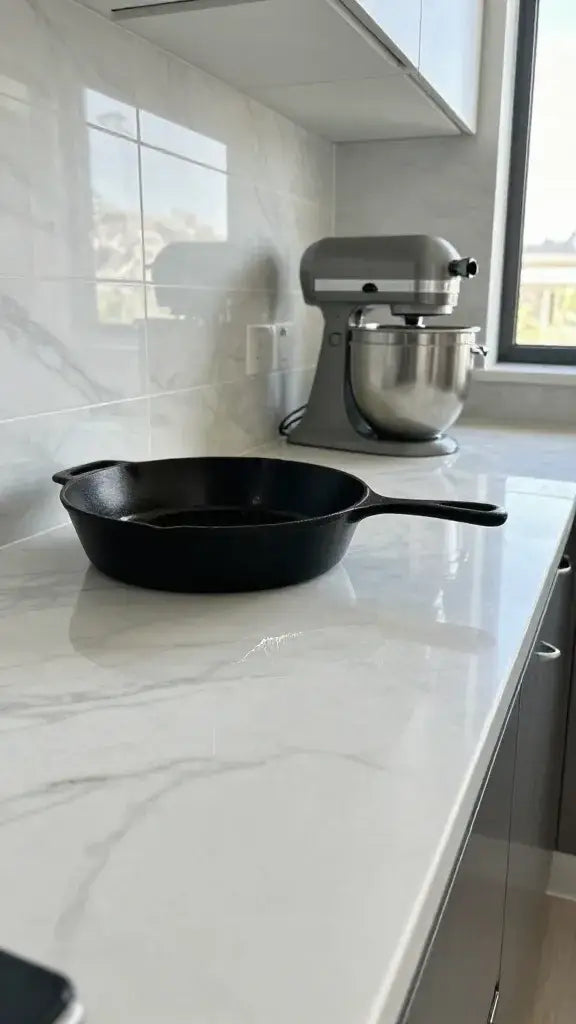
You might think your backsplash is safe from the wear and tear your floors face, but kitchen tools are surprisingly aggressive. Marble is much softer than granite or porcelain, meaning a stray cast iron skillet or a slipped chef's knife can leave a permanent mark.
I've seen people accidentally gouge their stone just by sliding a heavy stand mixer back against the wall. Metal whisk attachments or even the bottom of a ceramic crock can create fine white lines that catch the light. These scratches stand out more on honed finishes where the smooth surface gets interrupted by the jagged texture of a scrape.
If you're the type of cook who moves fast and tosses utensils around, you'll need to be extra mindful of your working zone. It helps to keep a small buffer between your heaviest appliances and the tile surface. You can also add small felt pads to the back of countertop items to prevent them from grinding against the marble during daily use.
6. The Higher Cost of Premium Slabs
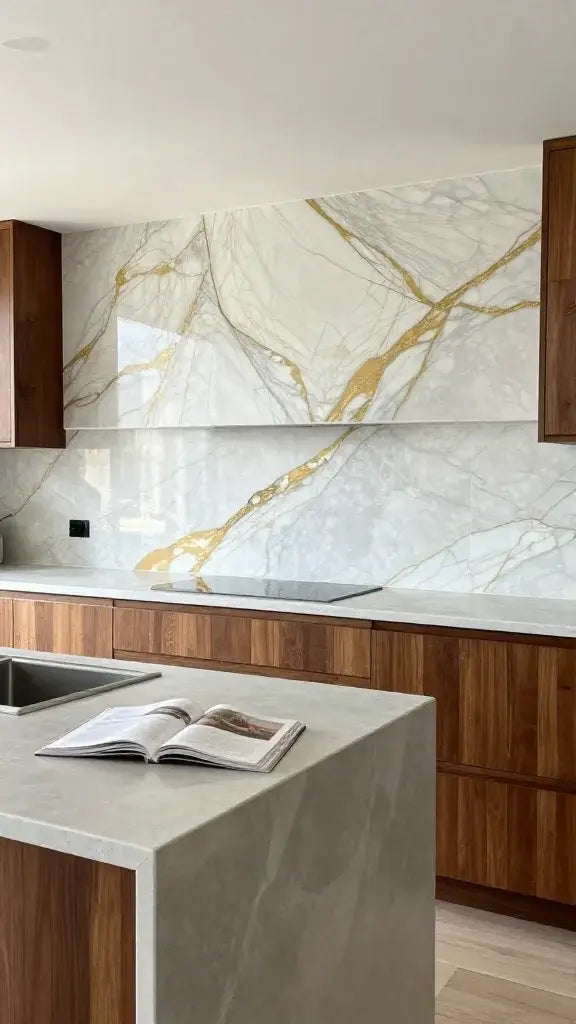
Marble isn't a budget material, but the price gap between basic and premium slabs can be a shock. You might find generic white marble for fifteen dollars a square foot, while a rare Calacatta Borghini can easily run over one hundred dollars for the same amount.
The cost usually comes down to the background color and the specific veining patterns. Whiter backgrounds with bold, distinct veins are rare in nature, so quarries charge a massive premium for those specific blocks.
- Rarity of patterns: Slabs with high contrast or unique gold veining are much harder to find than standard grey varieties.
- Waste factor: When you buy a high end slab, you often have to pay for the entire piece even if your backsplash only uses half.
- Fabrication difficulty: Exotic marbles are often more fragile and require specialized tools or resin backing to cut without cracking.
Budgeting for the tile itself is only the first step. You should also account for a twenty percent overage to ensure you have enough matching pieces if a slab breaks during the installation process.
7. Matching Grout Colors to Natural Stone
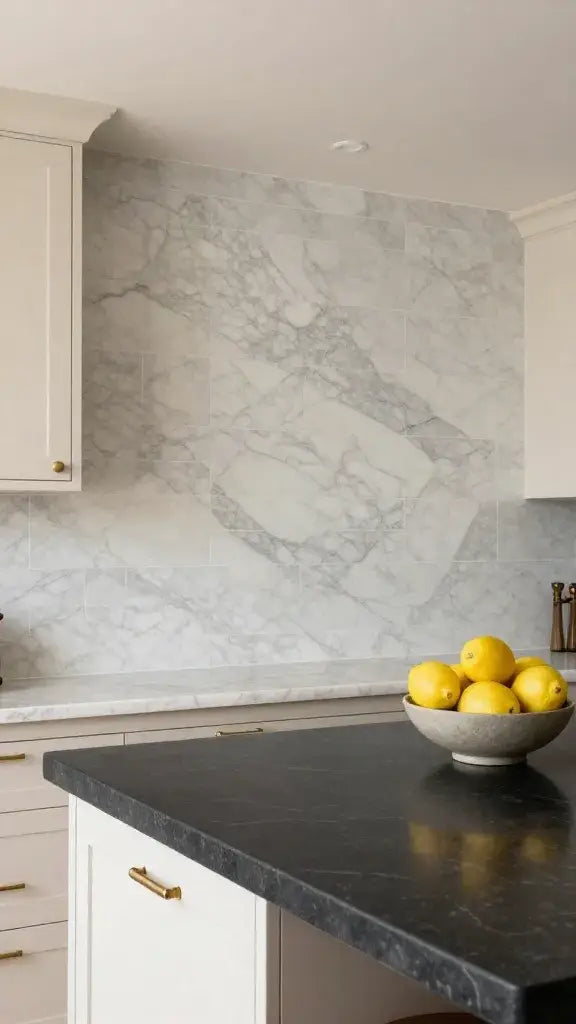
Choosing a grout that perfectly blends with your marble creates a high end, monolithic look where the stone appears to flow across the wall. This approach hides the grid lines and lets the natural veining take center stage. If you pick a shade just one notch lighter than the stone, the seams practically disappear from a distance.
On the other hand, using a high contrast grout like charcoal gray against white Carrara makes a bold architectural statement. This highlights the shape of each individual tile, which works well if you've spent extra money on a unique pattern like herringbone or chevron. However, high contrast can look busy and distracting if your marble already has a lot of heavy, dark movement.
I usually recommend sticking with a neutral tone that matches the base color of the marble rather than the veins. This keeps the backsplash looking classic and ensures you won't get tired of a heavy grid pattern after a few years. It also makes it much easier to keep the lines looking clean since subtle staining won't stand out as much against a medium gray or beige.
8. Weight Limits of Your Kitchen Walls
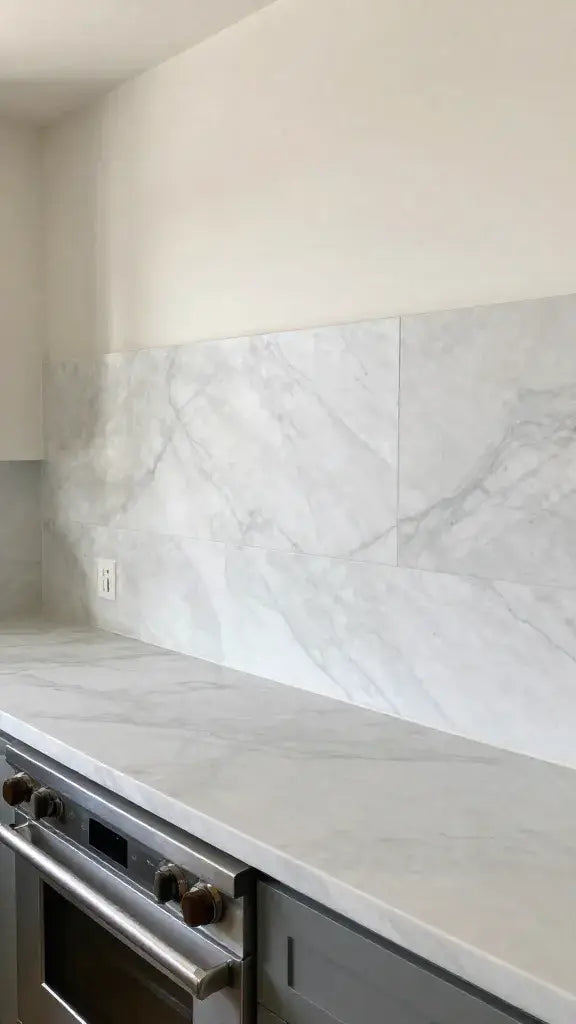
Marble is significantly heavier than ceramic or porcelain. If your drywall is old or improperly secured, the sheer weight of natural stone can cause the entire surface to sag or pull away from the studs.
A standard slab of marble tile can weigh five pounds per square foot or more once you add the mortar. You need to verify that your wall board is at least half-inch thick and screwed tightly into the framing.
If the wall feels flimsy when you press on it, you should consider replacing it with cement backer board. This provides a rigid, waterproof base that won't crumble under the constant pressure of heavy stone tiles.
9. Professional Installation vs DIY Difficulty
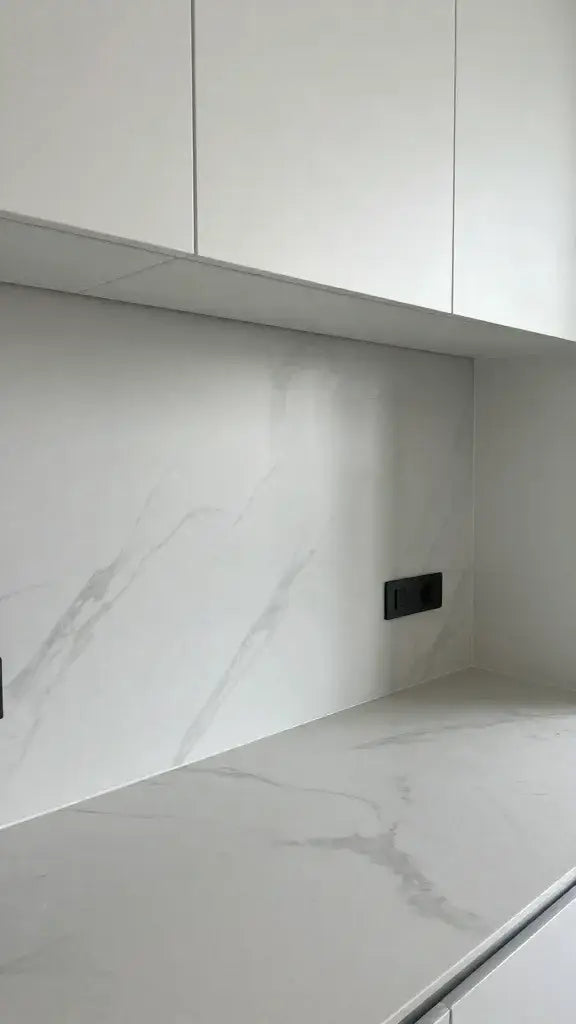
| Task | DIY Difficulty | Pro Standard |
|---|---|---|
| Tile Cutting | High risk of cracking expensive slabs. | Precision wet saw cuts for outlets. |
| Layout Logic | Easy to end up with tiny slivers. | Perfectly centered and balanced rows. |
| Grouting | Messy, risks staining the stone. | Clean lines with sealed protection. |
Imagine spending six hundred dollars on Calacatta Gold tiles only to watch the first three pieces shatter because your manual snapper wasn't up to the task. Marble is surprisingly soft and brittle compared to ceramic, so one wrong move with a cheap blade ruins your investment instantly.
If you choose the DIY route, you'll need to rent a high end wet saw and practice your plunge cuts on scrap pieces first. Professionals handle these tricky maneuvers every day, ensuring that every outlet cover sits flush against the stone without huge gaps.
Labor costs for a pro might sting at first, but they bring specialized adhesives that won't discolor the porous backing of the marble. If you've never worked with natural stone before, starting with a kitchen backsplash is a high stakes way to learn a difficult trade.
10. Long Term Resale Value Impact
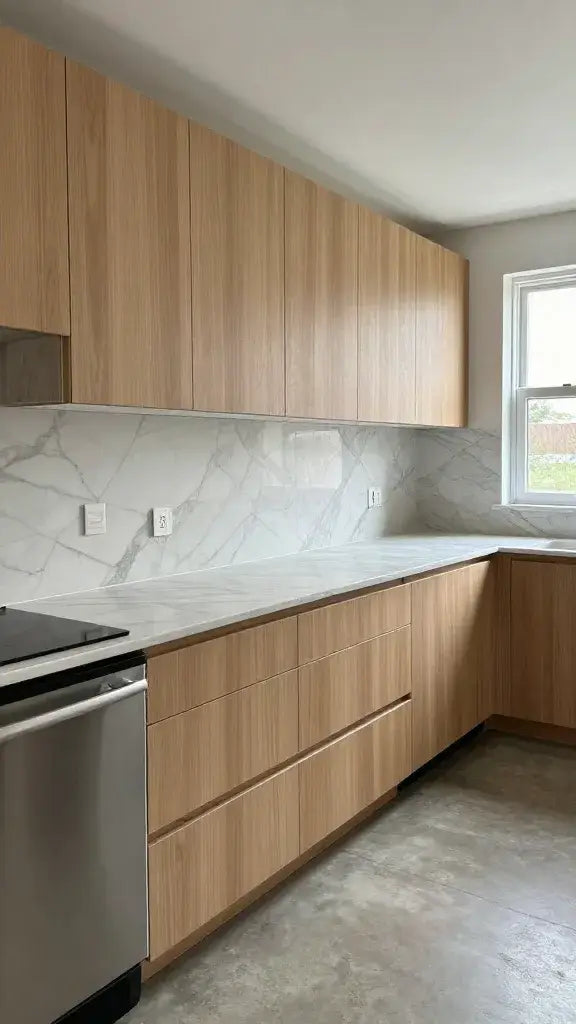
Marble is the only material that consistently keeps its premium status in the eyes of home buyers regardless of current trends. While subway tile or peel-and-stick patterns might look dated in five years, a Carrara or Calacatta backsplash feels like a permanent upgrade. It signals to a potential buyer that you didn't cut corners during your renovation.
You'll likely see a higher return on investment because people associate natural stone with luxury and durability. Most buyers are willing to pay a bit more for a kitchen that looks finished and high-end without them having to touch a thing. It’s a safe bet for your property value because it bridges the gap between classic and modern styles.
However, you have to keep it in pristine condition to actually see that financial boost later on. A stained or etched slab can actually hurt your sale price because it looks like a chore for the next owner. If you seal it properly and wipe up splashes immediately, that marble will still be a major selling point a decade from now.
11. Light Reflection and Kitchen Brightness
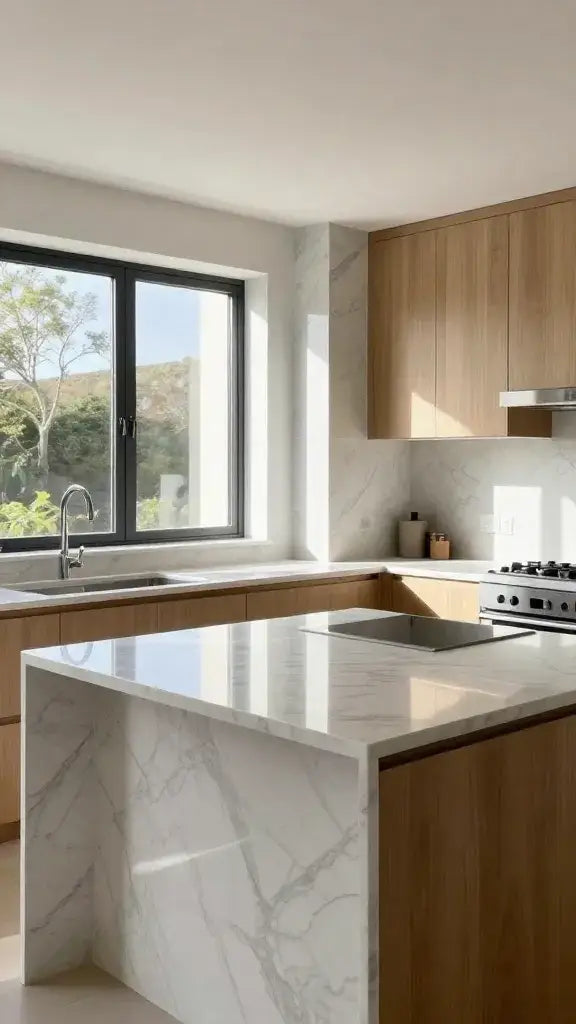
Marble has a naturally crystalline structure that acts like a mirror for your under-cabinet lighting. If your kitchen feels a bit like a cave, picking a polished white marble can actually double the perceived light in the room.
The finish you choose determines how that light behaves throughout the day. A polished finish creates sharp highlights and bright spots, while a honed surface diffuses the glow for a softer look.
- Position your LED strips toward the front of the cabinets to avoid harsh glare on the stone.
- Stick with Calacatta or Thassos varieties if your goal is maximizing brightness in a small space.
- Check your stone samples under both warm and cool light bulbs to see how the veining shifts in color.
You'll notice that the right slab makes the whole room feel much larger and airier than dark ceramic or matte tiles ever could.
12. Choosing Between Honed and Polished Finishes
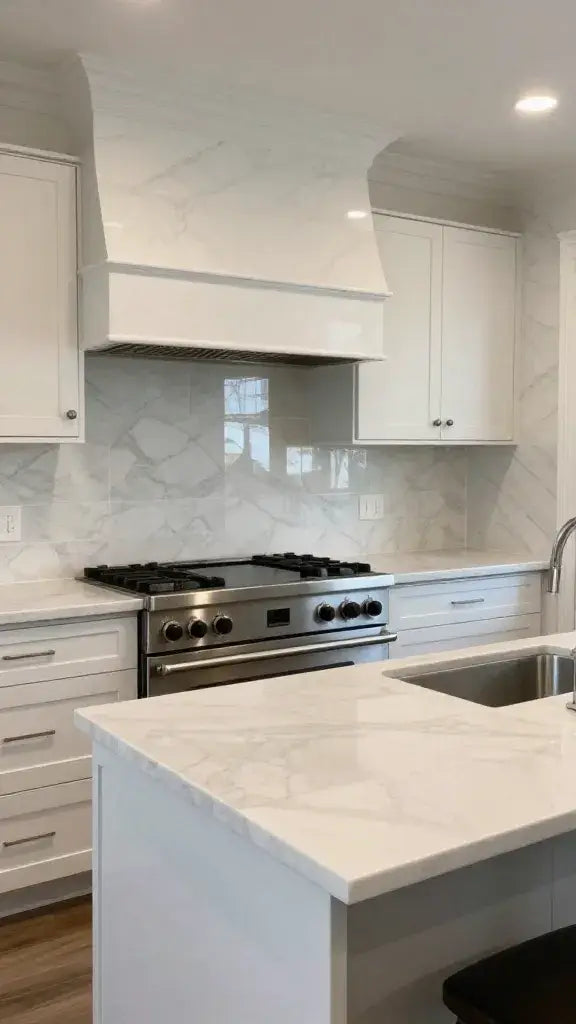
You really have to think about how you use your kitchen before picking a finish. A polished surface gives you that classic, high-shine look that reflects under-cabinet lighting beautifully.
It makes a small kitchen feel much larger because of the mirror effect. However, that glossy coat shows every single water spot and grease splatter from your stovetop.
If you hate wiping down walls every time you boil pasta, honed marble might be your best friend. It has a matte, velvety texture that feels soft to the touch and hides imperfections well.
Etching from lemon juice or tomato sauce is less noticeable on a honed surface compared to a shiny one. It looks a bit more modern and grounded, which works great in farmhouse or contemporary designs.
Just keep in mind that honed stone is more porous than polished. You will need to be diligent about applying a high-quality sealer to prevent deep stains from setting into the stone.
13. Heat Resistance Near Stovetops and Ovens
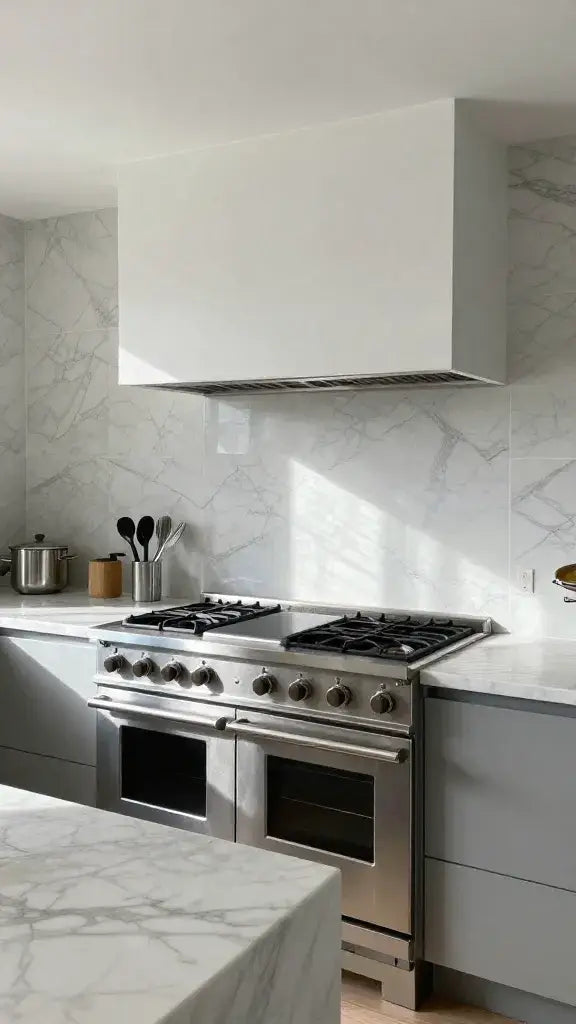
Marble is a natural stone that handles heat better than synthetic materials like peel and stick vinyl. However, it isn't completely immune to the high temperatures coming off your professional range or wall oven.
The real danger isn't the stone melting, but rather the thermal shock that occurs when a surface goes from room temperature to scorching hot in seconds. This rapid change can cause hairline fractures or yellowing in the sealant you've applied to the stone.
- Keep a small gap between the back of your stove and the tile to allow for proper airflow.
- Choose a high quality, heat rated sealer that won't discolor or peel when exposed to steam and grease.
- Watch for localized cracking in thinner marble tiles if you frequently use high heat burners for long periods.
- Wipe away hot oil splatters immediately because heat opens the pores of the stone and makes staining much more likely.
If you're installing a high BTU gas range, consider a stainless steel riser behind the cooktop. This small barrier protects the marble from the most intense direct heat while keeping the aesthetic of the stone visible everywhere else.
14. Chemical Sensitivities to Common Household Cleaners
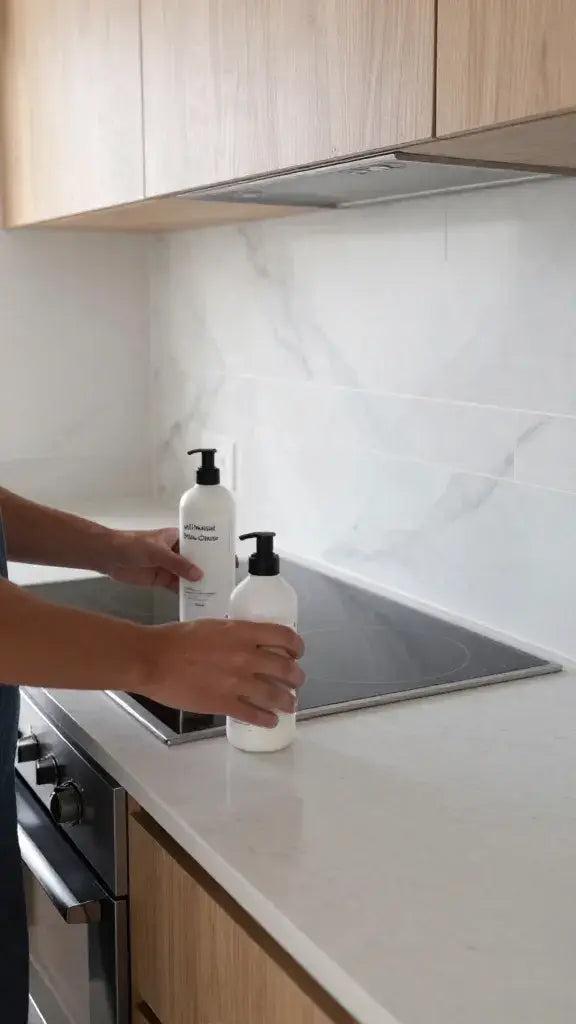
Most people grab a bottle of bleach or a generic citrus spray when things get messy in the kitchen. If you take this approach with marble, the acid or harsh chemicals will eat into the stone almost instantly.
The alternative is switching to specialized pH neutral stone cleaners or very mild dish soap. While these are safer for the tile, they often struggle to cut through heavy grease or dried tomato sauce.
I recommend skipping the fancy stone sprays and sticking to a simple mix of warm water and a tiny drop of Dawn. It prevents the dull, etched spots that chemical cleaners leave behind while still keeping the surface sanitary.
You should also avoid anything containing vinegar or lemon juice at all costs. These common green cleaning hacks will ruin your finish faster than any commercial chemical ever could.
15. Sourcing Extra Tiles for Future Repairs
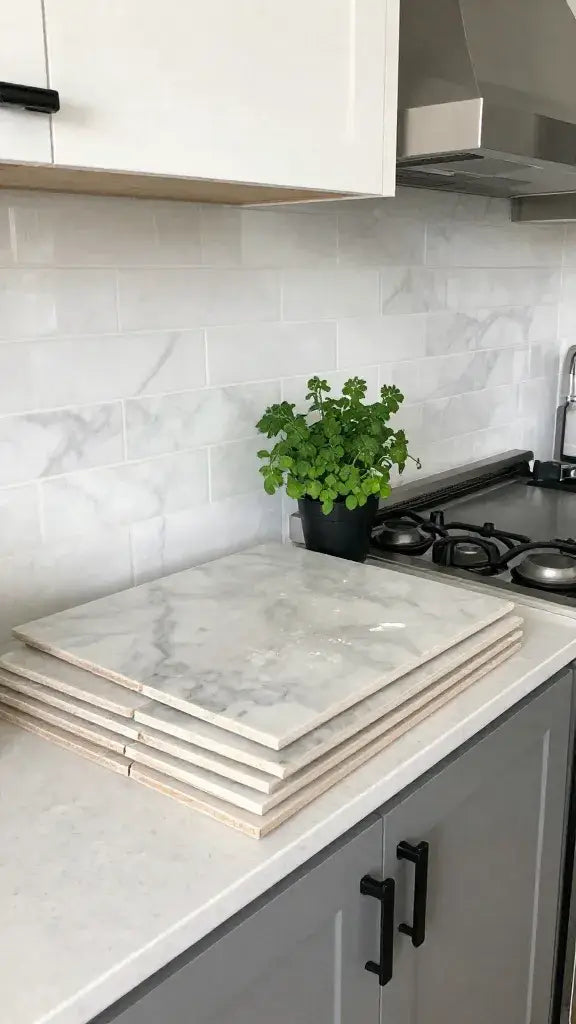
Marble is a natural stone, which means every single slab comes from a different part of the earth. If a tile cracks or gets stained by a stray splash of red wine years from now, you won't be able to just walk into a store and find an identical match. The colors and veining patterns change constantly as quarries move deeper into the ground.
You should buy at least 10 to 15 percent more tile than your measurements actually require. This extra stash acts as an insurance policy for your kitchen. Having matching attic stock ensures that any future repairs look completely invisible rather than like a patchy afterthought.
Store these leftovers in a dry spot where they won't get knocked around or chipped. It's smart to keep them in their original boxes so you can track the batch number and specific stone variety. You'll be incredibly relieved to have these on hand if a plumber ever needs to cut into your wall for a pipe repair.
Wrapping Up
Choosing a marble tile backsplash is a big commitment for any kitchen or bathroom project. These fifteen points should give you a realistic look at the costs, maintenance, and installation steps required for a great result. If you feel ready to handle the upkeep, go ahead and start picking out your favorite slabs. Your home will look beautiful once the work is finished.

Leave a comment