

Why Seal Marble Tiles: Protect Your Investment

Spilled wine or citrus on unsealed marble can mean more than just a minor inconvenience for California designers working on luxury interiors. Marble’s elegant surface hides tiny pores that allow liquids and acids to travel deep, risking stains and permanent etching if neglected. Understanding the science behind marble’s crystalline structure and learning about marble’s unique porosity and the best sealing solutions are essential steps to preserve value and beauty in every high-end residential project.
Table of Contents
- What Makes Marble Tiles Porous
- Types of Marble Sealers Explained
- How Sealing Protects Your Surfaces
- Financial Benefits of Sealing Marble
- Maintenance Tips for Lasting Beauty
- Common Sealing Mistakes to Avoid
Key Takeaways
| Point | Details |
|---|---|
| Marble Porosity | Marble has interconnected microscopic pores that make it sensitive to stains and damage, necessitating proper sealing. |
| Sealer Types | Topical sealers provide surface protection but require frequent reapplication, while penetrating sealers last longer and maintain marble’s natural appearance. |
| Sealing Benefits | Proper sealing protects marble from stains, reduces cleaning efforts, and extends the material’s lifespan. |
| Maintenance Practices | Immediate spill cleanup and routine cleaning with pH-neutral products are essential for preserving marble’s beauty and integrity. |
What Makes Marble Tiles Porous
Marble might look like solid, impenetrable stone when you first see it in a showroom, but the truth is more complex. At its core, marble is a metamorphic stone composed primarily of calcite, formed through the recrystallization of limestone under intense heat and pressure deep beneath the Earth’s surface. While this process creates a tight crystalline structure, it does not eliminate porosity entirely. In fact, marble contains small but definite pores throughout its matrix. These aren’t large cavities you can see with the naked eye, but rather microscopic voids that exist within the stone’s internal structure.
What makes marble particularly vulnerable to damage is how these pores are organized. Marble’s pore space is interconnected and tortuous, meaning liquids don’t just sit in isolated pockets. Instead, they travel through capillary channels that connect throughout the stone, allowing water, acidic liquids, and oils to penetrate deeper than most homeowners expect. This is why a single spilled glass of wine or a splash of lemon juice can potentially leave a permanent mark if not sealed properly. The measure of open void spaces in a material directly influences how quickly liquids can be absorbed, and marble’s porosity rating means it’s far more permeable than granite or engineered stone alternatives.
The degree of porosity varies depending on marble’s origin and mineral composition. Some marble varieties are denser than others, which affects how quickly they absorb liquids. Lighter-colored marbles tend to be more porous than darker varieties, which is why white Carrara or Calacatta marble requires more attentive sealing schedules than, say, black Marquina marble. Additionally, marble’s crystalline structure and composition influence its overall durability, making some selections naturally more resistant to staining than others. For California interior designers selecting marble for high-end residential projects, understanding this porosity variation is crucial when specifying materials for different applications like kitchen countertops versus bathroom accent walls.
Pro tip: Ask your stone supplier for the porosity rating of the specific marble variety you’re selecting. Higher porosity marbles need sealing every 6 to 12 months, while denser options can go longer between applications.
Types of Marble Sealers Explained
Not all marble sealers work the same way, and understanding the difference between them is essential before you invest in protecting your marble tiles. The two main categories are topical sealers and penetrating sealers, each with distinct advantages and drawbacks that directly impact your maintenance schedule and long-term results. Topical sealers create a visible protective coating that sits on the surface of the marble, much like a layer of varnish on wood. This approach offers immediate visual protection and can enhance the stone’s appearance by adding shine or depth. However, topical sealers have a significant downside: they wear away over time with foot traffic, cleaning, and use. You’ll likely need to reapply them annually or even more frequently in high-traffic areas like kitchen islands or bathroom countertops.
Penetrating sealers, by contrast, work from the inside out. These sealers soak into the marble’s pores to reduce the absorption of water and stains without creating a surface film. This means your marble will look and feel exactly as it did before sealing, maintaining that natural, authentic aesthetic that makes marble so desirable in luxury residential design. The real advantage here is durability. Penetrating sealers provide better durability and resistance against acidic spills and everyday wear, making them the preferred choice for California interior designers specifying marble in kitchens and bathrooms where spills are inevitable. Penetrating impregnating sealers typically last 3 to 5 years before resealing becomes necessary, significantly reducing your maintenance burden compared to topical alternatives.
When selecting between these types, consider your specific application and aesthetic priorities. For marble flooring in guest bathrooms or accent walls, a topical sealer might work fine if you’re willing to maintain it regularly. For kitchen countertops, bathroom vanities, or any surface prone to acidic exposure, penetrating sealers deliver superior protection with minimal visual alteration. Proper application and curing of sealers are crucial to ensure optimal protection. Most penetrating sealers require 24 to 48 hours of curing time before the surface can handle normal use, so plan your sealing project accordingly. You’ll also want to verify that your chosen sealer is specifically formulated for marble rather than generic stone sealers, as marble’s unique porosity structure requires specialized products for maximum effectiveness.
Pro tip: Purchase your sealer from the same supplier providing your marble tiles, as they can recommend products that have been tested and proven compatible with your specific marble variety.
Here’s a quick comparison of topical vs. penetrating marble sealers:
| Attribute | Topical Sealer | Penetrating Sealer |
|---|---|---|
| Protective Location | Surface only | Within the marble pores |
| Visual Impact | Adds shine or film | Maintains natural look |
| Durability | 6-18 months typical | 3-5 years typical |
| Best For | Low-traffic decorative areas | Kitchens, baths, high-use |
How Sealing Protects Your Surfaces
Sealing marble isn’t about creating an impenetrable barrier that turns your stone into plastic. Instead, think of it as giving your marble tiles a defensive advantage against the daily threats they face. When you apply a quality sealer, you’re essentially reducing the stone’s porosity by creating a protective layer within the pores themselves. This means that when your client spills red wine on a marble kitchen counter or acidic lemon juice splashes onto a bathroom vanity, the liquid doesn’t immediately penetrate deep into the stone’s structure. Instead, sealing significantly reduces the rate of damage and gives you valuable time to clean up before permanent staining occurs.
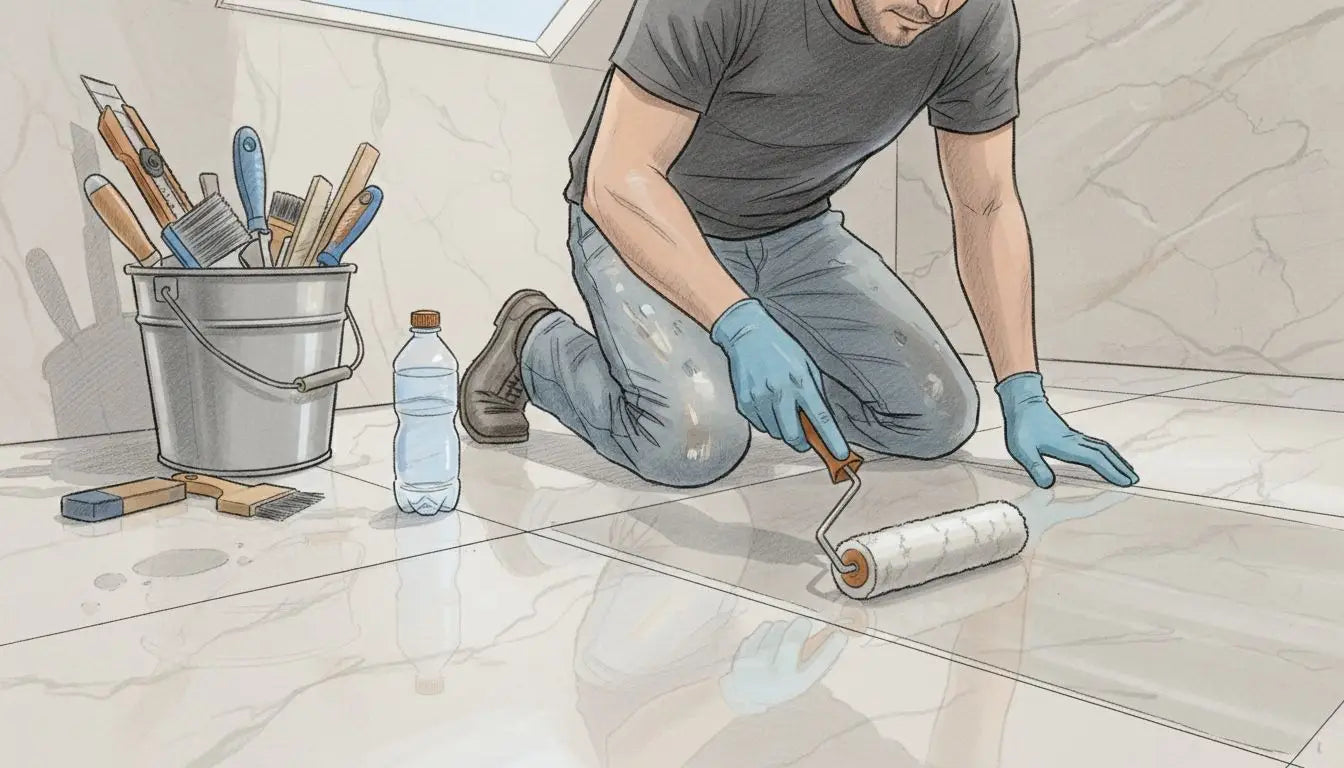
The protection works on multiple levels. First, sealers limit penetration of water, oils, and contaminants that would otherwise cause staining and degradation over time. Second, and equally important, they slow down the damage from acidic agents which can actually dissolve the calcite that makes up marble’s structure. This is particularly critical for California designers specifying marble in kitchens where acidic foods and beverages are inevitable. Without sealing, marble countertops would etch noticeably within months. With proper sealing, you extend the marble’s useful life by years, maintaining both its aesthetic appeal and structural integrity. The surface remains easier to clean because liquids don’t absorb as quickly, which also translates to reduced maintenance costs for your clients over the long term.
But sealing offers another benefit that’s often overlooked: it protects your clients’ investment by preventing permanent damage that could require expensive restoration or replacement. A properly sealed marble floor or vanity can look beautiful and perform well for decades. Without sealing, even a single acidic spill left unattended can create an etched mark that becomes permanent, forcing either costly professional restoration or living with the damage. High-quality impregnating sealers create a protective barrier within the pores that prevents or delays liquid absorption, reducing staining risk from everyday spills. When proper sealing also extends the life of marble while making cleaning easier, you’re not just protecting surfaces, you’re protecting the value of the entire renovation project. For high-end residential installations, this distinction between sealed and unsealed marble can mean the difference between a timeless, maintenance-friendly investment and a liability that requires constant vigilance.
Pro tip: Schedule sealing appointments 3 to 6 months after marble installation to allow the stone to fully cure, and mark your calendar for annual resealing to maintain continuous protection throughout the year.
Financial Benefits of Sealing Marble
When you’re presenting marble options to clients, the conversation often stops at the initial purchase price. But smart designers know that the real cost equation extends far beyond the price per square foot. Sealing marble is one of those preventative investments that pays for itself many times over by protecting what’s often the most expensive material in a renovation budget. Consider this: a single marble countertop or vanity can represent a significant portion of a kitchen or bathroom budget, sometimes totaling thousands of dollars. Without sealing, that investment faces constant risk from everyday hazards. With sealing, you’re essentially purchasing insurance that keeps the marble looking pristine for years longer than it would otherwise. The upfront cost of quality sealers and professional application is minimal compared to what you’d spend on restoration or replacement if damage occurs.
The financial math becomes even clearer when you factor in long-term maintenance costs. Sealed marble requires less intensive cleaning and maintenance, which translates directly to lower costs for your clients over the years. An unsealed marble surface requires meticulous care, careful product selection, and frequent professional restoration to address etching and staining. These expenses accumulate quickly. One professional marble restoration can easily cost hundreds or even thousands of dollars. Multiply that by multiple incidents over a decade, and you’re looking at restoration costs that dwarf the original sealing investment. Investing in sealing extends the material’s lifespan by delaying costly repairs caused by staining and acid damage, ultimately preserving both the aesthetic and structural value of the stone.
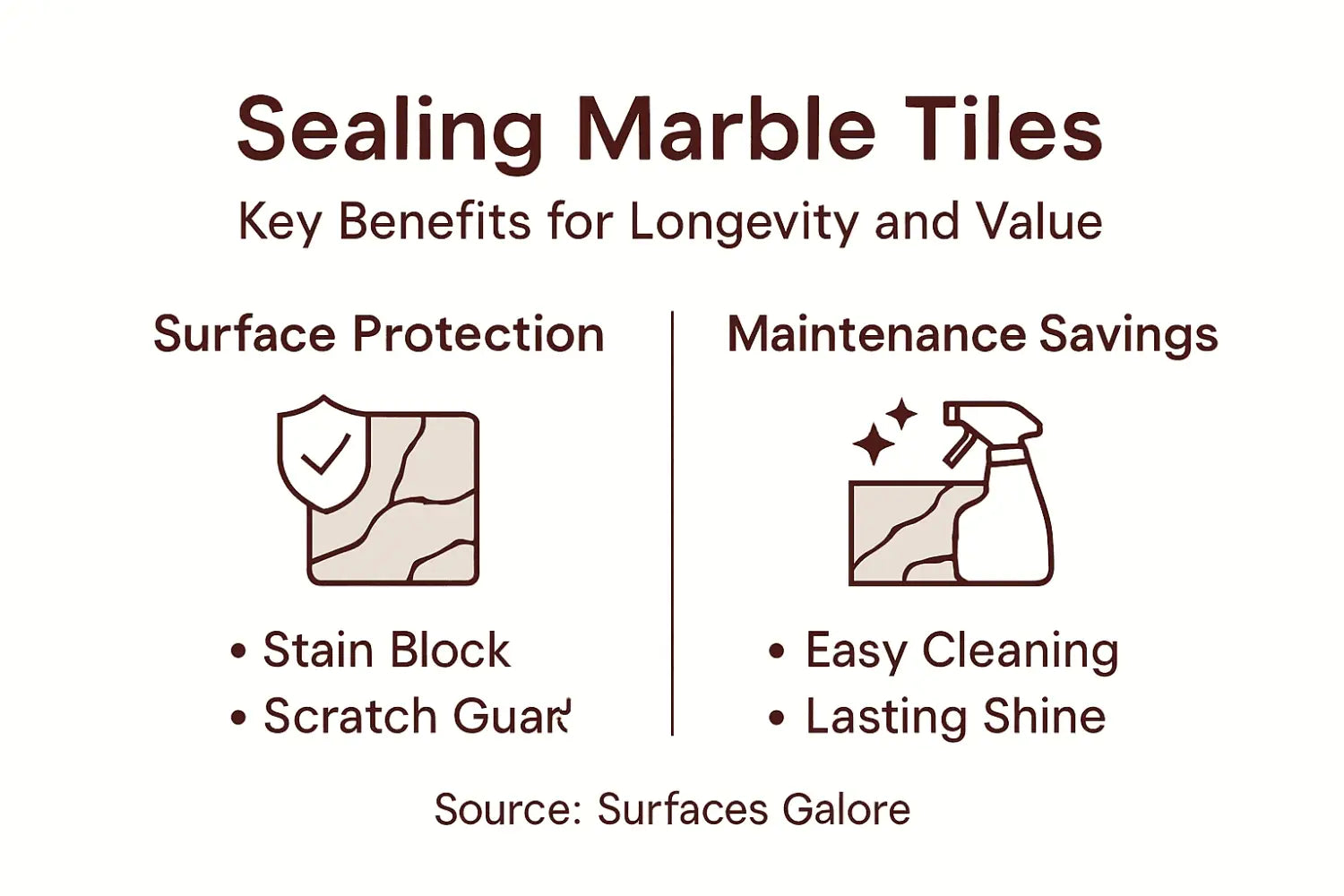
Beyond maintenance savings, sealing protects your clients’ asset value. Marble is a luxury material that homeowners and property appraisers recognize as a premium finish. Properly maintained, sealed marble in a kitchen or bathroom contributes meaningfully to property value and appeal. Unsealed marble that shows etching, staining, and wear becomes a liability rather than an asset, potentially reducing buyer interest or requiring price adjustments at resale. For high-end residential projects where marble flooring investment can run tens of thousands of dollars, sealing is simply non-negotiable. The cost of sealing, typically 50 to 200 dollars depending on square footage and sealer quality, represents less than 1 percent of most marble installation costs yet prevents damage that could necessitate complete replacement. When you frame sealing not as an optional expense but as essential investment protection, your clients understand the logic immediately.
Pro tip: Include sealing costs in your project proposal from the start, positioning it as part of the marble investment rather than an add-on; this helps clients see it as essential and prevents sticker shock later.
Maintenance Tips for Lasting Beauty
Sealing is only half the equation. What happens after the sealer cures determines whether your marble investment truly lasts or begins showing wear within a few years. The good news is that maintaining sealed marble requires far less effort than most people assume. The foundation of marble care is simple: promptly clean spills before they have time to penetrate the stone. This is especially critical for oils and acidic substances, which are marble’s primary enemies. A spill cleaned immediately after it happens rarely leaves a permanent mark. Give it an hour or two, and you might be looking at a stain that requires professional restoration. Red wine, citrus juice, olive oil, vinegar-based dressings, and even certain cosmetics can cause damage if left sitting on marble. Your clients should understand that marble isn’t a set-it-and-forget-it material, but rather one that rewards attentive care with years of beauty.
When it comes to cleaning products, avoid the temptation to reach for whatever surface cleaner is under the sink. Use only pH-neutral cleaners specifically formulated for natural stone, never harsh commercial cleaners or abrasive tools that scratch polished surfaces. Many common household products are acidic and will etch marble just as surely as spilled lemon juice. For routine cleaning, a soft microfiber cloth and pH-neutral stone cleaner diluted in distilled water works perfectly. For stubborn stains like oils or fats, poulticing methods remove oil and fat stains effectively without damaging the stone. Poulticing involves applying a paste-like substance that draws the stain out of the marble’s pores over several days, which is far gentler than scrubbing or using harsh chemicals.
Beyond daily care, your clients need a resealing schedule built into their maintenance routine. Most penetrating sealers require reapplication every 3 to 5 years, though this varies based on traffic, use patterns, and the specific marble variety. High-traffic kitchen countertops and bathroom vanities might need resealing every 18 months to 3 years, while rarely-used accent walls could go 5 years or longer. A simple test tells you when resealing is needed: sprinkle water droplets on the surface. If the water beads up, the sealer is still protecting the stone. If it absorbs into the surface, resealing time has arrived. For tumbled marble or other textured finishes, maintenance with routine inspection and timely touch-ups of sealers helps retain natural elegance and longevity. Encourage your clients to mark their calendar for annual sealer inspections, which takes just five minutes and can prevent costly damage from developing.
Pro tip: Create a marble care card for your clients listing the specific sealer used, application date, recommended resealing schedule, and approved cleaning products so they have everything needed for proper ongoing maintenance.
For easy reference, here are essential marble maintenance actions and their timing:
| Task | Frequency | Why It’s Important |
|---|---|---|
| Immediate spill cleanup | After every spill | Prevents stains and etching |
| Routine cleaning | Weekly | Maintains shine, removes dirt |
| Resealing (penetrating) | Every 3-5 years | Maintains long-term protection |
| Annual sealer inspection | Yearly | Detects loss of water resistance early |
Common Sealing Mistakes to Avoid
The difference between a sealing job that protects marble for years and one that fails within months often comes down to preparation and technique. The most frequent mistake contractors and homeowners make is applying sealer to marble that isn’t properly prepared. Applying sealers on dirty or damp marble prevents proper adhesion and penetration, resulting in ineffective protection that may peel or wear away quickly. Dust, residue from installation, moisture from cleaning, or even humidity in the air can create a barrier between the sealer and the stone’s pores. Before any sealer touches the marble, the surface must be completely clean and absolutely dry. This means waiting at least 24 to 48 hours after final cleaning before sealing, and ideally testing the surface with a moisture meter to confirm it’s ready. For kitchen backsplashes or bathroom installations where grout dust settles everywhere during installation, thorough vacuuming and tack cloth wiping are non-negotiable steps that many professionals rush through.
Another critical error is choosing the wrong type of sealer for the application. Using topical sealers instead of penetrating sealers on marble tiles causes peeling and uneven surfaces that look worse than unsealed marble. Topical sealers create a visible coating that sits on top of the stone, which might work for certain decorative applications, but marble’s porous nature and high-traffic exposure in kitchens and bathrooms demands penetrating impregnating sealers. Topical sealers wear through faster, require more frequent reapplication, and when they start peeling, they create a patchy, unprofessional appearance. Your clients invest premium dollars in marble specifically for its natural beauty, not to have a plastic-looking coating on top that degrades over time. Make sure you’re specifying products designed specifically for marble rather than generic stone sealers, and verify with your supplier that the sealer matches your marble type and application.
Over-application and insufficient curing time are equally damaging mistakes. Many people assume more sealer equals better protection, but excess sealer creates a sticky residue that traps dust and becomes difficult to clean. More critically, failure to allow adequate curing time compromises the sealer’s effectiveness and appearance. Most penetrating sealers require a full 48 to 72 hours of curing before normal use, yet homeowners often walk on marble floors or use kitchen countertops within hours of sealing. This disrupts the sealer’s bonding process and prevents it from properly penetrating the pores. Following the manufacturer’s curing instructions exactly isn’t optional, it’s the foundation of proper protection. For kitchen backsplashes or any high-visibility installation, creating a clear timeline with your client about when the surface becomes usable prevents frustration and ensures the sealer performs as intended.
Pro tip: Always conduct a test application of any sealer on a hidden area or leftover marble tile first to confirm the product works with that specific marble variety and produces the desired aesthetic result.
Protect Your Marble Investment with Expert Stone Solutions
Marble’s natural porosity and vulnerability to stains and etching can make maintaining its beauty a challenge for any project. If you want to avoid costly damage from everyday spills and acidic substances, sealing your marble with the right products is essential. Understanding the difference between topical and penetrating sealers is only the first step in extending your marble’s lifespan and preserving its elegant look.
At Surfaces Galore, we specialize in premium natural stone tiles including marble and travertine that meet the highest standards for durability and style. Our expert team can help you select marble varieties with favorable porosity ratings and recommend compatible sealers designed to protect your surfaces for years. Start your project on the right foot and give your marble the care it deserves by exploring our selection and trusted guidance today. Protect your investment now by visiting Surfaces Galore and taking the first step toward beautiful, long-lasting marble.
Frequently Asked Questions
Why is sealing marble tiles important?
Sealing marble tiles is crucial because it helps protect them from absorbing liquids, which can cause staining and damage, especially from acidic substances. It creates a barrier that allows for easier cleaning and maintenance, enhancing the longevity of the marble.
What are the types of marble sealers, and how do they differ?
There are two main types of marble sealers: topical sealers, which create a surface film for immediate visual protection but wear away quickly, and penetrating sealers, which soak into the marble’s pores to provide long-lasting protection without altering the stone’s appearance.
How often should I reseal my marble tiles?
Most penetrating marble sealers require resealing every 3 to 5 years, but high-traffic areas may need resealing every 18 months to 3 years. You can test the sealer’s effectiveness by sprinkling water on the surface; if it absorbs, it’s time to reseal.
What cleaning products are safe to use on sealed marble?
Only use pH-neutral cleaners specifically formulated for natural stone. Avoid harsh commercial cleaners and abrasive tools, as they can damage the marble surface. A soft microfiber cloth and a diluted pH-neutral stone cleaner will suffice for routine cleaning.
Leave a comment