

Marble shower floor slip resistance: safe and stylish choices

TL;DR:
- Slip resistance of marble shower floors depends on finish, tile size, installation, and maintenance.
- Honed, textured, and mosaic marble tiles offer better safety in wet shower environments.
- Proper installation and ongoing care are key to maintaining marble’s safety and beauty.
Marble shower floors have a reputation that’s half deserved and half myth. Yes, a polished marble slab can feel like an ice rink when wet. But that’s not the whole story, and it definitely doesn’t mean marble is off-limits for your shower renovation. Slip resistance on marble tile shower floors depends far more on the finish you choose, the size of your tiles, how the floor is installed, and how you care for it over time. This guide cuts through the confusion so you can make smart, confident decisions and end up with a shower floor that looks stunning and keeps your family safe.
Table of Contents
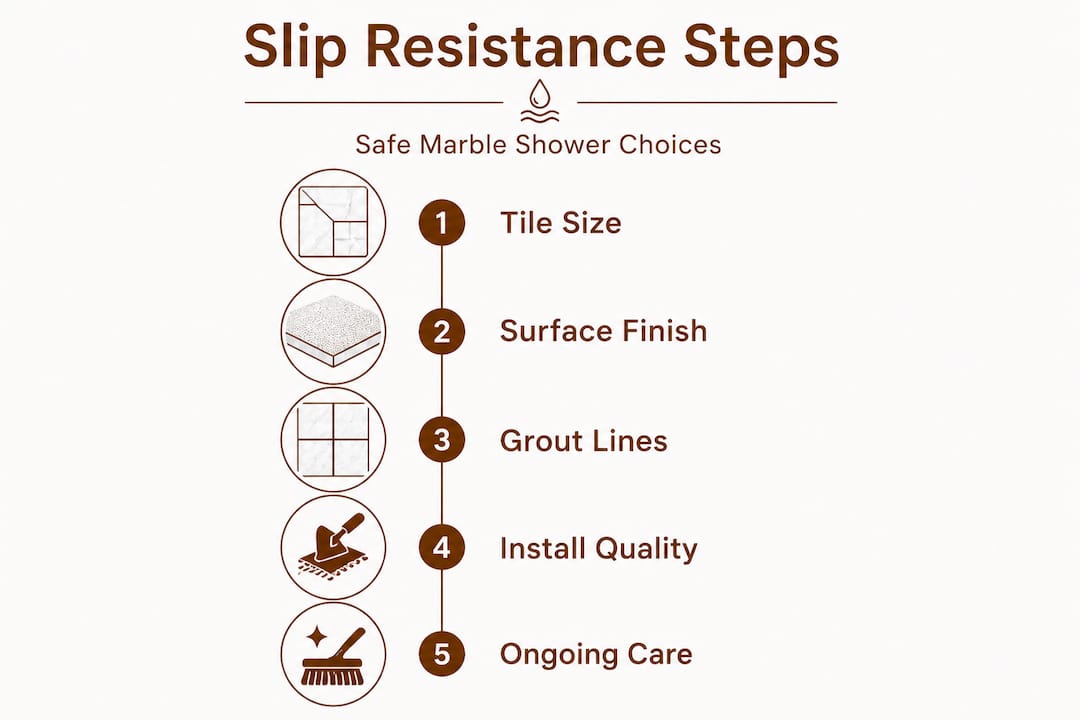
- What affects marble tile shower floor slip resistance?
- Comparing marble tile finishes and slip resistance
- Installation strategies to enhance marble tile shower floor safety
- Maintaining marble shower floors for ongoing slip resistance
- Why slip resistance on marble shower floors is misunderstood
- Ready to upgrade your bathroom? Explore marble solutions
- Frequently asked questions
Key Takeaways
| Point | Details |
|---|---|
| Slip resistance factors | Marble shower floor safety depends on tile size, finish, grout pattern, and real-world moisture. |
| Finish choice matters | Honed, textured, or mosaic marble tiles provide better grip than polished alternatives. |
| Install for safety | Proper installation with small tiles, wide grout lines, and slope improves shower floor slip resistance. |
| Maintenance is key | Routine cleaning and care keep marble tiles safe and prevent slipperiness. |
| Consult experts | Always check marble tile suitability and recommendations before installing in wet shower areas. |
What affects marble tile shower floor slip resistance?
Slip resistance is not a single property baked into marble at the quarry. It’s a combination of variables that you, your installer, and your stone supplier can actually influence. Understanding each factor helps you shop smarter and ask better questions before a single tile is set.
Stone variability matters more than most people realize. Marble is a natural material, and two tiles from the same quarry can have slightly different surface densities, vein structures, and porosity levels. This variability affects how water moves across the surface and how much friction your foot actually gets. Denser marble generally resists water absorption better and can be finished in ways that hold grip longer, while more porous varieties may need more frequent sealing and special attention to surface texture.
The finish is the single biggest lever you have. Polished, honed, brushed, leathered, and textured finishes all behave differently underfoot in a wet environment. A polished marble floor might score beautifully in a dry showroom but become dangerously slick the moment water and soap enter the equation. Honed finishes, which have a matte or satin appearance, create more microscopic texture for your foot to grip. Brushed and leathered finishes go even further, creating a tactile surface that dramatically improves traction without sacrificing the elegance marble is known for.
Grout lines are your secret safety feature. Smaller tiles mean more grout lines per square foot, and grout lines act as tiny channels that redirect water away from underfoot contact points. They also add physical edges your foot naturally grips against. A shower floor covered in large format 12x24 marble slabs offers far fewer of these grip points than one covered in 2x2 mosaic tiles set in a mesh-mounted sheet. This is one reason mosaic marble is considered one of the safest choices for wet shower floors.
Real-world conditions add another layer of complexity. Steam, soap residue, hard water mineral deposits, and cleaning product buildup all reduce friction on any surface, including marble. Marble tile in wet areas faces a constant battle against these elements. Industry guidance makes it clear that real-world shower conditions, including steam and moisture vapor combined with natural stone variability, can create unexpected slip hazards even when installation follows correct general tile methods. Always confirm with your supplier or fabricator that a specific marble is recommended for your shower environment before you buy.
Here is a quick summary of the key slip resistance variables:
- Stone density and porosity: Denser marble absorbs less water and holds finishes better
- Surface finish: Polished reduces grip; honed, brushed, and textured increase it
- Tile size: Smaller tiles create more grout lines and more friction points
- Grout joint width: Wider joints channel water more effectively
- Drainage slope: Correct pitch (typically 1/4 inch per foot toward the drain) prevents water pooling
- Cleaning habits: Soap scum and mineral buildup coat the surface and reduce friction
- Sealing status: Properly sealed marble resists staining and maintains surface texture
“The safest marble shower floor is the result of deliberate choices made before, during, and after installation. The tile you pick matters, but so does every decision that follows.”
Pro Tip: When shopping for marble tile for your shower floor, bring a sample home and test it wet with a light soap film before you commit. That five-minute test tells you more about real-world slip resistance than any showroom photo.
Comparing marble tile finishes and slip resistance
Not all marble finishes are created equal when it comes to wet shower environments. The chart below gives you a practical side-by-side look so you can match your safety needs to your design vision.
| Finish type | Appearance | Slip resistance (wet) | Best use in shower |
|---|---|---|---|
| Polished | High gloss, mirror-like | Low | Accent walls, not floor |
| Honed | Matte to satin, soft | Moderate | Shower floor with small tiles |
| Brushed | Textured, natural look | Moderate to high | Shower floor |
| Leathered | Dimpled, rustic feel | High | Shower floor |
| Tumbled | Rough, antique look | High | Shower floor |
| Mosaic (any finish) | Small tile grid | High | Shower floor, best choice |
Polished marble is where the reputation for slipperiness comes from, and that reputation is earned. The polishing process literally smooths stone down to a mirror surface, removing the microscopic roughness that creates friction. Water and soap create a film over that surface that your foot simply cannot grip. Stone World cautions that installing marble in a shower requires research into whether the specific stone is recommended for conventional stall showers and whether problems are expected under steam and moisture conditions. Polished marble almost always fails that test for floors.
Honed marble removes the gloss while keeping the stone’s natural beauty and color depth. The surface feels smooth to the touch but has enough microscopic texture to meaningfully improve grip. If you love the look of marble but worry about slip risk, honed is a strong first upgrade from polished.
Textured finishes like brushed, leathered, and tumbled take things further. These processes physically alter the stone surface to create varying degrees of tactile roughness. Tumbled marble, which gets its edges and surface rounded through a literal tumbling process, is especially popular for shower floors because it combines high slip resistance with an old-world aesthetic that suits many bathroom design styles.
Mosaic marble tiles are the gold standard for shower floor safety. Because individual tiles are small, often 1x1, 2x2, or penny-round shapes, a single square foot of floor can have 20 or more grout joints running through it. Each joint is a grip point and a water channel. You can explore marble mosaic types to see just how many design options exist within this category, from classic white penny rounds to herringbone patterns in mixed stone tones.
Here is a straightforward ranking of finish choices for shower floor safety from best to most challenging:
- Mosaic tiles (any finish, especially honed or tumbled)
- Leathered or tumbled individual tiles in small formats
- Brushed marble in 4x4 or 6x6 formats
- Honed marble in larger formats with tight grout lines
- Polished marble (best reserved for walls or dry areas)
For homeowners working on a marble bathroom project in 2026, the good news is that marble selection has never been more varied. Premium suppliers now offer honed and brushed versions of popular marble types that used to only come polished. You no longer have to choose between beauty and safety.
Installation strategies to enhance marble tile shower floor safety
Choosing the right finish and tile size gets you most of the way there, but installation quality can make or break your marble shower floor’s long-term safety. Even a perfectly chosen tile becomes a hazard if the installation behind it is done poorly.
Floor slope is non-negotiable. A properly sloped shower floor directs water toward the drain continuously. The standard is a pitch of at least 1/4 inch per foot, measured from the farthest wall to the drain. When water pools anywhere on a marble floor, it creates a standing slip zone. A correctly sloped mortar bed eliminates pooling and keeps the surface draining actively during and after every shower.
Grout selection and joint width deserve serious attention. Unsanded grout is typically used for joints under 1/8 inch, while sanded grout handles wider joints. For shower floors where grip matters, wider grout joints (1/8 to 3/16 inch) provide more traction surface. Use a grout that is rated for wet environments and consider a grout that resists mold and mildew, since a degraded grout line not only looks bad but can become slick and harbor bacteria.
Anti-slip treatments are a practical tool, not a last resort. Several products designed for natural stone apply a chemical reaction to the surface that creates micro-etching, increasing friction without changing the visual appearance of the tile. These treatments are used by contractors, hotel renovators, and commercial facility managers. For a residential marble shower, a quality anti-slip treatment applied after installation and refreshed every year or two is a sensible insurance policy.
As industry guidance confirms, even correctly installed marble can present challenges under steam and moisture conditions specific to shower environments. Discussing this with your supplier before purchase is part of good installation planning, not an afterthought. Your marble shower installation should follow a documented process that accounts for waterproofing, proper substrate preparation, and finish compatibility.
Here is a summary of key installation safety upgrades:
- Waterproofing membrane: Protects the substrate and maintains tile bond integrity over time
- Back-buttering tiles: Ensures full adhesive contact and prevents hollow spots that crack tiles
- Correct mortar bed slope: Eliminates pooling zones
- Wider grout joints on small tiles: Maximizes friction and drainage
- Anti-slip surface treatment: Adds a layer of grip to any marble finish
- Sealed grout joints: Prevents moisture intrusion and grout degradation
| Installation factor | Safety impact | DIY-friendly? |
|---|---|---|
| Floor slope | High | No, hire a pro |
| Waterproofing membrane | High | No, hire a pro |
| Tile size and grout spacing | High | Yes |
| Anti-slip treatment | Moderate to high | Yes |
| Grout type and sealing | Moderate | Yes |
| Drain placement and size | High | No, hire a pro |
Pro Tip: Before grouting, do a dry-lay test of your tile pattern and walk across the floor in wet socks. This gives you a sense of how grout line frequency affects grip before anything is permanently set. You can also reference marble floor installation tips for a detailed breakdown of best practices.
Maintaining marble shower floors for ongoing slip resistance
Installation creates the foundation for safety, but what happens after the shower is in daily use determines how long that safety holds up. Marble is durable, but it responds to how it is treated.
Here are the core maintenance steps that keep your marble shower floor slip-resistant over time:
-
Clean regularly with pH-neutral stone cleaner. Standard bathroom cleaners, including many popular spray products, are too acidic or too alkaline for marble. Acidic cleaners etch the surface, which can paradoxically create micro-damage that looks rough but traps soap and mineral deposits. Use a cleaner specifically formulated for natural stone.
-
Rinse thoroughly after every shower. Soap residue is one of the biggest contributors to slipperiness on marble floors. A quick rinse with clean water after each use removes the film before it dries and hardens.
-
Squeegee or wipe down the floor weekly. In hard water areas, mineral deposits build up fast. A quick squeegee after rinsing reduces deposit accumulation significantly, which in turn preserves the friction texture of your marble finish.
-
Reseal the marble on the schedule your fabricator recommends. Most marble shower floors benefit from sealing every six to twelve months, though denser marbles may go longer. Sealer protects the stone from deep staining but also helps the surface maintain its intended texture rather than becoming polished by foot traffic and abrasive cleaners.
-
Inspect grout lines annually. Cracked or missing grout reduces both the structural integrity and the traction benefit of the joint network. Regrouting affected areas is a relatively simple repair that has a real safety payoff.
Industry guidance reinforces that marble tile in showers can develop slip issues over time due to steam, moisture vapor, and stone variability, making active maintenance critical to long-term safety. This is not a reason to avoid marble. It is a reason to treat it like the premium material it is.
Pro Tip: Keep a small bottle of stone-safe cleaner and a dedicated scrub brush near your shower controls. A 60-second targeted scrub of high-traffic areas during your weekly cleaning takes almost no time and makes a noticeable difference in surface grip.
Avoid the following products and habits that damage marble’s slip-resistant qualities:
- Vinegar, lemon juice, or citrus-based cleaners (all acidic, will etch marble)
- Bleach-based products (can break down sealer and lighten stone color)
- Abrasive scrubbing pads (can polish honed or textured finishes over time)
- Steam cleaners directed at the floor surface (can drive moisture into grout lines and loosen tiles)
- Leaving shampoo or conditioner bottles directly on the marble floor (ring stains reduce surface uniformity)
If you notice your floor becoming more slippery over time despite regular cleaning, it may be time for a professional anti-slip re-treatment or a sealer refresh. Resources on cleaning marble flooring and troubleshooting marble floors can walk you through both processes in practical detail.
Why slip resistance on marble shower floors is misunderstood
Here is the uncomfortable truth: most of the fear around marble and shower safety comes from people who have seen one badly chosen, poorly installed, and neglected marble floor and generalized from there. The tile renovation industry does marble a disservice when it lumps it into a “slippery luxury material” category without distinguishing between polished hotel lobby floors and tumbled mosaic shower tiles. These are completely different products with completely different safety profiles.
What most homeowners and even some designers get wrong is treating marble slip resistance as a fixed property rather than a designed outcome. You do not just buy marble and hope for the best. You make deliberate choices about finish, format, installation method, grout, and maintenance protocol, and those choices determine whether your shower floor is safe or not. That is actually good news, because it means safety is within your control.
We see this play out constantly in the questions we get from customers. Someone reads a forum post warning against marble in showers and arrives convinced it is a bad idea. But when you walk them through a 2x2 honed mosaic on a properly sloped, sealed, and maintained floor, the conversation changes completely. The fear was based on an incomplete picture.
The deeper issue is that marble’s reputation suffers from comparison to ceramic and porcelain tiles that are mass-produced with factory-applied slip-resistant coatings that meet specific ratings straight out of the box. Marble, being a natural stone, requires more intentional specification. That is a meaningful difference, but it is not a disqualifying one. It simply requires working with a knowledgeable supplier who understands what why marble for bathrooms actually involves at a practical level.
Properly specified, installed, and maintained marble can be as safe as any alternative on the market and far more beautiful than most. The homeowners who enjoy marble showers for decades without incident are not lucky. They made smart choices upfront and followed through with consistent care. That outcome is available to any remodeler willing to do the same homework.
Ready to upgrade your bathroom? Explore marble solutions
If this guide has shifted how you think about marble in the shower, you are ready to take the next step with confidence. At Surfaces Galore, we work directly with homeowners, designers, and contractors to find marble tile options that match both your design vision and your practical safety needs.

Our team at Surfaces Galore imports premium marble, limestone, and travertine tiles and mosaics directly, which means you get authentic natural stone at prices that make sense for real renovation budgets. Whether you are drawn to classic white honed marble mosaics or a dramatic leathered dark stone pattern, we can point you toward options that are specifically suited for wet shower environments. Reach out to our specialists, browse our curated selections, and start your bathroom remodel with the knowledge that beauty and safety do not have to compete.
Frequently asked questions
Is polished marble too slippery for shower floors?
Polished marble is slippery when wet, but choosing smaller mosaic tiles, honed or textured finishes, or applying anti-slip treatments can dramatically improve grip. Polished marble works best on shower walls, not floors.
How can I make a marble shower floor less slippery?
Choose honed, brushed, or tumbled marble tiles in smaller formats to maximize grout line coverage, and apply a professionally tested anti-slip treatment after installation for an added layer of safety.
Are marble tiles recommended for all shower environments?
Not every marble type is suitable for every shower setup. Always confirm with your supplier or fabricator, since real-world shower conditions including steam and heavy moisture can affect certain stones differently.
How do you maintain marble shower floors for slip resistance?
Clean weekly with a pH-neutral stone cleaner, rinse soap residue after every use, reseal on the schedule your fabricator recommends, and inspect grout lines annually. Consistent care as outlined in marble floor maintenance keeps the surface safe and looking its best.
Recommended
- Marble slab selection: Stylish, affordable options for U.S. homes– SurfacesGalore
- Complete Guide to Why Choose Marble Floors for Homes– SurfacesGalore
- Marble in Wet Areas for Beauty and Function– SurfacesGalore
- Marble Shower Installation Workflow for Elegant Results– SurfacesGalore
- Glow in the Dark Anti Slip Tape - Luminescent Stripe | STICK 2
Leave a comment