
Marble Texture Options: Impact on Luxury Interiors

Confusion around marble texture often begins with a simple conversation between a designer and client in Southern California. That gorgeous slab in a showroom might not be true marble by geological standards, and the texture you choose can dramatically affect both appearance and performance. For luxury residential projects, understanding granoblastic texture and how different finishes like polished, honed, or brushed surfaces interact with impurities and light is key to creating authentically beautiful spaces. This guide clarifies common misconceptions and helps you specify marble textures with confidence.
Table of Contents
- Marble Texture Basics And Common Misconceptions
- Key Surface Finishes: Polished, Honed, Brushed
- Texture Comparison For Kitchen, Bath, And Floors
- Selecting The Right Finish For Each Application
- Explore Surfaces Galore’s Curated Texture Collections
Key Takeaways
| Point | Details |
|---|---|
| Marble Texture Understanding | Marble should be correctly identified based on geological definitions, not merely marketplace terminology. Designers must comprehend these distinctions to avoid specification errors. |
| Surface Finishes Matter | The choice between polished, honed, and brushed finishes significantly impacts marble’s appearance, performance, and maintenance requirements. Clients need guidance on the right finish based on their lifestyle. |
| Room-Specific Considerations | Each room demands careful selection of marble texture; kitchens and bathrooms require practical finishes for safety and durability, while aesthetic finishes are suitable for vanities and accent walls. |
| Sample Evaluation Process | Request large-format samples of marble finishes in the actual installation space; this helps clients visualize and understand how light and use will affect the material over time. |
Marble Texture Basics and Common Misconceptions
Marble gets thrown around casually in the design world, but most people don’t understand what they’re actually looking at. When you talk about marble texture, you’re discussing the physical surface characteristics that define how the stone feels, looks, and performs in your space. The confusion starts with the geological definition versus what’s sold in the marketplace. Geologically, marble forms as a metamorphic rock when limestone undergoes intense heat and pressure deep within the Earth. This process recrystallizes the original stone into interlocking calcite or dolomite crystals, which is what gives marble its distinctive appearance and workable qualities. However, in the stone trade, the term “marble” gets applied more loosely to include stones that geologists wouldn’t technically classify as true marble. This disconnect creates real confusion when Southern California designers specify materials with their clients or contractors.
The texture you see on a marble slab is determined by several factors working together. Pure marble typically develops a granoblastic texture with uniformly sized crystals that create a relatively homogeneous appearance. Think Carrara white marble as the classic example. But most commercial marbles contain impurities like clay, iron oxides, or other minerals that redistributed during metamorphism. These impurities are what create those stunning veins, swirls, and color variations you see in Calacatta or Nero Marquina. The size and distribution of these crystals, combined with how the stone’s surface is finished (polished, honed, or brushed), create the textural experience that transforms a marble slab into a luxury interior statement. This is where understanding texture options becomes critical for your design decisions.
Here’s where the misconceptions trip up even experienced designers. Many assume that all marble textures are equally durable or that a honed finish means the same thing across different marble types. Wrong. The actual mineral composition, crystal structure, and finish application each play their own role in how the stone will age in kitchens, bathrooms, and high-traffic areas. Some marbles are softer and more prone to etching (a light dulling when acidic substances contact the surface), while others hold up better under practical conditions. The texture finish you choose doesn’t just affect aesthetics. It impacts maintenance requirements, durability ratings, and how the stone will patina over time. A polished surface on Statuario marble will develop a different character than the same finish on marble with higher iron content. Your clients need to understand these nuances before committing to a texture choice for a permanent installation.
Common myth number two: “This marble texture will look the same in five years.” Marble, especially lighter varieties with certain finishes, develops a natural patina as it ages. Traffic patterns emerge in high-use areas, and the surface can accumulate micro-scratches that change its reflective qualities. This isn’t a failure of the material. It’s marble aging with character. But it catches people off guard if they haven’t been properly educated. Understanding that texture options like honed or brushed finishes often age more gracefully than polished surfaces because they obscure these changes can actually help you specify the right product for your client’s lifestyle and expectations. This reality should inform whether you recommend a highly polished Calacatta for a showpiece kitchen island versus a honed finish for kitchen countertops that will see daily use.
Pro tip: Before specifying any marble texture, request large-format samples from your supplier and place them in the actual space where they’ll be installed, checking how they perform under the client’s specific lighting conditions and how they’ll interact with surrounding finishes.
Key Surface Finishes: Polished, Honed, Brushed
When you’re evaluating marble for a luxury residential project, the surface finish you choose dramatically shapes how the material will look and function day to day. These three primary finishes represent fundamentally different approaches to preparing marble, each with distinct visual characteristics and practical implications. Understanding what separates polished, honed, and brushed finishes is non negotiable if you want to make informed recommendations that align with your client’s lifestyle and design vision. The difference isn’t just cosmetic. It affects durability, maintenance requirements, slip resistance, and how the stone will age over time in different room contexts.
Polished marble surfaces represent the glossy, high-shine option that many people picture when they think of luxury marble. Polishing involves sanding and grinding the stone with progressively finer abrasive grits until a reflective, mirror-like surface emerges. This process enhances the marble’s color depth, making veining and patterns pop with intensity. A polished Calacatta or Statuario becomes absolutely stunning in showpiece applications like kitchen islands or bathroom vanities where the visual drama justifies the extra care. The high reflectivity amplifies light in a space, which can make smaller bathrooms feel airier. However, polished finishes show water spots, fingerprints, and footprints easily, and they’re slippery when wet, making them less practical for kitchen work surfaces or bathroom floors where safety matters. The glossy surface also shows every dust particle and mineral deposit from hard water, so maintenance involves regular polishing and careful cleaning. In Southern California’s bright, direct sunlight, polished marble can create nearly dazzling reflections, which might feel beautiful or overwhelming depending on the space orientation.
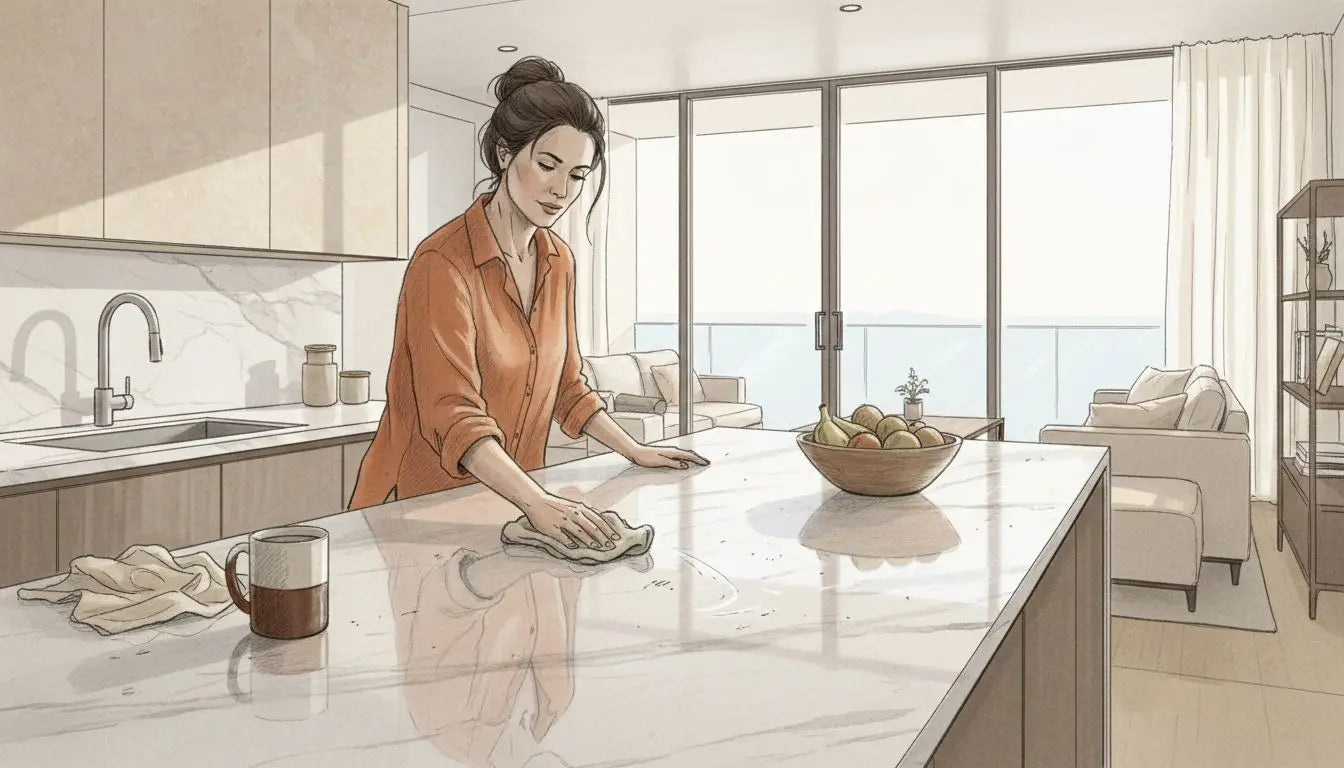
Honed finishes provide a matte, soft-looking surface that feels sophisticated without the high-maintenance demands of polish. Honing uses finer abrasives than polishing but stops before achieving that mirror shine, leaving a smooth yet non-reflective surface. This texture softens the stone’s appearance, making patterns appear less intense while still maintaining visual interest. The real advantage for practical projects: honed marble offers significantly better slip resistance than polished, making it far more suitable for kitchen countertops and bathroom flooring where people actually work and move around. Fingerprints and water spots are less visible on honed surfaces, reducing the constant cleaning cycle that polished marble demands. A honed finish also hides dust and minor imperfections better than polished, which means your clients spend less time maintaining the surface. The trade-off is that you lose some of that intense color depth and visual drama. Honed marble reads as understated elegance rather than showstopping luxury. For designers working with clients who value livable, practical luxury over pristine presentation, honed typically wins the logic test.
Brushed finishes take texture one step further by intentionally creating an irregular, directional surface using abrasive brushes. This approach softens colors even more than honing and introduces visible texture that you can feel as well as see. Brushed marble has almost a hand-hewn quality that appeals to designers seeking authenticity and character in luxury spaces. The directional patterns create visual movement and depth that photographs beautifully in design portfolios. Like honed finishes, brushed surfaces hide wear patterns and require less frequent maintenance than polished marble. They’re also slip resistant and more forgiving in high-traffic kitchen and bathroom applications. The downside: brushed surfaces can trap dust and debris in their texture, potentially requiring different cleaning approaches than smoother finishes. Some clients find the tactile quality of brushed marble irresistible, while others prefer the smoothness of honed surfaces.
Here’s the practical reality for your specifications: kitchen applications typically perform best with either honed or brushed finishes because countertops need usability and safety. Bathroom vanities and walls can accommodate polished marble if you’re designing a spa-like showpiece, but floors should lean honed or brushed. Flooring in general performs better when it’s not slippery and when it hides footprints and traffic patterns gracefully. When comparing these options for your specific project, request large-format samples finished in all three ways, then place them in the actual space under the client’s real lighting conditions. Observe how they perform over a few days. Watch for water spots, fingerprints, and how the light interacts with each finish at different times of day. This hands-on approach beats any theoretical discussion because it shows exactly what your client will live with.
Pro tip: Specify honed or brushed finishes for high-traffic kitchen and bathroom floors in Southern California homes, where intense sunlight and practical daily use make polished marble maintenance unrealistic, then reserve polished surfaces for statement-making vanities or focal wall applications where drama trumps practicality.
Here’s a concise comparison of marble surface finishes to help you choose the best fit for your project:
| Finish Type | Appearance | Practical Benefits | Typical Applications |
|---|---|---|---|
| Polished | High-shine, glossy | Strong visual impact, color enhancement | Vanities, accent walls, statement pieces |
| Honed | Matte, smooth | Slip resistance, hides etching | Kitchen counters, bathroom floors, high-traffic areas |
| Brushed | Textured, irregular | Conceals wear, tactile depth | Kitchen floors, contemporary designs, living spaces |
Texture Comparison for Kitchen, Bath, and Floors
Each room in a luxury residential project makes different demands on marble. A texture that works beautifully in a primary bathroom might fail catastrophically in a kitchen. The same finish that looks stunning on a foyer floor could become a maintenance nightmare in a mudroom. Understanding these room-specific requirements separates competent specifications from expert ones. Your texture choice must balance aesthetics, safety, durability, and the practical realities of how your clients actually use their homes.
Kitchens present the most demanding environment for marble because they combine water exposure, acidic substances, high traffic, and constant use. This is where the texture decision becomes critical. Polished marble in a kitchen is beautiful to photograph but problematic in reality. The glossy surface becomes slippery when wet, creating safety concerns around sink areas and island edges where people stand while cooking. More importantly, marble’s calcite composition makes it vulnerable to acids commonly found in kitchens, including lemon juice, vinegar, wine, and tomato-based foods. Acidic contact causes etching, which appears as dull spots on polished surfaces. Honed finishes mask etching far better than polished because the matte texture already lacks shine. A honed Carrara or Calacatta marble works wonderfully for kitchen countertops because it hides fingerprints, water spots, and minor etching that would be glaringly obvious on polished surfaces. Brushed finishes perform even better in this regard, though some designers find the texture less refined for kitchen applications. The slip resistance advantage of honed and brushed also matters around the sink and cooktop. If your client insists on polished marble in the kitchen, restrict it to island end caps or decorative applications where it won’t encounter daily acid exposure and heavy traffic.
Bathrooms offer more flexibility because they don’t involve acidic food contact, but moisture and slip resistance remain important considerations. Vanity countertops can accommodate polished marble because they typically see less water exposure than kitchen countertops and the client can wipe up spills quickly. A polished Statuario or Arabescato marble above a bathroom sink creates that luxurious spa aesthetic that resonates with high-end residential clients. Bathroom floors present a different story entirely. Wet feet on polished marble equals safety concerns, particularly in master baths where older clients might be at greater risk from slipping. Honed or brushed finishes provide dramatically better slip resistance when wet, making them the responsible choice for bathroom flooring. Shower walls can use any finish because they’re vertical surfaces where slip resistance matters less, though honed or brushed create a more contemporary aesthetic that photographs well in design work. For wet areas like shower benches or tub decks, honed marble performs excellently because marble suits wet applications while maintaining elegance, though you should always recommend a quality sealer to protect against standing water penetration.
Flooring demands perhaps the most practical thinking because it combines high traffic, potential moisture, and the need to hide wear patterns over years of use. Polished marble floors work in formal living rooms or dining rooms that see limited foot traffic. They create that dramatic, gallery-like quality that clients sometimes desire. But specifying polished marble for foyer floors, kitchen flooring, or any high-traffic area sets your clients up for constant maintenance and safety concerns. Honed marble flooring strikes the ideal balance. It hides footprints and traffic patterns beautifully while offering legitimate slip resistance and forgiving maintenance. A large-format honed marble floor in a neutral tone can anchor an entire luxury home aesthetic without demanding constant attention. Brushed marble flooring performs similarly, adding subtle texture and character that appeals to designers seeking authenticity. The directional brushing can create visual flow that guides the eye through spaces, which works particularly well in open floor plans common to Southern California luxury homes.
Here’s the practical specification strategy that has proven effective with luxury residential clients: Start by mapping where marble will appear. List each application separately. For kitchens, specify honed finishes on all countertops unless the client has a showpiece island that justifies polished as a dramatic focal point. For bathroom countertops, honed or polished both work depending on the client’s priorities. For all flooring, default to honed unless traffic patterns are genuinely minimal. For bathroom shower walls, allow polished if the client wants visual drama. Then create a sample board showing these finishes in the actual marble types you’re specifying, installed in the actual spaces under real lighting. This visual comparison clarifies decisions far more effectively than discussing finishes abstractly.
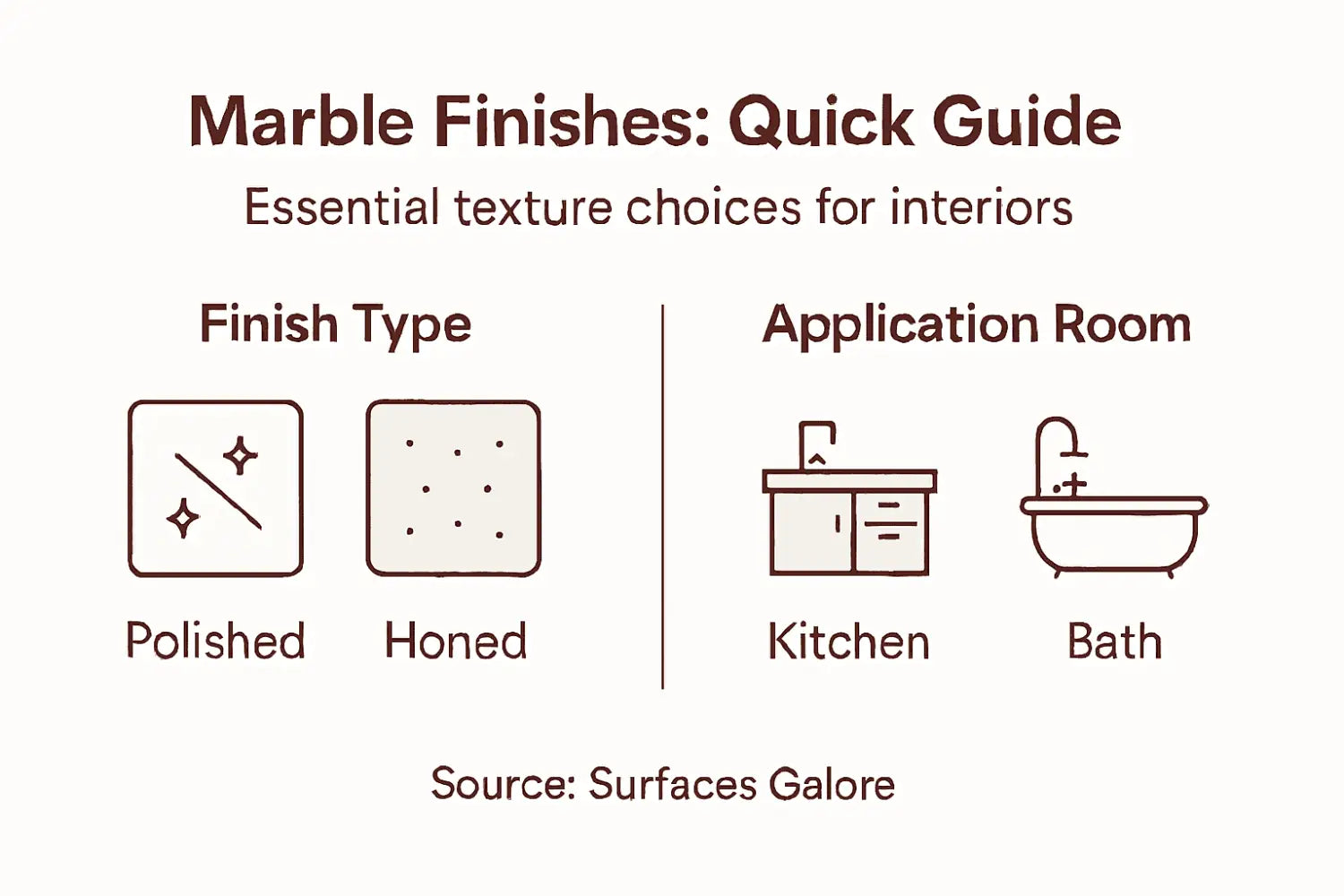
Pro tip: Create a finish specification matrix for each project that maps marble finish to room and application, then physically place all samples in their intended locations for at least 48 hours so clients experience how light, moisture, and daily use will affect each finish before making final commitments.
Selecting the Right Finish for Each Application
Choosing a marble finish isn’t a one-size-fits-all decision. The ideal finish for a foyer statement piece completely fails in a busy kitchen. The logic that works for bathroom walls breaks down when applied to shower floors. Each application demands its own analysis based on how the space functions, who uses it, what it’s exposed to, and how much maintenance your client realistically tolerates. This room-by-room thinking separates designers who create problems from those who create lasting solutions.
Kitchens and Kitchen Islands require the most strategic finish selection because they combine moisture, heat, acidic foods, and constant handling. This is where honed finishes dominate for practical reasons. Marble’s porous nature requires sealing to prevent stains from food and liquids, and honed finishes provide a forgiving surface that hides the etching and minor wear that inevitably occurs. A honed Carrara or Calacatta on kitchen countertops accepts its role in a working kitchen rather than fighting it. You’re not creating a museum piece; you’re creating a functional luxury surface that looks better every year as it develops character. Kitchen islands can justify polished marble on decorative end caps or sides where the client isn’t actively working, but the main work surface demands honed. This balanced approach gives clients the visual drama they want without creating a maintenance nightmare. Brushed finishes work in kitchens too, particularly for clients seeking additional texture and character, though some purists find brushed marble less refined than honed for this application.
Bathroom Vanities and Countertops allow more flexibility toward polished finishes because they don’t involve acidic food contact or heavy daily use. A polished Statuario or Arabescato above the sink creates that spa-like luxury aesthetic that resonates strongly with Southern California clients. Bathroom counters also receive less water exposure than kitchen countertops because spills get wiped immediately rather than sitting. However, specify honed if the client has young children, uses the vanity heavily, or values a low-maintenance approach. Bathroom Flooring flips the calculation entirely. Here, safety matters more than aesthetics. Flooring selections for kitchens and bathrooms should balance durability, water resistance, and maintenance with the need for non-slip surfaces in wet conditions. Honed or brushed finishes provide dramatically better slip resistance than polished when wet. If a client insists on polished bathroom flooring, restrict it to the vanity area where water exposure is minimal. For the actual bathing zone, honed marble offers the responsible choice. Shower Walls can accommodate polished marble because they’re vertical surfaces where slip resistance matters less and water drains immediately. Honed works equally well and creates a more contemporary aesthetic. Shower Floors and Benches absolutely require honed or brushed finishes for safety reasons.
Foyer and High-Traffic Flooring demands thinking about wear patterns and visibility of traffic. Polished marble in a formal foyer that sees minimal foot traffic creates that gallery-like drama clients love. But polished marble in a main foyer or entry area that receives daily traffic becomes problematic quickly. The surface shows every footprint and micro-scratch, and the slippery nature creates safety concerns on stairs or near transitions. Honed marble flooring strikes the ideal balance for high-traffic areas. It hides footprints naturally, provides legitimate slip resistance, and develops a beautiful patina over years that actually improves the appearance rather than degrading it. A large-format honed marble floor in a neutral tone anchors an entire luxury home without demanding constant attention. Living Rooms and Dining Rooms with limited traffic can accommodate polished marble because use patterns don’t create the visible wear that happens in foyers and entries. Accent Walls and Fireplace Surrounds can use any finish because they’re primarily visual elements. Here, polished creates the most dramatic impact, though honed offers subtle sophistication.
The practical specification framework involves three questions asked for each application. First, what substances will contact this marble? Kitchens require honed or brushed because of acidic foods. Bathrooms can handle polished on vertical surfaces and vanities. Second, how wet does this area get? High moisture demands honed or brushed for slip resistance. Third, how much traffic and daily handling occurs? High-traffic areas perform better with honed because they hide wear patterns and require less maintenance. Apply these three questions consistently, and your finish selections align with real-world performance. Then present your recommendations with physical samples placed in the actual spaces, under the client’s actual lighting, so they experience the finish choice rather than imagining it.
Pro tip: When presenting finish options to clients, physically install comparable-sized samples of each finish in the exact locations where they’ll be used, then photograph them under different lighting conditions throughout the day to demonstrate how finish choices affect appearance in that specific space.
Use this quick reference to see how marble finishes perform in typical home spaces:
| Room / Surface | Recommended Finish | Rationale | Maintenance Level |
|---|---|---|---|
| Kitchen Countertops | Honed | Masks fingerprints, resists etching | Moderate |
| Bathroom Vanity | Polished/Honed | Visual drama or practicality | Varies |
| Flooring (main) | Honed/Brushed | Slip resistance, hides traffic | Low to moderate |
| Accent Walls | Polished | Maximum visual impact | Low |
Explore Surfaces Galore’s Curated Texture Collections
Theory and specifications matter, but ultimately you need access to real marble with actual texture options to bring your vision to life. Surfaces Galore curates texture collections specifically for designers like you who work on luxury residential projects in Southern California. Rather than wading through endless generic inventory, you get thoughtfully organized selections that represent what actually performs well in high-end homes. The distinction matters because not all marble texture options are created equal, and having a trusted direct importer who understands your specific design context saves time while improving project outcomes.
Surfaces Galore operates as a direct importer based in Anaheim, California, which means you’re accessing premium natural stone without unnecessary middleman markups or inventory limitations. This direct relationship matters for several practical reasons. First, you get consistent access to specific marble types and finishes that perform reliably across multiple projects. When you find a honed Carrara that works beautifully in kitchens, you can specify it with confidence knowing it’s available and consistent. Second, the team understands regional design preferences and climate considerations that matter specifically to Southern California luxury homes. Bright desert sunlight, Mediterranean-inspired aesthetics, and the region’s emphasis on both indoor-outdoor living and practical durability all influence which texture options perform best. Third, as a designer working on multiple projects simultaneously, having a single trusted source for marble tiles, mosaics, moldings, switch plate covers, and custom cuts streamlines your sourcing process dramatically. Rather than coordinating with multiple suppliers, you manage one relationship that delivers the breadth and depth you need. The company ships nationwide, which means you can specify Surfaces Galore’s collections for projects beyond California while still benefiting from that direct importer advantage.
The curated texture collections organize marble by practical application rather than overwhelming you with every variation available globally. When you’re sourcing kitchen marble, you can access the collection filtered for honed and brushed finishes that perform well in that environment, eliminating the polished options that would create maintenance headaches. When specifying bathroom vanity surfaces, you can browse collections organized by finish type, so you’re seeing polished and honed options presented together with the actual visual and tactile differences visible. For flooring projects, you get collections curated specifically for slip resistance and traffic performance. This curation saves you research time while ensuring you’re considering options that genuinely work in their intended applications. Understanding texture and visual properties in material selection helps designers make informed choices, and having collections pre-organized by these attributes means you’re working with surfaces already vetted for performance. The browsing experience itself becomes educational as you see how finish choices affect the appearance of specific marble types across different lighting conditions.
What makes Surfaces Galore’s approach different from big-box retailers or generic online platforms is the integration of education with product access. You’re not just buying marble tiles. You’re accessing expert knowledge about which textures work where, how they’ll age, what maintenance they require, and how they’ll photograph in completed projects. The team can discuss nuances like why Calacatta marble with a honed finish handles kitchen applications better than the same marble polished, or why brushed finishes in Nero Marquina create visual interest that photographs better than the smoother honed alternative. This context transforms your sourcing from a transactional activity into a collaborative design process. When you have questions about specific texture options for a challenging application, the direct importer relationship means you’re talking to people who actually understand marble, not order-takers working through a corporate script.
The practical workflow involves browsing curated texture collections organized by application, requesting large-format samples of finishes you’re considering, and consulting with the Surfaces Galore team about specific project requirements. Start by filtering collections for your application type. Kitchen projects direct you toward honed and brushed options. Bathroom projects let you explore both polished and honed finishes depending on application. Flooring projects emphasize slip-resistant textures and traffic performance. Once you’ve narrowed your options, request physical samples. The samples come in sizes substantial enough to evaluate texture, color, and finish characteristics authentically. Place them in your client’s actual space under real lighting. Live with them for at least 48 hours. Then make your final selections with confidence. This sample-driven approach costs slightly more upfront but eliminates the risk of specifying texture options that disappoint once installed.
Pro tip: Request sample sets that include multiple marble types with the same finish (such as three different marbles all honed) so you can compare how different stone compositions respond to the same texture finish, revealing which marble type will age and perform best for your specific application.
Discover Premium Marble Texture Solutions That Elevate Luxury Interiors
Choosing the perfect marble texture involves navigating important challenges like durability, maintenance, and aesthetic impact as detailed in the article. Whether your project demands the sophisticated elegance of polished finishes or the practical beauty of honed and brushed textures, understanding these nuances is key to creating timeless spaces. At Surfaces Galore, we solve this problem by offering carefully curated marble textures designed specifically for luxury residential applications in Southern California and beyond. We help you avoid costly mistakes related to finish choices by providing authentic, consistent, and performance-tested natural stones.
Explore our direct importer advantage and gain access to premium marble tiles, mosaics, and decorative pieces with finishes that balance visual drama and practical living. With our extensive sample program, you can place real slabs under your client’s lighting to see how each texture interacts with space and use. Start specifying with confidence, backed by expert support and nationwide shipping.
Take the next step and refine your marble texture selections today with Surfaces Galore’s curated collections.
Experience the difference of working with a trusted partner who understands the complexity of marble finishes and your exact design requirements. Visit Surfaces Galore now to request samples and elevate your project with natural stone that truly performs.
Frequently Asked Questions
What are the main types of marble finishes?
The main types of marble finishes include polished, honed, and brushed. Polished marble has a glossy surface, honed offers a matte look, and brushed features a textured surface that adds depth and character.
How does the finish of marble affect its durability?
The finish of marble significantly impacts its durability. Polished finishes show scratches and etching easily, making them less suitable for high-traffic areas. Honed and brushed finishes are more forgiving in terms of hiding wear and providing slip resistance.
Which marble texture is best for kitchen countertops?
Honed marble is generally best for kitchen countertops due to its ability to mask fingerprints and etching from acidic substances. It offers better slip resistance compared to polished marble, making it a practical choice for cooking and food preparation areas.
How does marble patina over time based on its finish?
Marble develops a natural patina as it ages, with lighter varieties showing wear patterns and micro-scratches. Polished finishes tend to reveal these changes more dramatically, while honed and brushed finishes often age more gracefully, obscuring such changes.

Leave a comment