
Marble Tile Bevel Explained: 30% Fewer Chips in 2026

Many believe beveling weakens marble tiles, but beveled edges show a 30% reduction in edge chipping compared to straight cuts in professional installations. This guide clarifies bevel types, their impact on tile durability and aesthetics, and helps you make confident material selections for premium kitchen and bathroom renovations. Understanding bevels ensures your projects deliver both beauty and lasting performance.
Table of Contents
- What Is A Marble Tile Bevel? Defining The Basics
- Types Of Marble Tile Bevels And Their Visual Impact
- Functional Advantages And Considerations Of Beveled Marble Tiles
- Common Misconceptions About Marble Tile Bevels
- Comparison Framework To Choose The Right Bevel For Your Project
- Technical And Installation Insights For Marble Tile Bevel Selection
- Practical Implications For Interior Designers And Remodelers
- Enhance Your Projects With Surfaces Galore’s Premium Marble Tiles
- Frequently Asked Questions
Key Takeaways
| Point | Details |
|---|---|
| Bevel Types | Micro, standard, and wide bevels each create distinct visual effects and functional benefits for marble tiles. |
| Edge Protection | Beveled edges reduce chipping by redistributing stress and provide smoother, safer tile transitions. |
| Design Impact | Bevel size influences grout line visibility, shadow depth, and overall design sophistication in renovations. |
| Installation Success | Matching bevel size to tile thickness and grout width prevents alignment issues and uneven grout lines. |
| Room Suitability | Micro and standard bevels suit modern kitchens; wide bevels enhance traditional bathroom designs. |
What is a Marble Tile Bevel? Defining the Basics
A bevel is an angled edge cut on a tile, typically at 45 degrees, that replaces the sharp 90 degree corner of a straight cut edge. This subtle angle creates a visible transition between the tile face and its side, adding dimension and visual interest. Marble tile basics explain how this edge treatment differs from flat, straight cut edges in both appearance and function.
Bevels serve three primary purposes in premium installations. They enhance aesthetics by creating subtle shadow lines that add depth to tile layouts. They protect tile edges from chipping during handling, installation, and daily use. They create smoother transitions between tiles, making surfaces easier to clean and maintain.
Industry standards recognize several bevel categories:
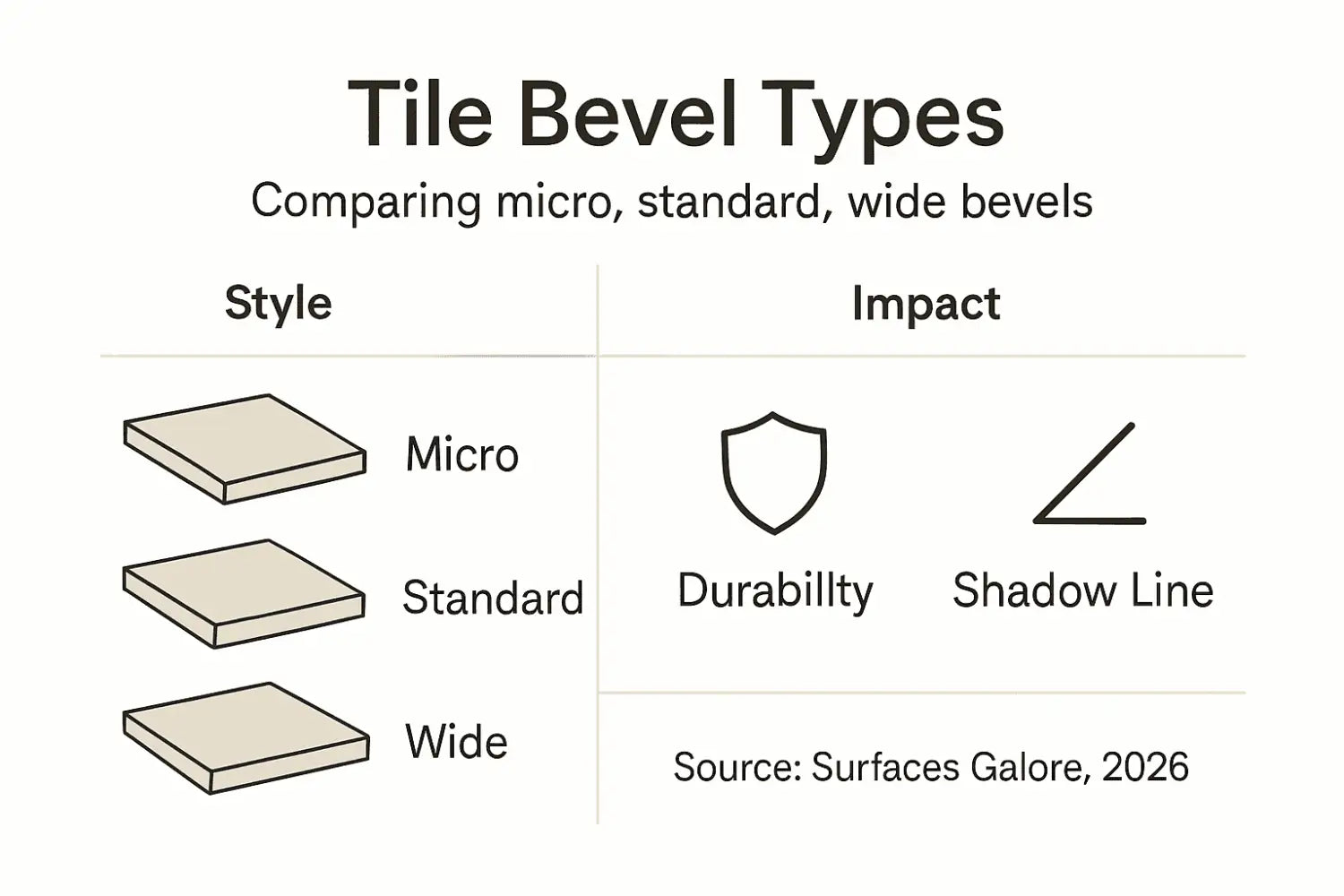
- Micro bevel: 1/32 to 1/16 inch angle creating minimal edge definition
- Standard bevel: 1/16 to 1/8 inch angle providing balanced edge visibility
- Wide bevel: 1/8 inch or greater creating pronounced edge framing
- Angle specifications: Most bevels cut at 45 degrees for optimal stress distribution
The bevel affects tile profile height and requires specific installation approaches. Installers must account for the angled edge when setting tiles to maintain consistent grout line alignment across surfaces. Proper bevel sizing ensures tiles sit flush while creating the intended visual effect without installation complications.
Types of Marble Tile Bevels and Their Visual Impact
Three distinct bevel styles offer different aesthetic possibilities for your renovation projects. Each type creates unique visual effects that influence how light interacts with tile surfaces and how grout lines appear in finished installations.
Micro bevels create subtle shadow lines along tile edges without obvious dimensional changes. This minimal edge treatment reduces grout line visibility by softening transitions between tiles, making the surface appear more uniform. The delicate angle adds texture without drawing attention away from the marble’s natural veining and color.
Standard bevels balance edge definition with practicality. They enhance tile dimension through visible shadow lines that emphasize each tile as an individual element within the larger pattern. This middle ground option works across various design styles, from transitional to contemporary, providing just enough edge definition to add visual interest.
Wide bevels function as stylistic frames for traditional and classic designs. The pronounced edge creates a distinct border effect that highlights grout lines and gives each tile a framed appearance. This dramatic treatment suits formal spaces where architectural detail and traditional elegance matter most.
Bullnose edges differ fundamentally from bevels:
- Bullnose edges curve smoothly from face to side in a rounded profile
- Bevels maintain flat surfaces at an angle without curves
- Bullnose edges suit tile perimeters and transitions
- Bevels work across entire field tile installations
Bevel size directly controls grout line perception and overall design impact. Smaller bevels minimize grout line visibility, creating seamless surfaces ideal for modern aesthetics. Larger bevels emphasize individual tiles and grout patterns, supporting traditional design intentions where detail and craftsmanship take center stage.
Functional Advantages and Considerations of Beveled Marble Tiles
Bevels reduce edge chipping and improve water runoff, making them particularly valuable in kitchen and bathroom settings. The angled edge redistributes impact stress across a larger surface area rather than concentrating force on a sharp 90 degree corner. This engineering advantage translates directly into longer lasting installations with fewer maintenance calls.
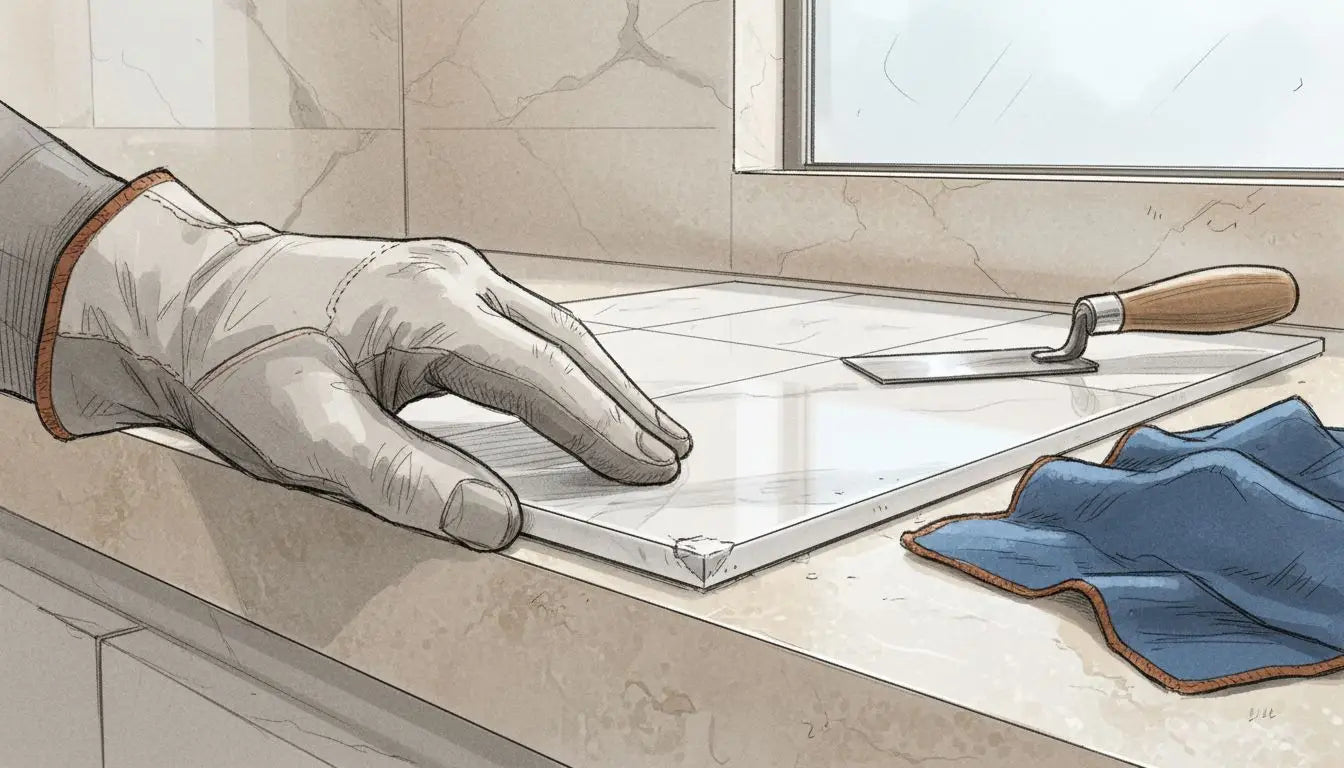
Maintenance benefits extend beyond durability. Beveled edges promote water runoff by preventing standing water along tile edges where straight cuts might trap moisture. This improved drainage reduces stain risks in areas exposed to splashing, cooking oils, and bathroom humidity. The angled surface also sheds debris more easily during cleaning.
Safety improvements matter in residential and commercial projects:
- Smooth beveled edges eliminate sharp corners that could cause injury
- Angled transitions reduce catching points for clothing or cleaning tools
- Rounded stress points lower breakage risks during impact events
- Comfortable tactile experience along countertop and shower edges
Improper bevel sizing creates installation challenges. Oversized bevels relative to tile thickness cause alignment difficulties and uneven grout lines. Undersized bevels fail to provide adequate edge protection and visual impact. Inconsistent bevel dimensions across tile batches lead to grout line irregularities that compromise the finished appearance.
Pro Tip: Always match bevel size to tile thickness and grout width specifications before ordering materials. A tile thickness of 3/8 inch typically pairs with micro to standard bevels, while 1/2 inch thickness accommodates standard to wide bevels without installation complications.
Proper marble tile maintenance combined with appropriate bevel selection maximizes both aesthetic and functional performance. Understanding these professional installation challenges helps you specify materials that installers can work with confidently.
Common Misconceptions About Marble Tile Bevels
The belief that bevels weaken tiles contradicts engineering reality. Beveled edges actually increase durability by distributing stress across angled surfaces rather than concentrating force on sharp corners. The 45 degree angle creates a stronger geometric profile that resists chipping under impact.
Some designers worry bevels trap dirt or complicate cleaning routines. Proper surface grading and sealing eliminate these concerns entirely. The angled edge sheds water and debris more effectively than straight cuts, and modern sealers protect beveled surfaces just as thoroughly as flat tile faces. Regular maintenance remains straightforward regardless of edge treatment.
Another myth suggests bevels limit design flexibility:
- Micro bevels actually enhance subtle texture while reducing grout visibility in modern designs
- Standard bevels provide dimensional interest across transitional and contemporary styles
- Wide bevels support traditional aesthetics where edge definition matters
- All bevel types accommodate various grout colors and tile patterns effectively
Installer expertise matters more than bevel presence for successful outcomes. Issues wrongly attributed to bevels often stem from inconsistent tile dimensions, improper substrate preparation, or inadequate installation technique. Experienced professionals understand how to work with beveled tiles to achieve flawless results.
Beveled edges show a 30% reduction in edge chipping incidents compared to straight cut edges in professional installations, proving their durability advantage.
This statistic reinforces that bevels strengthen rather than weaken marble tiles. The misconception persists because damaged straight cut edges often go unnoticed until severe chipping occurs, while beveled edges prevent that initial damage. Choosing beveled tiles represents a proactive durability strategy backed by measurable performance data.
Comparison Framework to Choose the Right Bevel for Your Project
Selecting the appropriate bevel requires weighing multiple factors against your project goals. This comparison table provides decision making data across key parameters:
| Bevel Type | Angle Size | Water Runoff | Edge Durability | Grout Visibility | Install Difficulty | Best Room Match |
|---|---|---|---|---|---|---|
| Micro | 1/32–1/16 in | Good | Excellent | Minimal | Low | Modern kitchens, minimalist baths |
| Standard | 1/16–1/8 in | Excellent | Excellent | Moderate | Medium | Contemporary kitchens, transitional baths |
| Wide | 1/8+ in | Excellent | Very Good | High | Medium-High | Traditional baths, formal kitchens |
Micro bevels suit modern kitchens where seamless surfaces and understated elegance matter most. The subtle edge definition adds just enough texture to prevent monotony without creating visual breaks in expansive tile fields. Grout lines nearly disappear, allowing marble veining to dominate the aesthetic.
Standard bevels balance aesthetic impact with practical performance. They work across the broadest range of design styles, from contemporary to transitional, providing visible dimension without overwhelming the space. This versatility makes them the default choice when project style hasn’t fully crystallized.
Wide bevels enhance traditional bathrooms where architectural detail and craftsmanship take center stage. The pronounced edge frames each tile, emphasizing grout patterns and creating a formal appearance. This treatment works best in spaces with classic fixtures, ornate trim, and established period styling.
Installation difficulty increases with bevel size because larger angles require more precise tile alignment to maintain consistent grout lines. Micro bevels forgive minor installation variations, while wide bevels demand expert technique and careful substrate preparation. Budget adequate installation time for projects using standard or wide bevels.
Align bevel choice to project priorities. Prioritize micro bevels when minimizing grout line visibility matters most. Choose standard bevels for balanced aesthetics and durability. Select wide bevels when traditional design and visual detail justify the additional installation complexity and cost.
Technical and Installation Insights for Marble Tile Bevel Selection
Bevel size affects grout line continuity because the angled edge changes where tiles meet. Larger bevels create wider apparent spacing between tile faces even when grout joint width remains constant. This optical effect requires careful planning to maintain intended grout line appearance across the finished surface.
Installation errors related to bevel inconsistencies cause up to 25% of grout line unevenness in premium marble renovations. These challenges stem from several sources:
- Bevel dimension variations across tile batches create alignment difficulties
- Inconsistent bevel angles prevent tiles from sitting flush on substrate
- Improper substrate flatness exaggerates bevel related height differences
- Inadequate lippage control systems allow uneven tile edges
Pro Tip: Provide your installer with exact bevel specifications, including angle degree and edge width measurements, before beginning work. This upfront communication prevents costly corrections and ensures proper material handling from delivery through final installation.
Experienced professionals familiar with beveled tiles deliver superior results. They understand substrate preparation requirements, possess appropriate lippage control tools, and know proper thinset application techniques for tiles with angled edges. Verify installer credentials specifically include premium marble tile experience before contracting.
Proper handling prevents damage during transport and installation. Store tiles on edge rather than stacked flat to avoid pressure damage to beveled corners. Use padded supports when cutting tiles to prevent chipping. Handle tiles by body rather than edges during setting to minimize breakage risks.
Grout application requires extra attention with beveled tiles. The angled edge creates more surface area for grout contact, increasing cleaning time during final wipedown. Use appropriate grout float angles to push material into joints without depositing excess on beveled surfaces. Multiple cleaning passes ensure professional results.
Understanding these installation challenges helps you set realistic project timelines and budgets. Quality beveled marble installations take longer than basic straight edge work but deliver superior aesthetic and functional performance that justifies the investment.
Practical Implications for Interior Designers and Remodelers
Kitchen projects with beveled tiles report 15% higher customer satisfaction scores compared to straight edge installations in post completion surveys. This measurable preference reflects how bevels enhance perceived quality through visible craftsmanship details. Clients notice and appreciate the dimensional interest beveled edges add to premium marble installations.
Balancing design style with durability and maintenance determines long term client happiness. Beveled tiles deliver on both fronts when properly specified and installed. The aesthetic enhancement satisfies immediate design goals while improved edge durability prevents future maintenance complaints that damage client relationships.
Best practices for bevel selection avoid common pitfalls:
- Verify bevel consistency across all tile batches before accepting delivery
- Match bevel size to overall design scale and room dimensions
- Consider lighting conditions that affect shadow visibility along beveled edges
- Coordinate bevel choice with grout color to achieve intended contrast levels
- Budget adequate installation time for proper beveled tile setting
Surfaces Galore provides premium beveled marble selections with consistent quality across nationwide deliveries. Our direct import model ensures dimensional accuracy and bevel uniformity that installers need for flawless results. We ship to designers, architects, and contractors in all 50 states from our Anaheim, California warehouse.
Collaboration between suppliers and installers maximizes renovation quality. Share bevel specifications early in project planning so installers can prepare appropriate tools and techniques. Discuss substrate requirements and timeline expectations before material delivery. This coordination prevents surprises and supports smooth project execution.
Your bevel selection directly impacts project success and client satisfaction. Understanding the technical, aesthetic, and functional dimensions of beveled marble tiles empowers confident specifications that deliver exceptional results in 2026 kitchens and bathrooms.
Enhance Your Projects with Surfaces Galore’s Premium Marble Tiles
Surfaces Galore offers premium beveled marble tiles backed by expert guidance for designers and remodelers nationwide. Our direct import model delivers authentic, durable natural stone at affordable prices without compromising quality or consistency.

Explore our educational resources including comprehensive marble tile guides and natural stone type overviews that support informed material selection. Our collections feature marble tiles specifically chosen for upscale kitchens and bathrooms, with bevel options tailored to modern and traditional design preferences. Contact our Anaheim based experts for personalized advice and take advantage of our nationwide shipping to bring premium beveled marble to your next renovation project through Surfaces Galore.
Frequently Asked Questions
What is the most common bevel angle for marble tiles?
The most common bevel angle is 45 degrees, which balances aesthetic appeal with manufacturing efficiency. This angle provides optimal stress distribution for edge durability while creating visible shadow lines that enhance tile dimension across both kitchen and bathroom applications.
Can bevels affect the longevity of marble tiles in wet areas?
Beveled edges promote water runoff that reduces standing moisture along tile edges, limiting stain penetration and grout deterioration in wet areas. They also reduce edge chipping risks by distributing impact stress across angled surfaces, contributing to longer tile longevity in kitchens and bathrooms where durability matters most.
Are there design styles that benefit most from wide bevels?
Wide bevels work best in traditional and classic design styles where architectural detail and visible craftsmanship matter. They create pronounced edge framing that highlights individual tiles and emphasizes grout patterns, supporting formal aesthetics in spaces with period fixtures and ornate trim details.
Do beveled tiles require special maintenance compared to straight edge tiles?
Beveled tiles require the same maintenance routines as straight edge tiles when properly sealed. The angled edges actually improve cleaning by shedding water and debris more effectively than sharp 90 degree corners, making routine maintenance easier rather than more complicated in both residential and commercial settings.
How do I verify bevel consistency across tile batches?
Request sample tiles from each production batch and measure bevel width and angle using precision calipers before accepting full delivery. Consistent bevels should match within 1/64 inch across all samples, ensuring uniform grout lines and proper tile alignment during installation without height variations that compromise finished appearance.

Leave a comment