
Types of mosaic patterns: a complete guide for homeowners

TL;DR:
- Choosing the right mosaic pattern involves understanding the combination of tessera geometry and arrangement logic to achieve the desired visual and functional results.
- A dual-layer framework focusing on shape and layout helps select patterns that align with your space’s style and practical needs, avoiding costly mistakes.
Choosing the right mosaic pattern for a kitchen backsplash or bathroom renovation is genuinely difficult, and not because the options are bad. It’s because there are too many of them and most of the guidance out there treats “types of mosaic patterns” as a list of pretty pictures with no framework for deciding what actually works in a real space. The shape of each tile piece, the way those pieces are arranged, the grout line width, the scale relative to your cabinetry — all of it interacts. Get even one element wrong and the whole wall can feel off. This guide gives you a practical, two-part framework to cut through the noise and make a confident choice.
Table of Contents
- Understanding mosaic pattern criteria: geometry and arrangement
- Common tessera shapes and their style profiles
- Popular mosaic pattern arrangements and their design impacts
- Comparing types of mosaic patterns: what fits your kitchen or bathroom?
- Expert design tips for choosing mosaic patterns that complement your space
- Why understanding mosaic patterns as both shape and layout changes everything
- Explore premium natural stone mosaics at Surfaces Galore
- Frequently asked questions
Key Takeaways
| Point | Details |
|---|---|
| Mosaic pattern basics | Mosaic patterns combine tile shape and arrangement to create unique visual styles for kitchens and baths. |
| Popular shapes | Penny round, hexagon, subway brick, and arabesque shapes each evoke different aesthetic effects. |
| Layout types | Herringbone, chevron, basketweave, and linear stacked patterns shape the overall mosaic rhythm and mood. |
| Design harmony | Choose pattern intensity and geometry to complement cabinetry, countertops, and lighting for balanced design. |
| Installation impact | Mesh sheet orientation and grout line management are essential to preserve pattern integrity during installation. |
Understanding mosaic pattern criteria: geometry and arrangement
Before you fall in love with a pattern on a showroom sample, you need to understand what you’re actually looking at. Every mosaic pattern is built from two distinct layers, and confusing them is the single most common source of buyer regret.
The first layer is tessera geometry: the shape and scale of the individual tile pieces. A tessera (the singular of tesserae) is simply one tile piece in the mosaic. It could be a tiny penny round, a hexagon, a rectangular subway brick, or a curved arabesque. The second layer is arrangement logic: how those pieces are positioned relative to each other on the surface. A herringbone arrangement, for example, can use rectangular tesserae or elongated hexagons. The shape and the layout are separate decisions, and they produce entirely different visual outcomes depending on how you combine them.
As the team at D and G Flooring explains, framing mosaic patterns as these two layers, tessera geometry and arrangement logic, is the most professional and useful way to evaluate options before committing to a design. When you approach selection this way, you stop asking “which pattern looks nice?” and start asking “which tessera shape serves my style, and which arrangement supports my spatial goals?”
Here’s a quick overview of the two layers you’ll be working with:
- Tessera geometry options: penny round, square, hexagon, subway brick, arabesque, fish scale, elongated hexagon, irregular/random cut
- Arrangement styles: herringbone, chevron, basketweave, linear stacked, offset brick, arabesque, random scatter, pinwheel
- Scale considerations: smaller tesserae mean more grout lines and more visual texture; larger pieces read cleaner but lose the “mosaic” quality at a distance
- Impact on installation: mesh-mounted sheets lock in the arrangement geometry, so your layout choice affects not just aesthetics but how the install goes
Understanding the role of pattern in mosaic design before shopping will save you hours of second-guessing and prevent costly mid-project changes.
Common tessera shapes and their style profiles
With a grasp of mosaic pattern criteria, let’s explore the common tessera shapes and what styles they bring to your space.

Tessera shape is where the personality of a mosaic lives. Two kitchens with the same herringbone arrangement can look completely different depending on whether the tesserae are rectangular subway bricks or elongated hexagons. Shape sets the tone before the arrangement even gets a chance to speak.
According to D and G Flooring’s tile guide, specific small-tile formats including penny round, square, hexagon, subway brick, arabesque, and fish scale each create distinct visual profiles that fundamentally change how a mosaic reads on a surface. Here’s how each one behaves in real kitchens and bathrooms:
- Penny round: Small circles, typically 1 inch in diameter. The curved edges create visible grout channels that add a retro, artisan quality. Excellent on shower floors where slip resistance matters, and the curved shape allows water drainage without pooling.
- Square: The most versatile tessera shape. Works in everything from traditional to ultra-modern spaces. A 1x1 square on a backsplash reads formal; a 2x2 on a floor reads contemporary.
- Hexagon: Six-sided tiles that create an organic, honeycomb structure. They feel simultaneously modern and natural, which is why they pair so well with marble and travertine in bathrooms.
- Subway brick: Rectangular tesserae (usually 1x2 or 1x3 ratio) that bring a clean, linear energy. The classic kitchen backsplash shape for a reason. They create strong directional lines when arranged in herringbone or stacked patterns.
- Arabesque/lantern: Pointed oval shapes derived from Islamic geometric art. Ornate and dramatic. Best used in niches, feature walls, and shower alcoves rather than full rooms, where they can overwhelm.
- Fish scale (scallop): Overlapping curved tiles that mimic the texture of fish scales. Highly decorative and best suited to accent applications. Powder rooms, niche walls, and single-wall shower features are ideal placements.
Tile size directly affects the density of grout lines. More grout lines mean more texture and more maintenance. In wet areas, epoxy grout is worth the extra cost regardless of tessera size. You can explore the full range of possibilities in this types of stone mosaics guide, and if you’re considering something truly custom, hand-cut mosaic designs open up shapes no mesh sheet can produce.
Popular mosaic pattern arrangements and their design impacts
Now that you’ve learned about tessera shapes, let’s look at how these pieces are arranged to create distinct mosaic patterns and moods.
Arrangement is where geometry becomes architecture. The same penny round tile on a bathroom floor can feel calm and retro in a random scatter or feel sharp and structured in a tightly aligned grid. The most common mosaic layout types — herringbone, chevron, basketweave, arabesque, linear stacked, and random scatter — each carry a distinct visual energy that should align with the broader design intention of your space.
- Herringbone: Rectangular tiles are placed at 90-degree angles to each other in a V-shaped interlocking pattern. This creates a strong sense of movement and visual elongation. Excellent for subway-tiled backsplashes and shower surrounds where you want the wall to feel taller.
- Chevron: Similar to herringbone but with tiles cut at angles so the edges meet precisely in a continuous zigzag. The result is sharper and more graphic than herringbone. Strong choice for feature walls and kitchen backsplashes in modern spaces.
- Basketweave: Alternating groups of rectangular tiles in horizontal and vertical orientations. The pattern is classic, balanced, and slightly traditional. It works beautifully on bathroom floors, especially in black-and-white marble.
- Arabesque: The arrangement follows the tile shape itself. Lantern-shaped tiles interlock in a flowing, curved pattern. The result is rich and ornate, ideal for niches, powder rooms, and spa-style shower walls.
- Linear stacked: Tiles aligned in straight, continuous rows with no offset. The cleanest, most architectural of all arrangements. Perfect for contemporary kitchens and minimalist bathroom designs where visual noise needs to be controlled.
- Random scatter: Tiles placed without a repeating grid, often mixing colors or sizes. This creates an artisanal, handmade quality. Works best in smaller applications — a single shower floor or a niche — where the lack of structure reads as intentional rather than chaotic.
Pro Tip: Treat high-intensity patterns like chevron and arabesque as accents rather than full-room treatments. A single feature wall or niche with a bold pattern has far more impact than covering every surface. Full-room application of a complex arrangement often feels visually exhausting rather than impressive.
For more on how arrangement and layout affect the mosaic pattern design roles in a finished space, the linked resource breaks it down by room type.
Comparing types of mosaic patterns: what fits your kitchen or bathroom?
To help you apply these insights, here is a clear comparison of popular mosaic types and when to use them in your kitchen or bathroom.
One thing the tile catalogs rarely tell you: the “best” pattern is never just about aesthetics. Slip resistance on a wet shower floor, grout maintenance in a kitchen backsplash above a gas range, and the way a pattern visually shrinks or expands a small bathroom all matter as much as whether a pattern looks beautiful in a photo. As Remodeling Studios notes, mosaic tiles on mesh sheets allow fine detail on backsplashes without overwhelming the space, but pattern intensity and color palette must be matched to cabinetry, countertops, and lighting to avoid discord.
| Pattern type | Tessera shape | Best application | Visual effect | Maintenance level | Style fit |
|---|---|---|---|---|---|
| Herringbone | Subway brick | Backsplash, shower wall | Elongating, dynamic | Moderate | Modern, transitional |
| Chevron | Rectangular, angled | Feature wall, backsplash | Graphic, energetic | Moderate | Contemporary, bold |
| Basketweave | Square, rectangular | Bathroom floor | Classic, balanced | Low to moderate | Traditional, transitional |
| Arabesque | Lantern-shaped | Niche, powder room | Ornate, dramatic | Moderate | Mediterranean, eclectic |
| Linear stacked | Square, hexagon | Shower surround, backsplash | Clean, architectural | Low | Modern, minimalist |
| Penny round | Circular | Shower floor, bath floor | Playful, retro | Higher (more grout) | Vintage, artisan |
| Hexagon | Six-sided | Accent wall, bath floor | Organic, modern | Moderate | Contemporary, natural |
| Random scatter | Irregular/mixed | Niche, single wall | Artisanal, organic | Moderate to high | Bohemian, handcrafted |
A few practical points worth noting before you commit:
- Grout line density is highest in penny round and random scatter patterns. More grout means more cleaning surface in kitchens, particularly near stovetops.
- Slip resistance in wet areas improves with smaller tesserae because more grout lines create more traction. Penny round and small hexagon patterns on shower floors outperform large-format tiles on safety.
- Visual scale matters in small bathrooms. High-contrast, complex patterns in tight spaces (under 60 square feet) amplify the sense of busyness. Stick to one bold pattern in one zone.
- Mixing materials (stone, glass, metal tesserae within one pattern) adds depth and dimension without adding pattern complexity. It’s often a better approach than choosing an intricate arrangement in a single material.
The backsplash mosaic workflow guide walks through install considerations that directly affect which pattern types are practical for DIY versus professional installation.
Expert design tips for choosing mosaic patterns that complement your space
Beyond basic comparison, these design tips will help you confidently choose mosaic patterns that genuinely elevate your space rather than just fill it.
The biggest mistake homeowners make when selecting mosaic pattern designs is evaluating tiles in isolation. A sample looks great on a white table. But your kitchen has warm walnut cabinets, busy granite countertops, and pendant lighting with an amber cast. The tile has to work within that context, not against it. As design specialist Lindsay Fluckiger advises, backsplashes should be focal points without overwhelming the room, and pattern intensity must be calibrated to what’s already in the space.
Here are the practical rules that professional designers follow when specifying mosaic patterns:
- Match pattern energy to surface busyness. Busy countertops (veined marble, speckled granite) pair best with simpler mosaic arrangements like linear stacked or standard hexagon. Plain countertops give you room to use more complex patterns like chevron or arabesque.
- Use linear patterns to convey modernity. Herringbone and stacked arrangements read architectural and contemporary. If your design intent is sleek and current, these are your baseline.
- Use curved shapes to soften a space. Penny rounds and arabesque tesserae introduce softness and warmth. In all-white bathrooms that risk feeling clinical, a penny round floor in warm marble is often all the personality the space needs.
- Control mesh sheet orientation carefully. When installing mosaic tiles on mesh sheets, the direction you set the first sheet determines the pattern alignment for the entire wall. A small angle deviation at the start becomes a noticeable drift by the time you reach the edge. Mark your layout lines before opening a single sheet.
- Introduce bold patterns through accent bands and niches. A full wall of arabesque tile is a commitment that few rooms survive gracefully. A niche, a recessed shelf, or a single accent band behind a freestanding tub? That’s where dramatic patterns earn their keep.
- Avoid tiny, high-contrast patterns on full walls in wet areas. In a shower with white tile and dark grout in a 1-inch mosaic covering all four walls, the grout network becomes visually louder than the tile itself. Reserve high-contrast small-tile applications for floors and accents.
“Shape matters just as much as color: linear patterns like herringbone or stacked bars read modern and architectural, while curved motifs like penny rounds read softer and more playful.” — Lindsay Fluckiger, as cited by Martha Stewart
Pro Tip: Before ordering, create a “context board” by photographing your actual cabinetry, countertops, and existing fixtures under your kitchen or bathroom lighting. Lay your tile sample against that photo on a tablet or printed sheet. The difference between how a tile looks in a showroom and how it looks in your specific light can be dramatic — especially with natural stone, which shifts color significantly under warm versus cool light.
For inspiration on how to apply mosaic art techniques in unexpected ways, explore creative mosaic uses beyond the standard backsplash, and browse stone tile pattern ideas for concrete examples of patterns in real kitchen and bath contexts.
Why understanding mosaic patterns as both shape and layout changes everything
Most of the conversation around mosaic patterns focuses on arrangement. You’ll hear people debate herringbone versus chevron, basketweave versus linear stacked. That’s a useful conversation, but it’s only half the picture. The tessera shape sitting underneath that arrangement does just as much work — and ignoring it is how people end up with results that technically match the design board but feel wrong in the finished room.
Here’s a concrete example. Two clients ask for a herringbone backsplash. One gets it in 1x3 ceramic subway tiles. The other gets it in 1x2 marble tesserae on mesh sheets. Same arrangement. Completely different results. The ceramic version reads bold, graphic, and contemporary. The marble version reads intricate, refined, and almost classical. The arrangement told the same story in both cases. The tessera shape changed the language it was spoken in.
This matters practically because when you walk into a tile showroom or browse an online catalog, you’re usually shown the arrangement as the headline feature. “Herringbone mosaic.” “Chevron backsplash.” The tessera shape is listed somewhere in the product specs, but it’s not given equal billing. That framing pushes buyers toward arrangement-focused decisions and leaves the shape variable underweighted. The result is mismatch — a pattern that looked right in the catalog but doesn’t feel right on the wall.
The fix is to start your selection process from the tessera shape, not the arrangement. Ask yourself: do I want the texture and playfulness of round edges, or the architectural precision of clean rectangular lines? Do I want the organic, natural quality of hexagons, or the formal structure of squares? Once you’ve answered those questions, the arrangement choice becomes much easier because you’re working with shapes that already speak the right design language for your space.
Understanding mosaic patterns as a custom mosaic design guide through both lenses, shape and layout, is what separates a renovation that feels intentional from one that just looks busy. The dual-layer framework isn’t just a way to sound informed. It’s the actual reason some mosaic installations become the best feature in the house while others become the thing you quietly plan to redo someday.
Explore premium natural stone mosaics at Surfaces Galore
At Surfaces Galore, we source marble, travertine, and limestone mosaics directly from quarries to your project, with no middleman markups and no compromise on quality. Whether you’re drawn to the clean geometry of hexagon marble sheets, the warmth of travertine penny rounds, or the drama of hand-cut arabesque limestone for a shower niche, our inventory is organized by tessera shape and arrangement style so you can shop the way this guide taught you to think.
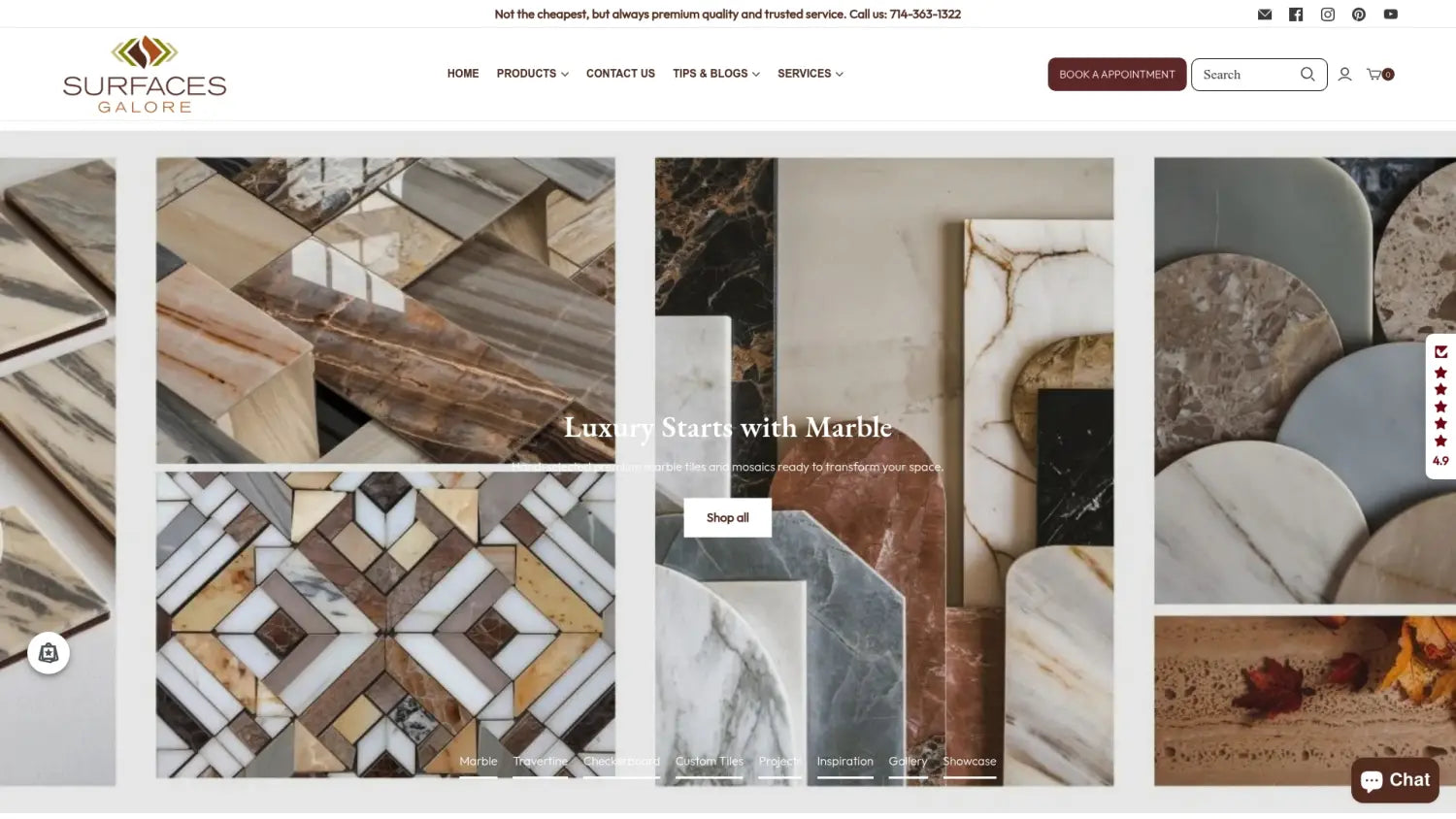
We ship nationwide from Anaheim, California, serving homeowners, designers, architects, and contractors across the U.S. Our team understands natural stone at a material level — the variation between slabs, how limestone absorbs moisture differently than marble, which travertine finishes work in wet areas. Visit the Surfaces Galore natural stone collection to browse our full mosaic selection, request samples, and get guidance on which patterns suit your specific kitchen or bathroom renovation.
Frequently asked questions
What are the most common mosaic pattern types for kitchens and bathrooms?
Common mosaic pattern types include herringbone, chevron, basketweave, arabesque, linear stacked, penny round, and hexagon — each producing a distinct visual rhythm suited to different kitchen and bathroom styles. As D and G Flooring outlines, these are the layouts most commonly available pre-mounted on mesh sheets from tile suppliers and installers.
How does tile shape affect the look of a mosaic pattern?
Tile shape, or tessera geometry, is just as influential as color and arrangement in defining a mosaic’s character. Linear patterns like herringbone read modern and architectural when built from rectangular subway bricks, while curved tesserae like penny rounds shift the same arrangement toward something softer and more playful.
What should I consider to avoid overwhelming a kitchen backsplash with mosaic patterns?
Calibrate your mosaic’s pattern intensity and color palette to what’s already in the room. As Lindsay Fluckiger advises, a backsplash should function as a focal point, not visual noise, which means the pattern geometry must complement, not compete with, countertops, cabinets, and lighting.
Why is mosaic tile installed on mesh sheets important for pattern selection?
Mesh-mounted sheets hold tesserae in precise arrangements and make installation far more manageable, but they introduce a variable most buyers overlook: sheet orientation and grout-line thickness affect how the pattern aligns at transitions and edges. Even small angular errors in the first sheet compound into visible drift by the end of the wall.

Leave a comment