

Understand marble grading: a guide for smart renovators

Not all marble is created equal, and that misconception costs homeowners thousands every year. Walk into any stone showroom and you will see slabs that look almost identical but carry very different price tags and performance profiles. The reason comes down to marble grading, a standardized system that classifies natural stone based on color consistency, veining patterns, porosity, and surface flaws. Understanding how grading works helps you pick the right material for the right room, avoid overpaying, and get results that hold up beautifully for decades. This guide covers the grading basics, what each category means, and how to use that knowledge to shop with real confidence.
Table of Contents
- What is marble grading and why does it matter?
- The main marble grading categories explained
- How marble grading affects your project
- How to inspect and choose the right marble grade
- Our perspective: What most buyers miss about marble grading
- Upgrade your renovation with expert marble selection
- Frequently asked questions
Key Takeaways
| Point | Details |
|---|---|
| Not all marble is equal | Grading determines a stone’s durability, consistency, and visual appeal for renovation projects. |
| Grades impact usage | Certain grades are better for high-traffic areas while others suit decorative or budget projects. |
| Inspection is crucial | Personally checking slabs and asking the right questions ensures you get the best value. |
| Lower grades offer value | You can save by using lower grades in the right spaces without sacrificing design impact. |
What is marble grading and why does it matter?
Marble grading is the process of evaluating and ranking natural marble based on specific physical and visual characteristics. Graders look at four main factors: color uniformity, veining consistency, surface porosity, and the presence of natural flaws like pits, cracks, or fill marks. The result is a letter grade that tells you, at a glance, how uniform and structurally sound a slab is.
Think of it like grading eggs or lumber. A Grade A egg is consistent and defect-free. A Grade D egg might have a crack but is still usable in the right context. Marble works the same way. The grade does not tell you whether the stone is beautiful. It tells you how predictable and structurally reliable it is.
Why does this matter for your renovation? Because marble grading basics directly impact both the stone’s appearance and durability in construction. A lower grade slab installed in a high-traffic kitchen floor may chip faster, absorb stains more readily, and require more frequent maintenance. A higher grade slab in the same spot will look consistent from tile to tile and resist wear far better.
Grading also affects your budget in ways that are not always obvious. Higher grade marble costs more per square foot, but using the wrong grade in a demanding space can lead to costly repairs or early replacement. The industry grading standards help buyers understand what they are actually paying for, not just what the stone looks like on the showroom floor.
Here are the key factors that go into determining a marble’s grade:
- Color consistency: How uniform is the background color across the slab?
- Veining pattern: Are the veins predictable and evenly distributed, or chaotic and irregular?
- Surface porosity: How many micro-pores does the stone have, and how easily will it absorb liquids?
- Natural flaws: Are there visible cracks, pits, or areas filled with resin to repair damage?
- Fill quality: If repairs were made, how well do they blend with the surrounding stone?
For premium marble options in high-visibility areas like kitchen islands or master bath floors, the grade directly determines whether your finished project looks polished and intentional or slightly inconsistent.
Pro Tip: Always ask your supplier for the grade before you fall in love with a color. Two slabs of Calacatta marble can look nearly identical but sit two grades apart, meaning very different performance and pricing.
The main marble grading categories explained
The Grades A through D are the main categories used to classify marble according to the Marble Institute of America. Each grade tells a specific story about the stone’s quality, workability, and ideal application.
Here is a breakdown of what each grade means in practice:
| Grade | Description | Porosity | Typical uses | Drawbacks |
|---|---|---|---|---|
| A | Uniform color, minimal veining variation, no fills | Very low | Kitchen counters, main floors, feature walls | Highest cost |
| B | Minor natural variations, occasional small fills | Low | Bathrooms, living areas, light commercial | Slight inconsistency |
| C | Noticeable variation, visible fills, some cracks | Medium | Accent walls, low-traffic areas | Needs more prep |
| D | Significant variation, heavy fills, multiple flaws | High | Decorative use, mosaics, budget projects | High maintenance |
Grade A is the gold standard. Slabs are consistent, structurally sound, and require minimal surface preparation before installation. They cost more, but they deliver the most predictable results, especially when you are tiling a large area where uniformity matters.
Grade B still looks excellent and performs well in most residential settings. The natural variations are minor and often add character rather than detract from the look. Most marble selection tips for homeowners point toward Grade B as the best value for bathrooms and secondary living spaces.
Grades C and D are not failures. They are simply better suited to applications where slight imperfections are either hidden or part of the design. A rustic mosaic backsplash or a decorative garden feature can look stunning with Grade C or D stone.
Here is a simple way to think about the grading order:
- Grade A: Best structural integrity, most uniform appearance
- Grade B: Very good quality with minor natural character
- Grade C: Visible natural variation, requires more skilled installation
- Grade D: Heavily filled, best for decorative or non-structural uses
The Stone Standards published by the Natural Stone Institute provide technical benchmarks that back up these classifications. When choosing marble slabs for any project, always cross-reference the grade with your specific application before committing.
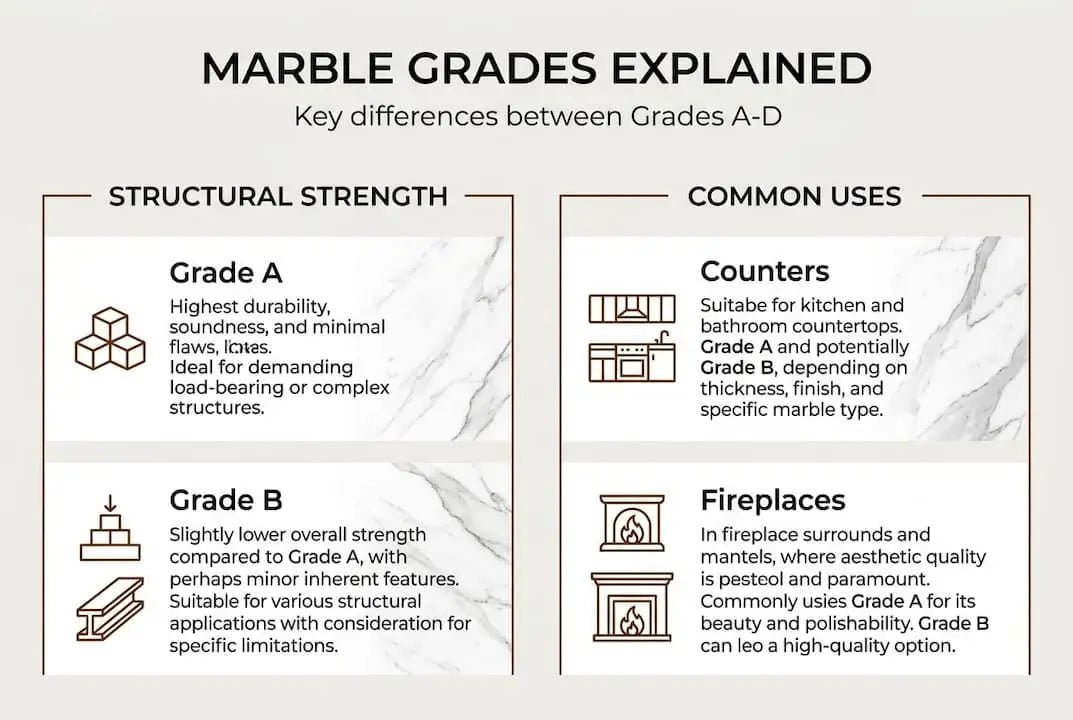
Pro Tip: Do not default to Grade A for every surface in your home. A Grade C slab used as a decorative fireplace surround can look stunning and save you hundreds of dollars per square foot.
How marble grading affects your project
Now that you understand the grades, the next step is matching them to specific spaces in your renovation. Higher grade marbles are recommended for high-traffic areas where durability and aesthetics are equally prioritized. That guidance is practical and worth building your project plan around.
Here is a quick reference for matching grades to common renovation applications:
| Application | Recommended grade | Reason |
|---|---|---|
| Kitchen countertops | A | Heavy use, moisture, staining risk |
| Master bathroom floor | A or B | Wet conditions, daily foot traffic |
| Guest bathroom walls | B or C | Lower traffic, visual impact matters |
| Outdoor cladding | A | Weather exposure, freeze-thaw cycles |
| Decorative accents | C or D | Visual use only, no structural stress |
| Budget flooring | B | Balance of cost and performance |
Grading also affects how much prep work your installer needs to do. Lower grade slabs often come with resin fills that need to cure properly before cutting or polishing. If those fills are not handled correctly, you can end up with visible patches after installation.
Here is what grade-related flaws actually mean on the job site:
- Chips and pits: Common in Grade C and D, these need to be filled and sanded before grouting
- Veining inconsistency: Makes pattern matching harder, which increases waste and labor costs
- Resin fills: Can react differently to sealers, causing uneven sheen on the finished surface
- Structural cracks: Rare in Grade A but more common in C and D; these can worsen under heavy loads
“The grade you choose today determines how much time and money you spend maintaining that surface five years from now.”
For using marble in wet areas like showers or pool surrounds, Grade A is almost always the right call. The lower porosity means water and cleaning products are far less likely to penetrate and stain the surface. When you look at marble for floors in high-traffic zones, the same logic applies.
For guidance on choosing lasting marble, experienced designers consistently recommend prioritizing grade over price per square foot. The cost difference between Grade A and Grade B is often far smaller than the cost of resealing, repairing, or replacing a lower grade surface prematurely.
How to inspect and choose the right marble grade
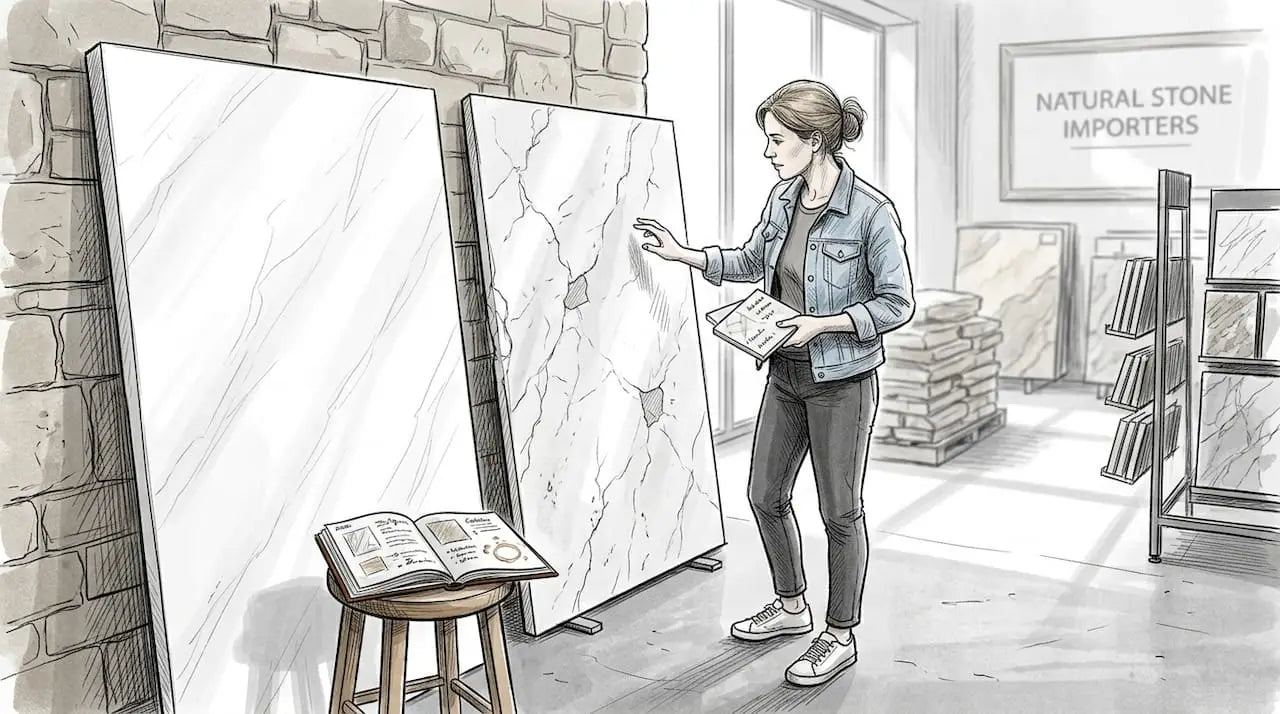
Knowing the grades is useful. Being able to verify them yourself is even better. Inspecting marble for cracks, color uniformity, and fill quality is essential before final selection, and it is a skill any homeowner or contractor can develop quickly.
Here is a step-by-step process for inspecting marble at the showroom:
- Look at the slab under natural light. Artificial lighting hides fills, cracks, and color shifts that natural light reveals immediately.
- Run your hand across the surface. You should feel a smooth, consistent texture. Rough patches or slight depressions often indicate resin fills.
- Check the edges. Chips along the cut edges can signal brittleness, which is a common trait in Grade C and D stone.
- Hold two slabs side by side. Color and veining should be reasonably consistent if they are labeled the same grade.
- Ask for the technical data sheet. Reputable suppliers provide documentation that includes grade, origin, and absorption rate.
When choosing marble colors for a large installation, always order samples and inspect them in the actual room where they will be installed. Lighting conditions change how marble looks dramatically.
Questions to ask your supplier before buying:
- What grade is this stone, and how was it determined?
- Has this slab been filled or repaired? Where?
- What is the absorption rate, and what sealer do you recommend?
- Can I see multiple slabs from the same lot?
For marble flooring types with complex patterns or large format tiles, also ask about the calibration tolerance. Uncalibrated tiles from lower grade lots can vary in thickness, which makes installation harder and more expensive.
Pro Tip: Always inspect slabs under both natural and artificial light before purchasing. A fill that blends perfectly under showroom lighting may stand out clearly in your home’s natural light.
For tips on the actual installation process, marble installation tips can help you avoid common mistakes that even experienced contractors make. And for countertop-specific decisions, resources like best marble countertops offer practical comparisons worth reviewing.
Our perspective: What most buyers miss about marble grading
After years of working with homeowners, contractors, and designers across the country, we have noticed a consistent pattern: buyers either obsess over Grade A for every single surface, or they ignore grading entirely and shop purely by looks. Both approaches lead to regret.
The truth is that grading is a tool, not a ranking of beauty. Some of the most stunning installations we have seen used Grade C marble in creative, low-stress applications where the natural variation became the design feature. Obsessing over Grade A for a powder room accent wall is simply wasted money.
What really pays off is understanding the specific demands of each surface in your project and matching the grade accordingly. A premium marble for homes does not have to mean Grade A everywhere. It means Grade A where it counts, and smart value everywhere else.
The buyers who get the best results are the ones who ask questions, inspect in person, and treat grading as a practical decision rather than a status symbol.
Upgrade your renovation with expert marble selection
Choosing the right marble grade does not have to feel overwhelming. At Surfaces Galore, we work directly with homeowners and contractors to match the right stone to the right space, every time. Our team understands grading inside and out, and we are happy to walk you through every option before you commit to a single square foot.
When you browse the SurfacesGalore marble selection, you will find clearly labeled grades, detailed product specs, and a team ready to answer your questions one on one. Whether you are tiling a master bath or sourcing stone for a full home renovation, we make sure you get lasting beauty and real value from every purchase. Reach out today and let us help you choose with confidence.
Frequently asked questions
What is the most common marble grade used in U.S. homes?
Grades A and B are preferred for high-visibility, high-traffic areas, making them the most common choices for main living spaces and kitchens in American homes.
Can lower grade marble still be a good choice?
Absolutely. Lower grades are suitable for decorative elements and budget-conscious projects, especially where slight natural variation adds visual interest rather than detracting from it.
How do I know if a marble slab is labeled honestly?
Buyers should verify labeling and assess quality in person before purchase, comparing slabs side by side under natural light to catch inconsistencies that showroom lighting can mask.
Does marble grade affect how often I need to seal or maintain the surface?
Yes. Maintenance frequency varies by grade due to differences in porosity and surface strength, with lower grade marble typically requiring more frequent sealing to prevent staining and wear.
Leave a comment