
What is honed finish? A 2026 guide for homeowners

Many assume matte stone surfaces feel rough or prove difficult to maintain. In reality, honed finishes deliver smooth, elegant surfaces that blend subtle sophistication with practical durability. This guide clarifies what honed finishes are, how they’re created, their advantages over polished alternatives, and how to select and care for them confidently in your home or design projects.
Table of Contents
- Introduction To Honed Stone Finishes
- How Honed Finishes Are Created
- Advantages And Practical Benefits Of Honed Stone
- Comparing Honed, Polished, And Other Stone Finishes
- Common Misconceptions About Honed Finishes
- Selecting And Caring For Honed Stone Surfaces
- Conclusion: Is Honed Finish Right For Your Project?
- Explore Quality Stone Finishes At Surfaces Galore
Key takeaways
| Point | Details |
|---|---|
| Honed finish defined | A smooth, matte surface without gloss, commonly applied to marble, granite, and travertine. |
| Practical benefits | Offers slip resistance, hides scratches effectively, and suits high-traffic or wet areas. |
| Maintenance requirement | Requires sealing every 6-12 months due to increased porosity compared to polished stone. |
| Visual and functional contrast | Differs from polished (glossy), leathered (textured), and brushed finishes in appearance and upkeep. |
| Longevity | Proper sealing and routine cleaning extend beauty and performance for decades. |
Introduction to honed stone finishes
A honed finish refers to a matte, smooth surface achieved by grinding natural stone to eliminate gloss without reaching full polish. Unlike polished stone that reflects light brilliantly, honed surfaces appear flat and soft, creating understated elegance. Common stones treated with honed finishes include marble, granite, and travertine, each offering unique visual character suited to residential and commercial interiors.
Homeowners and designers favor honed finishes because they balance beauty with functionality. The matte appearance complements modern, rustic, and minimalist styles while delivering practical advantages like slip resistance and scratch concealment. Honed stone is more porous than polished stone, requiring more frequent sealing to prevent stains, especially on lighter stones like marble. Understanding marble honing importance helps you appreciate why this finish appeals to so many.
Key characteristics of honed stone finishes include:
- Matte, non-reflective surface with smooth tactile feel
- Reduced glare compared to polished alternatives
- Enhanced slip resistance for safer wet areas
- Better concealment of scratches, etching, and daily wear
- Versatile aesthetic compatibility across design styles
By grasping these foundational traits, you can evaluate whether honed finishes align with your project goals. A stone finish comparison guide provides deeper context for weighing trade-offs between finish types.
How honed finishes are created
The honing process involves grinding stone surfaces using progressively finer abrasives until the desired matte appearance emerges. Manufacturers halt the polishing sequence earlier than they would for glossy finishes, leaving a smooth but non-reflective texture. This controlled abrasion removes surface irregularities without creating the mirror-like sheen associated with fully polished stone.
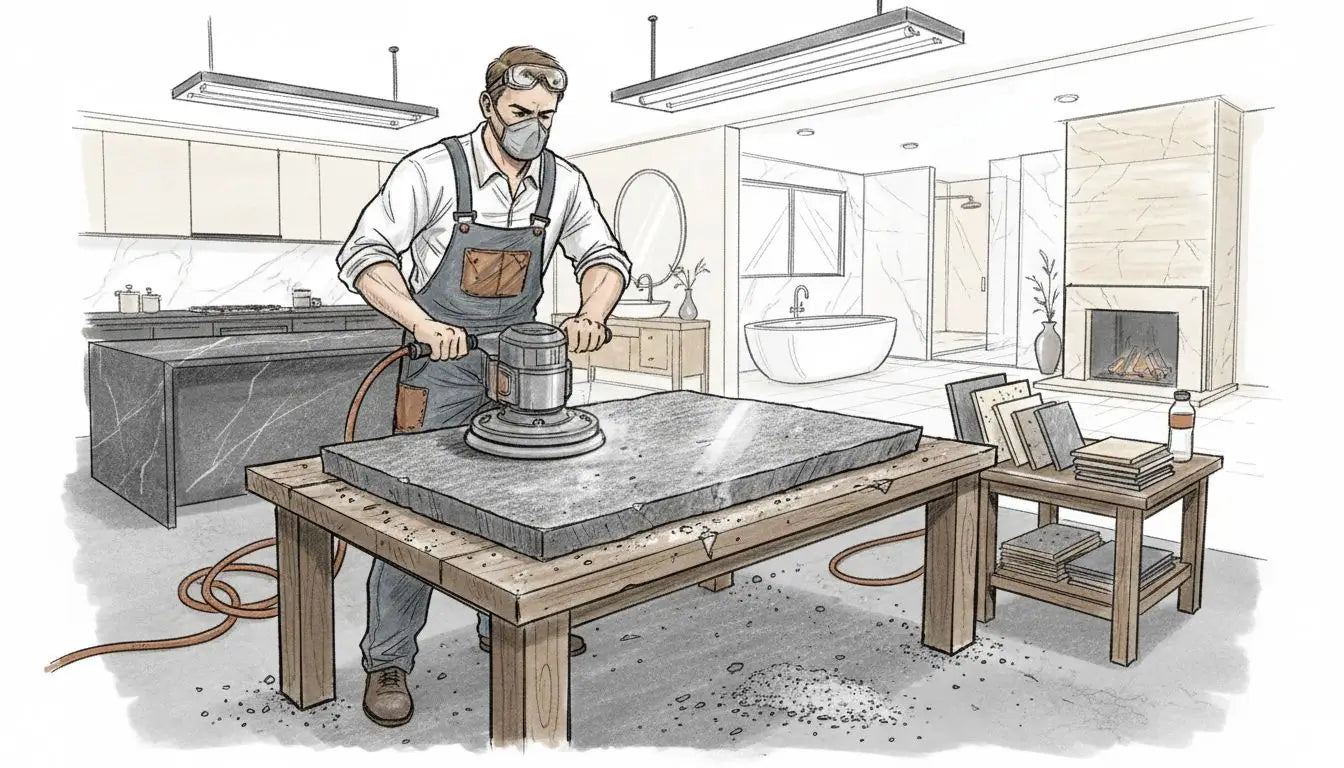
Because honing opens the stone’s pores slightly more than polishing, the surface becomes marginally more porous. This increased porosity necessitates regular sealing to guard against moisture penetration and staining. However, the matte finish conceals scratches better than polished stone, which reveals flaws more readily due to its reflective nature.
The step-by-step honing process typically unfolds as follows:
- Initial grinding removes surface imperfections and levels the stone.
- Progressive abrasive pads smooth the texture incrementally.
- Final honing passes create the uniform matte finish.
- Quality inspection ensures consistent appearance and texture.
- Sealing application protects the newly honed surface.
Understanding marble honing method details reveals why professional finishing matters. Skilled fabricators control abrasive grit sequences to achieve the exact sheen level desired, from completely matte to subtle satin.
Pro Tip: Request sample tiles with your preferred honing level before committing to large orders. Honed finishes vary slightly in sheen, and seeing physical samples prevents surprises during installation.
The implications for daily care stem directly from the honing process. While honed surfaces resist visible scratching better, their porosity demands disciplined sealing schedules and prompt spill cleanup. Learning about honed stone benefits clarifies these maintenance nuances.
Advantages and practical benefits of honed stone
Honed finishes deliver multiple aesthetic and functional advantages that make them preferred choices in kitchens, bathrooms, and high-traffic commercial spaces. The matte surface effectively hides scratches, smudges, fingerprints, and etching that would stand out glaringly on polished stone. This forgiving quality reduces the need for frequent surface repairs and keeps spaces looking cleaner longer.
Slip resistance represents another major benefit. Wet surfaces with honed finishes provide better traction than glossy alternatives, making them safer for bathroom floors, pool decks, and entryways. The matte finish conceals wear compared to polished stone, which reveals flaws more easily, ensuring your investment maintains visual appeal over time.
Design versatility also distinguishes honed stone. The subtle, low-glare appearance complements minimalist interiors, rustic farmhouse kitchens, and contemporary commercial lobbies equally well. Unlike polished stone that dominates visual attention, honed surfaces provide elegant backdrops that highlight furnishings, fixtures, and architectural details.
Additional practical benefits include:
- Reduced glare minimizes eye strain in bright spaces
- Lower maintenance visibility allows longer intervals between deep cleanings
- Enhanced durability perception through scratch concealment
- Timeless aesthetic that ages gracefully without appearing dated
Pro Tip: Pair honed stone with soft lighting to amplify its warm, inviting character. The matte surface diffuses light beautifully, creating cozy atmospheres in residential settings.
When selecting natural stone spaces, consider how honed finishes align with your lifestyle and design preferences. The combination of safety, durability, and understated elegance makes honed stone compelling for projects prioritizing function alongside beauty. Exploring honed stone advantages further reinforces why this finish continues gaining popularity among homeowners and designers nationwide.
Comparing honed, polished, and other stone finishes
Understanding how honed finishes compare to polished, leathered, and brushed alternatives helps you select the best option for your specific needs. Each finish offers distinct visual characteristics, maintenance requirements, and functional trade-offs worth evaluating carefully.
| Finish Type | Appearance | Slip Resistance | Scratch Visibility | Sealing Frequency |
|---|---|---|---|---|
| Honed | Matte, smooth | High | Low | Every 6-12 months |
| Polished | Glossy, reflective | Low | High | Every 12-24 months |
| Leathered | Textured, subtle sheen | Medium | Medium | Every 6-12 months |
| Brushed | Textured, rustic | High | Low | Every 6-12 months |
Polished finishes maximize color vibrancy and light reflection, creating dramatic visual impact in formal spaces. However, they show scratches, etching, and water spots prominently, requiring diligent maintenance. Polished surfaces also offer less traction when wet, making them less suitable for bathrooms and pool areas.
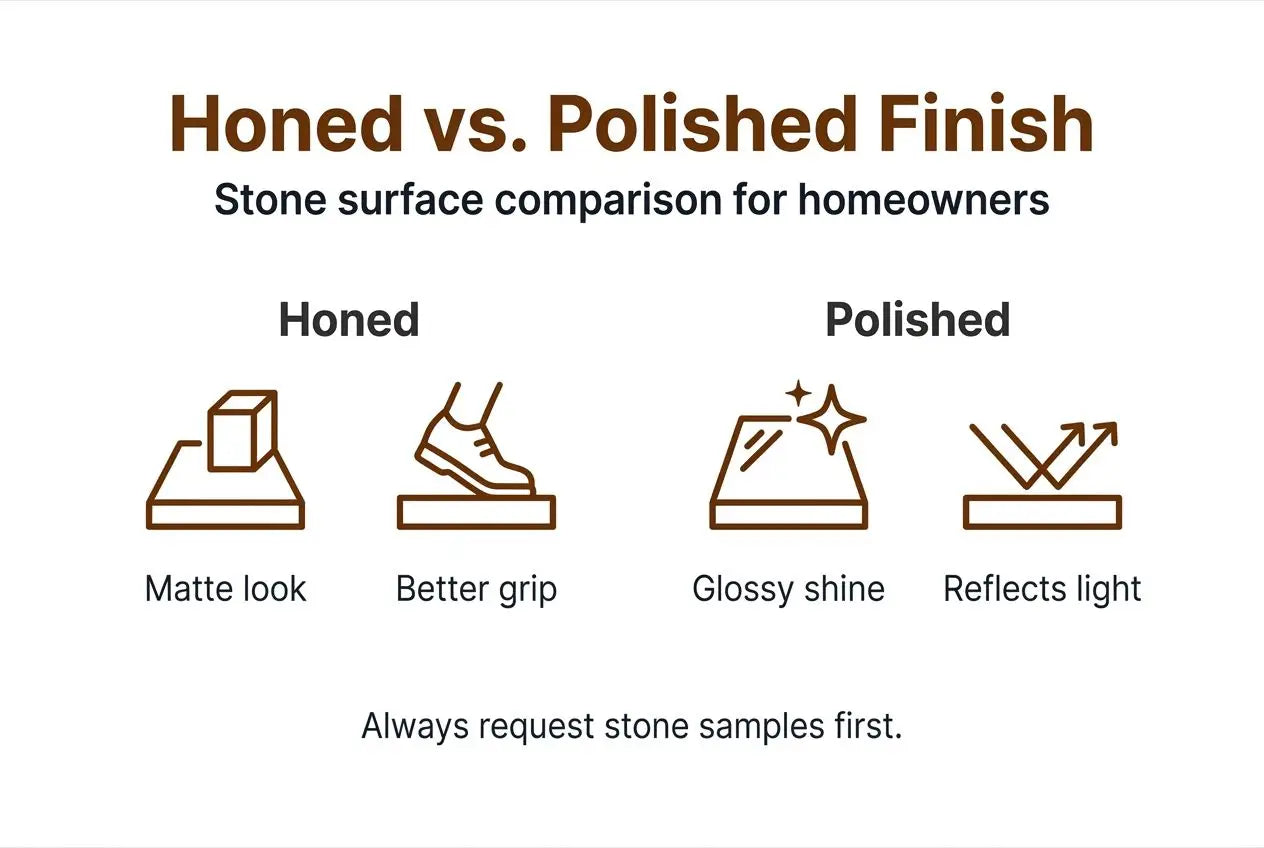
Leathered finishes combine texture with a soft sheen, providing a middle ground between honed and polished. The slight texture hides fingerprints and minor imperfections while maintaining some visual depth. Brushed finishes emphasize stone’s natural texture through mechanical abrasion, creating rustic, organic appearances ideal for traditional or Mediterranean designs.
Choosing between finishes depends on balancing aesthetic goals, maintenance tolerance, and functional needs like slip resistance or scratch concealment. Consider these factors:
- Traffic patterns and moisture exposure in the installation area
- Desired visual impact versus practical maintenance commitment
- Compatibility with existing design elements and lighting
- Long-term care budget and willingness to perform regular sealing
Pro Tip: Use polished stone in low-traffic formal areas and honed finishes in kitchens and bathrooms to balance beauty with practicality throughout your home.
Reviewing a floor tile selection guide provides room-specific recommendations. A comprehensive stone finish decision guide outlines additional considerations for commercial projects where durability and safety take priority over aesthetic preferences.
Common misconceptions about honed finishes
Several myths about honed stone surfaces persist despite abundant evidence to the contrary. Addressing these misconceptions helps you make informed decisions without unnecessary concerns about performance or maintenance.
Many assume honed surfaces feel rough or abrasive. In reality, honed stone is smooth to the touch, lacking only the glossy reflection of polished alternatives. The matte appearance results from controlled grinding, not coarse texture. Properly honed surfaces feel pleasant underfoot and under hand, suitable for any application where polished stone would be considered.
Another common belief suggests honed finishes are less durable. Actually, they hide scratches better and are ideal for high-traffic areas, though they require more frequent sealing. The perception of fragility stems from visible porosity, but with appropriate sealing schedules, honed stone matches or exceeds polished stone’s functional lifespan.
Some worry that honed stone demands excessive or complicated maintenance. While regular sealing is necessary due to increased porosity, the process is straightforward and affordable. Most homeowners complete sealing in under an hour using readily available products. The intervals between sealing typically range from six to twelve months, depending on stone type and use intensity.
Additional misconceptions worth clarifying:
- Honed stone does not stain more easily if properly sealed on schedule
- The matte finish does not make spaces appear darker when adequate lighting is present
- Honed surfaces clean just as easily as polished with appropriate pH-neutral products
- Color vibrancy remains strong in honed finishes, though slightly less intense than polished
Understanding these realities through stone finish myths clarified empowers confident decision-making. Honed finishes offer practical advantages that often outweigh perceived drawbacks, especially in family homes and commercial environments where durability and safety matter most.
Selecting and caring for honed stone surfaces
Choosing the right stone and finish for your project involves considering room function, aesthetic goals, and maintenance willingness. Honed finishes excel in bathrooms, kitchens, and high-traffic residential areas where their safety features and forgiving appearance provide maximum value.
Marble, granite, and travertine each respond beautifully to honing, though maintenance requirements vary. Marble requires more frequent sealing due to its calcium carbonate composition, while granite’s density allows slightly longer intervals. Travertine’s natural porosity benefits from honing’s scratch-concealing properties but demands diligent sealing to prevent moisture damage.
According to industry research, 60% of kitchen and bathroom projects prioritize slip resistance over gloss when selecting natural stone finishes. This preference reflects growing awareness of safety considerations alongside aesthetic appeal, particularly in homes with children or elderly residents.
Practical care guidelines for honed stone include:
- Seal every six to twelve months depending on stone type and traffic exposure
- Clean daily with pH-neutral, non-abrasive cleaners designed for natural stone
- Wipe spills immediately to prevent staining, especially acidic substances like citrus or wine
- Avoid harsh chemicals, vinegar, bleach, or abrasive scrubbing pads that damage sealant
- Use cutting boards and trivets to protect kitchen countertops from scratches and heat
Pro Tip: Perform a water droplet test every few months. If water absorbs into the stone within minutes rather than beading up, resealing is overdue.
When choosing stone for bathrooms, honed finishes provide luxury with practicality. Consulting a comprehensive natural stone selection guide helps match stone types to specific rooms. Understanding marble kitchen benefits clarifies why honed marble countertops remain popular despite requiring attentive care. Additional insights from stone finish care tips ensure your surfaces stay beautiful for decades.
Conclusion: Is honed finish right for your project?
Honed finishes blend subtle elegance with functional durability, making them ideal for spaces prioritizing safety, scratch resistance, and timeless design. Their matte appearance suits wet areas, high-traffic zones, and rooms where glare reduction enhances comfort. While maintenance requires commitment to regular sealing, the benefits often outweigh this modest effort.
Across the United States, honed stone appears frequently in kitchen countertops, bathroom floors, shower surrounds, and commercial interiors. Designers appreciate how the understated aesthetic complements diverse styles without overwhelming other design elements. Homeowners value the forgiving nature that keeps surfaces looking fresh despite daily wear.
Weighing your priorities helps determine fit:
- Choose honed if safety, scratch concealment, and matte aesthetics align with your goals
- Consider polished if maximum color vibrancy and easier stain protection matter more
- Evaluate your willingness to seal regularly versus tolerance for visible wear
- Factor in room function, moisture exposure, and expected traffic levels
Ultimately, honed finishes reward those who appreciate their unique combination of beauty and practicality. With proper selection and care, honed stone surfaces deliver decades of performance while maintaining their sophisticated, welcoming appearance.
Explore quality stone finishes at Surfaces Galore
Ready to bring the elegance and durability of honed stone into your home or design project? Surfaces Galore specializes in premium natural stone including marble, granite, and travertine with various finish options. Our nationwide shipping connects you with authentic, affordable materials that elevate any space.
Our blog offers expert guidance on selecting stone for luxury bathrooms and choosing natural stone for different spaces. Whether you’re a homeowner planning a renovation or a designer sourcing materials for clients, we provide the quality and support to ensure your project achieves timeless beauty.
FAQ
What is the difference between honed and polished stone?
Honed stone features a matte, smooth surface with minimal gloss, while polished stone displays a shiny, reflective finish. Honed finishes offer superior scratch concealment and slip resistance, making them safer for wet areas. Polished surfaces emphasize vibrant color and dramatic visual impact but reveal flaws more readily.
Do honed stone surfaces require sealing?
Yes, honed stone is more porous than polished and typically needs sealing every six to twelve months to prevent stains and moisture damage. The exact frequency depends on stone type, traffic levels, and exposure to spills. Regular sealing preserves appearance and extends the stone’s functional lifespan significantly.
Is a honed finish suitable for kitchen countertops?
Absolutely, honed finishes work beautifully on kitchen countertops because they hide scratches, reduce glare, and create inviting warmth. However, they require diligent sealing and prompt spill cleanup, especially with acidic substances. The balance of aesthetics and functionality makes honed countertops popular in modern kitchens nationwide.
How do I clean and maintain honed stone surfaces?
Clean honed stone daily using pH-neutral, non-abrasive cleaners applied with soft cloths or microfiber mops. Avoid acidic cleaners, vinegar, bleach, or harsh chemicals that degrade sealant. Seal surfaces every six to twelve months and wipe spills immediately to prevent staining. Routine care ensures your honed stone maintains its beauty for decades.

Leave a comment