

What is marble thickness? A 2026 guide for homeowners

Choosing marble for your kitchen or bathroom remodel involves more than picking a beautiful pattern. Many homeowners assume marble thickness only affects cost, but this measurement plays a critical role in durability, functionality, and overall design impact. Understanding the difference between 16mm, 20mm, and 30mm slabs helps you select the right material for countertops, backsplashes, vanities, and floors. This guide breaks down common marble thicknesses, explains how each option performs in real-world applications, and provides practical advice to match your renovation goals with the perfect slab.
Table of Contents
- Understanding Common Marble Thickness Options
- How Marble Thickness Affects Durability And Application
- Marble Thickness And Its Impact On Cost And Aesthetics
- Practical Advice For Choosing Marble Thickness In Kitchen And Bathroom Remodels
- Explore Marble Options For Your Renovation At Surfaces Galore
Key takeaways
| Point | Details |
|---|---|
| Thickness affects durability | Thicker slabs resist cracking and wear better in high-traffic areas like kitchens. |
| Standard options vary | Common thicknesses include 16-18mm for walls, 20mm for countertops, and 30mm for heavy-duty use. |
| Cost increases with thickness | Thicker marble slabs cost more due to material weight and premium appearance. |
| Application determines choice | Match thickness to room function: 20mm works for vanities, 30mm suits islands and stairs. |
| Support needs differ | Thinner slabs may require plywood backing to prevent damage during installation. |
Understanding common marble thickness options
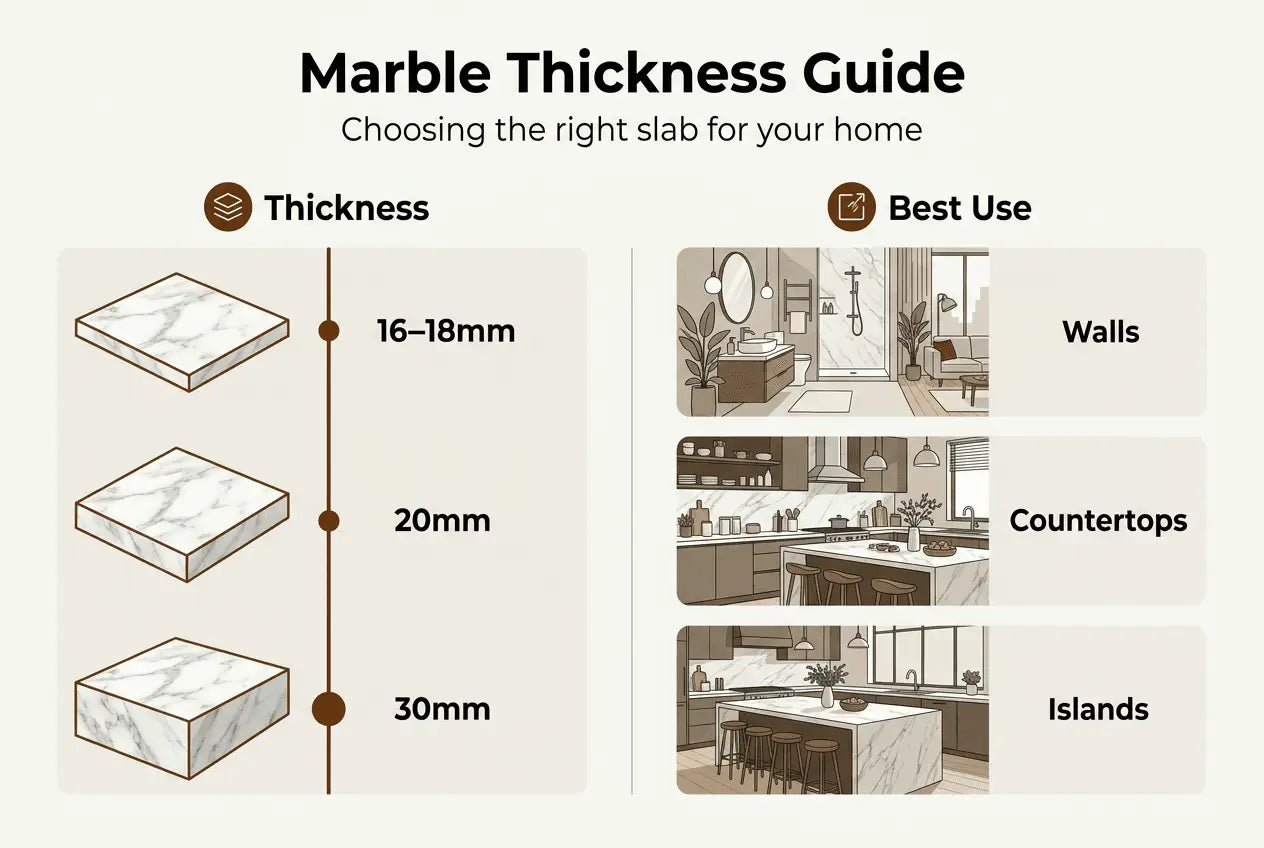
Marble slabs come in several standard thicknesses, each designed for specific applications and performance requirements. Common marble slab thicknesses include 16mm or 18mm, 20mm, and 30mm, measured in both metric and imperial units for clarity. These measurements translate to approximately ¾ inch for thinner options and 1¼ inch for the thickest slabs available in residential projects.
The 16-18mm category represents the lightest and most budget-friendly option. These thinner slabs work well for vertical surfaces like wall cladding, decorative backsplashes, and low-impact flooring in spaces with minimal foot traffic. Their reduced weight makes handling easier during installation, and the lower material cost appeals to homeowners working within tight budgets. However, these slabs require careful support planning to avoid stress fractures.
Moving up to 20mm thickness provides a noticeable upgrade in structural integrity. This mid-range option has become the most popular choice for kitchen countertops and bathroom vanities because it balances strength with manageable weight. The marble slab guide explains how this thickness handles daily use without excessive bulk, making it ideal for surfaces that experience regular contact with cookware, appliances, and personal care items.
At the premium end, 30mm slabs deliver maximum durability for demanding applications. These substantial pieces excel in high-stress environments like kitchen islands, outdoor decks, commercial lobbies, and staircases where people walk daily. The extra thickness provides a luxury aesthetic that communicates quality and permanence, though the increased material and installation costs require careful budget consideration.
To clarify these differences, consider this comparison:
| Thickness | Metric | Imperial | Best Applications | Key Advantage |
|---|---|---|---|---|
| Thin | 16-18mm | ¾ inch | Walls, backsplashes, light floors | Affordable, lightweight |
| Standard | 20mm | ¾ inch+ | Countertops, vanities, moderate floors | Balanced durability |
| Premium | 30mm | 1¼ inch | Islands, stairs, outdoor, commercial | Maximum strength |
Each thickness category serves distinct purposes in home renovation projects. Selecting the right option depends on understanding how these measurements translate to real-world performance in your specific spaces.
How marble thickness affects durability and application
The relationship between slab thickness and functional performance determines which marble works best for different areas of your home. Marble slab thickness directly affects durability, stress resistance, and appropriate placement, making this measurement a critical factor beyond aesthetics alone.
Thicker slabs naturally resist cracking and chipping better than thinner alternatives. In kitchens where heavy pots, cutting boards, and appliances create constant impact, the extra material absorbs stress without developing surface damage. High-traffic bathroom floors benefit similarly, as the additional thickness prevents hairline fractures from forming under repeated foot pressure over years of use.
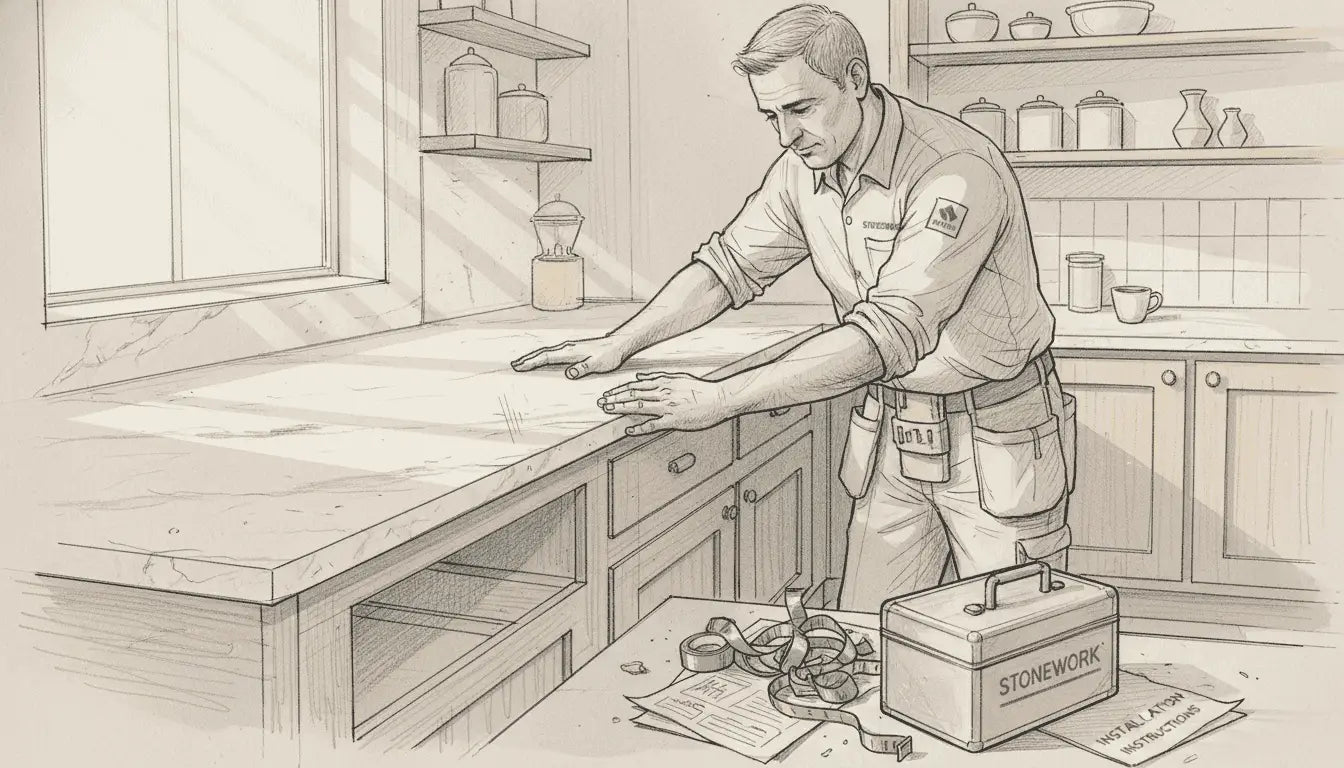
For the 16-18mm category, appropriate applications focus on protected surfaces. Wall cladding showcases marble’s beauty without subjecting the material to physical stress. Backsplashes behind stoves and sinks receive occasional splashes but rarely experience direct impact. Light-duty flooring in powder rooms or closets works well with this thickness, provided the subfloor offers adequate support and the space sees minimal traffic.
The 20mm sweet spot handles most residential demands effectively. Kitchen counters prepared on these slabs withstand daily meal preparation, hot pans, and cleaning routines without showing wear. Bathroom vanities maintain their appearance through years of cosmetic application, water exposure, and cleaning product contact. Flooring in bedrooms, hallways, and moderate-traffic bathrooms performs reliably when installed on proper underlayment. The marble countertop benefits become fully realized at this thickness level.
Heavy-duty scenarios demand 30mm thickness for long-term success. Kitchen islands serving as primary work surfaces need this extra protection against dropped items, standing pressure, and edge impacts. Staircases experience concentrated stress at tread edges where people step repeatedly, making thinner options prone to chipping. Outdoor decks face temperature fluctuations and weather exposure that thinner marble cannot handle safely. Commercial settings with constant foot traffic require this premium thickness to maintain appearance and structural integrity.
Pro Tip: When budget constraints push you toward thinner slabs, discuss reinforcement options with your fabricator. Plywood backing, metal supports, or strategic placement of seams can extend the viable applications for 16-18mm marble beyond typical recommendations.
Understanding these durability relationships helps you avoid the disappointment of choosing beautiful marble that fails to perform in its intended location. Match thickness to actual use patterns rather than visual preferences alone.
Marble thickness and its impact on cost and aesthetics
Budget planning for marble renovation requires understanding how thickness drives both material expenses and visual impact. The choice of marble thickness impacts both cost and appearance, creating trade-offs that influence your final design decisions.
Thicker 30mm slabs command premium pricing for several reasons. The raw material costs more because suppliers extract and transport heavier pieces. Fabrication takes longer as cutting, polishing, and finishing thick stone requires more time and specialized equipment. Installation crews charge higher rates because moving and positioning substantial slabs demands additional labor and safety precautions. However, these slabs create an unmistakable luxury presence, with substantial edges and weighty feel that communicate quality to anyone who sees or touches them.
Thinner 16-18mm options reduce upfront material costs significantly, sometimes by 30 to 40 percent compared to premium thickness. The sleek, modern aesthetic appeals to contemporary design styles that emphasize clean lines and minimal visual weight. However, the apparent savings can diminish when you factor in necessary support structures. Plywood backing, additional adhesive, and reinforced cabinets add expense and complexity that partially offset the initial price advantage.
The 20mm middle ground offers the best value proposition for most homeowners. Material costs remain reasonable while providing adequate durability without extensive reinforcement. Installation proceeds smoothly without special handling requirements. The visual presence satisfies traditional and transitional design styles without appearing either too delicate or overly heavy.
Consider this cost-benefit comparison:
| Thickness | Relative Cost | Visual Style | Support Needs | Best Value For |
|---|---|---|---|---|
| 16-18mm | Lowest | Sleek, modern | Often required | Decorative applications |
| 20mm | Moderate | Balanced, versatile | Minimal | General countertops |
| 30mm | Highest | Substantial, luxury | None | Statement pieces |
When selecting thickness based on budget and style, follow these steps:
- Determine your total marble budget including installation and support costs.
- Identify which surfaces receive the most visual attention in your space.
- Allocate thicker marble to focal points like kitchen islands or master bath vanities.
- Use thinner options for secondary surfaces like backsplashes or powder room walls.
- Calculate total project cost with your fabricator before finalizing thickness choices.
Pro Tip: Match slab thickness with your overall interior style for maximum design impact. Traditional homes benefit from substantial 30mm edges that echo classical architecture, while minimalist spaces shine with sleek 16-18mm installations that emphasize choosing marble colors over material mass.
The aesthetic dimension extends beyond mere thickness numbers. Edge profiles, veining patterns, and finish types interact with slab depth to create the final look. A 20mm slab with a dramatic waterfall edge can appear more substantial than a 30mm piece with a simple straight cut. Understanding the marble role in interiors helps you balance thickness with other design elements for cohesive results.
Your budget and style preferences should work together rather than compete. Prioritize thickness where it matters most functionally and visually, then economize on surfaces where thinner options perform adequately.
Practical advice for choosing marble thickness in kitchen and bathroom remodels
Applying thickness knowledge to your specific renovation project requires matching material properties to room functions and personal priorities. These practical guidelines help you make confident decisions that balance performance, appearance, and budget.
For kitchen countertops, 20mm thickness is suitable for structural integrity where frequent usage occurs. This measurement handles meal preparation activities, hot cookware placement, and cleaning routines without requiring extensive support systems. The visual presence satisfies most design styles while keeping costs reasonable. If your kitchen features a large island serving as the room’s centerpiece, consider upgrading that single surface to 30mm for dramatic impact while using 20mm for perimeter counters.
Bathroom vanities perform well with 20mm slabs that resist water damage and daily cosmetic use. The thickness provides enough mass to anchor vessel sinks securely and support undermount installations without flexing. Master bathrooms benefit from this substantial feel, while guest bath vanities can use 16-18mm options to reduce costs without sacrificing appearance in lower-traffic spaces.
Backsplashes and decorative wall panels rarely need thickness beyond 16-18mm. These vertical applications avoid the stress factors that demand thicker material, making them ideal locations to economize. The thinner profile actually enhances visual appeal by creating sleek transitions between surfaces rather than bulky protrusions that interrupt sight lines.
Kitchen islands, staircases, and outdoor applications demand 30mm thickness for long-term success. Islands receive concentrated use as gathering spots, food prep stations, and dining surfaces that experience more stress than perimeter counters. Stair treads face repetitive edge impacts that cause thinner marble to chip and crack prematurely. Outdoor installations endure temperature swings and weather exposure that only premium thickness can withstand safely.
Marble variety influences thickness requirements because different stones have varying hardness levels. Softer varieties like Calacatta benefit from thicker slabs that compensate for their delicate nature with additional mass. Harder options like certain Carrara types can sometimes perform adequately at thinner measurements, though most fabricators still recommend standard 20mm for countertops regardless of marble type. Reviewing the best marble for kitchens helps you understand how stone selection and thickness work together.
Installation factors significantly impact total project costs and feasibility. Thinner slabs may require:
- Plywood backing panels to prevent flexing and cracking
- Additional adhesive layers for secure bonding
- Reinforced cabinet structures to support combined weight
- More careful handling during fabrication and placement
- Extended installation time as crews work more cautiously
These requirements can add 15 to 25 percent to your installation budget, reducing the apparent savings from choosing thinner material. Discuss these factors with your fabricator during the planning phase rather than discovering hidden costs after ordering slabs.
Pro Tip: Consult with your fabricator about support requirements before finalizing thickness selection. Experienced professionals can assess your specific cabinet construction, span lengths, and intended use patterns to recommend the minimum safe thickness for each surface. This conversation often reveals opportunities to economize safely or identifies situations where upgrading thickness prevents future problems.
The marble in kitchens guide provides additional context for integrating these thickness decisions into your broader renovation planning. Consider how marble selection, thickness choice, edge profiles, and finish types work together to achieve your desired outcome within budget constraints.
Your final thickness decisions should reflect actual use patterns rather than assumptions. A busy family kitchen with young children needs different solutions than a rarely-used guest bathroom. Honest assessment of how you live in your spaces leads to thickness choices that perform reliably for years.
Explore marble options for your renovation at Surfaces Galore
Now that you understand how marble thickness affects durability, cost, and design impact, finding the right slabs for your project becomes the next step. Surfaces Galore offers an extensive selection of premium marble in various thicknesses specifically suited for kitchen and bathroom applications. Their direct import model delivers authentic Italian and Turkish marble at prices that make quality accessible to homeowners and contractors across the country.
Browsing their curated collections online reveals detailed product specifications including exact thickness measurements, veining patterns, and finish options. Each listing provides the information you need to match material properties with your specific renovation requirements. Whether you need 20mm slabs for kitchen counters or 30mm pieces for a statement island, their inventory supports both practical and aesthetic goals. Contact their knowledgeable specialists at Surfaces Galore for personalized guidance on selecting the perfect marble thickness and variety for your home transformation.
FAQ
What is the standard thickness for marble kitchen countertops?
The standard thickness is 1¼ inches or 3 cm for marble countertops, offering balanced durability and aesthetics. This measurement handles daily kitchen activities without requiring extensive support structures. Most fabricators recommend this thickness as the default option for residential countertop installations.
Can thinner marble slabs be used for kitchen countertops?
Yes, but thinner slabs may require plywood support to prevent cracking and ensure structural integrity. The 2 cm or ¾ inch options work when properly reinforced, though installation complexity and costs increase. Discuss support requirements with your fabricator before choosing thinner materials for countertop applications.
How does marble thickness affect the appearance of my kitchen or bathroom?
Thicker slabs create a luxurious feel with substantial edges and weighty presence that communicates quality. Thinner options offer streamlined, modern aesthetics that emphasize clean lines and minimal visual bulk. Your choice should align with your overall interior design style and the statement you want your surfaces to make.
What marble thicknesses are best for bathroom vanities?
20mm thickness suits bathroom vanities perfectly, providing durability for daily use while maintaining elegant proportions. This measurement supports both vessel and undermount sink installations without flexing. The balanced strength handles water exposure and cosmetic product contact that bathroom surfaces experience regularly.
Recommended
- What is marble etching? A 2026 guide for homeowners– SurfacesGalore
- What is antiqued marble? A 2026 guide for homeowners– SurfacesGalore
- What is marble dust? Essential guide for homeowners 2026– SurfacesGalore
- Top Marble Selection Tips 2025 for Stylish Projects– SurfacesGalore
- Why cello top thickness varies: a maker’s guide for 2026
Leave a comment