

Best natural stone backsplash for timeless kitchens 2026

TL;DR:
- Natural stone backsplash offers unmatched beauty, durability, and long-term value for kitchens.
- Full slab installations create seamless, easy-to-clean surfaces ideal for high-end kitchen design.
- Quartzite is recommended for busy kitchens due to its stain resistance and marble-like appearance.
Choosing a kitchen backsplash sounds simple until you’re standing in a showroom surrounded by hundreds of slabs, tiles, and finishes with wildly different price tags. The decision carries real weight: your backsplash covers some of the most visible square footage in your home and gets exposed to heat, grease, and daily wear. Premium natural stone sits at the top of the category because it delivers a combination of beauty, durability, and long-term value that manufactured materials rarely match. This guide walks you through the key criteria, top materials, installation options, and real cost numbers so you can make a confident, informed choice.
Table of Contents
- How to evaluate premium kitchen backsplash options
- Top timeless natural stone backsplash materials
- Slab vs. tile: Choosing the right stone installation
- Cost, durability, and maintenance breakdown
- Expert perspective: What most homeowners overlook with natural stone backsplashes
- Find your premium stone backsplash with Surfaces Galore
- Frequently asked questions
Key Takeaways
| Point | Details |
|---|---|
| Evaluate using clear criteria | Consider style, durability, cost, and upkeep before picking your kitchen backsplash stone. |
| Marble, quartzite, and granite stand out | Each offers distinct advantages and enduring appeal for premium kitchen renovations. |
| Slab backsplashes lead 2026 trends | Full-height slabs deliver a seamless luxury look but need professional installation. |
| Maintenance impacts long-term value | Upkeep requirements differ—choose a stone that fits your lifestyle to avoid regrets. |
| Invest wisely for decades of beauty | Natural stone backsplashes can last 20-50 years with proper care, making them a smart long-term upgrade. |
How to evaluate premium kitchen backsplash options
Before you fall in love with a specific stone, it helps to build a simple scoring framework. Not every beautiful material is right for every kitchen, and skipping this step is how homeowners end up with a stunning backsplash they resent six months later.
Here are the core criteria worth evaluating:
- Aesthetic priorities: Look at veining intensity, color range, and available surface finishes (polished, honed, brushed). Each finish changes how light hits the stone and how formal the space feels.
- Durability: Consider heat resistance near the range, scratch resistance from cookware, and stain resistance from oils and acidic foods.
- Maintenance demands: Some stones need sealing every six months; others can go years without attention. Be honest about how much upkeep you’re willing to do.
- Installed cost: Material price is only part of the equation. Labor, substrate prep, and sealant add to the final number.
- Resale value and adaptability: Neutral, classic stones tend to age well with changing design trends and appeal to future buyers.
According to 2026 backsplash trends, natural stone continues to dominate high-end kitchen renovations because of its unmatched visual depth. Popular premium options for timeless kitchen backsplashes include marble, quartzite, granite, travertine, and limestone, each with its own strengths depending on your priorities.
For a deeper look at how each stone performs in real kitchens, the natural stone guide at Surfaces Galore covers installation considerations and design pairings in detail.
Pro Tip: Prioritize slab backsplashes for a seamless, grout-free look. Full slabs are easier to clean, visually dramatic, and ideal when you’re investing in premium natural stone.
Top timeless natural stone backsplash materials
With your criteria in hand, let’s look at what each stone actually brings to the table. Each material has a distinct personality, and the right choice depends on how your kitchen is used and what aesthetic you’re after.
| Stone | Best for | Key strength | Watch out for |
|---|---|---|---|
| Marble (Calacatta, Carrara) | Luxury, formal kitchens | Dramatic veining, prestige | Etching, staining |
| Quartzite (Taj Mahal, Calacatta Lux) | Busy family kitchens | Marble look, superior durability | Higher material cost |
| Granite | Heavy-use kitchens | Heat resistance, depth of pattern | Bold patterns can feel dated |
| Travertine | Rustic, Mediterranean styles | Warm tones, natural texture | Porous, needs sealing |
| Limestone | Neutral, transitional kitchens | Soft color palette, versatile | Softer, more prone to scratches |
Marble remains the gold standard for luxury kitchen design. Varieties like Calacatta Gold and Carrara White feature bold gray or gold veining on bright white backgrounds. The marble types for kitchens that work best as backsplashes are typically honed rather than polished, which reduces glare and hides minor etching.
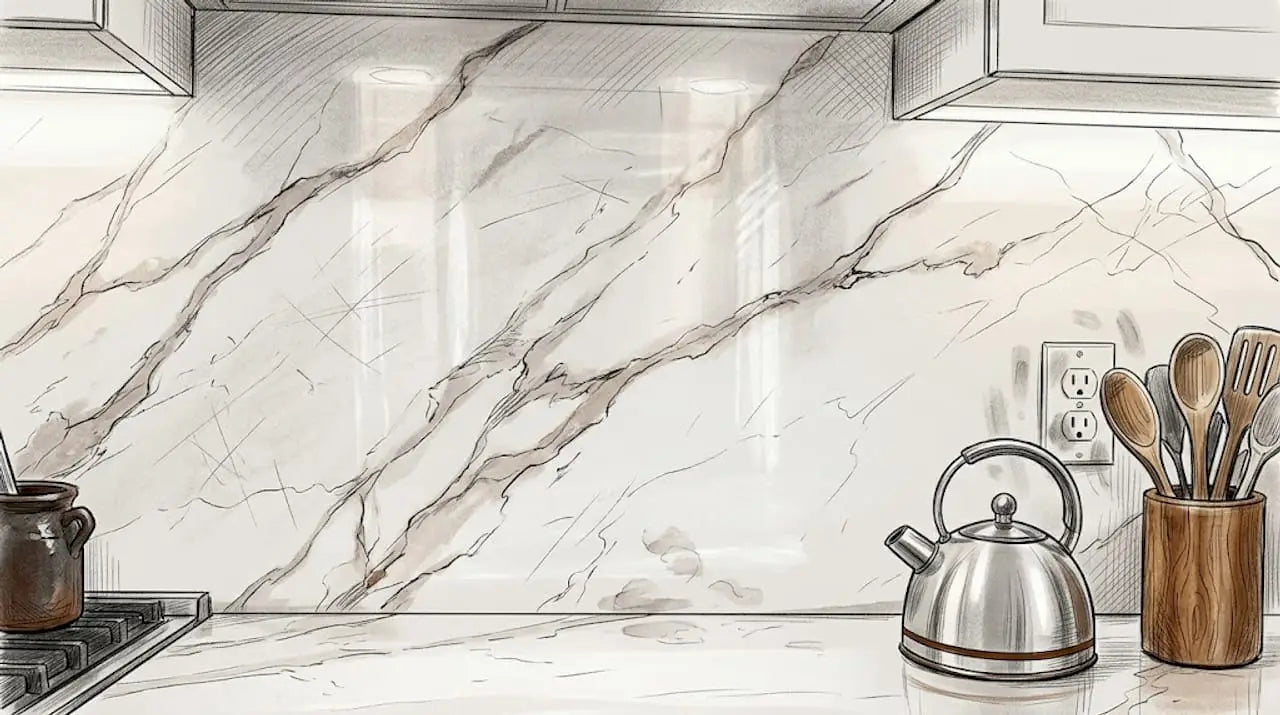
Quartzite is the material that surprises most homeowners. It forms under intense heat and pressure, which gives it a hardness that marble simply cannot match. Taj Mahal quartzite, for example, has soft cream tones and subtle veining that reads almost identical to marble from across the room.
Granite brings rich, complex patterns with flecks of mica and quartz that catch light beautifully. It holds up well near the stove and resists heat better than most natural stones. Travertine and limestone lean into a warmer, more textured aesthetic, and both work exceptionally well in farmhouse or Mediterranean-inspired kitchens.
For real project photos and design inspiration, browsing marble in kitchens gives you a clear sense of how these materials translate from slab to finished space.
The luxury veining and durability of each stone type varies significantly, so comparing them side by side before committing is always worth the extra time.
Pro Tip: If you love marble’s look but cook heavily or have young kids, quartzite is a smart alternative. You get the veining without the anxiety over every splash of lemon juice.
Slab vs. tile: Choosing the right stone installation
Once you’ve picked your material, the next decision is how it gets installed. This choice affects the final look, your cleaning routine, and your total project budget more than most homeowners expect.
Full-height slab backsplashes are a dominant 2026 trend for seamless luxury, outperforming tile in cleanability but requiring precise installation. A single continuous slab from countertop to upper cabinets creates an uninterrupted visual flow that tile layouts simply cannot replicate.
| Factor | Full slab | Tile |
|---|---|---|
| Visual impact | Very high, seamless | Moderate, pattern-dependent |
| Grout lines | None | Present, requires maintenance |
| Cleaning ease | Excellent | Moderate (grout traps grease) |
| Installation complexity | High, professional required | Moderate, DIY possible |
| Material waste risk | High without precise measuring | Low |
| Cost | Higher overall | More budget-friendly |
Here’s how to decide which approach fits your project:
- Set your budget first. Slabs cost more in both material and labor. Know your ceiling before falling in love with a specific look.
- Measure your wall space accurately. Slab installations leave very little room for error. Even a small miscalculation can mean wasted stone worth hundreds of dollars.
- Consider your cooking habits. If you cook daily and generate grease splatter, a grout-free slab surface is dramatically easier to wipe clean.
- Think about your kitchen’s scale. Slabs look best in larger kitchens where the visual expanse can be appreciated. In smaller kitchens, a well-chosen tile pattern can add texture without overwhelming the space.
- Hire a professional for slabs. The weight and fragility of large stone panels make this a job for experienced installers.
“Precise measurement is the single most important step in a slab backsplash installation. One inch off can compromise the entire panel, and natural stone is not forgiving of mistakes.” — Surfaces Galore installation team
For a full walkthrough of what the backsplash installation process involves, including substrate prep and adhesive selection, Surfaces Galore has a detailed guide. Also worth reviewing are the latest backsplash trends shaping how designers are approaching slab installations this year.
Cost, durability, and maintenance breakdown
Let’s get into the numbers. Understanding what you’re actually paying for and what to expect over time is the difference between a smart investment and an expensive regret.
| Stone | Mohs hardness | Stain resistance | Typical cost (per sq ft) | Lifespan |
|---|---|---|---|---|
| Quartzite | ~7 | High | $70-$200 | 30-50+ years |
| Granite | 6-7 | High | $40-$200 | 25-50+ years |
| Marble | 3-5 | Low to moderate | $60-$250 | 20-50+ years |
| Travertine | 4-5 | Moderate | $30-$120 | 20-40+ years |
| Limestone | 3-4 | Low | $25-$100 | 20-40 years |
Quartzite is the hardest at around Mohs 7, followed by granite at 6 to 7, while marble scores a softer 3 to 5. All natural stones can last 20 to 50 or more years with proper care, making them genuinely long-term investments. Installed costs in 2026 range from $40 to $200 per square foot for granite, $60 to $250 for marble, and $70 to $200 for quartzite, with full slab installations adding 20 to 50 percent to the base material price.
For maintenance, here’s what to expect by lifestyle:
- Luxury-focused homeowners who cook occasionally: Marble is a viable choice. Seal it twice a year and clean with a pH-neutral stone cleaner.
- Families with kids and frequent cooking: Quartzite or granite are your best bets. Both resist staining and scratching far better than marble.
- Low-maintenance seekers: Granite requires the least upkeep of the premium options. Seal it once a year and it handles most kitchen abuse without complaint.
- Budget-conscious renovators: Travertine and limestone offer natural stone beauty at lower price points, though both need more frequent sealing.
For detailed marble maintenance tips and a full guide to marble backsplash cleaning routines, Surfaces Galore has resources tailored specifically to kitchen environments. For broader pricing benchmarks across stone types, comparing material costs before you shop helps you negotiate better and avoid overpaying.
Expert perspective: What most homeowners overlook with natural stone backsplashes
Here’s the honest truth that most design guides skip over: the stone that photographs best is not always the stone that performs best in your actual kitchen.
We see it regularly. A homeowner falls in love with white Calacatta marble, installs it beautifully, and within a year they’re frustrated by etching from cooking splashes and staining near the range. Marble is genuinely stunning, but it’s also a calcium-based stone that reacts to acids including tomato sauce, citrus, and vinegar. That’s not a flaw to hide; it’s a material truth to factor into your decision.
Full slab installations look spectacular, but they are not DIY projects. We’ve seen expensive stone panels cracked during amateur installation attempts, and the cost of replacement often exceeds the original material budget. Hire professionals, especially for slabs over 60 inches wide.
Quartzite is the stone we consistently recommend for family kitchens. It mimics veining but resists stains and etching far better than marble, yet most homeowners have never heard of it. Meanwhile, marble’s maintenance demands versus granite and quartzite are well documented but rarely discussed at the point of sale.
The comparison between marble vs. ceramic also reveals why natural stone, even high-maintenance marble, outperforms manufactured alternatives in long-term value and visual richness. Choose the stone that fits your real life, not just your Pinterest board.
Find your premium stone backsplash with Surfaces Galore
Ready to move from research to reality? At Surfaces Galore, we carry an extensive selection of marble, quartzite, granite, travertine, and limestone for kitchen backsplash projects of every scale and budget.
Our team in Anaheim works directly with homeowners, designers, and contractors to find the right stone for each specific project. We offer samples, side-by-side comparisons, and installation guidance so you never have to guess. We ship nationwide, which means whether you’re renovating a kitchen in California or Connecticut, we can get premium natural stone to your door. Visit the Surfaces Galore showroom online to browse our full collection and connect with our stone specialists today.
Frequently asked questions
Which is better for a busy kitchen: marble or quartzite backsplash?
Quartzite is the better choice for heavy-use kitchens because it resists stains and etching while delivering a look nearly identical to marble. Marble is beautiful but requires more careful maintenance in high-traffic cooking environments.
How much does a natural stone backsplash cost in 2026?
Expect to pay between $40 and $250 per square foot installed depending on the stone, with full slabs costing 20 to 50 percent more than tile installations. Quartzite and marble sit at the higher end of that range, while travertine and limestone offer more budget-friendly entry points.
What is the trendiest backsplash style for 2026?
Full-height slab backsplashes in natural stone are the dominant 2026 trend, prized for their seamless, grout-free surface and high-end visual impact. Marble and quartzite slabs in particular are driving this look in luxury kitchen renovations.
How do I maintain a marble backsplash to avoid stains?
Seal marble every six months and clean it with a gentle, non-acidic stone cleaner to prevent staining and etching. Avoid vinegar, lemon juice, and harsh chemical sprays anywhere near the surface.
Leave a comment