
Is Limestone Good for Walls? What Builders Need to Know

TL;DR:
- Limestone is a durable, aesthetically appealing wall material when properly selected and installed, especially for interior applications. Its lifespan exceeds 50 years outdoors and over 75 years indoors, with moisture management being crucial for longevity. The key to success lies in choosing low-porosity varieties, correct installation, and regular maintenance with breathable sealers.
If you’ve spent any time researching wall materials, you’ve probably asked whether limestone is good for walls and gotten conflicting answers. The truth sits somewhere between “it lasts forever” and “it’s too delicate to bother with.” Limestone has built cathedrals, courthouses, and contemporary homes for centuries. Its warm tones and natural texture are hard to replicate. But its performance depends heavily on how it’s selected, where it’s placed, and how the surrounding wall system is built. This guide breaks down the real story so you can decide with confidence.
Table of Contents
- Key takeaways
- Is limestone good for walls? Understanding the technical side
- The real benefits of limestone walls
- Challenges and honest considerations for limestone walls
- Choosing the right limestone and installing it correctly
- Limestone walls in 2026 design trends
- My take on limestone walls after years in natural stone
- Explore limestone walls at Surfacesgalore
- FAQ
Key takeaways
| Point | Details |
|---|---|
| Durability depends on selection | Matching limestone’s porosity and absorption rate to your climate is more critical than aesthetics alone. |
| Exterior walls can last 50+ years | Properly installed limestone cladding lasts 50 or more years, with structural stone potentially exceeding a century. |
| Moisture management is non-negotiable | Correct flashing, drainage, and breathable sealing protect limestone far better than stone quality alone. |
| Interior limestone is low-risk | Interior limestone walls face minimal weathering and deliver strong design and thermal performance with basic maintenance. |
| Sealing requires the right product | Only breathable sealers should be used, as non-breathable options trap moisture and cause hidden damage over time. |
Is limestone good for walls? Understanding the technical side
To answer this question honestly, you need to understand what limestone actually is at a structural level. It’s a sedimentary rock composed primarily of calcium carbonate, formed from compressed marine shells and organic material over millions of years. That origin gives it distinct properties that affect how it performs on walls.
Porosity and moisture absorption
Limestone is more porous than granite and, depending on the variety, more porous than travertine. Porosity determines how much water the stone absorbs, and that absorption rate is one of the most important specifications you’ll evaluate when selecting a material for exterior use. Selecting limestone based on absorption and porosity data tailored to your local climate conditions, including freeze-thaw cycles, rainfall intensity, humidity levels, and UV exposure, is what separates a 75-year wall from one that needs repair within a decade.
The porosity range across limestone varieties is wide. Some dense varieties have absorption rates below 3%, which is suitable for most exterior applications. Others exceed 12%, making them appropriate only for dry interiors. This is not a one-size-fits-all material.
Durability and weathering resistance
Limestone handles compressive loads well and resists everyday physical wear, which is why it has been used structurally throughout history. What it doesn’t handle as well as granite is prolonged freeze-thaw exposure. Freeze-thaw performance tests measuring 140 versus 48 cycles are standard tools for determining whether a specific limestone variety is suitable for cold and wet climates. Low-absorption varieties that pass these tests can perform reliably in regions with harsh winters.
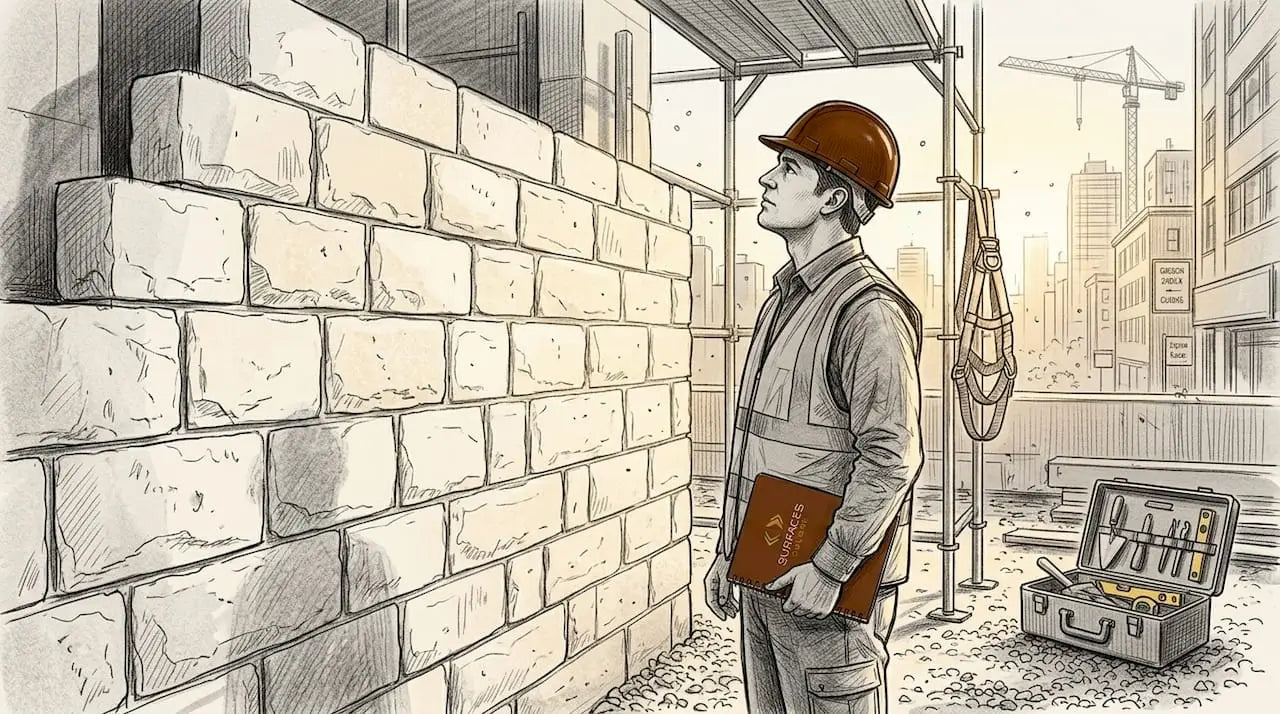
For interior walls, weathering is essentially a non-issue. The stone won’t be exposed to rain, frost, or direct sun, so interior limestone walls deliver exceptional longevity with minimal structural concern.
Lifespan expectations
| Application | Expected lifespan | Key factors |
|---|---|---|
| Interior accent wall | 75 to 100+ years | Maintenance, sealing, mechanical damage |
| Exterior cladding | 50 to 75+ years | Stone density, mortar, flashing, drainage |
| Structural stone wall | 100+ years | Installation quality, wall assembly, climate |
| Retaining wall base | 25 to 50+ years | Compaction, drainage, frost exposure |
Pro Tip: Request the technical data sheet for any limestone you’re considering for exterior use. Look specifically for the water absorption percentage and the freeze-thaw cycle rating. These two numbers tell you more about real-world performance than any visual sample.
When comparing limestone to other natural stone materials, granite offers superior hardness and moisture resistance but lacks the warmth and textural variety of limestone. Marble is softer and more susceptible to acid etching. Travertine is closely related to limestone but has a more porous, honeycombed structure. For an in-depth comparison, the travertine vs. limestone differences are worth reviewing before committing to either material.
The real benefits of limestone walls
The benefits of limestone walls extend well beyond how they look, although aesthetics alone are enough to make it one of the most sought-after natural stones in contemporary and traditional design.
Visual character that improves with age
Limestone develops a natural patina over time, deepening in tone and gaining character that no manufactured material can replicate. Its color palette runs from creamy whites and warm buffs to cool grays and rich taupes. The veining is subtle compared to marble, which makes it easier to integrate into both minimalist and ornate spaces. You’re not fighting the stone for visual balance. It cooperates with your design.
Thermal mass and energy efficiency
This is where limestone offers an advantage that gets less attention than it deserves. Stone has significant thermal mass, meaning it absorbs heat during the day and releases it slowly at night, helping stabilize interior temperatures. Is limestone energy efficient in practice? For passive heating and cooling strategies, yes. Using limestone as an interior wall material adjacent to south-facing glazing is a documented passive solar technique. The stone stores solar gain and moderates temperature swings.
The benefits of limestone walls in this context include:
- Reduced reliance on mechanical heating and cooling in mild climates
- Consistent indoor temperatures in spaces with high limestone coverage
- Lower thermal bridging compared to thinner, lighter wall finishes
- Long-term energy savings when incorporated as part of a thoughtful building envelope
Design flexibility across applications
Limestone for exterior walls works on everything from modern stacked-stone facades to traditional ashlar cladding. Inside, it’s equally at home on a kitchen backsplash, a bathroom surround, a fireplace facing, or a living room feature wall. The variety of finishes available, including honed, brushed, tumbled, and flamed, means you can control the texture and sheen to suit the setting. For more on this, the complete limestone tile guide covers how different finishes affect both appearance and performance.
Sustainability credentials
Limestone is a natural material requiring no synthetic binders, chemical treatments, or energy-intensive manufacturing processes to produce. It’s quarried, cut, and finished. That’s it. Natural stone supports sustainable design through low embodied energy, long service life, and the ability to be reclaimed and reused at the end of a building’s life. For clients or projects with sustainability requirements, limestone checks boxes that engineered materials cannot.
Challenges and honest considerations for limestone walls
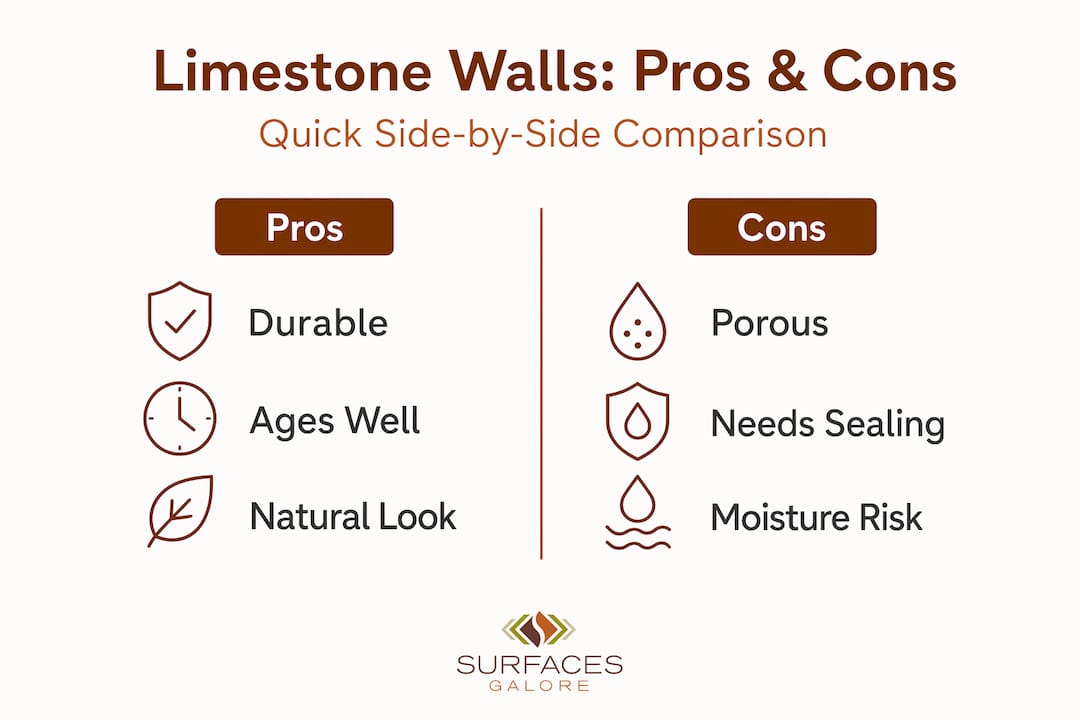
The pros and cons of limestone walls aren’t equally weighted on both sides. The advantages are significant, but the challenges are real and require upfront planning. Ignoring them is how projects go wrong.
Moisture is the primary risk factor
Moisture movement through a limestone wall is the most common cause of deterioration, and it’s preventable. When water enters a wall system through inadequate flashing, poorly designed joints, or incompatible mortar, it migrates through the stone and mortar. As it evaporates, it carries dissolved minerals to the surface, depositing the white crystalline residue known as efflorescence.
Efflorescence is not just cosmetic. Recurring white bloom on limestone walls signals active moisture pathways that are weakening joints and, over time, accelerating deterioration. Cleaning it away without addressing the source is like mopping around a dripping faucet. The only lasting solution is stopping moisture intrusion through proper drainage, flashing, and breathable wall assembly.
The risk of biological growth, including algae and moss, is also real in high-humidity or shaded exterior installations. This is a maintenance issue, not a structural one, but it affects appearance and requires periodic attention.
Maintenance requirements
Limestone wall maintenance is straightforward but non-negotiable. Key practices include:
- Clean with warm water and mild, pH-neutral cleaners only. Harsh chemicals and pressure washing damage limestone surfaces and strip sealers
- Inspect mortar joints annually on exterior walls and repair any cracks before they allow water infiltration
- Reapply breathable sealer every three to five years on exterior installations, and every five to seven years on interior walls in wet areas
- Address any signs of efflorescence by tracing the moisture source, not just cleaning the stone surface
Pro Tip: When sealing limestone walls, test any product on a small inconspicuous area first. Some sealers darken the stone noticeably, which may or may not suit your design intent.
Installation quality drives everything
Stone wall performance depends on wall assembly compatibility. Mortar selection matters enormously. Using a Portland cement mortar that is harder than the limestone can cause the stone to crack as the wall moves with temperature changes. A softer, lime-based mortar allows for natural movement and is often the correct specification for historic and traditional limestone work. Incompatible materials or trapped moisture cause damage regardless of how premium the stone itself is.
Choosing the right limestone and installing it correctly
Using limestone in construction successfully comes down to two decisions made early: choosing the right stone for the application and building the wall system correctly around it.
How to select the right limestone variety
Stone selection success depends on matching porosity and absorption to the project’s climate, not on picking the most attractive sample at the stone yard. Here’s a practical framework:
- Identify your climate conditions. Cold and wet regions require limestone with low absorption rates and documented freeze-thaw resistance. Hot and dry regions have more flexibility.
- Determine the wall type. Exterior cladding, interior accent wall, wet bath surround, and retaining wall base each have different requirements. Dense stone for exterior. More finish variety available for interior.
- Request absorption and density data. Any reputable supplier will provide a technical data sheet. If they won’t, look elsewhere.
- Choose the finish based on use. Honed finishes are smooth and suit contemporary interiors. Brushed and tumbled finishes add texture and are better at hiding minor wear on exteriors. Flamed finishes offer maximum grip but require sealing.
- Verify mortar compatibility. Confirm with your installer that the specified mortar type matches both the stone and the wall assembly.
Dense limestone varieties for exterior use
Dense limestone options like charcoal lueders stone perform well on exterior walls, maintaining structural strength and visual integrity after decades of weather exposure. These denser varieties show strong resistance to moisture penetration and are among the most reliable choices for limestone exterior walls in demanding climates.
A comparison of common limestone applications by density requirement:
| Limestone use | Density requirement | Absorption target |
|---|---|---|
| Exterior cladding, cold climate | High density | Under 3% |
| Exterior cladding, mild climate | Medium to high density | Under 6% |
| Interior wet areas (showers, baths) | Medium density | Under 5% |
| Interior dry areas (accent walls) | Low to medium | Under 10% |
| Retaining wall base (crushed) | Any | Drainage-focused |
Crushed limestone for retaining wall bases offers excellent compaction and drainage properties. Its angular shape locks together, preventing shifting and providing the stable base that any wall system needs beneath it. For best practices on installation in bathroom settings, bathroom wall tile installation guidance covers the specific steps for wet-area limestone applications.
Limestone walls in 2026 design trends
Natural stone is having a strong moment in 2026 design, and limestone sits at the center of it. The shift toward quieter, more organic interiors has made limestone’s muted tones and natural texture exactly what designers and homeowners are reaching for.
Current trends and applications worth considering include:
- Textured feature walls in living rooms and primary bedrooms, using stacked or ledger-style limestone panels to create depth and shadow play without paint or wallpaper
- Fireplace surrounds and mantels in honed cream or warm gray limestone, complementing both traditional and transitional interiors
- Kitchen and bathroom accent walls with large-format limestone tiles in brushed finishes, reducing grout lines and creating a more seamless look
- Exterior facades with a mix of limestone cladding and complementary materials like blackened steel frames, raw concrete, or aged wood for contemporary residential architecture
- Spa-inspired showers and bath surrounds using soft limestone tones to create a calming, retreat-like atmosphere
The material’s ability to work beautifully in living room design makes it as versatile for residential interiors as it is for commercial lobbies and hospitality spaces. Sealing for these applications is discussed in depth in guidance on sealing natural stone in kitchens and baths.
My take on limestone walls after years in natural stone
I’ve worked closely with limestone across dozens of projects, from bathroom renovations to full exterior facade installations. What I’ve come to believe is that limestone’s reputation suffers from two groups of people: those who install it wrong and blame the material, and those who oversell it as indestructible.
The honest truth is that limestone is a superb wall material when you respect what it is. It’s sedimentary stone. It has texture, variation, and character that comes from millions of years of natural formation. That same character means it has preferences about how it’s used.
What I’ve learned most clearly is that moisture management matters far more than which variety of limestone you choose. I’ve seen beautifully specified stone fail within a few years because the flashing detail at the base was inadequate. I’ve also seen modest, budget-friendly limestone cladding outlast its neighbors by decades because a thoughtful installer got the drainage and mortar exactly right. Moisture problems masquerade as surface defects, but the real failure is almost always in the wall assembly behind the stone.
My advice to anyone deciding on this material: visit a project that used the same limestone variety five to ten years ago. Ask the owner what the maintenance has been like. That conversation will teach you more than any specification sheet. Limestone rewards careful selection and skilled installation with beauty that genuinely improves over time. Rush those two things, and you’ll be scrubbing efflorescence every spring instead.
— cihan
Explore limestone walls at Surfacesgalore
At Surfacesgalore, we source and import premium limestone directly, which means you’re getting authentic stone at prices that reflect what it actually costs to produce, not what a distributor chain adds on top. Our limestone collection spans a range of densities, finishes, and formats specifically suited to wall applications, whether you’re cladding an exterior facade in California’s varied climate zones or designing a spa bathroom in the interior. Our team understands the technical side of natural stone selection and can help you match the right limestone variety to your project’s specific requirements. Browse our natural stone tile collections to find limestone options for walls, explore companion materials like travertine and marble, and connect with our design and sourcing experts. Every project deserves stone that performs as well as it looks.
FAQ
How long does limestone last on exterior walls?
Properly installed limestone cladding lasts 50 or more years, and structural full-depth limestone walls can exceed 100 years when mortar, flashing, and drainage details are built correctly.
Does limestone need to be sealed on walls?
Yes, particularly in wet areas and exterior applications. Breathable sealers limit water absorption without trapping moisture inside the wall, which is critical. Non-breathable sealers can cause more damage than no sealer at all.
Is limestone a good material for bathroom walls?
Limestone works very well for bathroom walls when a medium-density variety is selected, sealed with a breathable penetrating sealer, and installed with appropriate waterproofing behind the stone in wet zones like showers.
What causes white staining on limestone walls?
White staining is efflorescence, caused by moisture carrying dissolved minerals to the stone surface. Addressing the drainage and flashing details that allow water into the wall is the only permanent fix. Cleaning alone will not stop it from returning.
How does limestone compare to other natural stone for walls?
Limestone offers more warmth and texture than granite at a lower cost, with easier workability for custom profiles. It requires more moisture management than granite but is more forgiving to work with than marble and more available in large format than most travertine.

Leave a comment