
Mosaics in design: timeless impact, innovative results

TL;DR:
- Mosaics blend artistry, tradition, and durability, making them versatile design tools.
- Strategic, limited application of mosaics creates impactful focal points without visual overwhelm.
- Natural stone mosaics offer lasting beauty, resale value, and long-term resilience.
Mosaics have been dismissed as ornamental relics for too long. In reality, they are one of the most strategically versatile tools available to designers and architects working on both residential and commercial projects. A well-placed mosaic installation does something most surface materials cannot: it functions simultaneously as texture, color, pattern, and story. Mosaics provide artisanal craftsmanship and timeless appeal, bridging architecture and art in ways that no printed tile or painted wall can replicate. This guide breaks down exactly why mosaics belong in your modern design toolkit, how to use them with precision, and what separates a forgettable installation from one that clients remember for years.
Table of Contents
- Understanding the artistry and legacy of mosaics
- Why mosaics are a designer’s secret for innovation
- The timeless value: durability and long-term appeal
- Practical ways to incorporate mosaics in your projects
- What most designers get wrong about mosaics
- Elevate your next project with mosaic expertise
- Frequently asked questions
Key Takeaways
| Point | Details |
|---|---|
| Timeless artistry | Mosaics infuse spaces with artistic heritage and longevity difficult to replicate with other materials. |
| Design flexibility | Strategic mosaic placement allows for endless creative opportunities without overwhelming spaces. |
| Lasting impact | Mosaics combine durability and visual appeal, making them a smart investment for lasting design. |
| Practical guidance | Thoughtful use and expert advice maximize both innovation and client satisfaction in mosaic projects. |
Understanding the artistry and legacy of mosaics
With the foundation set, let’s explore why the artistry of mosaics resonates so powerfully in today’s design.
Few surface treatments carry the cultural weight and technical depth of mosaics. Their origins stretch back more than 4,000 years, appearing first in Mesopotamia as decorative cone arrangements in temple architecture. By the time of ancient Greece and Rome, mosaic work had grown into a highly refined craft, used to tell stories on floors, celebrate gods on walls, and signal wealth through intricate geometric precision. Byzantine artisans elevated the medium further, embedding gold and glass tesserae into sacred spaces to create luminous, otherworldly environments that still draw millions of visitors today.
What separates mosaics from other historical surface treatments is that the craft itself never became obsolete. It evolved. Contemporary mosaic production draws from the same artisanal principles: individual pieces are selected, cut, and placed by skilled hands to achieve a unified composition. The difference today is the sheer breadth of available materials, including marble, limestone, travertine, glass, ceramic, and mixed media. Each material responds differently to light, touch, and setting, which means the design possibilities are genuinely limitless.
“Mosaics bridge architecture and art, and hand-placement allows for unique, custom designs that elevate spaces to a level no machine-produced surface can match.”
This hand-placement is worth pausing on, because it is the core of what makes mosaics exceptional. When a mosaic artist positions each tessera, they are making constant micro-decisions about color variation, joint width, texture contrast, and compositional balance. Even within a repeating geometric pattern, no two handcrafted mosaic installations are identical. That irreproducibility is part of the value proposition, especially for high-end clients who want spaces that feel genuinely one-of-a-kind.
The legacy of timeless luxury design through mosaics continues to inform how contemporary designers approach surface selections. Understanding where this tradition comes from helps you communicate its value to clients who might initially see mosaics as simply decorative or old-fashioned.
Key characteristics that define artisanal mosaic craftsmanship include:
- Hand-cut precision: Individual tesserae are shaped to fit specific compositional needs rather than relying entirely on pre-cut uniformity.
- Material variety: Natural stone options such as marble, travertine, and limestone provide organic color variation that adds visual richness.
- Scale flexibility: Mosaics can be produced at scales ranging from a small accent niche to an entire feature wall or floor.
- Pattern complexity: From simple running bond arrangements to intricate medallions and figurative designs, the pattern range is enormous.
- Tactile quality: The physical texture of mosaic surfaces adds a sensory dimension that flat painted or printed tiles simply cannot offer.
The tumbled mosaic appeal of aged, softly rounded stone pieces is particularly relevant in spaces where warmth and history are design goals. Tumbling creates naturally worn edges that give installations an organic, relaxed quality that pairs beautifully with both traditional and transitional interiors.
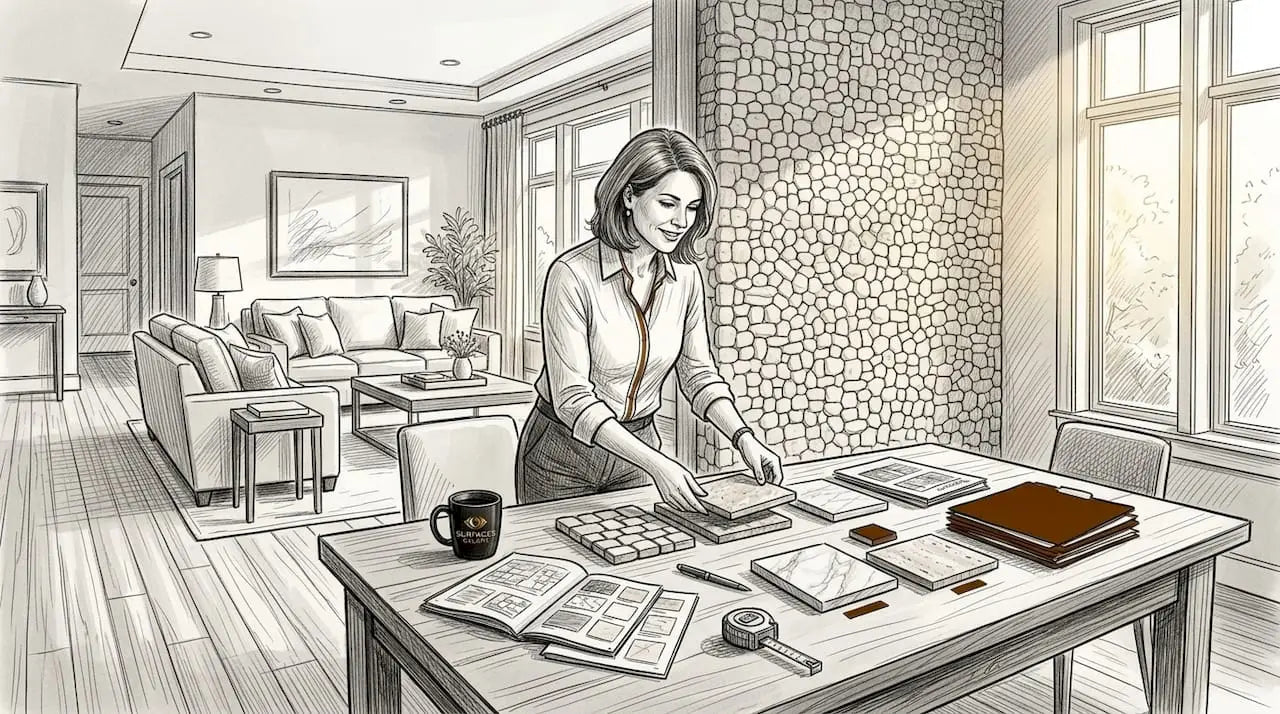
Understanding this artisanal depth positions you to advocate for mosaic installations with confidence. When clients question the investment, the answer is straightforward: what they are purchasing is not just a surface material, but a continuation of one of the world’s oldest and most respected craft traditions, produced with skills that cannot be automated or cheaply replicated.
Why mosaics are a designer’s secret for innovation
Now that we’ve explored tradition, let’s see how mosaics serve as innovative tools for today’s designers.
There is a common misconception that mosaics are inherently traditional, that using them automatically pulls a space backward in time. Experienced designers know the opposite is true. Mosaics are among the most adaptable materials available, capable of functioning equally well in a minimalist contemporary bathroom, an industrial-inspired restaurant, or a richly layered luxury hotel lobby.
The real innovation potential lies in how you deploy them. A mosaic does not need to cover an entire surface to make an impact. In fact, some of the most compelling contemporary installations use mosaics in deliberately limited, focused applications that create strong focal points without overwhelming the overall design.
Creative mosaic uses include feature walls behind reception desks, inset floor medallions at entryways, artisan niches in shower enclosures, and even ceiling installations in intimate dining spaces. Each of these applications uses the mosaic as a moment of visual punctuation rather than a background pattern. The contrast between the mosaic’s rich detail and the surrounding simplicity is what makes the design sing.
Mosaics also serve a spatial zoning function that few other materials can match. In open-plan residential and commercial spaces, a floor mosaic can define a seating area or dining zone without the need for walls, partitions, or level changes. The mosaic becomes a visual anchor that organizes the space while adding beauty. The role of pattern in mosaics is critical here: a strong geometric pattern reads clearly from above, making it especially effective for floor-level zoning.
Mosaics provide artisanal craftsmanship and timeless appeal, excelling in creating focal points and zoning without dominating, which makes them ideal for designers who want impact without visual noise.
Here is how mosaics compare to other popular feature surface materials:
| Feature material | Customization level | Durability | Visual impact | Cost range |
|---|---|---|---|---|
| Natural stone mosaic | Very high | Excellent | High | Moderate to premium |
| Ceramic tile | Low to moderate | Good | Moderate | Low to moderate |
| Wallpaper / wall covering | Moderate | Low | High | Low to moderate |
| Large-format stone slab | Low | Excellent | High | Premium |
| Wood paneling | Moderate | Moderate | Moderate | Moderate |
| Painted accent wall | Very low | Low | Low | Very low |
The table makes the case clearly: natural stone mosaics offer a combination of customization, durability, and visual impact that no other single material category can match at a comparable price range. The perceived cost is often higher than the actual price, particularly when you factor in the longevity of a well-installed mosaic against the replacement cycles of wallpaper or wood paneling.
Pro Tip: Rather than covering an entire wall or floor in mosaic, target a maximum of 20 to 25 percent of any given surface area for mosaic application. This keeps the installation as a focal element rather than a backdrop, maximizes visual impact, and often reduces material and labor costs while still achieving a high-end result.
The timeless value: durability and long-term appeal
Innovation matters, but longevity is key in quality design, so why do mosaics keep their appeal generation after generation?
The answer starts with the materials themselves. Natural stone mosaics made from marble, travertine, and limestone are among the most physically durable surface options available. Marble, for example, has been documented surviving thousands of years in both interior and exterior applications across the Mediterranean. The structural integrity of natural stone is not a marketing claim; it is a geological fact backed by millennia of real-world performance.
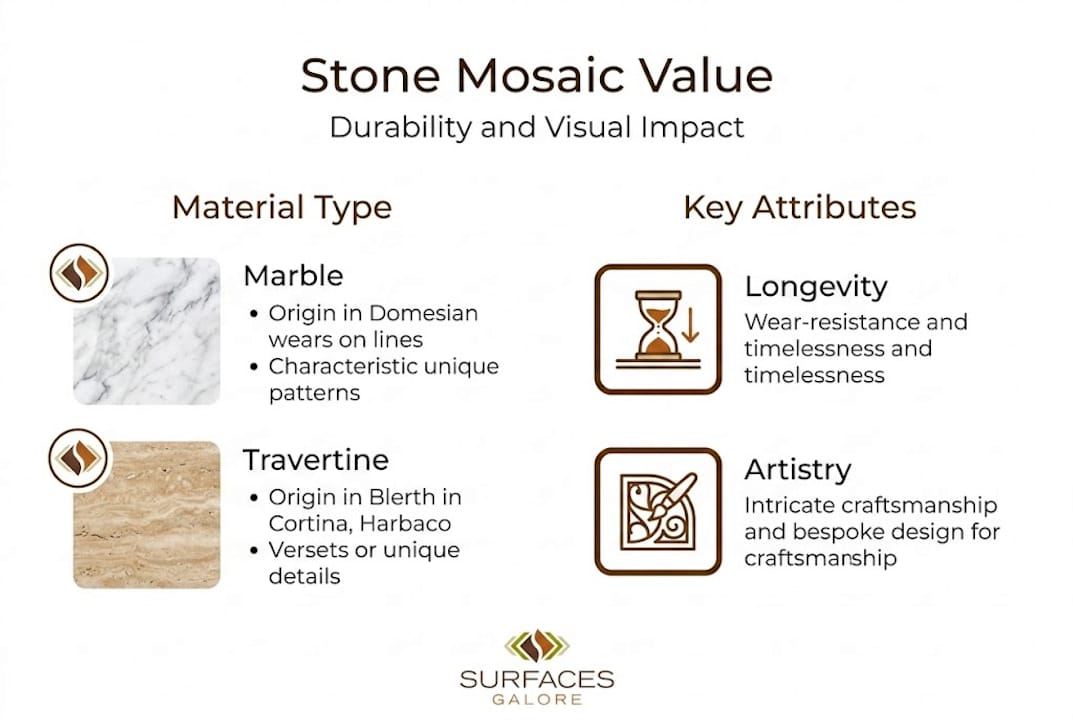
Mosaics provide timeless appeal that elevates spaces and withstands design trends precisely because natural stone is not a manufactured product subject to delamination, fading, or material degradation in the way that synthetic alternatives are. A properly installed natural stone mosaic does not go out of date. Its color comes from mineral composition rather than dye or print, which means it does not fade under UV exposure or normal use.
Here is a comparison of estimated lifespan across common decorative surface categories:
| Material type | Estimated lifespan | Maintenance frequency | Resale value impact |
|---|---|---|---|
| Natural stone mosaic | 50 to 100+ years | Low (annual sealing) | High |
| Ceramic or porcelain tile | 20 to 50 years | Very low | Moderate |
| Wallpaper | 5 to 15 years | High (replacement) | Low |
| Wood paneling | 15 to 30 years | Moderate | Moderate |
| Large-format porcelain | 20 to 50 years | Very low | Moderate to high |
The longevity data reinforces what experienced designers already understand intuitively: selecting natural stone mosaics is not just an aesthetic decision, it is a sound investment decision for clients who want lasting value from their renovations.
Long-term benefits that make natural stone mosaics worth the initial investment:
- Resistance to wear: Stone surfaces resist scratching, scuffing, and surface degradation far better than most synthetic alternatives, particularly in high-traffic areas such as entryways and commercial lobbies.
- Color stability: Because color in natural stone is mineral-based, it does not fade or shift over time the way painted surfaces or printed tiles do.
- Hygienic surface quality: Non-porous or properly sealed stone mosaics resist moisture penetration and bacterial growth, making them ideal for kitchens and bathrooms.
- Thermal stability: Natural stone has low thermal expansion, meaning it handles temperature fluctuations in both heated floor systems and exterior applications without cracking or buckling.
- Increasing rarity value: As natural stone quarries produce unique batches, early installations from specific quarry runs can become increasingly distinctive over time.
Explore the full spectrum of types of stone mosaics to understand which material properties best fit your specific project conditions and client goals.
Real-world examples of enduring mosaic installations are not hard to find. The Basilica of San Vitale in Ravenna, Italy contains mosaic programs dating to the sixth century that remain structurally intact and visually stunning today. Closer to home, early twentieth-century American train stations and civic buildings feature mosaic floors and walls that have outlasted multiple generations of renovation trends while remaining in active daily use.
For practical guidance on how to plan and execute a successful installation, the stone mosaic installation workflow is an essential reference for both designers and their contractor partners.
Practical ways to incorporate mosaics in your projects
With the benefits in mind, here’s how to make mosaics an integral part of forward-thinking design practice.
Strategic mosaic integration begins with a clear understanding of scale, placement, and material fit. The most common mistake is thinking about mosaics too late in the design process, treating them as a finish-layer decision rather than a foundational design move. When mosaics are introduced early in the planning phase, they inform lighting design, furniture placement, and complementary surface selections in ways that produce far more cohesive results.
Strategic use of mosaics creates custom designs that elevate spaces without dominating, which is a principle that applies equally whether you are working on a 300-square-foot urban bathroom or a 5,000-square-foot commercial lobby.
Placement and application best practices by space type:
- Kitchen backsplashes: The backsplash is the ideal entry point for mosaic integration in residential kitchens. A hand-cut stone mosaic behind the range creates a clear focal point while protecting the wall from heat and splatter. Limit the mosaic field to the immediate cooking zone and carry a simpler complementary tile to either side for visual balance. The hand-cut mosaic for kitchens approach delivers remarkable results even in relatively small applications.
- Bathroom feature walls: In primary bathrooms, the shower back wall or the wall behind a freestanding tub is the natural mosaic moment. A full-height mosaic on a single wall creates dramatic visual depth without overwhelming the space. Keep adjacent walls in a coordinating plain stone to let the pattern breathe.
- Entryways and foyers: A floor medallion at the entry threshold sets the tone for the entire home or facility. Even a modest-sized medallion in a 4-foot by 4-foot format reads powerfully against a simple surround tile. This is one of the highest-impact, lowest-coverage applications available.
- Commercial accent walls: In hospitality, retail, and corporate environments, a mosaic feature wall behind a bar, at a reception desk, or as a corridor accent immediately signals investment in quality and attention to detail, which clients and guests notice and remember.
- Exterior applications: Travertine and limestone mosaics work well in covered exterior settings such as loggia floors, pool surrounds, and courtyard walls, where their thermal stability and natural variation complement landscape and architectural materials.
When discussing mosaic installations with clients, frame the conversation around three key value points: longevity (this will outlast every other finish in the room), uniqueness (no two handcrafted installations are identical), and return on investment (stone mosaics consistently add measurable value to residential and commercial properties).
The custom mosaic projects design guide offers a structured framework for taking client briefs through to installation-ready specifications, which is especially useful for architects and designers who are new to specifying mosaics professionally.
Pro Tip: In residential projects, a mosaic niche inside a shower enclosure, typically 12 by 24 inches, costs a fraction of a full wall installation but delivers the same design signature and artisanal quality. Present this as a premium upgrade option for clients who want mosaic presence without the full coverage budget. Many clients who start with a niche return for larger installations once they see the installed result.
For projects where clients want to understand the full process from concept to completion, the backsplash mosaic workflow and custom tile mosaic creation resources are valuable references that support transparent client communication and set realistic expectations.
What most designers get wrong about mosaics
Let’s step back and consider what even experienced designers frequently overlook when working with mosaics.
The most persistent mistake is treating mosaics as a surface to fill rather than a design element to frame. When mosaics appear on every wall of a bathroom, across an entire kitchen backsplash, and on the floor simultaneously, the artisanal detail that makes each installation remarkable becomes visual noise. The eye has nowhere to rest, and the craftsmanship that justifies the investment disappears into the overall pattern.
We have seen this play out in real projects repeatedly. A client approves a mosaic scheme that looks stunning in rendering but feels overwhelming once installed, because the rendering cannot fully communicate the cumulative effect of pattern, texture, and color at human scale across every surface. The result is a redesign that costs more than getting the coverage decision right the first time.
The most effective designers we work with consistently apply the principle that designers should prioritize strategic use over expansive coverage for visual balance. They treat mosaics the way a skilled tailor treats a bold fabric pattern: one strong statement piece, not a head-to-toe pattern combination that competes with itself.
Creative mosaic applications work best when they are given room to breathe. A single mosaic feature in a room that is otherwise restrained in its surface palette will always outperform a space where mosaics compete for attention at every angle. This is the advice that separates designers who get repeat commissions from those whose clients love the initial concept but feel unsettled in the finished space.
Trust restraint. It is not timidity. It is confidence in the material.
Elevate your next project with mosaic expertise
If you’re ready to put mosaic expertise into action, here’s where to start.
At Surfaces Galore, we work directly with interior designers and architects across the country to source and specify premium natural stone mosaics that meet both aesthetic and performance requirements. Our catalog spans marble, travertine, and limestone options in formats from fine tesserae to larger-scale hand-cut compositions.
We are a direct importer based in Anaheim, California, which means you get access to authentic stone at pricing that reflects real material value rather than retail markup. Our team understands the pace and precision that professional design projects require, and we ship nationwide with the documentation and sampling support that makes specification straightforward. Explore our luxury mosaic design patterns resource to find the pattern and material direction that fits your current project, then reach out to discuss sampling, quantities, and custom design support. We are ready to be your stone resource from concept through installation.
Frequently asked questions
What types of spaces benefit most from mosaic design?
High-impact zones such as kitchens, baths, entryways, and feature walls benefit most from mosaics, because these are the spaces where unique, custom designs deliver the greatest visual return on a relatively focused surface area.
Are mosaics suitable for both residential and commercial projects?
Yes, mosaics offer versatile detailing that works across residential and commercial interiors, and their artisanal craftsmanship and timeless appeal holds up equally well in a private home or a high-traffic hospitality environment.
How do mosaics compare with other decorative wall treatments?
Unlike wallpaper, wood paneling, or painted finishes, mosaics bridge architecture and art, offering a level of customization, material durability, and one-of-a-kind character that no other surface treatment category can match.
What’s the best way to maintain mosaic installations?
Routine cleaning with mild, pH-neutral soap and warm water keeps most mosaic surfaces looking their best, and natural stone mosaics benefit from periodic sealing, typically once a year, to maintain optimal stain and moisture resistance over the long term.

Leave a comment