
How to Seal Natural Stone: A Step-by-Step Guide

TL;DR:
- Sealing natural stone involves applying a protective compound to prevent moisture, oil, and stains from entering the pores. Proper sealing requires selecting the right product, thorough cleaning, and correct application to ensure long-lasting protection. Regular testing and maintenance, including resealing based on stone type, maintain the stone’s appearance and durability over time.
Sealing natural stone is defined as applying a penetrating or topical protective compound to the stone’s surface to block moisture, oil, and stains from entering its pores. Properly sealed marble, granite, limestone, and travertine resist stains and moisture damage better over time, making sealing one of the most cost-effective maintenance steps you can take. The process is not complicated, but it demands the right product, the right preparation, and the right sequence. This guide covers all three, from selecting the best stone sealer to applying it without leaving haze or residue behind.
How to seal natural stone: what you need before you start
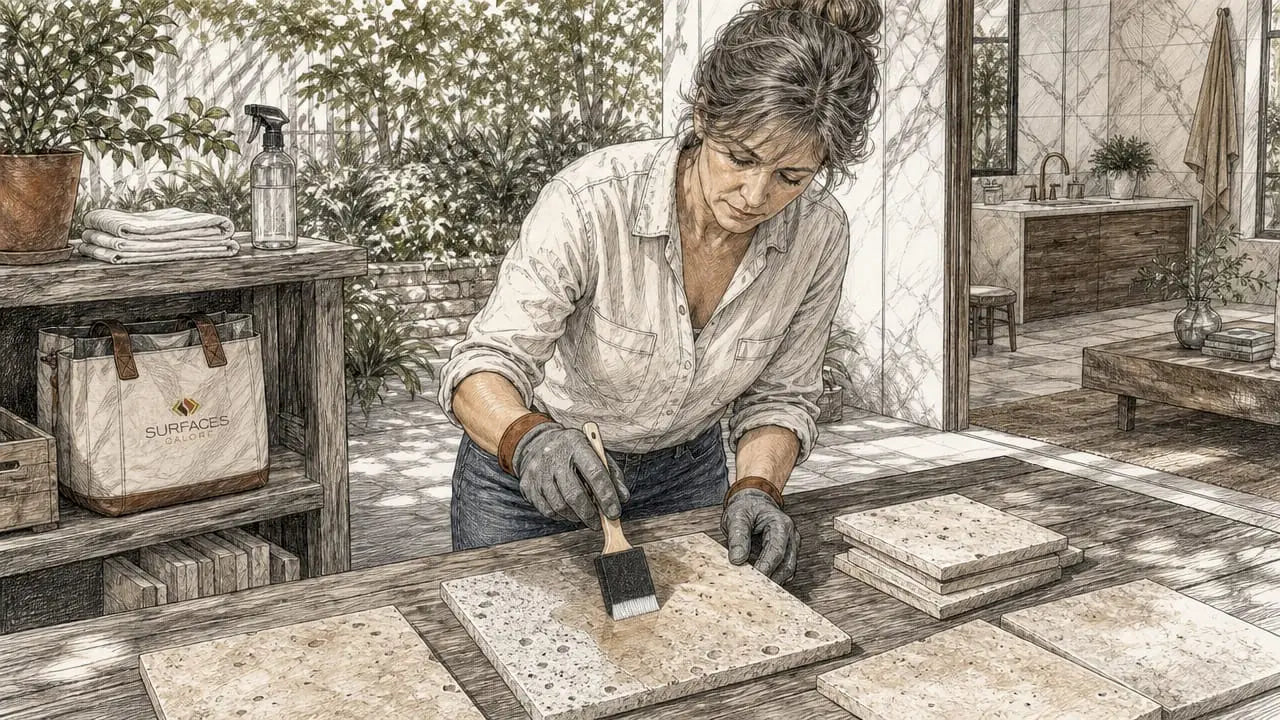
Before you apply a single drop of sealer, you need the right supplies assembled and the right conditions in place. Skipping this step is the most common reason sealing jobs fail within months instead of lasting years.
Types of sealers available
Three categories of sealers cover virtually every natural stone application:
- Penetrating (impregnating) sealers, solvent-based: These soak deep into dense stones like polished granite and marble. Solvent-based sealers penetrate deeper and last longer, though they carry stronger odors and require ventilation. Brands like Tenax Ultra Premium and STAIN-PROOF Premium fall into this category.
- Penetrating (impregnating) sealers, water-based: Water-based sealers are easier to apply, clean up with water, and work well on porous stones like limestone and travertine. Their lifespan is typically shorter than solvent-based options, so reapplication is more frequent.
- Topical sealers: These form a film on the stone surface rather than soaking in. They add sheen and color enhancement but can trap moisture if used on stones that need to breathe. Reserve topical sealers for outdoor pavers or unpolished slate where a surface coating is appropriate.
Tools and cleaning agents
| Item | Purpose |
|---|---|
| Applicator pad or foam brush | Even sealer distribution across the surface |
| Microfiber cloths | Buffing off excess sealer without scratching |
| Nitrile gloves and respirator mask | Protection from solvent fumes and skin contact |
| Neutral stone cleaner (FABER 30, ALGAFLOOR) | Removing invisible residues that block sealer penetration |
| Painter’s tape | Protecting adjacent surfaces like grout lines or cabinetry |
Environmental conditions that affect results
Apply sealer when surface temperature is between 40°F and 95°F and avoid any moisture contact on the stone for at least six hours after application. High humidity slows curing and can cause cloudiness in the finished surface. Direct sunlight accelerates drying too fast, which prevents the sealer from fully penetrating. An indoor, climate-controlled space is ideal for countertop work.
Pro Tip: Test your cleaner on a small hidden area first. Some alkaline cleaners leave a residue that blocks sealer absorption just as effectively as dirt does.
Step-by-step process for sealing natural stone correctly
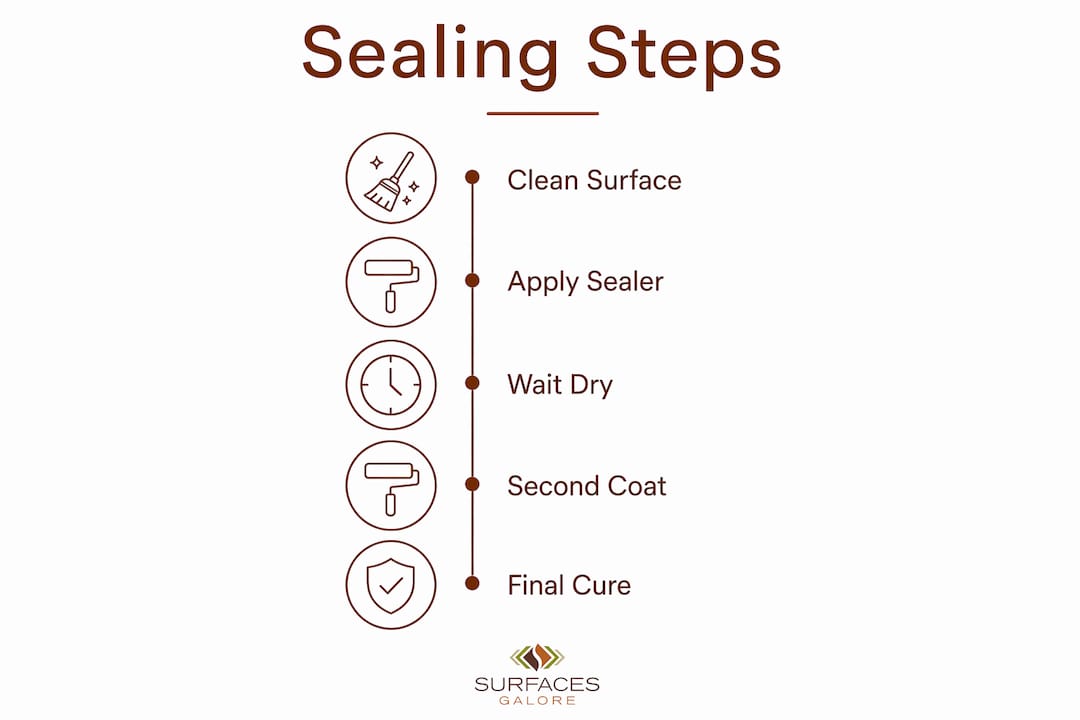
A proper sealing job follows seven distinct steps. Rushing any one of them compromises the entire application.
-
Clean the stone thoroughly. Use neutral stone cleaners like FABER 30 or ALGAFLOOR to remove grease, soap film, and mineral deposits. Avoid acidic or bleach-based cleaners on marble, limestone, or travertine since they etch the surface and open micro-fractures that sealer cannot fill.
-
Allow complete drying time. After cleaning, the stone must be completely dry before sealer touches it. For countertops, allow at least 24 hours of air drying. For floors or shower walls that have been in use, 48 to 72 hours of drying is more realistic. Trapped moisture under a sealer causes white haze and eventual delamination.
-
Run a test patch. Apply a small amount of sealer to an inconspicuous area, such as under a countertop overhang or inside a cabinet. Wait the full dwell time, wipe it off, and check for color shift, cloudiness, or uneven absorption. This step is non-negotiable for dark stones like black granite or green marble, where solvent-based sealers can temporarily darken the surface.
-
Apply the sealer evenly. Pour a small amount of sealer onto an applicator pad and work in sections of two to three square feet. Use overlapping strokes to avoid missed spots. Apply sealer evenly and follow manufacturer instructions for the number of coats. Most penetrating sealers require one to two coats; topical sealers often need three thin coats for full coverage.
-
Allow the recommended dwell time. Dwell time is the period the sealer sits on the surface before you wipe it off. This ranges from three minutes to fifteen minutes depending on the product. During this window, the sealer migrates into the stone’s pores. Do not let it dry completely on the surface or it will leave a haze that requires stripping.
-
Remove excess sealer. Wipe off all remaining sealer with a clean, dry microfiber cloth before it dries. Work in the same direction as your application strokes. If you notice streaking or tackiness, apply a small amount of fresh sealer to the area, let it soften the residue for thirty seconds, then wipe again. This technique dissolves dried sealer without abrasives.
-
Observe curing time and post-application care. Most penetrating sealers reach full cure in 24 to 48 hours. During this window, keep the surface dry and avoid placing objects on it. For sealing natural stone countertops in kitchens, wait the full 48 hours before resuming normal use with food prep and water exposure.
Pro Tip: For travertine tiles with unfilled holes, apply sealer in two thin coats rather than one heavy coat. The first coat seals the pores; the second coat provides the protective barrier. A detailed workflow for travertine is available in Surfacesgalore’s travertine sealing guide.
Reapplication schedule by stone type
| Stone type | Recommended resealing interval |
|---|---|
| Polished granite | Every 3 to 5 years |
| Honed marble | Every 1 to 2 years |
| Limestone | Every 1 to 2 years |
| Travertine | Every 1 to 3 years |
| Slate | Every 3 to 5 years |
How to choose the best sealer for your stone type and application
The best stone sealer for your project depends on two variables: the density of the stone and the environment where it lives. Getting this wrong means either under-protecting a porous surface or wasting money on a heavy-duty product a dense stone does not need.
Matching sealer type to stone density
Dense, polished stones like granite and quartzite have tight pore structures. Solvent-based penetrating sealers deliver superior oil and water resistance for these stones because they carry the active ingredients deeper into the compact matrix. Tenax Ultra Premium and Miracle Sealants 511 Impregnator are well-regarded choices for granite kitchen countertops and quartzite bathroom vanities.
Porous stones like limestone, travertine, and honed marble absorb water-based sealers readily. Aqua Mix Sealers Choice Gold is a water-based penetrating sealer that works well on these surfaces without altering their natural matte or satin appearance. For outdoor limestone pavers or travertine pool decks, STAIN-PROOF Premium Impregnating Sealer provides invisible, long-lasting protection against water and oil stains while allowing the stone to breathe.
Application-specific recommendations
- Kitchen countertops: Use a solvent-based penetrating sealer for polished granite or quartzite. For honed marble or limestone countertops, a water-based penetrating sealer like Aqua Mix Sealers Choice Gold protects without darkening the surface.
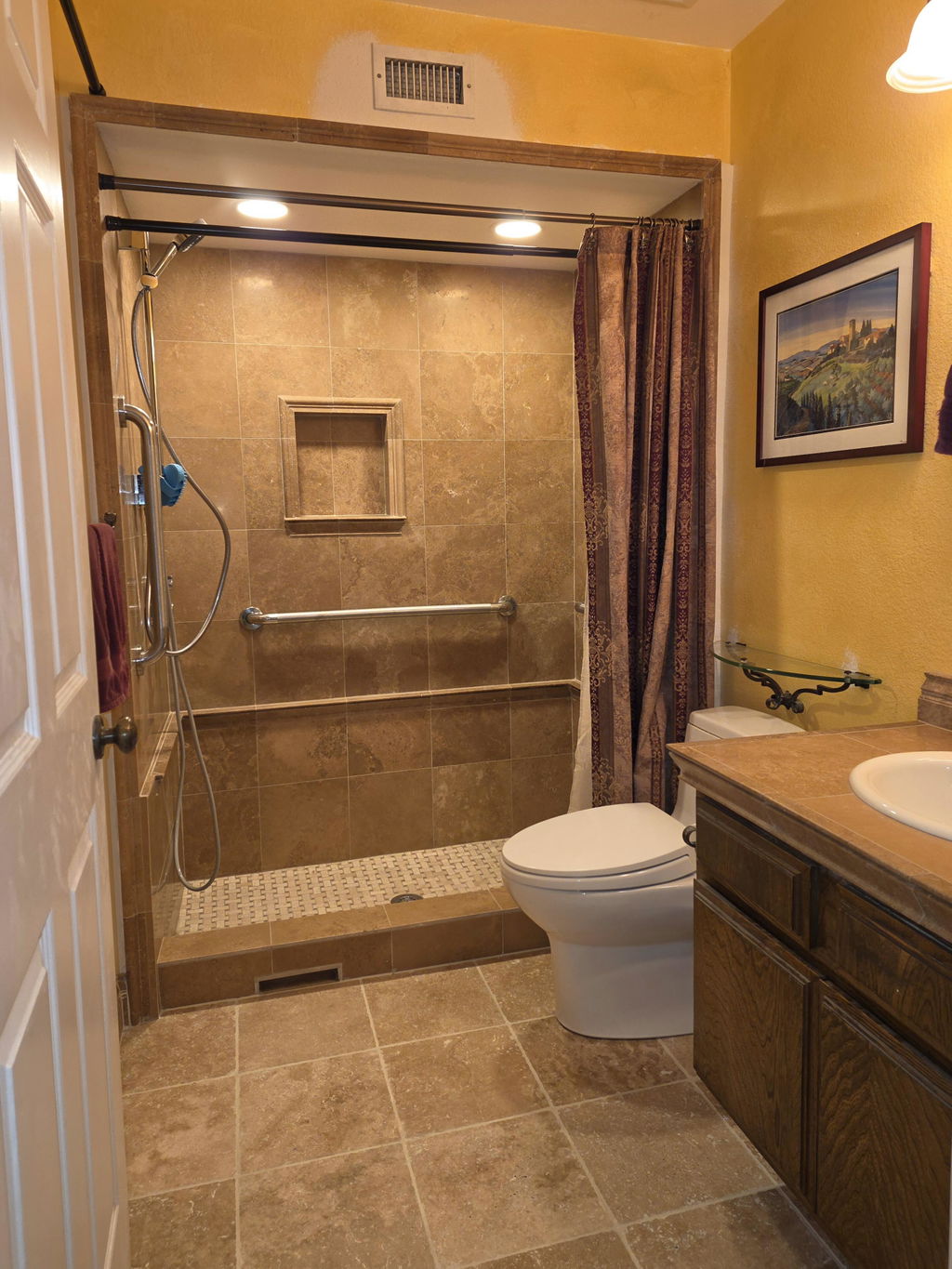
- Bathroom floors and shower walls: Penetrating sealers are the only appropriate choice here. Topical sealers trap moisture in wet environments and peel within months. For marble shower walls, reseal every 12 months given constant water exposure.
- Outdoor surfaces: STAIN-PROOF Premium and similar impregnating sealers rated for outdoor use handle freeze-thaw cycles and UV exposure that would degrade standard interior sealers.
- Slate and sandstone: These stones are highly porous and benefit from two coats of a water-based penetrating sealer. Topical enhancer sealers work well on slate when you want to deepen the natural color.
Pro Tip: If you are unsure whether your stone needs sealing at all, perform the water absorption test before purchasing any product. Place a few drops of water on the surface and wait 10 minutes. If the stone darkens or absorbs the water, it needs sealing. If the water beads up, the existing seal is still active.
Common mistakes to avoid when sealing natural stone
Most sealing failures trace back to one of five predictable errors. Knowing them in advance saves you the cost and frustration of stripping and resealing.
- Sealing over dirty or damp stone. These errors cause seal failure, trap moisture beneath the surface, and create residue buildup that is difficult to remove. Clean and fully dry the stone before any sealer touches it.
- Applying too much sealer at once. A heavy coat does not penetrate better. It sits on the surface, dries into a hazy film, and requires a stripper to remove. Thin, even coats always outperform thick applications.
- Using topical coatings on polished indoor stone. Topical sealers on polished marble or granite countertops create a plastic-looking sheen that scratches easily and traps moisture over time. Penetrating sealers preserve the stone’s natural look without a surface film.
- Skipping cure time after new installation. Freshly installed stone often contains residual moisture from the setting bed or grout. Sealing too soon traps that moisture and causes efflorescence or white haze. Wait at least 72 hours after installation before sealing.
- Ignoring the water test for maintenance. If water absorbs quickly into the stone, the protective barrier has broken down and resealing is overdue. Run this test every six months on high-traffic surfaces like kitchen countertops and bathroom floors.
Cleaning sealed stone without damaging the sealer
Sealed stone still requires proper daily care. Use pH-neutral cleaners specifically formulated for natural stone. Avoid vinegar, lemon juice, bleach, and general-purpose bathroom sprays. These products etch acid-sensitive stones like marble and limestone and degrade the sealer’s active chemistry over time. For ongoing stain prevention on natural stone, wipe spills immediately and use stone-safe cleaning products consistently.
Sealing is not a one-time fix. It is a maintenance cycle. The stone, the sealer, and your cleaning habits all work together. Neglect any one of them and the protection breaks down faster than the product label suggests.
Pro Tip: For marble surfaces specifically, understanding the sealer chemistry helps you make better product choices. Surfacesgalore’s guide on marble sealer selection explains the differences between impregnating and topical options in plain language.
Key takeaways
Sealing natural stone correctly requires matching the sealer type to the stone’s density, preparing the surface thoroughly, and following a disciplined application and maintenance schedule.
| Point | Details |
|---|---|
| Sealer type determines performance | Use solvent-based penetrating sealers for dense stones; water-based for porous stones like limestone and travertine. |
| Preparation is non-negotiable | Clean with a neutral stone cleaner and allow full drying before applying any sealer. |
| Application technique matters | Apply thin, even coats and remove excess before it dries to prevent haze and streaking. |
| Environmental conditions affect curing | Apply between 40°F and 95°F and keep the surface dry for at least six hours post-application. |
| Maintenance extends sealer life | Run the water test every six months and reseal on schedule based on stone type and traffic level. |
What I have learned after years of working with natural stone
There is a persistent belief in the DIY world that sealing natural stone is a set-it-and-forget-it task. You apply the product once, and the stone is protected for life. That belief causes more damage than neglect does.
What I have seen repeatedly is that homeowners choose the right sealer, apply it correctly, and then clean their stone daily with a product that slowly strips the sealer away. A marble countertop sealed with Tenax Ultra Premium will perform beautifully for three years if you clean it with a pH-neutral stone cleaner. That same countertop will need resealing within eight months if you use a vinegar-based spray every day. The sealer is only as durable as the maintenance routine around it.
The other thing most guides understate is the difference between solvent-based and water-based penetrating sealers in real-world conditions. On paper, both are penetrating sealers. In practice, a solvent-based product on a polished granite countertop in a busy kitchen will outlast a water-based product by two to three years. That gap matters when you are talking about a surface that costs several thousand dollars to install. For high-traffic areas, the extra cost of a solvent-based product like STAIN-PROOF Premium or Tenax Ultra Premium is worth it every time.
My honest recommendation for homeowners doing this for the first time: do not skip the test patch. I have seen beautiful Calacatta marble turn noticeably darker after a solvent-based sealer was applied without testing. The effect was temporary, but the homeowner panicked and tried to wipe it off before the dwell time was complete, which left an uneven finish. A five-minute test on a hidden area would have prevented the entire situation.
For contractors working on large commercial installations, the investment in a professional-grade impregnating sealer pays for itself in reduced callbacks. Builders who use budget sealers on hotel lobby limestone floors are typically back within 18 months for a full reseal. Premium products applied correctly last three to five times longer.
— cihan
Start your project with quality stone from Surfacesgalore
The right sealer protects your investment, but the investment starts with the stone itself. Surfacesgalore is a direct importer of premium marble, limestone, and travertine tiles, mosaics, and decorative pieces, shipping nationwide from Anaheim, California to homeowners, contractors, and designers. Every stone in the collection is selected for authenticity, durability, and the kind of natural variation that makes a space genuinely distinctive. Whether you are sealing an existing surface or planning a new installation, explore Surfacesgalore’s premium natural stone collections and find the material that fits your project. Quality stone, properly sealed, lasts a lifetime.
FAQ
Is sealing natural stone always necessary?
Not every stone requires sealing, but most do. Dense, polished granite may need sealing only every few years, while porous stones like limestone and travertine need it annually. Run the water absorption test to confirm whether your stone needs attention.
What is the best stone sealer for kitchen countertops?
Solvent-based penetrating sealers like Tenax Ultra Premium and Miracle Sealants 511 Impregnator are the top choices for kitchen countertops. They penetrate deeper into dense stones and provide superior resistance to cooking oils and food stains compared to water-based alternatives.
How long does natural stone sealer last?
Sealer longevity depends on stone type, traffic, and cleaning habits. Polished granite countertops typically hold a seal for three to five years, while honed marble and limestone surfaces in active kitchens or bathrooms may need resealing every one to two years.
Can you seal natural stone yourself or do you need a professional?
Most homeowners and DIY enthusiasts can seal natural stone successfully by following the correct preparation and application steps. Professional sealing is worth considering for large commercial installations, heavily damaged stone, or situations where color-enhancing sealers require precise, even application.
How do you know when natural stone needs resealing?
Place a few drops of water on the surface and wait ten minutes. If the stone absorbs the water and darkens, the sealer has degraded and resealing is needed. If the water beads on the surface, the protective barrier is still active.

Leave a comment