
Polished vs. honed marble: choosing the right finish

TL;DR:
- Polished marble has a high-gloss, mirror-like finish that enhances color and veining.
- Honed marble features a matte or satin surface that offers better slip resistance and a softer appearance.
- The choice between finishes depends on space function, safety needs, maintenance, and design style.
Most people assume marble comes in one default look: glossy, reflective, and almost mirror-like. Walk into any high-end showroom and that impression makes sense, because polished marble tends to steal the spotlight. But that assumption can lead homeowners and designers straight into a renovation decision they later regret. The finish on your marble isn’t just a cosmetic detail. It determines how the surface feels underfoot, how it performs over years of daily use, and how much time you’ll spend cleaning and sealing it. This article breaks down exactly what separates polished and honed marble, where each works best, and how to pick with confidence.
Table of Contents
- What are polished and honed marble finishes?
- Key differences: Appearance, texture, and performance
- Where each finish works best: Use cases and practical considerations
- Maintenance and longevity: Caring for polished and honed marble
- Why the right marble finish is more than a style choice
- Discover your perfect marble finish with SurfacesGalore
- Frequently asked questions
Key Takeaways
| Point | Details |
|---|---|
| Finish alters look and feel | Polished marble delivers a shiny, formal appearance while honed marble offers a soft, matte vibe. |
| Slip resistance differs | Honed marble reduces slip risk in wet areas compared to polished surfaces. |
| Maintenance varies by finish | Polished marble shows wear more readily and needs careful upkeep; honed marble hides imperfections. |
| Choose based on usage | Consider room traffic and moisture before selecting a marble finish for your project. |
| Finish impacts long-term value | Selecting the right finish improves usability, safety, and future resale value. |
What are polished and honed marble finishes?
Before comparing the two, it helps to understand what each finish actually is and how it’s created. Marble doesn’t come out of the quarry shiny or smooth. The raw stone is relatively rough, and its final surface quality depends entirely on how it’s processed.
Polished marble goes through a progressive machine abrasion process that starts with coarse diamond grinding pads and gradually moves to finer and finer grits. The final stages use buffing compounds that bring up the stone’s crystalline structure, creating the glassy, high-gloss surface most people associate with marble. The result reflects light almost like a mirror and makes the stone’s natural veining, color depth, and patterning pop with incredible clarity.
Honed marble, by contrast, stops at an earlier stage of abrasion. The machine smoothing process ends before the reflective polish is applied, leaving a matte or soft satin surface. According to our detailed honed finish definition, honed marble absorbs light rather than reflecting it, giving it a quieter, more understated look that many designers prefer for contemporary or minimalist spaces.
The stone type genuinely affects what you see. Some marble varieties, like Carrara, respond beautifully to honing and develop a soft gray tone with subtle veining. Others, like Calacatta Gold or Statuario, are often polished to showcase their dramatic white and gold or white and gray veins. Understanding marble honing importance helps you choose a finish that works with your specific stone rather than against it.
It’s also worth knowing that marble polishing process involves more than just aesthetics. The crystallization that happens during polishing slightly closes the stone’s pores, which affects how the surface absorbs moisture and reacts to acidic substances. This distinction matters enormously for maintenance, which we’ll cover later.
Here’s a quick comparison of finish characteristics:
- Polished marble: High gloss, mirror-like, strong light reflection, vivid color depth
- Honed marble: Matte to satin sheen, soft texture, understated appearance, diffused light
- Polished process: Extended machine grinding plus buffing compounds
- Honed process: Partial abrasion, no final buffing stage
- Best visual pairing: Polished with traditional or maximalist interiors; honed with modern, minimalist, or organic spaces
Pro Tip: Think about traffic level before choosing a finish. Polished marble in a high-traffic hallway will show scuff marks and dull patches far faster than the same marble with a honed finish. Reserve polished surfaces for areas where you want visual drama without constant foot wear.
Key differences: Appearance, texture, and performance
Having defined polished and honed finishes, let’s explore their practical differences with a side-by-side comparison.
The most immediate difference is visual. Polished marble makes a bold statement. The gloss amplifies every vein, every color shift, and every tonal variation in the stone. In a formal dining room or a master bathroom feature wall, that drama is exactly what you want. Honed marble reads softer and more organic. It has a warmth that polished surfaces can’t replicate, and it integrates more easily into layered, textural interiors where you don’t want one element to dominate.

Touch matters more than people expect. Polished marble feels glassy and cool under your fingertips. Honed marble feels slightly grainier, almost like fine matte ceramic. If you’re installing flooring, that tactile difference becomes a safety factor, not just a sensory preference. Honed marble provides measurably better traction, particularly when wet. The National Floor Safety Institute reports that wet floor slip accidents account for a significant portion of residential fall injuries, and floor finish is a direct contributing factor. Choosing honed marble over polished in bathrooms, kitchens, and entryways is a straightforward way to reduce that risk.
Explore the full range of marble texture options to see how surface variation also influences acoustics, how grout lines interact with tile edges, and how different finishes photograph in design portfolios.
Here’s a direct comparison table to make the distinctions clear:
| Feature | Polished marble | Honed marble |
|---|---|---|
| Light reflection | High gloss, mirror-like | Matte to soft satin |
| Texture underfoot | Smooth, glassy | Slightly textured, velvety |
| Slip resistance | Lower, especially when wet | Higher, better traction |
| Scratch visibility | Scratches show more clearly | Scratches less noticeable |
| Etch visibility | Etching highly visible | Etching less obvious |
| Best environment | Dry, low-traffic, decorative use | High-traffic, wet areas |
| Color appearance | Deep, vivid, high contrast | Softer, more muted tones |
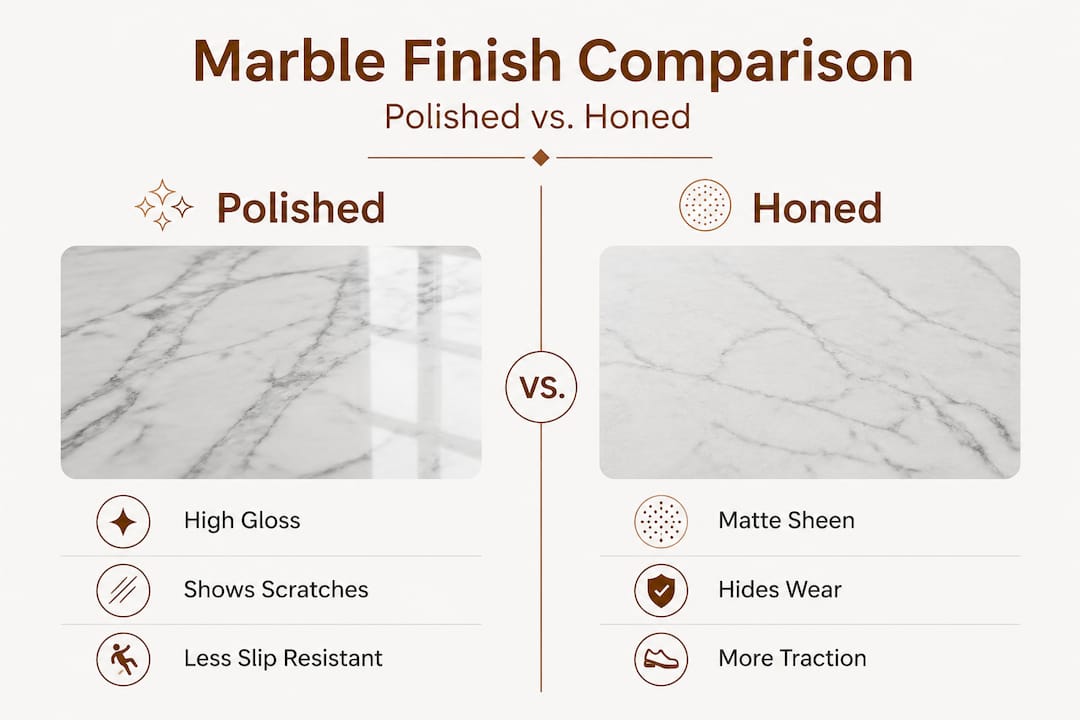
Performance differences extend beyond slip resistance. Because polished marble has a more closed surface structure from the buffing process, it resists water absorption slightly better in the short term. However, it’s also more vulnerable to etching. Etching happens when acidic substances like lemon juice, wine, coffee, or common cleaning products contact the marble’s calcium carbonate composition and chemically dissolve part of the surface. On polished marble, etch marks appear as dull spots that break the gloss and are immediately obvious. On honed marble, etching blends into the existing matte surface and is far less visible.
Understanding marble finishes explained in depth helps you prepare realistic expectations before installation, rather than discovering these realities the hard way after the fact.
Key performance distinctions to keep in mind:
- Polished marble requires more frequent repolishing to restore gloss after surface wear
- Honed marble needs sealing more often because its open-pored surface absorbs liquids more readily
- Polished surfaces are easier to wipe clean because there are no microscopic surface pores to trap particles
- Honed surfaces are more forgiving of light scratches and minor wear in everyday settings
Where each finish works best: Use cases and practical considerations
Once you understand the characteristics, the next step is choosing the right finish for each space in your home or project.
This is where most renovation decisions either succeed or fall apart. People often pick a finish based on what looks good in a showroom or on social media, without considering how the actual environment will interact with the stone. Here’s a practical framework for evaluating your project room by room.
Step 1: Identify the function of the space. Is it decorative or functional? A marble accent wall behind a fireplace has zero foot traffic and minimal moisture exposure, making it an excellent candidate for polished marble. A master bathroom floor, on the other hand, gets wet daily and is walked on with bare feet, which points strongly toward honed.
Step 2: Assess moisture and traffic levels. High moisture plus high traffic is the toughest combination for polished marble. Bathrooms, pool surrounds, laundry rooms, and mudrooms all qualify. For these areas, honed marble is the clear choice for both safety and longevity.
Step 3: Consider the design style. Polished marble belongs in formal, traditional, glam, or maximalist interiors where visual richness is the goal. Honed marble fits naturally into contemporary, Japandi, organic modern, and transitional spaces where texture and restraint are valued.
Step 4: Think about who uses the space. Households with children, elderly residents, or anyone with mobility considerations should prioritize slip resistance. Honed marble on all floor surfaces significantly reduces fall risk compared to polished.
Step 5: Factor in your maintenance tolerance. Be honest with yourself. Polished marble demands more effort to keep looking its best. If you don’t want to deal with etch marks, visible fingerprints, or periodic professional repolishing, honed is a more forgiving partner for daily life. You can read more marble selection tips that factor in lifestyle and household patterns.
Pro Tip: Honed marble is particularly smart for kitchen countertops. It conceals etching from acidic foods far better than polished, and light surface scratches from cutting boards or small appliances don’t stand out. You still get the beauty of natural marble without the anxiety of maintaining a mirror finish in a working kitchen.
“The most durable marble installation isn’t always the hardest stone. It’s the one where the finish was chosen to match the reality of daily use, not just the aspiration of a design photograph.” This perspective from stone fabrication professionals who see renovation regrets firsthand captures why marble in interiors requires finish decisions grounded in real life, not just visual preference.
To summarize the best use cases by space:
- Kitchen countertops: Honed is preferred for practicality
- Bathroom floors: Honed for safety and moisture resistance
- Bathroom walls and shower surrounds: Polished is acceptable, adds glamour
- Formal entryway floors: Honed for traffic tolerance
- Statement walls and fireplace surrounds: Polished for visual drama
- Living room floors: Either works, depending on traffic and lifestyle
- Exterior applications: Neither standard finish holds well without specialized treatment
Maintenance and longevity: Caring for polished and honed marble
After room placement, proper care is critical for keeping marble finishes beautiful and functional.
Both finishes need care, but the nature of that care differs. Understanding what each finish requires upfront prevents the frustration of watching a beautiful marble surface deteriorate because of mismatched expectations or the wrong cleaning products.
For polished marble, the primary enemies are etching and scratching. Because the glossy surface is the most refined version of the stone, any disruption to it stands out immediately. Everyday substances that seem harmless, like orange juice at breakfast or a splashed glass of wine, can chemically etch the polished surface within seconds of contact. Always blot spills immediately rather than wiping, which spreads the liquid further. Avoid acidic or abrasive cleaners entirely.
For honed marble, the priority is preventing staining rather than etching. The slightly more porous surface means liquids penetrate more readily if not sealed. Oil from cooking, coffee rings, or colored beverages can leave marks that become permanent if not addressed quickly. Sealing is your most important protective step.
Here’s a maintenance comparison table to guide your care routine:
| Maintenance factor | Polished marble | Honed marble |
|---|---|---|
| Cleaning frequency | Daily wiping recommended | Daily wiping recommended |
| Sealing frequency | Annually (or as tested) | Every 6 to 12 months |
| Etch risk | High, very visible | Lower, blends into surface |
| Stain risk | Moderate | Higher without proper sealing |
| Repolishing needed | Every 2 to 5 years in high use | Not applicable |
| Best cleaner type | pH-neutral stone cleaner | pH-neutral stone cleaner |
| Scratch visibility | High | Low to moderate |
| Typical lifespan with care | Decades | Decades |
The good news is that both finishes can last generations with proper care. Marble has been used in architecture and interiors for thousands of years, and its longevity is one of the strongest arguments marble value in renovation consistently delivers compared to engineered or synthetic alternatives. The key is matching your cleaning and sealing routine to the actual finish you have.
Maintenance best practices for both finishes:
- Always use pH-neutral stone cleaners. Household cleaners like vinegar, bleach, or lemon-based products are acidic and will etch marble surfaces regardless of finish.
- Seal regularly and test when in doubt. Drop a few beads of water on the surface. If they soak in within a few minutes rather than beading up, it’s time to reseal.
- Use protective pads and coasters. Place felt pads under decorative objects, use trivets under hot cookware, and always use coasters under glasses.
- Address spills within seconds. Marble’s calcium carbonate composition reacts to acids fast. Don’t wait to wipe up anything acidic.
- Schedule professional restoration when needed. For polished marble that has lost its shine or developed significant etch marks, professional diamond polishing can restore the surface without full replacement.
Pro Tip: Use pH-neutral stone cleaners exclusively, even for daily wiping. Products labeled “stone safe” or “neutral pH” are widely available and protect the sealer as well as the marble itself. This single habit extends the time between professional restorations significantly.
Why the right marble finish is more than a style choice
Here’s something we’ve noticed after working with homeowners and designers across countless renovation projects: most finish decisions happen almost entirely based on aesthetics. Someone sees polished Calacatta marble in a design magazine and falls in love with it. They install it everywhere, including the kitchen floor and the master bathroom, and then six months later they’re frustrated by the maintenance, nervous about slip safety, or disappointed that it doesn’t look as pristine as the magazine photo anymore.
The honest truth is that finish selection is a functional decision first and a style decision second. Polished marble isn’t better than honed marble, and honed isn’t better than polished. What makes a finish “right” is whether it aligns with how the space actually functions and how the household actually lives. A polished marble floor in a family kitchen with three kids and two dogs is a setup for daily disappointment. The same floor in a formal sitting room that sees minimal foot traffic is absolutely perfect.
We also think honed marble is genuinely undervalued in the current design landscape. The industry tends to glamorize the mirror-bright finish because it photographs beautifully and stands out in showrooms. But honed marble is the smarter choice for modern life in most real-world applications. It’s more forgiving, more versatile across design styles, and easier to maintain at a realistic standard. For the homeowner who wants natural stone beauty without constant anxiety about the surface, honed marble is often the more satisfying long-term investment.
There’s also the question of timeless marble design. Polished marble has specific associations with particular design eras and styles. Honed marble has shown far more staying power across different aesthetic movements, from mid-century modernism to contemporary minimalism to the current organic and warm neutral trend. If you’re renovating with resale value in mind, honed marble often reads as more timeless to a broader range of future buyers.
The finish you choose sends a signal about how a space should be used. A polished floor says “admire this.” A honed floor says “live here comfortably.” Both have their place, but knowing which message fits which room is the real sophistication in marble selection.
Discover your perfect marble finish with SurfacesGalore
You’ve just covered everything you need to make a genuinely informed marble finish decision, from how each surface is created to where it belongs in your home and how to care for it over time. That knowledge is the foundation of a renovation you’ll love for decades.
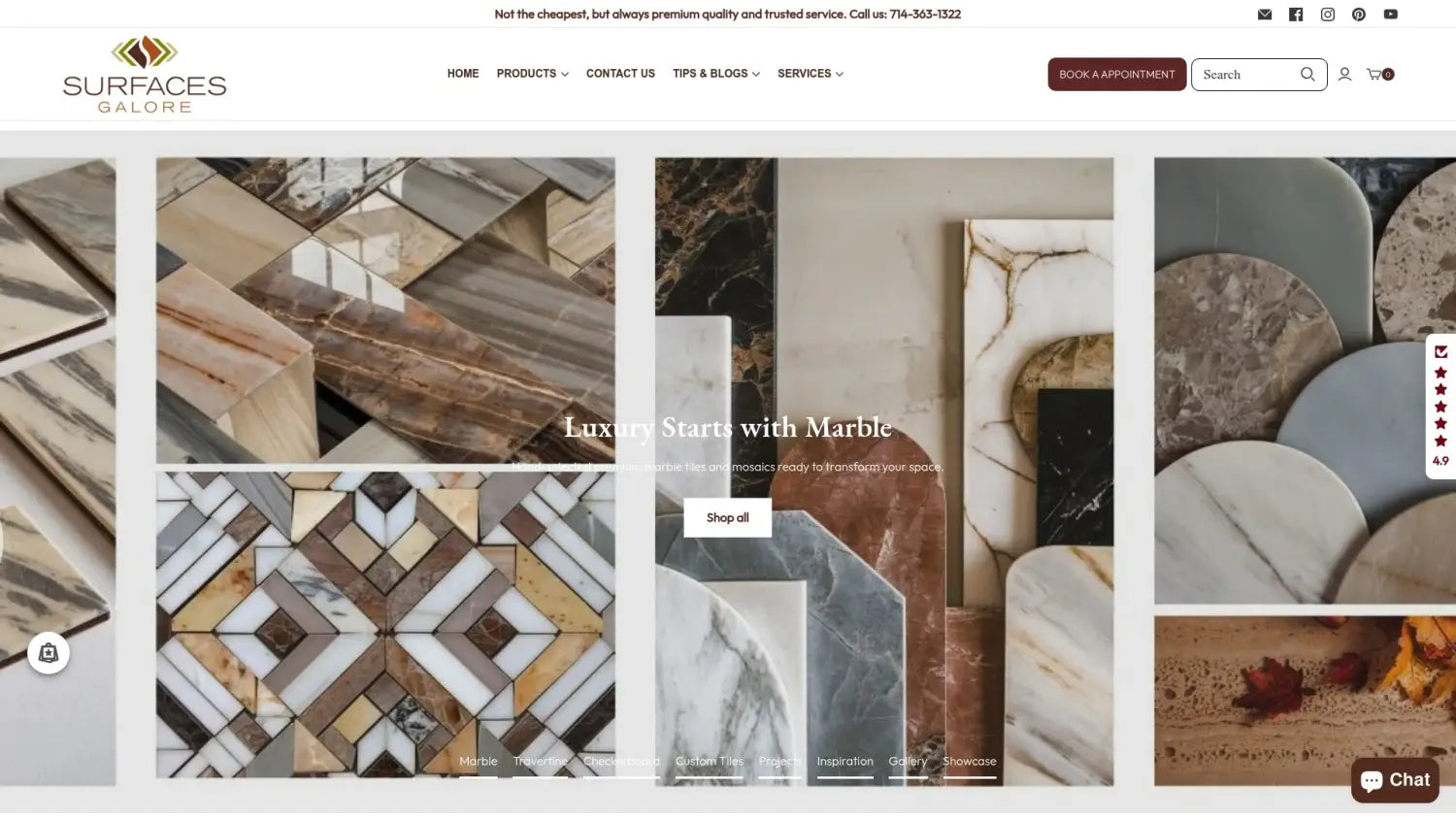
At Surfaces Galore, we import and supply premium marble tiles, mosaics, and decorative stone in both polished and honed finishes, shipped nationwide from our Anaheim, California facility. Whether you’re a homeowner planning a bathroom remodel or a designer specifying stone for a full-scale project, our team can help you match the right marble finish to your exact application. Explore marble finishes across our full collection to see the variety of stones, colors, and surface treatments available. We make it easy to find natural stone that performs as beautifully as it looks, at prices that don’t require a luxury budget.
Frequently asked questions
Which marble finish is better for kitchen countertops?
Honed marble is generally more practical for kitchen countertops because it resists showing scratches and etching from acidic foods. Polished marble creates a dramatic, reflective look but requires more vigilant maintenance in a working kitchen environment.
Is polished marble slippery and unsafe for bathroom floors?
Polished marble can be quite slippery when wet, making it a risk for bathroom floors and shower areas. Honed marble provides significantly better traction and is the safer choice for any moisture-prone floor surface.
Does honed marble require sealing?
Yes, both honed and polished marble benefit from regular sealing to prevent staining and protect the surface. Honed marble often needs sealing more frequently, roughly every six to twelve months, because its more open pore structure absorbs liquids more readily than polished.
Can you switch from honed to polished marble after installation?
It is possible to convert honed marble to a polished finish using professional diamond grinding and buffing equipment. Results depend on the marble type, its thickness, and its current condition, so always consult a certified stone restoration professional before attempting the conversion.
How often should marble surfaces be resealed?
Most marble surfaces should be resealed annually as a baseline, but high-traffic or high-moisture areas may need sealing every six months. The water bead test is the most reliable way to check: if water soaks into the stone within a few minutes rather than beading on the surface, reseal immediately.
Recommended
- What is honed finish? A 2026 guide for homeowners– SurfacesGalore
- Marble Surface Finishes for High End Spaces– SurfacesGalore
- Natural stone finishes explained: a guide for homeowners– SurfacesGalore
- Tile finishes explained: choose right for any room– SurfacesGalore
- On the Level Cleaning - Tile & Grout Experts in West Palm Beach

Leave a comment