

Why natural stone is ideal for luxury hotels in 2026

Stone cladding failures in luxury hotels result in millions of dollars in damages annually, yet many developers still underestimate the importance of proper material selection and installation. Natural stone remains the gold standard for high-end hospitality projects when chosen and applied correctly. This article cuts through common misconceptions about natural stone durability and maintenance, revealing why it continues to outperform alternatives in luxury hotel environments. You’ll discover the specific factors that separate successful installations from costly disasters and learn how to leverage natural stone’s unique benefits for your next project.
Table of Contents
- The Challenges And Costs Of Stone Cladding Failures In Hotels
- Why Natural Stone Stands Out For Luxury Hotel Design
- Sustainability And Ethical Sourcing Of Natural Stone For Hotels
- Best Practices For Specifying And Installing Natural Stone In Luxury Hotels
- Explore Premium Natural Stone Solutions At Surfaces Galore
- Frequently Asked Questions
Key takeaways
| Point | Details |
|---|---|
| Cladding failures cost millions | Improper stone application leads to expensive repairs and safety risks in hotel projects. |
| Natural stone offers timeless elegance | Unique textures and colors create distinctive luxury hotel aesthetics that synthetic materials cannot replicate. |
| Sustainability requires verification | Responsible sourcing practices and environmental certifications distinguish quality suppliers from questionable sources. |
| Installation expertise prevents disasters | Proper anchoring, drainage, and stone selection separate successful facades from catastrophic failures. |
| Collaboration ensures project success | Coordinated efforts among architects, engineers, and installers deliver durable, beautiful results. |
The challenges and costs of stone cladding failures in hotels
Stone cladding failures result in millions of dollars in repair costs and property damage annually. Luxury hotels face particularly severe consequences when exterior or interior stone installations fail. Beyond immediate repair expenses, properties suffer reputational damage, guest safety concerns, and potential litigation that can devastate a brand’s standing in competitive markets.
Common failure scenarios in hospitality settings include detached facade panels, water infiltration behind cladding systems, and structural degradation from improper load distribution. These issues often stem from three interconnected problems: inadequate anchoring systems that cannot support stone weight over time, insufficient drainage pathways allowing moisture accumulation, and selection of inappropriate stone types for specific environmental conditions. Each factor compounds the others, creating cascading failures that start small but escalate rapidly.
The financial impact extends beyond physical repairs. Hotels must often relocate guests during remediation, losing revenue while managing public relations crises. Insurance premiums increase after claims, and future projects face heightened scrutiny from investors wary of repeating expensive mistakes. A single cladding failure can cost between $500,000 and $3 million to remediate, depending on building size and accessibility challenges.
Preventing these disasters requires expert collaboration from the earliest design phases. Architects must specify appropriate stone types based on environmental exposure and aesthetic goals. Structural engineers calculate load requirements and design anchoring systems that account for thermal expansion, seismic activity, and long-term material behavior. Installers bring practical knowledge about waterproofing details, joint spacing, and quality control measures that drawings alone cannot capture.
Critical failure factors to address:
- Anchoring system inadequacy for stone weight and environmental stresses
- Drainage pathway blockages causing moisture accumulation
- Stone type mismatches with climate and exposure conditions
- Installation technique deficiencies in waterproofing and joint treatment
- Lack of coordination between design, engineering, and construction teams
Understanding stone cladding failure risks transforms how developers approach luxury hotel projects. The difference between success and disaster lies not in avoiding natural stone but in respecting its requirements and working with professionals who understand its complexities.
“The most expensive stone installation is the one that fails. Investing in proper design, materials, and installation expertise costs a fraction of remediation expenses while protecting your brand reputation and guest safety.”
Why natural stone stands out for luxury hotel design
Natural stone delivers aesthetic qualities that synthetic materials simply cannot replicate. Each slab carries unique veining patterns, color variations, and textural depth formed over millions of years. This inherent individuality creates signature spaces that guests remember long after checkout. Luxury hotels leverage these distinctive characteristics to establish brand identity and justify premium positioning in crowded markets.
Durability factors make stone particularly suitable for heavy-use hotel areas. Properly selected and installed natural stone withstands decades of foot traffic, luggage cart impacts, and cleaning regimens that would destroy lesser materials. Marble lobbies in century-old hotels still gleam with regular maintenance, while synthetic alternatives installed just years ago show wear and fading. This longevity translates to lower lifecycle costs despite higher initial investment.
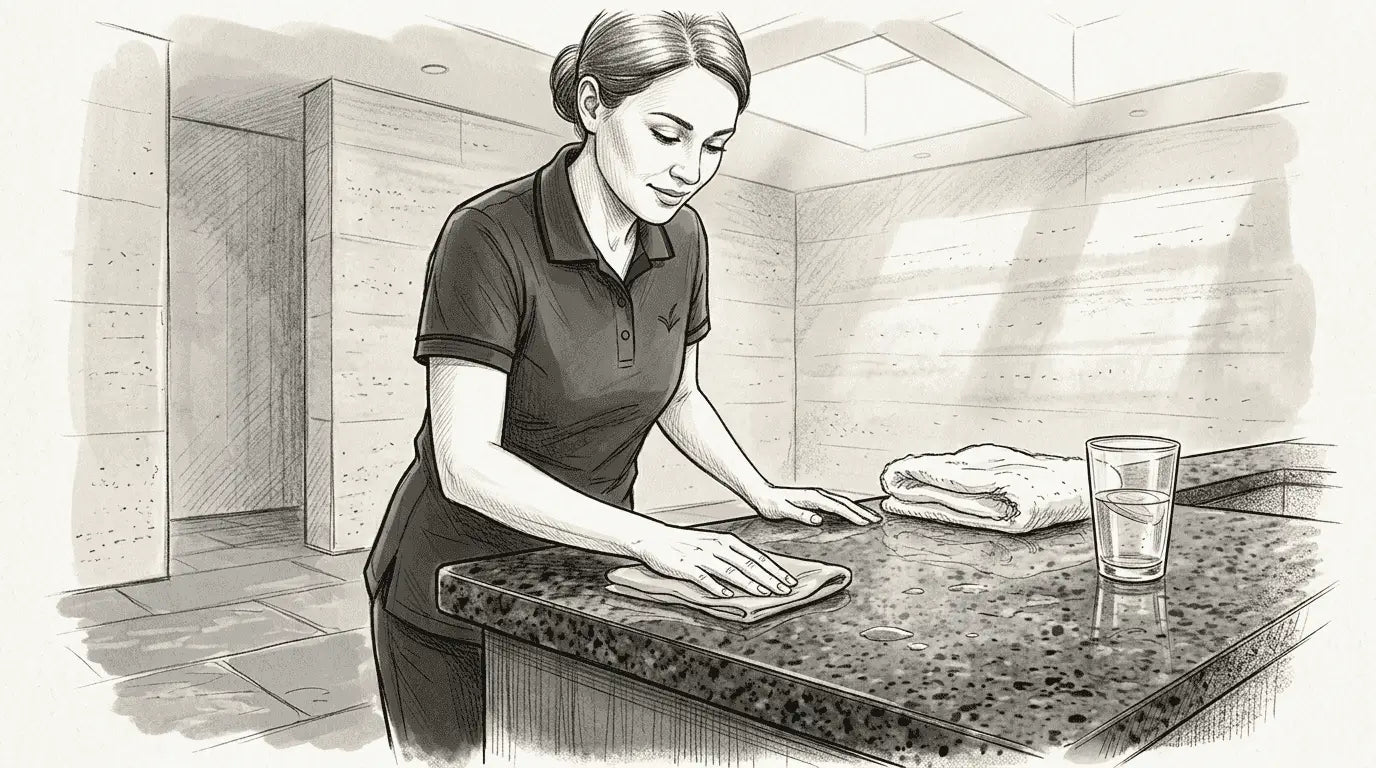
Unlike synthetic materials with predictable properties, natural stone presents unique challenges due to inherent variations in density, water absorption rates, and structural integrity. Two slabs from the same quarry can behave differently under identical conditions. Expert stone suppliers and fabricators manage this variability through rigorous testing, careful selection, and matching processes that ensure consistent performance across large installations.
The variety available within natural stone categories offers solutions for virtually any design vision. Marble ranges from pure white Carrara to dramatic black Marquina, each with distinct performance characteristics. Travertine provides warmth and texture for floors and walls while offering excellent durability in appropriate applications. Granite delivers unmatched hardness for high-impact areas. Limestone creates sophisticated neutral palettes that complement contemporary and traditional aesthetics equally well.
Stone selection considerations for hotel applications:
- Lobby floors require high-density stones with low porosity to resist staining and wear
- Bathroom vanities benefit from polished marble or granite for water resistance and elegance
- Exterior facades need stones with low water absorption and high freeze-thaw resistance
- Feature walls can showcase dramatic veining in stones less suitable for high-traffic areas
- Pool surrounds demand slip-resistant finishes and chlorine-resistant stone types
Balancing aesthetic desires with performance requirements demands expertise. A stunning but porous stone might work beautifully as an accent wall but fail catastrophically as shower cladding. Understanding these nuances separates successful projects from expensive mistakes. Reviewing a comprehensive natural stone types guide helps developers and designers make informed decisions early in the specification process.
Pro Tip: Request physical samples of your selected stone from the actual quarry lot designated for your project. Photographs and small samples cannot capture the full range of variation you will receive. Approving full slabs before fabrication prevents surprises during installation and ensures the final result matches your vision.
The investment in natural stone pays dividends through guest perception and brand differentiation. Hospitality research consistently shows that guests associate natural materials with luxury and quality. Hotels featuring authentic stone command higher average daily rates and receive better reviews for ambiance and design. This perception premium justifies the material and installation costs while contributing to long-term competitive advantage. Learning how to select natural stone for hotels ensures your project maximizes these benefits.
Sustainability and ethical sourcing of natural stone for hotels
Environmental impacts of quarrying and stone processing deserve serious consideration in luxury hotel development. Extraction activities disturb landscapes, consume energy, and generate waste that requires responsible management. Transportation from quarries to fabrication facilities and ultimately to project sites adds carbon emissions to the environmental equation. However, natural stone’s longevity and recyclability offset these impacts when compared to synthetic alternatives requiring petroleum-based manufacturing and frequent replacement.
Ongoing debates regarding environmental impact of natural stone sourcing make supplier selection critical. Hotel developers should prioritize suppliers with sustainable quarrying practices and certifications demonstrating environmental stewardship. Responsible quarries implement land reclamation programs, water recycling systems, and dust control measures that minimize ecological disruption. They also maintain fair labor practices and contribute to local community development in quarrying regions.
Certifications and practices signaling responsible sourcing include third-party environmental audits, membership in industry sustainability initiatives, and transparent supply chain documentation. LEED certification programs recognize natural stone as a sustainable material when sourced responsibly, offering points for regional materials, recycled content, and low-emitting materials. ISO 14001 environmental management certification indicates systematic approaches to reducing environmental impacts throughout operations.
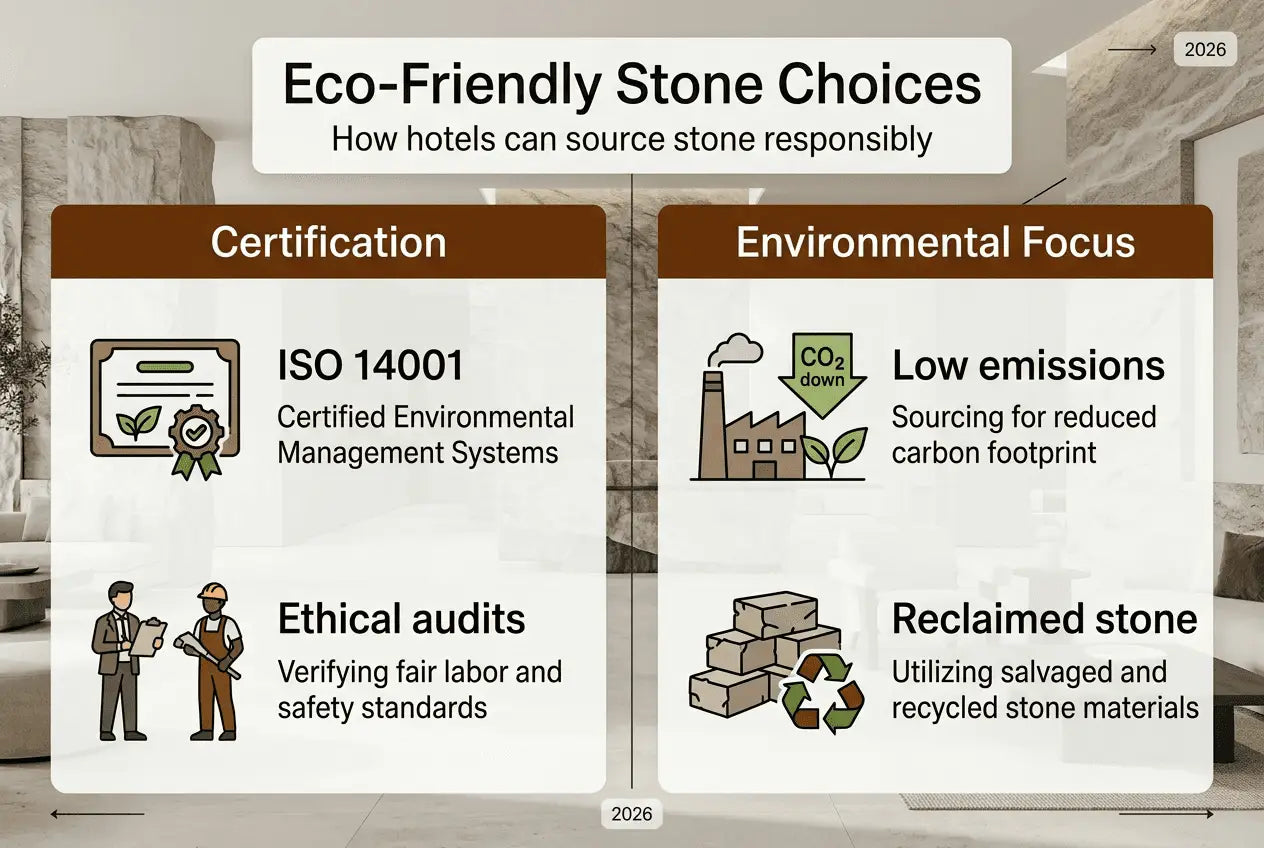
Environmental comparison factors:
| Material Type | Manufacturing Energy | Lifespan | Recyclability | Carbon Footprint |
|---|---|---|---|---|
| Natural Stone | Low (extraction only) | 100+ years | Fully recyclable | Low to moderate |
| Porcelain Tile | High (firing process) | 25-50 years | Limited | Moderate to high |
| Engineered Quartz | Very high (resin binding) | 25-40 years | Not recyclable | High |
| Concrete | Moderate | 50-75 years | Partially recyclable | Moderate |
Natural stone requires no chemical processing or synthetic binding agents, unlike engineered alternatives. Its production generates minimal toxic byproducts, and waste stone from cutting and fabrication can be repurposed for aggregate, landscaping materials, or smaller decorative elements. At end of life, natural stone can be salvaged, recut, and reused indefinitely without degradation, creating truly circular material flows.
Pro Tip: Request documentation of your supplier’s quarrying practices, including environmental permits, reclamation plans, and third-party audit results. Legitimate sustainable suppliers welcome transparency and readily provide this information. Evasive responses or lack of documentation signal potential environmental and ethical concerns that could damage your hotel’s reputation.
Vetting suppliers for eco-friendly standards protects both environmental values and brand reputation. Guests increasingly research hotel sustainability practices before booking, particularly in luxury segments where corporate responsibility expectations run high. Demonstrating commitment to responsible natural stone sourcing practices strengthens marketing narratives while ensuring alignment with evolving environmental regulations.
The transparency advantage of natural stone over synthetic materials extends to health impacts. Stone contains no volatile organic compounds, formaldehyde, or other chemicals that off-gas in interior environments. This contributes to better indoor air quality, supporting both guest wellness and LEED certification goals. Understanding stone sustainability practices helps developers make informed decisions that balance luxury aesthetics with environmental responsibility.
Best practices for specifying and installing natural stone in luxury hotels
Successful natural stone installations begin with coordinated collaboration among all project stakeholders. This multidisciplinary approach ensures that aesthetic visions align with structural realities and installation capabilities from the earliest design phases. Waiting until construction documents are complete to involve engineers or installers invites costly redesigns and compromised outcomes.
Step-by-step collaboration framework:
- Conceptual design phase: Architect and developer establish aesthetic direction and identify potential stone applications throughout the property.
- Schematic design phase: Stone supplier provides samples, technical data, and preliminary cost estimates for specified materials.
- Design development phase: Structural engineer analyzes loads, anchoring requirements, and environmental factors affecting stone performance.
- Construction document phase: Installation contractor reviews details for constructability and provides input on waterproofing, joint design, and sequencing.
- Procurement phase: Developer and supplier finalize material selection from actual quarry lots, approving full slabs before fabrication begins.
- Installation phase: Daily coordination between installer, general contractor, and design team ensures quality control and addresses field conditions.
The difference between successful facades and catastrophic failures comes down to understanding proper anchoring systems, adequate drainage pathways, and selecting appropriate stone types. Anchoring systems must accommodate thermal expansion and contraction while supporting dead loads and resisting wind pressures. Stainless steel anchors with engineered spacing prevent stress concentration that causes stone cracking. Drainage pathways behind cladding allow moisture to escape rather than accumulating and causing freeze-thaw damage or efflorescence.
Critical installation components extend beyond anchoring and drainage to include proper stone selection for specific applications. Exterior facades in freeze-thaw climates require stones with absorption rates below 0.5% to prevent moisture damage. Interior wet areas need dense, low-porosity stones that resist staining and bacterial growth. High-traffic floors demand stones with sufficient hardness to maintain finish under constant abrasion.
| Installation Method | Best Applications | Advantages | Limitations |
|---|---|---|---|
| Mechanical Anchoring | Exterior facades, tall walls | Superior strength, allows drainage | Higher cost, visible fasteners |
| Mortar Bed | Interior floors, low walls | Traditional, economical | Limited to low heights, no drainage |
| Thin-Set Adhesive | Interior walls, backsplashes | Fast installation, clean appearance | Requires flat substrate, weight limits |
| Rainscreen System | Exterior cladding | Optimal drainage, thermal performance | Most expensive, complex detailing |
Developers and designers can avoid common pitfalls by following a practical verification checklist throughout the project. Confirm that specified stones have been tested for absorption, flexural strength, and abrasion resistance appropriate to their intended use. Verify that anchoring systems have been engineered for actual stone weights and environmental loads. Ensure installation contractors have documented experience with similar stone types and applications. Require mockups of critical details before full-scale installation begins.
Understanding the complete ordering natural stone process prevents procurement delays and specification mismatches. Lead times for natural stone can extend 12 to 16 weeks from order to delivery, requiring early commitment to maintain project schedules. Familiarizing your team with natural stone terminology ensures clear communication with suppliers and installers, reducing misunderstandings that lead to incorrect materials or finishes.
Quality control during installation protects your investment and prevents future problems. Daily inspections should verify proper anchor installation, adequate drainage gaps, consistent joint widths, and appropriate sealant application. Document these inspections photographically to create records for warranty purposes and future maintenance planning. Address deficiencies immediately rather than allowing them to compound as installation progresses.
Explore premium natural stone solutions at Surfaces Galore
Applying the insights from this article starts with partnering with a supplier who understands luxury hotel requirements and delivers consistent quality. Surfaces Galore specializes in premium natural stone for high-end hospitality projects, offering curated collections of marble, travertine, and decorative pieces that meet the demanding standards of luxury hotel developers and interior designers.
Our direct import model eliminates middleman markups while maintaining rigorous quality control throughout the supply chain. We work closely with designers and developers to source specific stone types, coordinate delivery schedules, and provide technical support that ensures successful installations. Whether you need dramatic marble for a signature lobby or durable travertine for pool decks and spa areas, our team brings decades of expertise to your project. Explore our complete natural stone selection and discover how we help luxury hotels achieve timeless elegance with authentic materials. Learn more about selecting the right natural stone for your specific applications and design vision.
Frequently asked questions
How do you maintain natural stone interiors in high-traffic hotel areas?
Regular sealing protects stone from staining and moisture penetration, with frequency depending on stone type and traffic levels. Most lobby floors require resealing every 12 to 18 months, while lower-traffic areas can extend to 24 months. Use pH-neutral cleaners specifically formulated for natural stone, as acidic or alkaline products damage finishes and etch polished surfaces. Prompt cleanup of spills prevents staining, and daily dust mopping removes abrasive particles that dull finishes over time.
What sustainability certifications should hotel developers look for when sourcing natural stone?
Look for suppliers with ISO 14001 environmental management certification, demonstrating systematic approaches to reducing environmental impacts. LEED projects can earn points for regionally sourced stone, recycled content in setting materials, and low-emitting adhesives and sealants. Responsible quarrying certifications from organizations like the Natural Stone Council indicate commitment to land reclamation, water conservation, and fair labor practices. Request transparency in supply chain documentation to verify sustainable sourcing practices throughout the procurement process.
Can natural stone facades be safely installed in humid or coastal hotel environments?
Yes, with proper stone selection, engineered anchoring systems, and adequate drainage pathways. Coastal environments require stones with very low absorption rates, typically granite or dense marble varieties, to resist salt spray and moisture damage. Stainless steel anchors prevent corrosion that would compromise structural integrity. Rainscreen installation methods create ventilated cavities behind stone cladding, allowing moisture to escape and preventing the accumulation that causes efflorescence or freeze-thaw damage. Consult structural engineers and experienced stone installers early in design to tailor solutions for specific environmental conditions.
How does natural stone compare to porcelain or engineered materials for hotel durability?
Natural stone outlasts synthetic alternatives when properly selected and installed, with many historic hotel installations still performing after a century. Porcelain offers consistency and stain resistance but cannot match the depth and character of natural stone, and its thin profile makes it more susceptible to cracking under impact. Engineered quartz provides uniform appearance but relies on petroleum-based resins that yellow over time and cannot be refinished like natural stone. Natural stone can be repolished multiple times to restore original appearance, extending usable life far beyond synthetic options that must be replaced when surfaces degrade.
Recommended
- Natural Stone Countertops Elevate Luxury Kitchens– SurfacesGalore
- Marble in Hotels Enhancing Guest Experiences– SurfacesGalore
- Selecting Natural Stone for Timeless Elegant Spaces– SurfacesGalore
- Home Tile Renovation Guide 2026: 30% Less Edge Chipping– SurfacesGalore
- What Are the Top Luxury Safaris in Namibia for 2026?
Leave a comment