

Imported marble: luxury, longevity, and real value

TL;DR:
- Imported marble offers a unique, high-end aesthetic with rare colors, dramatic veining, and large slabs that domestic options cannot match. When properly planned, sourced, and maintained, it adds lasting value and durability to luxury interiors; however, careful project timing and strategic use are essential for optimal results. Its true advantage lies in purposeful placement and expert management of logistics and care routines, creating a timeless, impactful design statement.
You’ve seen the images in renovation magazines: sweeping kitchen islands wrapped in pale Calacatta veining, spa bathrooms dressed in dramatic grey Bardiglio, entryways that announce the home’s character before you say a single word. The finished rooms look effortless, and imported marble always seems to be the common thread. But flip past those glossy spreads and the practical questions pile up fast. Is imported marble genuinely worth the premium price? Will it survive a busy household? And what does the project actually look like from order to installation? This guide cuts through the noise with evidence-backed answers for every homeowner or remodeler who wants to make a confident, informed decision.
Table of Contents
- How imported marble transforms luxury spaces
- Does imported marble add value and longevity?
- Planning for success: Managing logistics and lead times
- Care, durability, and the real meaning of ‘low-maintenance’
- The uncomfortable truth: Not every luxury project needs imported marble everywhere
- Elevate your renovation with exclusive imported marble
- Frequently asked questions
Key Takeaways
| Point | Details |
|---|---|
| Distinct luxury appeal | Imported marble delivers colors, veining, and prestige that domestic stone cannot match. |
| Long-term value | With proper care, imported marble enhances resale and lasts for decades. |
| Maintenance is critical | Durability comes from finish choice and consistent sealing, not just stone quality. |
| Plan for logistics | Extra lead time and backup plans help avoid project delays from shipping or customs. |
| Strategic use pays off | Imported marble works best as a highlight for luxury impact and practical longevity. |
How imported marble transforms luxury spaces
With the context in mind, let’s focus first on what sets imported marble apart in visible, tangible terms.
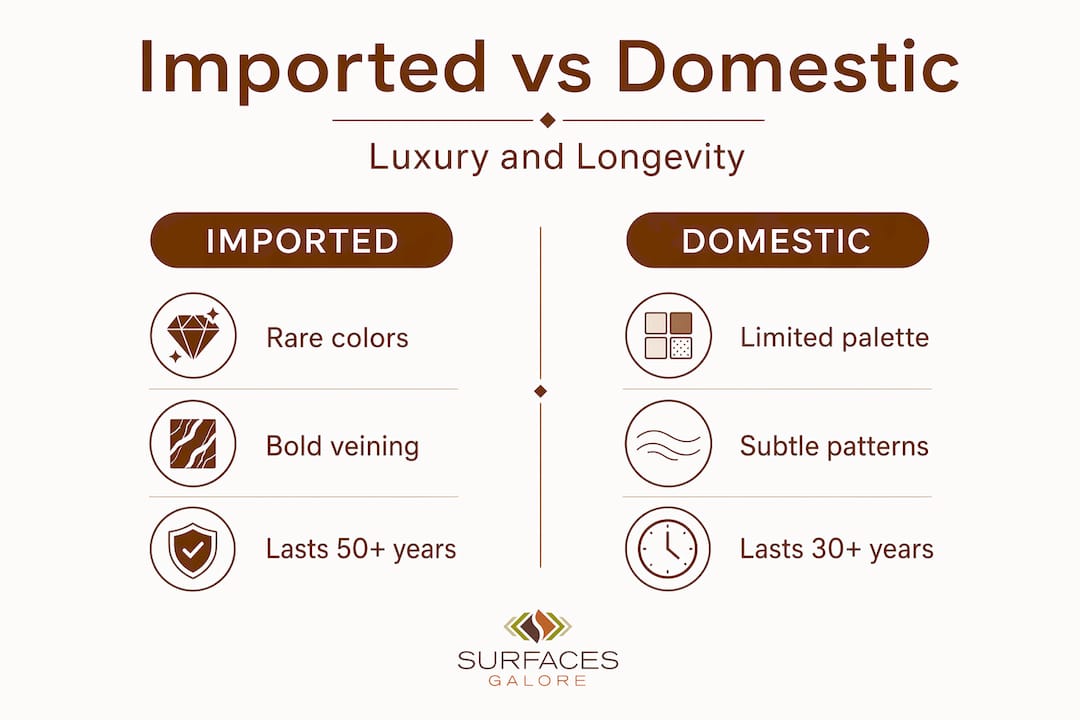
Walk into any award-winning residential project and you’ll notice that marble’s impact on interiors extends far beyond a simple surface choice. Imported marble carries a visual language that domestic alternatives rarely replicate. The difference shows up in vein structure, color depth, and the kind of movement that makes a slab feel alive. Italian Statuario carries bright white backgrounds with bold, expressive grey veining. Turkish Emperador delivers rich chocolate tones with subtle gold undertones. These characteristics come from specific geological formations that can only be found in certain quarries around the world, making each variety genuinely irreplaceable.
Aesthetic differentiation for high-end renovations is imported marble’s strongest advantage, and it shows in the way designers approach projects. When a client wants a specific look, imported marble gives the design team a far wider palette to work with. That palette includes:
- Rare color ranges unavailable in domestic stone, from deep verde green to luminous onyx white
- Distinctive veining patterns that allow for book-matching, where two slabs mirror each other like an open book
- Translucency in some varieties that creates a lit-from-within effect when backlit
- Consistent availability of large-format slabs ideal for dramatic, uninterrupted surfaces
- Heritage appeal connected to centuries of European and Mediterranean craftsmanship
Book-matching deserves special attention because it’s one of the most breathtaking techniques in luxury design. When two consecutive slabs are cut from the same block and laid side by side with veins flowing symmetrically, the effect is architectural sculpture. That’s only possible with imported marble from quarries producing large, consistent blocks. You’ll find this technique used on accent walls, fireplace surrounds, and statement island tops in homes where the stone itself is the focal point.
For those curious about where things are heading, top marble trends in 2026 show a strong move toward bolder veining and warmer beige tones drawing from European design inspiration, particularly from French and Italian coastal interiors. These aesthetics have filtered into American luxury homes in a big way.
| Feature | Imported marble | Domestic marble |
|---|---|---|
| Color variety | Extensive, rare global palettes | Limited, regionally specific |
| Origin prestige | Italy, Turkey, Greece, Portugal, Spain | Georgia, Vermont, Colorado |
| Buyer perception | Premium, globally recognized | Good quality, less distinctive |
| Veining patterns | Highly varied, often dramatic | More uniform, less expressive |
| Book-matching potential | High, large consistent blocks | Moderate, dependent on quarry |
| Design flexibility | Very high | Moderate |
The numbers behind this perception matter too. In premium real estate markets, buyers often specifically request Italian or European stone varieties by name. The origin story is part of the value proposition. That kind of recognizable prestige simply cannot be replicated by a domestic alternative, no matter how well-crafted.
Does imported marble add value and longevity?
Beyond beauty, homeowners are just as concerned with whether investing in imported marble truly pays off.
The short answer is yes, but context matters significantly. Premium marble surfaces enhance value in resale scenarios, particularly in markets where luxury finishes are expected. Marble installed in the right spaces, properly maintained, can last for generations. The Roman Pantheon still features its original marble floors after nearly two thousand years. That’s an extreme example, but it illustrates the raw longevity of the material when treated with respect.
For residential purposes, a well-maintained marble floor, countertop, or wall installation can easily last 50 years or more. Compare that to engineered quartz, which typically carries a 10 to 25 year functional lifespan before showing signs of wear, discoloration, or delamination at seams. Porcelain tile, another popular alternative, can chip, crack at grout lines, and fade over time. Natural marble, by contrast, ages with character. A patina can actually add perceived value in certain design contexts, particularly in European-inspired interiors where a lived-in elegance is the goal.

On the resale side, marble’s impact on home value has been documented across premium market segments. In cities like New York, Los Angeles, Miami, and Chicago, luxury buyers expect natural stone. A home without it in the primary bathroom or kitchen can actually feel dated or under-specified. However, it’s important to be clear-eyed: imported marble’s ROI is context-dependent, and treating it purely as a financial investment overlooks what matters most.
| Marble surface | Estimated lifespan | Resale perception impact | Maintenance intensity |
|---|---|---|---|
| Polished Carrara countertop | 30 to 50+ years | High in luxury markets | Moderate to high |
| Honed Calacatta floor | 40 to 60+ years | Very high, statement material | Moderate |
| Marble accent wall | 25 to 40+ years | High, focal point value | Low to moderate |
| Marble bathroom surround | 30 to 50+ years | Very high in primary bath | Moderate |
The prestige of the stone in relation to real estate value is something buyers in the high-end market recognize immediately. A home listing that mentions “Italian Carrara marble” reads very differently from one that says “white stone countertops.” That specificity signals quality throughout the home, and serious buyers notice.
Pro Tip: Visibly well-maintained marble sends a powerful message to potential buyers. It signals that the current homeowners cared meticulously for the property, which builds confidence about the home’s overall condition. Keep marble polished, sealed, and chip-free before any listing photography or showing.
Planning for success: Managing logistics and lead times
Great aesthetics and value mean little if your project is derailed. Here’s what to know logistically.
Imported marble does not arrive the way a box of domestic tile does. These are natural stone slabs quarried abroad, processed at international facilities, loaded into shipping containers, cleared through customs, and transported to a domestic warehouse or directly to your project site. Each of those steps carries its own timeline and potential for delay. Lead times and customs exposure require careful planning with ample buffers built into your project schedule, and experienced contractors know this well.
The actual logistics process for custom marble fabrication requires more coordination than standard domestic tile jobs. Here’s a step-by-step breakdown of what smart project planning looks like:
- Select and confirm your marble variety early. Exotic imported stones can have limited availability. Confirm the specific slab, quarry batch, and available quantity before committing to a design.
- Order well ahead of your installation date. Build a minimum of 8 to 16 weeks into your schedule for international sourcing, depending on origin country and supplier relationships.
- Vet your supplier’s import track record. Work with importers who have established relationships with trusted quarries and customs brokers. Direct importers, like those working closely with Italian and Turkish quarries, move product more reliably than third-party resellers.
- Factor in domestic fabrication time. Once the slab arrives stateside, cutting, edging, and finishing add additional lead time, often 2 to 4 weeks for complex countertop profiles.
- Plan for a buffer order of 10 to 15% extra material. Custom cuts, breakage during transit, and replacements for damaged pieces require you to have matching material on hand.
- Communicate proactively with your contractor. Give your tile setter or stone fabricator visibility into the entire supply chain timeline so they can sequence trades correctly.
- Establish a clear escalation path. Know in advance who to contact if a shipment is delayed, what the alternatives are, and whether your supplier holds backup stock domestically.
“Experienced remodelers treat imported marble lead times the way they treat structural work: plan for the worst case, and you’ll rarely be caught short. Rushing stone procurement is one of the top causes of budget overruns and schedule delays in high-end renovations.” This industry reality shapes how professional project managers sequence their work on luxury builds.
Working with expert flooring installation professionals who have experience with imported natural stone is just as important as the stone selection itself. A contractor unfamiliar with marble’s movement characteristics, weight, or subfloor requirements can cause installation problems that no amount of beautiful stone can fix.
Pro Tip: Order your imported marble at least three to four months before your planned installation date if you’re sourcing from European quarries. For Turkish or Asian sources, six to eight weeks may be sufficient if your importer maintains domestic inventory. Always confirm stock levels before finalizing your design drawings.
Care, durability, and the real meaning of ‘low-maintenance’
Once your marble arrives, here’s how to make sure it looks stunning and lasts.
Here’s a truth that separates happy marble owners from regretful ones: marble is not low-maintenance. It is manageable maintenance, which is a meaningfully different concept. Marble durability depends on usage patterns, maintenance, and finish far more than on whether it was quarried in Carrara or Connecticut. Understanding what it actually needs removes the mystery and makes ownership genuinely enjoyable.
Marble is calcium carbonate, which reacts with acids. That includes lemon juice, wine, vinegar, tomato sauce, and even some hand soaps. The reaction creates a chemical etch, a dull spot on the surface that looks different from the surrounding polish. Etching is not a stain; it’s a physical change to the surface texture. On honed (matte) finishes, etching is almost invisible. On high-gloss polished surfaces, it shows clearly. This is one reason many designers now specify honed finishes for kitchen applications, reserving polished marble for bathrooms and lower-traffic areas.
“Homeowners who choose marble primarily because it looks low-maintenance will likely be disappointed. The material rewards attentive care. Used selectively and finished wisely, it can perform beautifully for decades.” This guidance from design professionals reflects a pattern seen consistently in renovation outcomes.
For premium marble installation tips specific to California and other high-use environments, thinking through the right zones before installation saves significant regret. Here’s a practical framework:
Best zones for marble:
- Primary bathroom floors, walls, and shower surrounds
- Powder room vanities and feature walls
- Fireplace surrounds and hearths
- Entry hall floors with moderate foot traffic
- Decorative accent walls and backsplashes
Marble care do’s:
- Seal every 6 to 12 months using a penetrating impregnating sealer
- Clean with pH-neutral stone cleaner only
- Wipe up spills immediately, especially acids
- Use felt pads under decorative objects
- Dry surfaces after water exposure in showers and around sinks
Marble care don’ts:
- Never use vinegar, lemon juice, or citrus-based cleaners
- Avoid harsh scrubbing pads that scratch polished surfaces
- Don’t use bleach or ammonia-based products
- Never skip sealing because “it looks fine”
- Don’t install polished marble in high-traffic kitchen floors without accepting that a patina will develop
Homeowners may regret choosing marble if low-maintenance is the primary goal. The expert guidance is consistent: use marble selectively, choose finishes that match your lifestyle, and lean toward honed surfaces in kitchens and family rooms.
Working with professional installation for durability cannot be overemphasized. A proper subfloor preparation, the right mortar type, adequate curing time, and expert grouting all contribute to how long your marble stays beautiful and intact.
Pro Tip: Reserve your most dramatic, high-veining imported marble slabs for accent applications rather than sprawling floors in high-traffic zones. A stunning Calacatta slab behind a range hood or on a bathroom feature wall creates a focal point with maximum visual impact and minimal daily wear exposure. This approach gives you the full luxury statement with far less maintenance commitment.
The uncomfortable truth: Not every luxury project needs imported marble everywhere
Having explored practical realities, it’s time to confront what the sales brochures often ignore: less is sometimes more.
In our experience working with designers, architects, and homeowners across the country, the most regret we hear about comes not from people who chose imported marble, but from those who used it everywhere without thinking strategically. The master bath wrapped floor to ceiling in book-matched Calacatta is breathtaking and worth every penny. The same client’s mudroom floor in polished white marble is a different story entirely, scratched, etched, and constantly dulled by tracked-in grit.
True luxury is not about volume. It’s about intention. The world’s most celebrated hotel interiors and private residences use marble as a punctuation mark, not a paragraph. A single dramatic slab behind a kitchen range creates more visual impact than four bland marble countertop surfaces throughout the same home. A marble accent design done well is more powerful than wall-to-wall coverage done average.
We’d also push back gently on the idea that imported marble should be chosen primarily for resale value. That framing puts you in the position of designing a home for a hypothetical future buyer instead of the person actually living in it. The most satisfying marble projects we see are ones where the homeowner matched the stone to their actual lifestyle, not to a real estate agent’s checklist. If you cook every day and have kids, polished white marble counters will frustrate you. If you love entertaining and your kitchen is a visual centerpiece, a book-matched island top in dramatic veined marble might be exactly right.
The strategic use of imported marble, placed thoughtfully in focal zones, matched to finish types that suit the space’s use, and backed by proper care routines, delivers consistent satisfaction. That’s the real advantage: not just the stone itself, but the wisdom behind where and how you use it.
Elevate your renovation with exclusive imported marble
Ready to transform your space? Here’s where your imported marble journey can begin.
At Surfaces Galore, we’ve spent years building direct relationships with premier quarries across Italy, Turkey, Spain, and Portugal so that you can access the same caliber of stone used in luxury residences and five-star hotels, without the opaque markups of traditional distribution chains. Our curated selection spans everything from classic Calacatta and Carrara to rare book-matchable slabs in dramatic colorways that you simply won’t find at a big-box retailer.
Whether you’re a homeowner planning your first natural stone renovation, a designer sourcing for a client, or a contractor who needs reliable supply with predictable lead times, we’re here to make the process straightforward. Browse our full collection of imported marble tiles, mosaics, and decorative pieces at Surfaces Galore, or reach out to our team for guidance on finish selection, quantity estimates, and logistics support. We ship nationwide, so great stone is never out of reach.
Frequently asked questions
What makes imported marble different from domestic marble?
Imported marble offers more design-led impact and a broader palette, with rare colors, dramatic veining, and globally recognized heritage that domestic varieties typically cannot match.
How much longer does imported marble last compared to other surfaces?
With proper maintenance, imported marble lasts for decades and often outlasts synthetic surfaces like engineered quartz, especially when sealed regularly and kept away from harsh chemicals.
Is imported marble difficult to care for?
It requires sealing every 6 to 12 months and pH-neutral cleaning products; maintenance matters more than origin for long-term beauty, and etching from acids is possible without consistent care.
What are the biggest risks when importing marble?
Shipping and customs delays are the most common risks, so building adequate lead-time buffers into your project schedule and working with experienced importers is essential.
Can using marble really increase home resale value?
Premium stone surfaces enhance value in luxury real estate markets, but the actual return depends on your location, buyer demographics, and whether the marble has been well maintained throughout its use.
Leave a comment