
Marble vs. Quartzite: Key Differences for Your Renovation

TL;DR:
- Quartzite is a highly durable natural stone with high resistance to scratching and acids, making it ideal for busy kitchens and outdoor use. Marble, with its softer calcite composition, is more prone to etching, scratching, and surface changes over time, requiring regular maintenance and professional repairs. Verifying true quartzite through simple acid testing before purchase is essential to avoid costly mislabeling and ensure long-lasting beauty and performance.
Marble is a calcite-based natural stone that etches on contact with acids and ranks 3 to 5 on the Mohs hardness scale, while quartzite is a quartz-crystal stone that resists acids and scratches at a hardness of 7 to 8. The difference between marble and quartzite is not just geological. It determines how your countertop, floor, or shower wall will look and perform five years from now. Homeowners and designers who understand these distinctions before purchasing avoid costly surprises. This guide covers composition, durability, aesthetics, maintenance, cost, and the best applications for each stone so you can make a confident, informed decision.
What is the difference between marble and quartzite?
Marble and quartzite are both natural stones, but they form through entirely different geological processes, and that origin shapes everything about how they behave in your home.
Marble begins as limestone, a sedimentary rock composed primarily of calcium carbonate. When limestone is subjected to intense heat and pressure deep within the earth, the calcite crystals recrystallize into the interlocking grain structure we recognize as marble. The result is a stone with soft, flowing veins, a warm luminosity, and a surface that responds to its environment. That responsiveness is both marble’s beauty and its vulnerability.
Quartzite starts as sandstone, a rock made largely of quartz grains. Under extreme heat and pressure, those grains fuse together into a dense, interlocked matrix of quartz crystals. The finished stone is one of the hardest natural materials available for residential use, with a crystalline structure that gives it both its sparkle and its acid resistance.
One critical issue buyers face is marketplace mislabeling. Many slabs sold as “quartzite” are actually quartzitic sandstone or soft dolomitic marble, both of which etch and stain just like marble. Verifying true quartzite before purchase is not optional. It is the single most important step in the buying process. A simple acid test with a few drops of vinegar on an inconspicuous area of the slab will cause a soft stone to fizz and dull. True quartzite will show no reaction at all.
Understanding natural stone terminology is the foundation of a smart purchase. The difference in mineralogy between calcite and quartz explains every performance gap between these two stones.
How do marble and quartzite compare in durability?
Durability is where the quartzite vs marble comparison becomes most consequential for daily living. The gap between these two stones is significant and measurable.

Hardness and scratch resistance
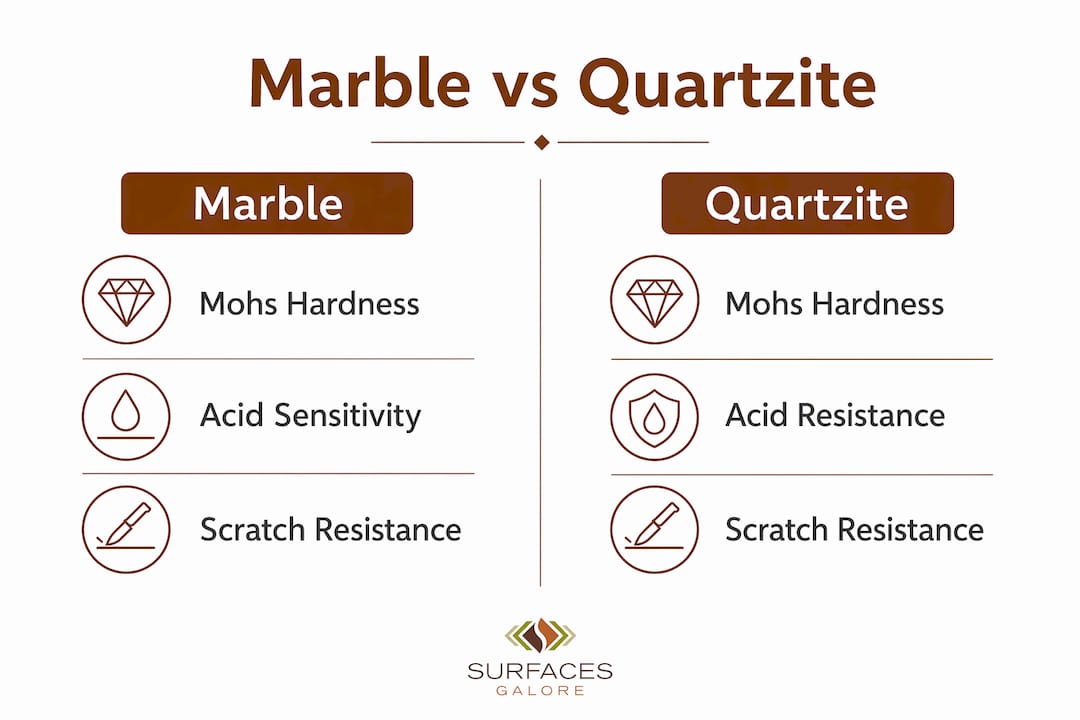
The Mohs hardness scale rates minerals from 1 (talc) to 10 (diamond). Marble scores 3 to 5, meaning a standard kitchen knife or even a piece of quartz countertop can scratch it. Quartzite scores 7 to 8, placing it harder than most metals and nearly as hard as topaz. In practical terms, quartzite resists scratches from cookware, utensils, and general kitchen activity that would visibly mark marble over time.
Acid etching: the most misunderstood damage type
Etching is not a stain. It is a chemical reaction between acid and calcite that dissolves the polished surface of marble, leaving a dull, matte spot that no amount of cleaning will remove. Lemon juice, vinegar, wine, tomato sauce, and even some cleaning products trigger this reaction instantly. Etching requires professional polishing to repair, which adds ongoing cost and effort to marble ownership. Quartzite does not etch because quartz does not react with household acids.
Heat resistance
Both stones handle heat reasonably well, but quartzite performs better under sustained thermal stress. Marble can develop micro-fractures from repeated heat exposure, particularly near stovetops. Quartzite’s fused crystal structure distributes heat more evenly, making it a safer choice for kitchen surfaces near cooking zones.
Durability comparison at a glance
| Feature | Marble | Quartzite |
|---|---|---|
| Mohs hardness | 3 to 5 | 7 to 8 |
| Scratch resistance | Low | High |
| Acid/etch resistance | None | High |
| Heat resistance | Moderate | High |
| Outdoor suitability | Not recommended | Excellent |
Pro Tip: Place a few drops of white vinegar on any slab labeled “quartzite” at the warehouse. If the surface fizzes or dulls within 30 seconds, the stone is not true quartzite. Walk away.
What do marble and quartzite look like?
Aesthetics drive most stone purchases, and both marble and quartzite deliver visual drama. The difference lies in character, color range, and how each stone ages.
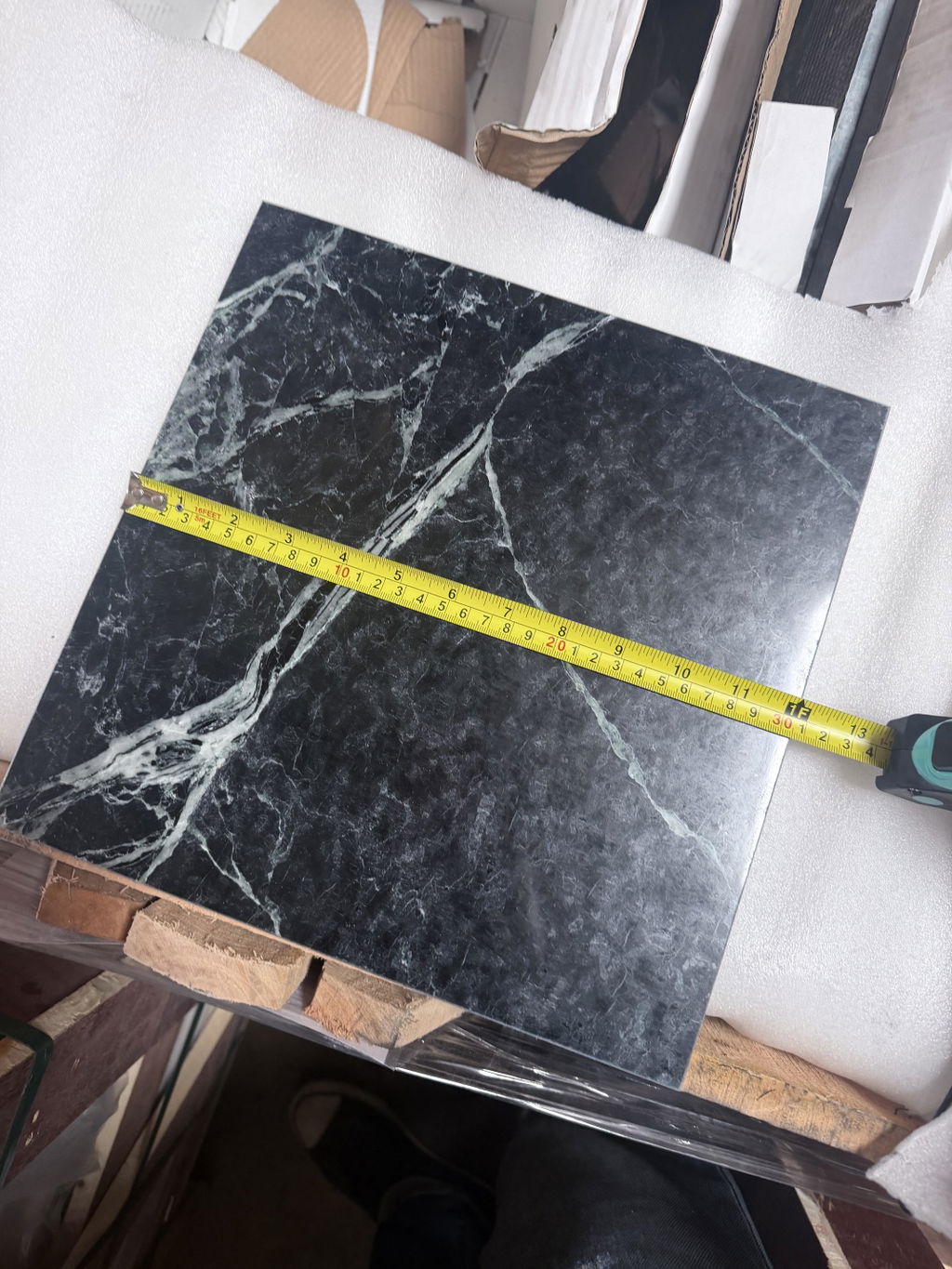
Marble is defined by its soft, flowing veins that move across a white, cream, gray, or occasionally green or black background. The veining in marble forms from mineral impurities trapped during metamorphism, and no two slabs are identical. Calacatta marble, sourced from the Apuan Alps in Italy, features bold, dramatic veining on a bright white background. Carrara marble, also from Italy, offers finer, more delicate gray veining on a softer white ground. Nero Marquina, a black marble from Spain, delivers deep contrast with white veining.
Quartzite’s aesthetic is equally striking but different in character. The crystalline structure creates a subtle sparkle that marble lacks. Popular varieties include:
- Super White quartzite: often mistaken for marble, with soft white tones and delicate gray veining
- Sea Pearl quartzite: a dramatic mix of white, gray, and green tones with a luminous surface
- Taj Mahal quartzite: warm cream and gold tones with flowing veins, sourced from Brazil
- Macaubas quartzite: blue-gray tones with bold movement, a favorite in contemporary interiors
How each stone ages is a defining factor in the quartzite vs marble comparison. Marble develops a patina over time, accumulating small etch marks and wear that soften its surface into a lived-in, antique quality. Many designers and homeowners embrace this evolution as part of marble’s character. Quartzite, by contrast, retains its original appearance for decades with minimal intervention. Its visual stability makes it the preferred choice when a consistent, long-term look is the priority.
For designers working on high-end residential projects, the choice often comes down to whether the client wants a stone that tells a story over time or one that holds its ground.
How much does marble vs quartzite cost, and what maintenance do they need?
Cost and maintenance are inseparable in this comparison. A lower purchase price can become expensive if ongoing care is demanding or repairs are frequent.
Installed cost per square foot
Both stones fall in a similar price range at purchase. Installed costs typically run $75 to $250 per square foot for both marble and quartzite, depending on slab rarity, origin, and fabricator. For a standard 40-square-foot kitchen countertop, marble projects typically cost $3,000 to $10,000 installed, while quartzite runs $3,200 to $8,000. The overlap is significant, meaning quartzite is not automatically more expensive than marble.
Fabrication costs differ, however. Quartzite requires diamond-tipped tooling and more specialized handling due to its extreme hardness, which raises labor costs compared to marble. Marble is easier to cut and shape, but its brittle edges chip more readily during installation, which can add waste and replacement costs.
Sealing requirements
- Marble: Seal every 3 to 6 months. Sealing reduces staining from liquids but does not prevent etching. Marble’s porosity means spills left on the surface will penetrate quickly without a fresh seal.
- Quartzite: Seal every 6 to 24 months depending on the specific slab’s porosity. Denser quartzite slabs may need sealing only once a year or less. Sealing quartzite primarily guards against staining from oils and pigmented liquids.
- Cleaning: Both stones require pH-neutral stone cleaners. Avoid vinegar, lemon-based cleaners, bleach, and abrasive scrubbers on either surface. Standard dish soap diluted in water works well for daily cleaning.
- Repairs: Marble etches require professional polishing and honing to restore the surface. Deep scratches in marble can sometimes be buffed out. Quartzite, because it resists both scratching and etching, rarely needs professional restoration under normal use.
Marble vs quartzite cost summary
| Cost factor | Marble | Quartzite |
|---|---|---|
| Installed price range | $75 to $250 per sq ft | $75 to $250 per sq ft |
| 40 sq ft kitchen project | $3,000 to $10,000 | $3,200 to $8,000 |
| Sealing frequency | Every 3 to 6 months | Every 6 to 24 months |
| Repair needs | Frequent (etching, scratches) | Rare under normal use |
| Long-term maintenance cost | Higher | Lower |
For a complete look at marble maintenance practices that extend the life of your stone, Surfacesgalore has a dedicated guide covering sealing schedules, cleaning products, and professional restoration options.
Which stone is better for kitchens, bathrooms, and outdoor use?
The answer to “is quartzite better than marble” depends entirely on where you are installing it and how you live. Neither stone is universally superior. Each excels in specific conditions.
Quartzite is the stronger choice for:
- Busy family kitchens where cooking, food prep, and daily use are constant
- Outdoor kitchens and patio surfaces, where UV and weather resistance are critical. Marble is generally not recommended for outdoor use because freeze-thaw cycles and acid rain accelerate surface degradation
- Bathroom floors and shower walls in high-traffic households where durability and low maintenance matter
- Households with children, frequent entertainers, or anyone who does not want to manage a strict sealing and cleaning schedule
Marble is the stronger choice for:
- Bathroom vanities and shower surrounds in lower-traffic settings, where acid exposure is minimal and the classic aesthetic is the priority
- Decorative applications such as fireplace surrounds, accent walls, and flooring in formal rooms that see light foot traffic
- Designers and homeowners who want a stone with evolving character and are willing to invest in periodic professional maintenance
- Luxury kitchens where the owner understands and accepts marble’s limitations and values its visual distinction above all else
Lifestyle is the deciding variable. A professional chef who cooks daily at home will find marble frustrating within a year. A design-focused homeowner who uses the kitchen primarily for light meals and entertaining may find marble’s beauty worth every sealing appointment. The marble kitchen guide from Surfacesgalore walks through these trade-offs in detail for anyone weighing the decision for countertops specifically.
Key takeaways
Quartzite outperforms marble in durability and maintenance demands, while marble delivers unmatched classic beauty that requires consistent care and a tolerance for surface evolution over time.
| Point | Details |
|---|---|
| Composition drives performance | Marble’s calcite base causes etching; quartzite’s quartz crystals resist acids and scratches. |
| Hardness gap is significant | Quartzite scores 7 to 8 on the Mohs scale versus marble’s 3 to 5, a real-world difference in daily use. |
| Maintenance costs differ | Marble needs sealing every 3 to 6 months and professional repairs for etching; quartzite needs far less intervention. |
| Installed costs overlap | Both stones run $75 to $250 per square foot installed, so budget alone should not drive the choice. |
| Verify before you buy | Many slabs sold as quartzite are mislabeled softer stones. An acid test at the warehouse confirms true quartzite identity. |
Why I always ask clients one question before choosing between these stones
The question is simple: “How do you actually use your kitchen?” The answer tells me more than any specification sheet.
I have seen homeowners spend $12,000 on Calacatta marble countertops and love every etch mark as evidence of a life well-lived in their home. I have also seen clients devastated six months after installation when they realized their marble looked worn and dull despite careful maintenance. The difference between those two outcomes is not the stone. It is the expectation.
My honest view is that quartzite is the practical luxury choice for most daily-use kitchens in 2026. It gives you the drama and natural beauty of stone without the anxiety of managing a surface that reacts to everything in your kitchen. Taj Mahal and Sea Pearl quartzite, in particular, rival marble’s visual impact while demanding far less from their owners.
That said, I would never tell a design-conscious client to avoid marble. Marble is one of the most beautiful materials ever used in architecture, and its patina tells a story that quartzite simply cannot replicate. If you want a surface that ages like a well-worn leather chair, marble is your stone. If you want a surface that looks the same in twenty years as it does on installation day, choose quartzite.
One more thing: always select your slab in person. In-person slab selection with your fabricator is the only way to know what you are actually getting. Photos do not capture veining movement, surface texture, or the way light plays across the stone. And if you are buying quartzite, bring vinegar. A quick acid test at the warehouse has saved more than a few clients from an expensive mistake.
For those who want the look of marble or quartzite without any maintenance commitment, engineered quartz (not to be confused with quartzite) is worth considering as a third option. It is a manufactured product with consistent patterning and near-zero maintenance, though it lacks the depth and uniqueness of natural stone.
— cihan
Explore marble and quartzite at Surfacesgalore
Surfacesgalore is a direct importer of premium natural stone based in Anaheim, California, shipping nationwide to homeowners, designers, architects, and contractors. Whether you are drawn to the timeless elegance of marble or the lasting strength of quartzite, Surfacesgalore carries an extensive selection of slabs, tiles, mosaics, and custom cuts to suit any project. Browse marble collections for bathrooms, kitchens, and decorative features, or explore quartzite options for countertops, floors, and outdoor surfaces. Every piece is sourced for authenticity and quality. Visit Surfacesgalore’s natural stone collection to find the right stone for your renovation and get expert guidance from a team that knows natural stone inside and out.
FAQ
What is the main difference between marble and quartzite?
Marble is composed of calcite and etches on contact with household acids, while quartzite is made of fused quartz crystals and resists both acids and scratches. The difference in mineral composition explains every performance gap between the two stones.
Is quartzite harder than marble?
Quartzite scores 7 to 8 on the Mohs hardness scale, compared to marble’s 3 to 5, making quartzite significantly harder and more resistant to scratching and daily wear.
Which is more durable, marble or quartzite?
Quartzite is more durable than marble for most residential applications. It resists scratching, acid etching, heat, and outdoor weathering far better than marble, which requires more frequent sealing and professional repairs.
How do marble vs quartzite costs compare?
Both stones have similar installed price ranges of $75 to $250 per square foot, but quartzite carries lower long-term maintenance costs because it requires less frequent sealing and rarely needs professional restoration.
How can I tell if a slab is real quartzite?
Apply a few drops of white vinegar or citric acid to an inconspicuous area of the slab. True quartzite will show no reaction. A soft stone or mislabeled slab will fizz, dull, or etch within seconds.

Leave a comment