

Marble vs Travertine: Choose the Best Stone for Your Remodel

TL;DR:
- Marble offers luxury and elegance but requires regular sealing and higher maintenance.
- Travertine is more affordable, durable for high-traffic areas, and easier for DIY installation.
- Choosing depends on budget, location, usage, and desired aesthetic.
Choosing between marble and travertine is one of the most common decisions homeowners face during a kitchen or bathroom remodel. Both stones carry a sense of luxury that synthetic materials simply cannot replicate. But beyond their good looks, marble and travertine behave very differently under daily use, and picking the wrong one for your space can mean extra maintenance, unexpected costs, or a finish that just doesn’t hold up. This guide walks you through the key selection criteria, breaks down each stone honestly, and gives you a clear framework to pick the right material for your specific project.
Table of Contents
- Key criteria for choosing natural stone
- Marble: Pros, cons, and best uses
- Travertine: Pros, cons, and best uses
- Marble vs travertine: Head-to-head comparison
- Which should you choose? Expert recommendations by scenario
- Our take: What most homeowners get wrong about marble vs travertine
- Ready to bring your vision to life?
- Frequently asked questions
Key Takeaways
| Point | Details |
|---|---|
| Define your priorities | Durability, style, and budget will shape whether marble or travertine is your best fit. |
| Marble offers elegance | Choose marble for a classic, high-end look, especially in bathrooms and kitchens. |
| Travertine suits active spaces | Travertine excels in areas needing slip resistance and is easier to repair if damaged. |
| Maintenance matters | Both stones require sealing, but travertine is typically more forgiving for homeowners. |
| Match to your scenario | Consider your space’s use, traffic, and style needs for the best natural stone choice. |
Key criteria for choosing natural stone
Before you fall in love with a slab at the showroom, it helps to know what actually matters when comparing natural stones. The decision isn’t just about color or veining. Longevity, maintenance, and installation complexity are just as important as how a stone looks on day one.
Here are the primary factors to evaluate:
- Durability: How well does the stone hold up against foot traffic, moisture, and impact?
- Slip resistance: Critical in bathrooms, showers, and kitchens where wet floors are common.
- Maintenance: Does the stone require frequent sealing, polishing, or special cleaners?
- Cost: Both material price and installation labor vary significantly between stone types.
- Installation difficulty: Some stones demand professional installation; others are more forgiving for DIYers.
- Visual impact: Does the stone complement your overall design direction?
These criteria apply differently depending on the room. A bathroom floor needs strong slip resistance and moisture tolerance. A kitchen backsplash prioritizes looks and easy cleaning. A high-traffic entryway demands durability above all else.
Pro Tip: Write down your top three priorities before you visit any stone supplier. If you walk in without a clear list, it’s easy to get swayed by aesthetics alone and overlook practical concerns that matter more in the long run.
Matching your priorities to the stone’s actual performance profile is what separates a successful remodel from one you’ll regret two years later.
Marble: Pros, cons, and best uses
Marble has been synonymous with luxury for centuries, and for good reason. Its distinctive veining, cool surface, and polished finish create a visual richness that very few materials can match. When you walk into a high-end hotel bathroom or a designer kitchen, there’s a good chance marble is part of the picture.
Strengths of marble:
- Stunning visual depth with unique veining patterns
- Adds perceived value and elegance to any space
- Performs well in marble for wet areas like showers and tub surrounds
- Available in a wide range of colors, from bright Carrara white to deep Nero Marquina black
- Hard surface that resists scratches when properly sealed
Drawbacks of marble:
- Porous surface absorbs liquids, stains, and acids easily
- Lemon juice, wine, and vinegar can etch the surface permanently
- Requires sealing every 6 to 12 months depending on use
- Higher material and installation cost compared to travertine
- Heavier and more brittle, making the marble shower installation workflow more technically demanding
Designers keep choosing marble for premium remodels because no two slabs are alike. That natural variation means your bathroom or kitchen will never look exactly like anyone else’s, and that exclusivity is something no manufactured tile can offer.
Marble shines brightest in low-traffic, high-visibility spaces. Think master bathroom walls, shower surrounds, and kitchen backsplashes. It also performs well as a countertop material if you’re willing to seal it regularly and treat it carefully. For homeowners who want marble in luxury kitchens, the payoff in visual impact is hard to argue with.
The key is going in with realistic expectations. Marble is not low-maintenance. But for the right homeowner, that tradeoff is absolutely worth it.
Travertine: Pros, cons, and best uses
Travertine is a form of limestone formed near mineral springs, and it has a distinctly different personality from marble. Where marble is sleek and polished, travertine is warm, textured, and earthy. Its natural color palette runs from creamy ivory to rich walnut brown, making it a natural fit for Mediterranean, Tuscan, and transitional design styles.
Strengths of travertine:
- Natural texture provides slip resistance on floors and wet surfaces
- Warmer underfoot than polished marble, especially in honed or brushed finishes
- Generally more affordable per square foot than marble
- Easier to repair: individual tiles can be replaced without disrupting the entire floor
- Wide range of finishes including polished, honed, brushed, and tumbled
Drawbacks of travertine:
- Porous like marble, requiring regular sealing
- Natural pitting and holes in the surface need to be filled before installation
- More rustic appearance may not suit ultra-modern or minimalist designs
- Softer than marble, so it can scratch under heavy use
Travertine excels in spaces where comfort and practicality matter as much as looks. Bathroom floors, entryways, pool surrounds, and outdoor patios are all ideal applications. You can explore more ideas through designing with travertine or browse travertine application ideas for inspiration across different room types.
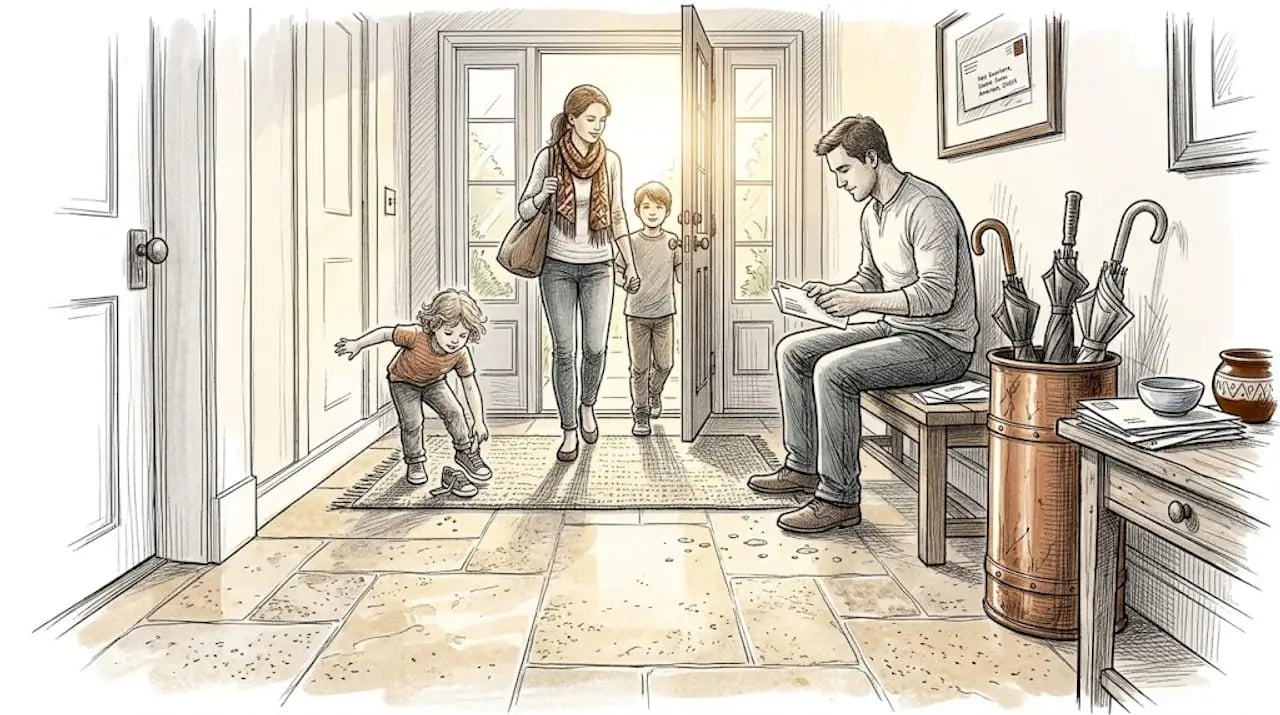
Pro Tip: If your household has kids, pets, or heavy foot traffic, travertine is often the smarter choice for floors. Its natural grip reduces slip risk, and a chipped tile is a straightforward fix rather than a costly repair job.
Travertine rewards homeowners who want a natural, lived-in aesthetic without sacrificing durability on the ground level.
Marble vs travertine: Head-to-head comparison
Now let’s put both stones side by side using the criteria we established earlier.
| Feature | Marble | Travertine |
|---|---|---|
| Average material cost | $10 to $30+ per sq ft | $3 to $15 per sq ft |
| Installation difficulty | High, professional recommended | Moderate, DIY-friendly |
| Durability | High when sealed | Moderate to high |
| Slip resistance | Low (polished) to moderate | Moderate to high |
| Maintenance | Seal every 6 to 12 months | Seal every 1 to 2 years |
| Best applications | Walls, showers, countertops | Floors, entryways, outdoors |
| Visual style | Elegant, formal, dramatic | Warm, rustic, natural |
The cost and installation differences between these two stones are significant. On average, marble installation runs 20 to 40 percent more than travertine when you factor in both materials and labor. That gap adds up fast on a full bathroom remodel.
Top three decision drivers:
- Budget: If cost is a constraint, travertine delivers natural stone beauty at a lower price point without sacrificing quality.
- Location in the home: Marble is better suited for vertical surfaces and low-traffic areas; travertine handles floors and high-traffic zones more reliably.
- Lifestyle and maintenance tolerance: Marble demands more consistent care; travertine is more forgiving and easier to repair.
If you’re planning a DIY travertine tiling project, travertine is the clear winner for accessibility. For those comparing natural stones more broadly, the travertine vs limestone comparison is also worth reviewing before making a final call.
Which should you choose? Expert recommendations by scenario
With the comparison in mind, here’s how to decide based on your project and lifestyle.
- Luxury master bathroom: Marble walls and shower surround for maximum visual impact, with travertine on the floor for safety and warmth.
- High-traffic kitchen floor: Travertine in a honed or brushed finish handles spills, foot traffic, and the occasional dropped pot better than polished marble.
- Kitchen backsplash: Marble is an excellent choice here. It’s a low-traffic surface, easy to wipe clean, and the visual payoff is enormous.
- DIY remodel on a budget: Travertine is more forgiving to work with and costs less per square foot, making it the practical pick for hands-on homeowners.
- Outdoor patio or pool surround: Travertine wins clearly. It handles heat, moisture, and freeze-thaw cycles better, and its texture reduces slip risk around water.
- Resale-focused renovation: Both stones add value, but marble tends to command higher buyer perception in premium markets.
As application and lifestyle needs vary from home to home, there’s no single right answer. The best stone is the one that fits how you actually live in your space, not just how you want it to look in listing photos.
Long-term, both stones hold their value when properly maintained. The real risk is choosing a material that doesn’t match your maintenance habits or usage patterns, because a neglected marble floor will look far worse than a well-kept travertine one.
Our take: What most homeowners get wrong about marble vs travertine
Here’s something we see constantly: homeowners dismiss travertine as a second-tier option because it costs less. That’s a mistake. Travertine used in travertine in luxury spaces by skilled designers looks anything but budget. The material’s warmth and texture create an atmosphere that cold, polished marble simply cannot.
On the flip side, people often overestimate how difficult marble is to live with. Yes, it needs sealing. Yes, you should wipe up red wine quickly. But millions of homeowners do exactly that every day without issue. The key is setting up a simple maintenance routine from day one.
What we’ve learned from working with designers and contractors across the country is this: the homeowners who end up happiest are the ones who chose based on how they use their space, not based on what’s trending on social media. A beautiful marble floor that gets etched by your morning orange juice routine will frustrate you every single day. A travertine floor that handles your family’s chaos without complaint will make you smile every time you walk through the door.
Prioritize your practical needs first. Let the aesthetics follow from there.
Ready to bring your vision to life?
You’ve done the research. Now it’s time to see these stones in person and find the combination that works for your home.
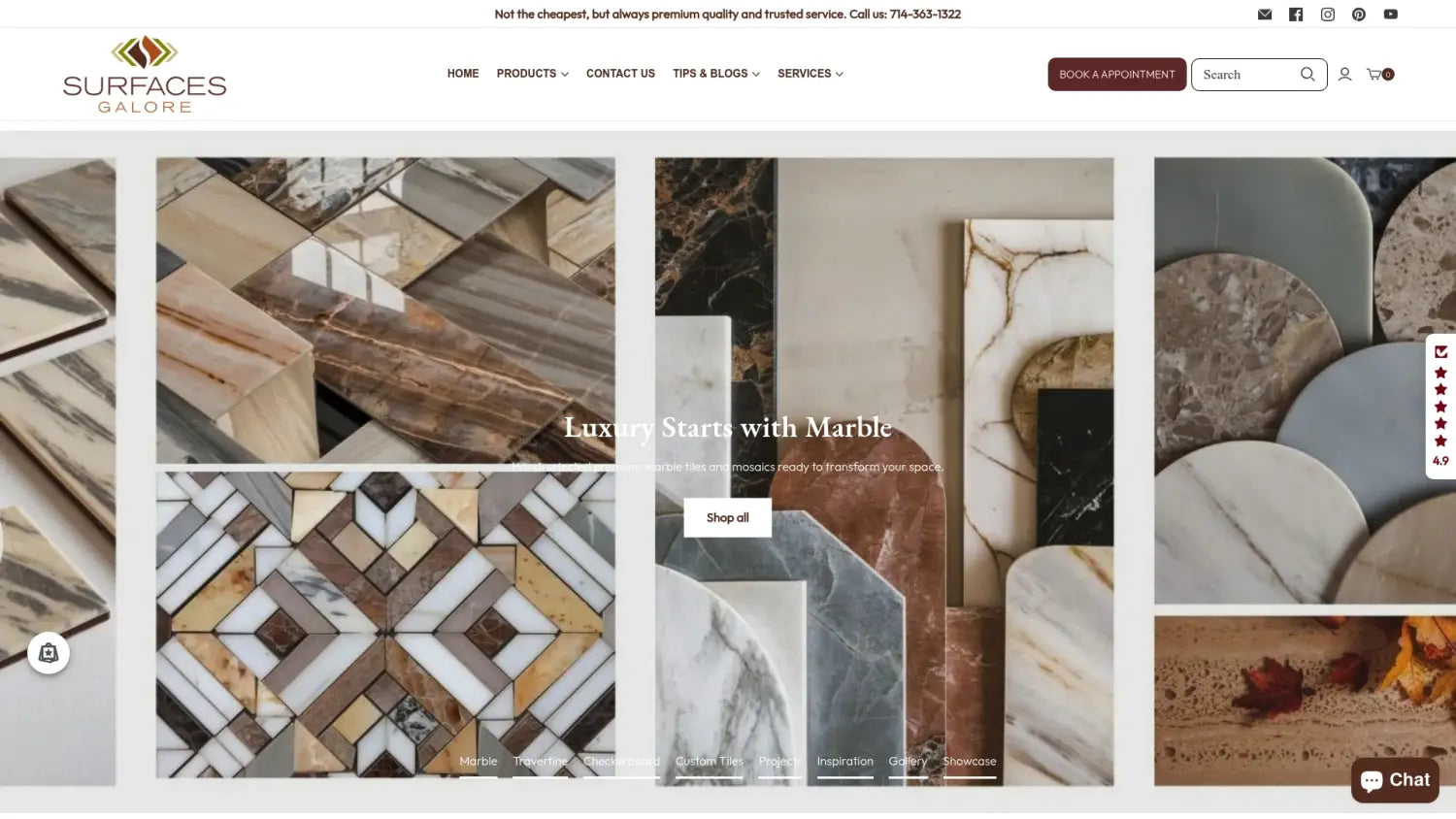
At Surfaces Galore, we carry an extensive selection of both marble and travertine tiles, mosaics, and decorative pieces, all sourced directly from premium quarries. Whether you’re leaning toward the drama of white Carrara marble or the earthy warmth of classic travertine, our team can help you visualize your project and choose the right material for your specific space. Explore natural stone options on our site, or reach out to us directly for a personalized consultation. We ship nationwide and love helping homeowners get this decision right.
Frequently asked questions
Is marble or travertine more suitable for kitchen countertops?
Marble is typically favored for kitchen countertops because of its elegant appearance and smooth surface, but it requires diligent sealing since marble needs more maintenance than travertine in high-use areas.
Which stone is easier to maintain: marble or travertine?
Travertine is generally easier to repair and live with day to day, though both stones need regular sealing. Travertine’s easier repairs make it a lower-stress option for busy households.
How does the cost of marble compare to travertine for a bathroom remodel?
Marble typically costs 20 to 40 percent more than travertine when you factor in materials and labor. Cost and longevity differences are significant enough to affect most remodeling budgets.
Can I install marble or travertine myself as a DIY project?
Travertine is the more DIY-friendly option because it’s easier to cut, set, and repair. The step-by-step DIY tiling process for travertine is well within reach for a skilled homeowner, while marble is best handled by a professional installer.
Leave a comment