

Types of tile edging: a detailed guide for professionals

Choosing the right tile edging is far from a simple decision. Many professionals assume that any edge finish will do, but the reality is that selecting the proper edging type directly impacts both the durability and visual appeal of your installation. From rounded bullnose edges to precision metal trims, each option serves distinct functional and aesthetic purposes. This guide breaks down the most common types of tile edging used in professional projects, helping you make informed decisions that elevate your work and satisfy demanding clients.
Table of Contents
- Understanding Bullnose Tiles: Aesthetics And Protection
- Metal Trims And Schluter-JOLLY Profiles For External Corners
- Using Matching Corners And Plug-In Connections For Clean Finishes
- Choosing The Right Tile Edging For Your Project: Material And Environment Considerations
- Explore Professional Tile Edging Solutions At Surfaces Galore
- Frequently Asked Questions
Key takeaways
| Point | Details |
|---|---|
| Rounded bullnose edges | Protect tiles from chips and simplify cleaning by eliminating sharp corners where dirt accumulates. |
| Schluter-JOLLY profiles | Offer versatile finished external corners with consistent grout joints and durable material options. |
| Material choice matters | Selecting appropriate trim materials affects installation ease and long-term durability, especially in wet areas. |
| Matching corners | Plug-in connections ensure clean professional corners on metal trims with secure alignment. |
Understanding bullnose tiles: aesthetics and protection
Bullnose tiles represent one of the most established edging solutions in professional tile work. These tiles feature rounded edges that protect against chips and cracks, making cleaning easier by eliminating the sharp corners where grime and moisture tend to collect. The curved profile creates a softer, more finished appearance that works particularly well in residential bathrooms, kitchens, and commercial spaces where a refined yet approachable aesthetic is desired.
Installing bullnose edges requires precision and planning. You need to cut and fit each piece carefully to ensure seamless transitions between flat tiles and the rounded edge profile. For a medium-sized bathroom, expect the installation process to take approximately three to five hours, depending on the complexity of the layout and the number of corners involved. The rounded edge must align perfectly with adjacent tiles to maintain visual continuity and structural integrity.
Bullnose tiles excel in projects where you want smooth transitions and softer visual lines. They work beautifully in shower surrounds, backsplashes, and countertop edges where the rounded profile adds a touch of elegance without overwhelming the design. The protective curve also reduces the risk of injury from sharp tile corners, making bullnose an excellent choice for family bathrooms and spaces frequented by children.
Consider these practical benefits when specifying bullnose edging:
- Reduced maintenance time due to easier cleaning around curved edges
- Lower risk of tile damage during regular use and cleaning
- Versatile aesthetic that complements both traditional and contemporary designs
- Wide availability in most tile materials including ceramic, porcelain, and marble bullnose options
Pro Tip: Before starting installation, plan your cuts and gather all necessary tools including a wet saw, measuring tape, and level. This preparation reduces installation time significantly and helps you avoid costly mistakes that can occur when you discover missing equipment mid-project.
Metal trims and Schluter-JOLLY profiles for external corners
Metal edge trims offer a different approach to tile finishing, particularly for external corners and edges that demand maximum durability. Schluter-JOLLY profiles finish and protect external corners in wall applications, providing a clean, flush look that enhances modern tile installations. These profiles create precise 90-degree external corners while incorporating integrated joint spacers that ensure consistent grout lines throughout your installation.
The material selection for metal trims directly influences both performance and appearance. Schluter-JOLLY profiles come in various materials, including brushed stainless steel, chrome-plated solid brass, and several anodized aluminum finishes. Each material brings specific advantages: stainless steel delivers superior corrosion resistance for wet environments, brass offers a warm metallic aesthetic, and anodized aluminum provides lightweight durability with color options that can complement or contrast with your tile selection.
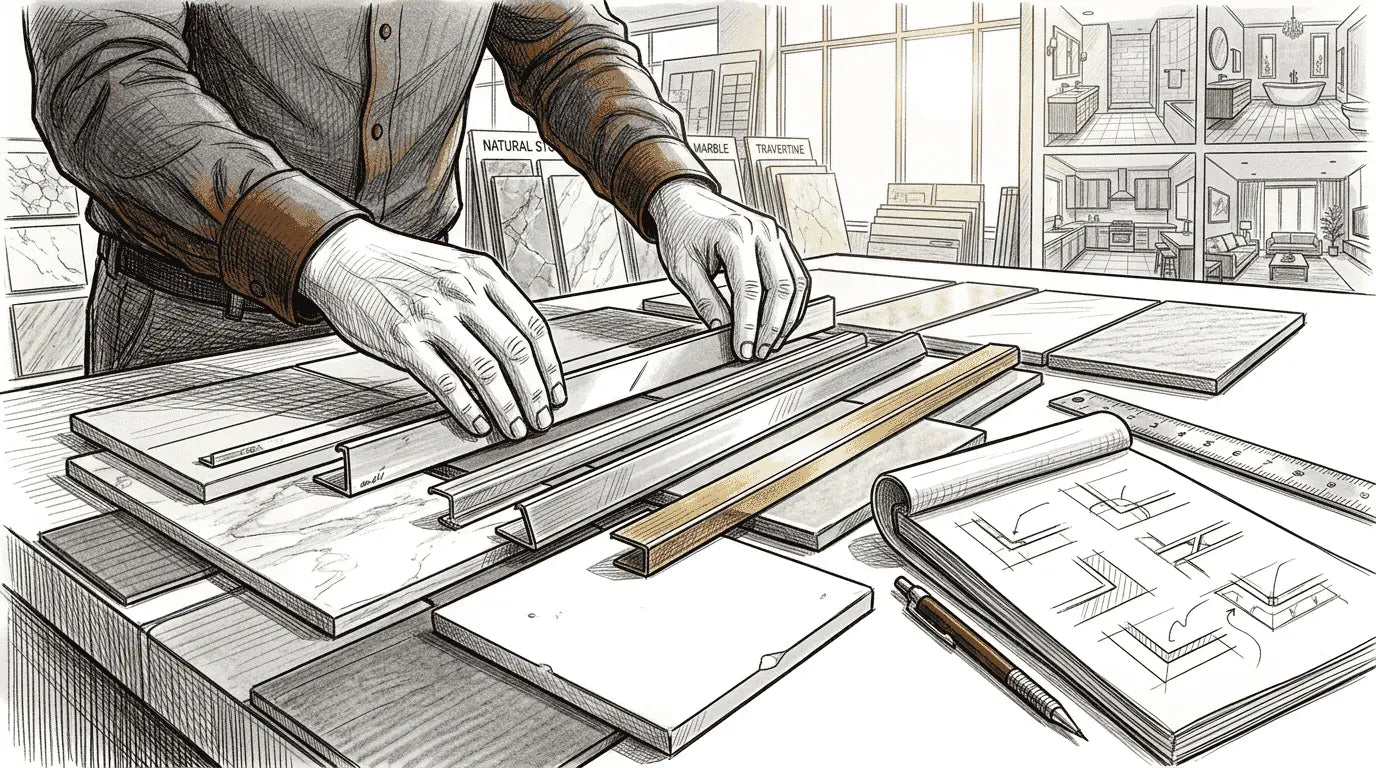
Metal trims prove particularly valuable in wet areas and high-traffic zones. The water-resistant properties of stainless steel and anodized aluminum make these profiles ideal for shower enclosures, around bathtubs, and in commercial kitchens where moisture exposure is constant. The rigid metal edge also withstands impacts better than tile edges alone, reducing the likelihood of chips and cracks in busy corridors or commercial spaces.
Here’s how different metal trim materials compare for professional applications:
| Material | Best Use | Key Advantage | Consideration | | — | — | | Stainless Steel | Wet areas, commercial kitchens | Maximum corrosion resistance | Higher material cost | | Chrome-Plated Brass | Decorative applications | Warm aesthetic appeal | Requires large bending radius | | Anodized Aluminum | Residential bathrooms, versatile projects | Lightweight with color options | Moderate durability |
The installation process for metal trims requires attention to detail but delivers professional results. You embed the perforated anchoring leg of the profile in the tile adhesive, ensuring the visible edge sits flush with the tile surface. The integrated joint spacer maintains consistent grout width, which is crucial for both aesthetic appeal and proper water management in wet installations.
Key advantages of metal trim profiles include:
- Consistent grout joints through integrated spacers
- Enhanced durability in high-impact zones
- Clean, modern aesthetic that complements contemporary tile designs
- Simplified edge protection without requiring specialized tile cuts
Pro Tip: When working with chrome-plated brass profiles, remember that this material requires a large bending radius during cutting and installation. Plan your cuts carefully and use appropriate tools to avoid damaging the chrome finish, which cannot be easily repaired once scratched or dented. For more guidance on selecting tile trim for durable results, consider the specific demands of your project environment.
Using matching corners and plug-in connections for clean finishes
Matching corners and plug-in connectors represent a significant advancement in achieving seamless tile edge transitions. These components work specifically with metal trim systems like Schluter-JOLLY to create neat, flush external corners that eliminate unsightly gaps or misalignments. Matching corners feature plug-in connections designed for clean corner applications, simplifying what would otherwise be a complex mitering process.
The size compatibility between profiles and matching corners is critical for successful installation. These systems are available in sizes ranging from 6 mm to 12.5 mm thickness, with connectors corresponding precisely to each size for secure locking. When you select a 10 mm Schluter-JOLLY profile, you must use the matching 10 mm corner piece to ensure proper fit and alignment. This standardization eliminates guesswork and reduces installation errors that can compromise both appearance and durability.
Installing matching corners with plug-in connectors follows a straightforward process that delivers professional results:
- Measure and cut your tile edge profiles to the required lengths for each wall section meeting at the corner.
- Insert the plug-in connector into the channel of the first profile section, ensuring it seats fully and securely.
- Align the second profile section with the connector and press firmly until you hear or feel the connection lock into place.
- Embed the assembled corner in tile adhesive, maintaining consistent depth and alignment with your tile surface.
- Verify that the corner sits flush and the integrated joint spacers align properly before the adhesive sets.
- Complete your tile installation around the corner assembly, using the spacers as guides for grout width.
This comparison shows how different corner sizes accommodate various tile thicknesses:
| Profile Size | Tile Thickness Range | Connector Count per Corner | Installation Complexity |
|---|---|---|---|
| 6 mm | 5-7 mm tiles | 2 connectors | Low |
| 8 mm | 7-9 mm tiles | 2 connectors | Low |
| 10 mm | 9-11 mm tiles | 2 connectors | Low |
| 12.5 mm | 11-13 mm tiles | 2 connectors | Moderate |
The primary benefit of using matching corners is the reduction in installation time coupled with improved long-term edge durability. Traditional corner finishing methods require precise miter cuts or complex overlapping techniques that demand advanced skills and specialized tools. Plug-in systems eliminate these challenges while delivering corners that maintain their alignment and appearance over years of use.
Pro Tip: Using matching corners reduces installation time by up to 40% compared to traditional mitering methods, and the secure connection improves long-term edge durability by preventing the corner separation that can occur with adhesive-only connections. This time savings becomes particularly valuable in large commercial projects where multiple corners multiply the efficiency gains. For additional techniques on achieving seamless results, explore strategies for matching tile patterns flawlessly throughout your installation.
Choosing the right tile edging for your project: material and environment considerations
Selecting the optimal tile edging type requires careful analysis of multiple factors specific to each project. Your decision should account for the installation environment, tile material compatibility, expected wear patterns, and the aesthetic goals established with your client. These considerations work together to determine which edging solution will deliver the best combination of durability, appearance, and long-term value.
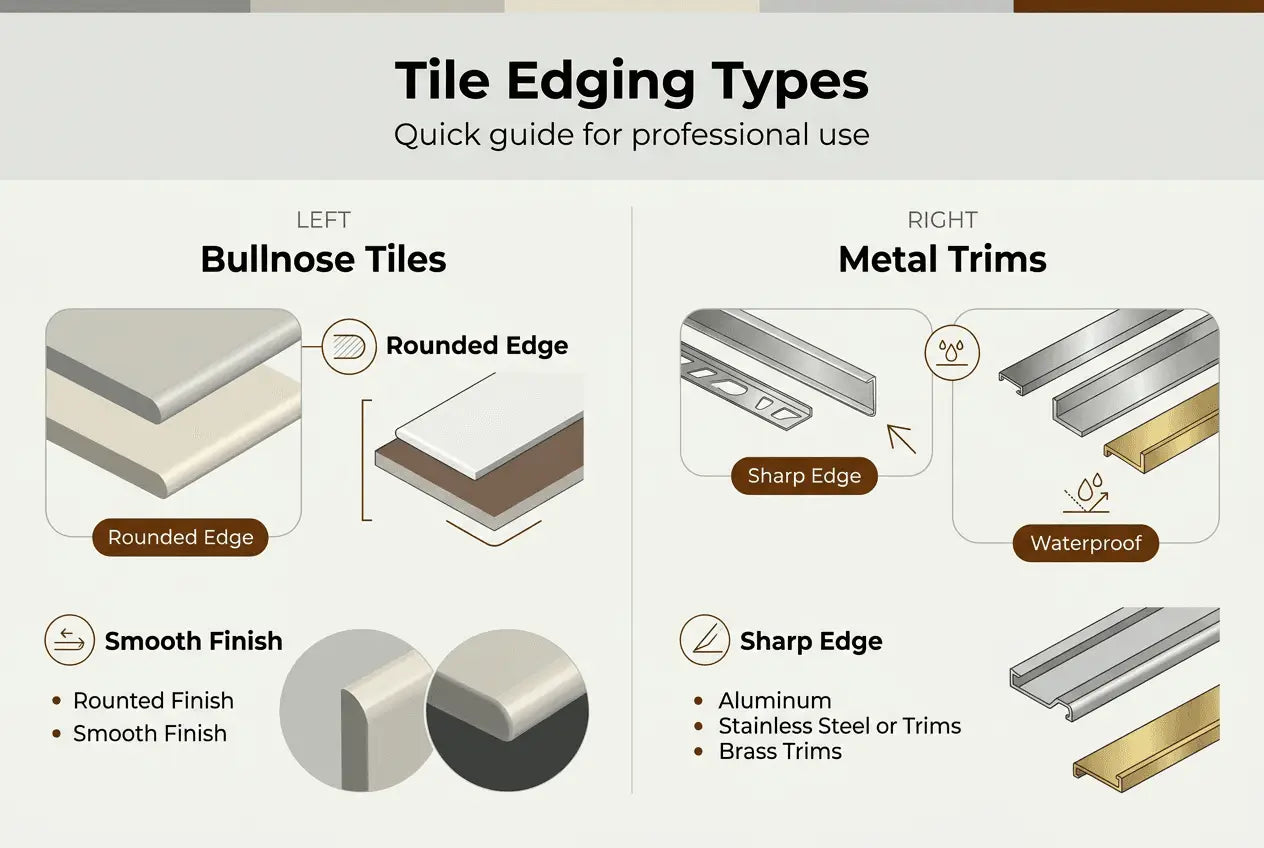
Environment plays a crucial role in edging selection. Metal trims excel in countertops, thresholds, and wet areas like showers or around bathtubs where water resistance is essential. The corrosion-resistant properties of stainless steel and anodized aluminum make these materials ideal for moisture-prone installations. Conversely, bullnose tiles suit areas favoring softer transitions and easier cleaning with moderate durability needs, such as residential bathroom walls or kitchen backsplashes in lower-traffic homes.
Material compatibility between your tile selection and edging type affects both installation ease and final appearance. Natural stone tiles like marble and travertine pair beautifully with bullnose edges cut from the same material, creating seamless transitions that highlight the stone’s natural beauty. Porcelain and ceramic tiles work well with both bullnose and metal trim options, giving you flexibility based on other project factors. Metal trims offer particular advantages when working with large-format tiles or thin porcelain panels where cutting bullnose profiles would be impractical or compromise tile integrity.
This comparison outlines edging suitability across different project environments:
| Environment Type | Best Edging Choice | Key Reason | Alternative Option |
|---|---|---|---|
| Shower enclosures | Stainless steel trim | Maximum water resistance | Anodized aluminum |
| Residential bathrooms | Bullnose or aluminum trim | Aesthetic flexibility | Chrome-plated brass |
| Commercial kitchens | Stainless steel trim | Durability and hygiene | Heavy-duty bullnose |
| Living area backsplashes | Bullnose tiles | Softer aesthetic | Decorative metal trim |
Practical considerations that influence your edging choice include:
- Installation complexity and required skill level for your crew
- Tool requirements and whether specialized equipment is needed
- Material costs relative to project budget constraints
- Maintenance expectations and cleaning requirements
- Client preferences for modern versus traditional aesthetics
The expected wear patterns in your installation area should guide material selection. High-traffic commercial spaces benefit from the impact resistance of metal trims, which maintain their appearance despite frequent contact. Residential installations with moderate use can successfully employ bullnose edges that offer adequate protection while contributing to a warmer, more residential feel. Consider not just initial installation but how the edging will perform over five to ten years of regular use.
Pro Tip: Early planning of edging types during the tile selection phase reduces installation issues and ensures cohesive design outcomes. When you coordinate edging decisions with tile choices from the start, you can optimize material orders, reduce waste, and avoid last-minute substitutions that compromise your design vision. This integrated approach also allows you to present clients with complete visualizations that include finished edges, leading to better project approval and fewer change orders. For comprehensive guidance on planning your installation sequence, review this bathroom wall tile workflow guide that addresses edging integration throughout the process.
Explore professional tile edging solutions at Surfaces Galore
Now that you understand the critical differences between tile edging types and how to select the right option for your projects, it’s time to source quality materials that meet your professional standards. Surfaces Galore offers a curated selection of tile trims and edging solutions designed specifically for professional results in both residential and commercial applications. Our direct import model ensures you receive premium natural stone products at competitive prices without sacrificing quality or authenticity.
Find expert guidance and detailed product specifications to support even your most complex tile projects. Whether you’re working with marble, travertine, or other natural stone materials, our team understands the unique requirements of professional installations. Visit the Surfaces Galore homepage to browse our complete product catalog, access installation tutorials, and connect with our specialists for personalized support on your upcoming projects.
Frequently asked questions
What is the difference between bullnose and metal trim tile edging?
Bullnose tiles feature rounded edges that provide moderate protection and create smoother, softer aesthetics ideal for residential bathrooms and traditional designs. Metal trims offer sharper, more durable edge protection with superior water resistance, making them better suited for high-traffic areas, commercial installations, and wet environments like showers where longevity is paramount.
Can matching corners with plug-in connections be used on any tile thickness?
Matching corners are manufactured in specific sizes to fit tile edges ranging from 6 mm to 12.5 mm thick, with each size designed for a corresponding tile thickness range. Proper size matching between your tile thickness and the corner profile is crucial for secure installation, clean appearance, and proper grout alignment throughout the corner assembly.
Which tile edging type is best for wet environments like showers or around tubs?
Metal trims made from corrosion-resistant materials like stainless steel or anodized aluminum perform best in moisture-prone areas due to their superior water resistance and durability. Bullnose edges can be used in wet areas but may show wear more quickly in high-traffic wet zones, making them better suited for residential applications with moderate use patterns.
How does tile edging choice affect installation time and complexity?
Bullnose edges require careful cutting and precise fitting to achieve seamless transitions, which can increase installation time by several hours in medium-sized projects. Metal trims with matching corners streamline the finishing process through plug-in connections but still demand precision in measurement and cutting, though they typically reduce overall installation time compared to traditional mitering methods.
Leave a comment