
10 creative uses for mosaic tiles to elevate your spaces

TL;DR:
- Mosaic tiles enable creative statements through murals, accents, and intricate patterns.
- They are highly functional in wet areas, providing slip resistance and detailed design options.
- Proper installation and material selection are key to maximizing durability and visual impact.
Tile shopping should feel exciting, but most renovation projects end up cycling through the same backsplash patterns and floor layouts. The result? Spaces that look fine but never feel truly special. Mosaic tiles change that equation completely. Whether you’re refreshing a powder room, designing a boutique lobby, or building a custom home, mosaics give you a level of creative control that standard large-format tiles simply cannot match. This guide walks through the most impactful and unexpected ways to use mosaic tiles, from statement walls to decorative inlays, so you can make confident design decisions that stand out.
Table of Contents
- Statement walls and artistic murals
- Accentuating kitchens and bathrooms
- Flooring: Function meets flair
- Decorative inlays, borders, and focal points
- Why mosaic tiles are the designer’s secret weapon
- Ready to transform your space with mosaics?
- Frequently asked questions
Key Takeaways
| Point | Details |
|---|---|
| Versatility in design | Mosaic tiles can create both bold focal points and subtle accents in any room. |
| Material matters | Choosing the right mosaic material ensures durability and safety, especially in high-traffic or wet spaces. |
| DIY or pro options | Homeowners can tackle small mosaic projects themselves, but professionals excel at complex layouts. |
| Function and flair | Mosaics add both beauty and practical benefits like slip resistance and easy repairs. |
Statement walls and artistic murals
When a room needs a focal point, paint and wallpaper often fall short. Mosaic tiles bring permanence, texture, and genuine artistry to any wall surface. As noted in the Custom Mosaic Design Guide, mosaic tiles are ideal for creating customized murals and highly detailed statement walls that no other material can replicate.
In residential settings, mosaic murals work beautifully in living rooms, dining areas, and entryways. In commercial spaces, they carry serious weight. A hotel lobby with a nature-inspired mosaic scene or a restaurant with a geometric tile feature wall immediately signals quality and intention to every guest who walks through the door.
Here are some of the most popular statement wall applications:
- Logo and brand murals for retail stores, spas, and corporate offices
- Nature-inspired scenes like forests, oceans, or botanical patterns for residential living rooms
- Geometric and abstract compositions for modern commercial entries or feature walls
- Architectural relief effects using tiles of varying depth and finish to create shadow and dimension
“A well-executed mosaic mural doesn’t just decorate a wall. It becomes the reason people remember the space.”
For custom mosaic art in high-traffic commercial areas, installation quality is non-negotiable. Following TCNA guidelines ensures your mural stays intact and beautiful through years of use, especially in public spaces where walls take more wear than you’d expect.
Pro Tip: Use porcelain mosaics for murals in lobbies, restaurants, or any public-facing space. Porcelain resists moisture, staining, and impact far better than glass or natural stone in high-contact environments.
The real power of a mosaic wall is its permanence. Unlike wallpaper that peels or paint that fades, a properly installed mosaic mural is a generational investment in your space’s identity.
Accentuating kitchens and bathrooms
Beyond large-scale wall features, mosaics shine in the busy and moisture-prone spaces where detail matters most. Kitchens and bathrooms are where mosaic tiles prove their everyday value, combining beauty with genuine performance.

One of the biggest advantages mosaics have over large tiles in wet areas is slip resistance. More tile edges and grout lines mean more surface texture underfoot, which is critical in shower floors and pool-adjacent spaces. Bathroom tile design research confirms that mosaic tiles are ideal for moisture-prone spaces and provide both slip resistance and visual interest that flat large-format tiles cannot.
Here are four quick upgrade areas where mosaics make an immediate impact:
- Backsplash borders that frame your main tile and add a layer of visual depth
- Shower floors where small tiles conform to the slope and drain shape naturally
- Vanity accent stripes that break up a plain tile field with color or texture
- Niche interiors inside shower recesses for a custom, built-in look
| Material | Best use | Slip resistance | Maintenance |
|---|---|---|---|
| Glass mosaic | Backsplashes, accent walls | Low | Easy |
| Porcelain mosaic | Shower floors, wet areas | High | Easy |
| Stone mosaic | Spa floors, feature walls | Medium | Moderate |
| Marble mosaic | Vanity accents, dry areas | Low to medium | High |
For tile choices for kitchens and baths, material selection matters as much as aesthetics. Glass looks stunning on a backsplash but is too slippery for a shower floor. Stone adds warmth but needs sealing in wet zones. Matching material to location is the difference between a beautiful result and a frustrating maintenance problem.
Mesh-backed mosaic sheets simplify installation significantly. Instead of placing individual tiles, you work with pre-spaced sheets that maintain consistent grout lines. Our backsplash install guide walks through the full process for confident DIY results.
Pro Tip: In kitchens and bathrooms, choose a grout color that either closely matches your tile for a seamless look or strongly contrasts for a graphic effect. Mid-tone grays often disappear visually and make cleaning harder to assess.
Flooring: Function meets flair
While mosaics provide accents and vertical flair, they also excel underfoot, blending function with creative impact in ways that large tiles cannot. Mosaic-tiled floors have a long history in grand architecture for good reason: they conform to complex shapes, create intricate patterns, and hold up under serious use.
The best locations for mosaic flooring include:
- Foyers and entryways where a patterned floor sets the tone for the entire home
- Powder rooms where the small scale of the room lets a bold floor pattern shine without overwhelming
- Pool decks and spa areas where slip resistance is a safety priority
- Commercial corridors and boutique retail where flooring is part of the brand experience
When choosing between porcelain and stone for floors, the differences matter. According to TCNA standards, porcelain mosaics outperform stone mosaics in durability, especially for high-traffic or uneven surfaces.
| Factor | Porcelain mosaic | Stone mosaic |
|---|---|---|
| Durability | Excellent | Good |
| Slip resistance | High (textured finish) | Medium |
| Upkeep | Low | Moderate (sealing required) |
| Design range | Wide | Natural variation only |
| Cost | Moderate | Moderate to high |
For a deeper look at your options, our stone mosaic types guide breaks down travertine, marble, and slate choices for kitchen and bath floors. And if you’re still deciding on the right format, the full mosaic tile guide for designers covers substrate prep, format selection, and pattern planning in detail.
One underrated advantage of mosaic flooring: it adapts to curved or irregular substrates far better than large tiles. In older homes with uneven subfloors, smaller tiles flex slightly with the surface and reduce the risk of cracking over time.
Decorative inlays, borders, and focal points
Beyond big surfaces and floors, the details set apart great mosaic design. Some of the most memorable tile work in high-end homes and commercial spaces comes not from large tile fields but from small, precise moments of mosaic artistry placed exactly where the eye naturally lands.
Custom inlays and borders give old or basic spaces an instant luxury upgrade without requiring a full renovation. The key is placement and contrast.
Four high-impact decorative applications worth considering:
- Fireplace surrounds where a mosaic frame transforms a standard firebox into a room centerpiece
- Stair risers where each step gets a unique tile insert, creating a gallery effect as you climb
- Table and vanity inlays where a mosaic medallion replaces a plain stone top with something personal
- Floor medallions at the center of an entry hall or dining room, anchoring the space visually
“The right border tile doesn’t just finish an edge. It tells the viewer exactly where to look and why the design was intentional.”
Metallic and iridescent mosaic tiles work especially well for focal points because they catch light differently throughout the day, making the space feel dynamic without any additional effort. Pairing them with matte field tiles creates the contrast that makes both materials look better.
Grout choice is just as important as tile selection in decorative work. Our grout color strategies guide explains how to use grout as a design tool rather than just a filler. And for anyone planning a custom mosaic creation from scratch, understanding edge treatments early prevents costly corrections later.
Why mosaic tiles are the designer’s secret weapon
After years of working with homeowners, designers, and contractors across the country, one pattern is clear: the projects that look the most expensive are rarely the ones with the biggest budgets. They’re the ones where mosaics were used with intention.
The conventional wisdom is that mosaics are a luxury add-on. We’d push back on that. Mosaics are actually one of the most budget-flexible materials in tile design. You can use a standard field tile for 90% of a surface and drop in a custom mosaic border or medallion to create a result that looks fully custom. That’s the real secret.
What goes wrong most often is installation. Cutting costs on a skilled installer for mosaic work leads to uneven grout lines, lippage (where tile edges don’t align flush), and long-term performance problems that are expensive to fix. The tile itself is rarely the issue. Our complete designer’s mosaic guide covers exactly how to brief an installer and what to inspect before signing off on a job.
Mosaics also make future repairs easier. When a large-format tile cracks, matching it years later is nearly impossible. With mosaics, individual pieces can often be replaced without disturbing the surrounding installation. That’s a practical advantage that rarely gets mentioned but matters enormously over the life of a space.
Pro Tip: Never skip the mock-up step on a mosaic project. Lay out a dry sample of your tile and grout combination in the actual space before committing. Lighting changes everything, and what looks perfect in a showroom can read completely differently on your wall or floor.
Ready to transform your space with mosaics?
If this article sparked ideas for your next project, you’re in the right place. At SurfacesGalore, we carry an extensive range of mosaic tiles in natural stone, porcelain, glass, and mixed materials, all available to ship nationwide directly to your door.
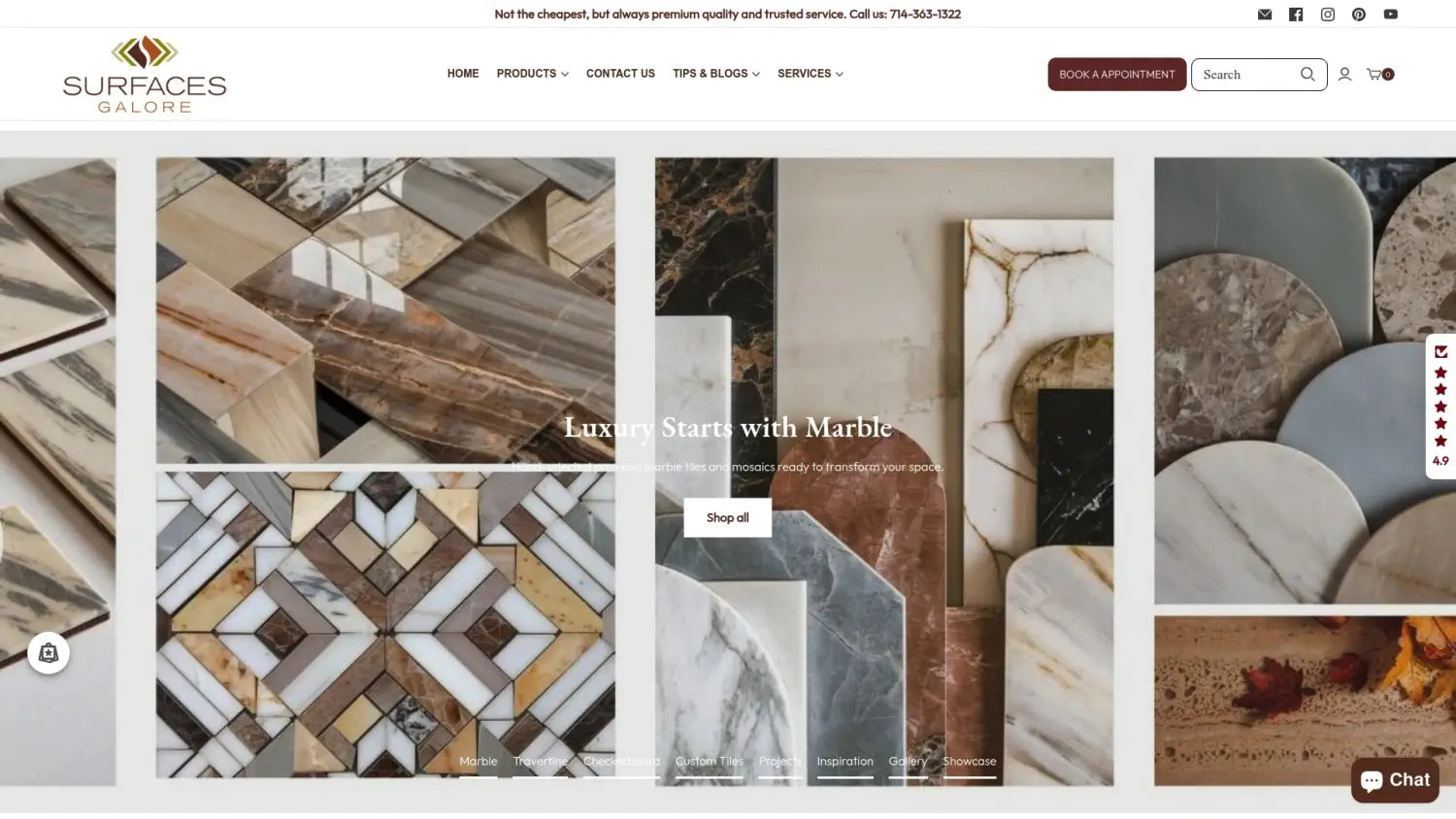
Our team works with homeowners, interior designers, and contractors to match the right tile to every application, from shower floors to statement murals. Browse our full mosaic catalog online, explore installation guides written for real projects, and reach out for personalized design consultation. Whether you’re planning a single accent wall or a full renovation, we’re here to help you get it right the first time, with materials that last.
Frequently asked questions
How do I choose the best material for mosaic tiles in a high-traffic area?
Select porcelain mosaics for high-traffic and uneven surfaces. Porcelain outperforms stone in durability and follows TCNA standards for long-lasting floor installations.
Are mosaic tiles suitable for wet areas like showers and pool decks?
Yes. Mosaics in moisture-prone spaces provide slip resistance and visual interest. Choose the right material and grout to maximize performance and longevity.
Can I install mosaic tiles myself or should I hire a professional?
Mesh-backed mosaics simplify DIY installs for smaller areas like backsplashes, but professional installation is strongly recommended for large surfaces, floors, and custom murals.
How do mosaic tiles compare to large-format tiles for maintenance?
Mosaic tiles have more grout lines, which requires slightly more cleaning effort, but they offer superior slip resistance and far greater design flexibility than large-format alternatives.

Leave a comment