
Enhance your space: the role of pattern in mosaic design

Many homeowners assume that any mosaic pattern will work in any room. Professionals know better. The right pattern can anchor a space, make a narrow hallway feel grand, or turn a plain backsplash into a focal point. Choose the wrong one and even the most expensive tile will feel chaotic or cramped. Small-scale high-contrast mosaics can overwhelm tight spaces and busy areas, which is why thoughtful pattern selection is one of the most important decisions you’ll make in any tile project.
Table of Contents
- Understanding the basics: What is pattern in mosaic design?
- The impact of pattern on space and mood
- Choosing the right mosaic pattern for your space
- Popular mosaic pattern types and when to use them
- Mistakes to avoid with mosaic patterns
- Applying mosaic patterns: Inspiration for real-world projects
- Bring your mosaic vision to life with Surfaces Galore
- Frequently asked questions
Key Takeaways
| Point | Details |
|---|---|
| Patterns shape space | The right mosaic pattern can visually expand, organize, or energize your room. |
| Choose patterns carefully | Consider the room’s size, traffic, and mood before selecting a bold or subtle pattern. |
| Avoid common design pitfalls | Too many bold or high-contrast mosaics overwhelm the senses and are harder to maintain. |
| Timeless vs. trendy materials | Natural stone mosaics offer lasting beauty, while glossy ceramics give a contemporary flair. |
Understanding the basics: What is pattern in mosaic design?
Pattern in mosaic design refers to the deliberate arrangement of individual tiles to create rhythm, order, and visual interest across a surface. Unlike a single large-format tile, a mosaic is built from many small pieces, and the way those pieces are organized is what defines the pattern. That organization can be tight and geometric, loose and organic, or somewhere in between.
There are four broad pattern categories you’ll encounter most often:
- Geometric patterns: Grids, diamonds, hexagons, and chevrons with clean, repeating lines
- Organic patterns: Flowing, nature-inspired arrangements without strict symmetry
- Repetitive patterns: A single motif tiled consistently across the entire surface
- Random patterns: Varied placement that still maintains visual balance through color or texture
Each category creates a different spatial experience. A tight geometric grid feels structured and modern. A random organic arrangement feels relaxed and artisanal. Understanding these categories helps you match the pattern’s energy to the room’s purpose before you ever order a single tile.
“Bold patterns energize a space but risk clutter when overused; natural stone over glossy ceramic delivers timelessness that trendy finishes rarely match.”
When you’re just getting started, reviewing a guide on choosing tile patterns can help you build a clear framework before committing to a direction.
The impact of pattern on space and mood
Pattern does more than decorate a wall. It actively shapes how large, warm, or energetic a room feels to anyone standing in it. This is one of the most underestimated tools in residential interior design.
Here’s a quick reference for how common mosaic patterns influence different spaces:
| Pattern type | Best space | Effect |
|---|---|---|
| Herringbone | Entryways, hallways | Elongates and adds movement |
| Geometric grid | Bathrooms, kitchens | Creates order and structure |
| Basketweave | Bathroom floors | Classic, balanced, timeless |
| Arabesque | Feature walls, niches | Adds drama and elegance |
| Linear stacked | Backsplashes | Clean, modern, expansive |
| High-contrast small mosaic | Accent areas only | Bold but visually busy |
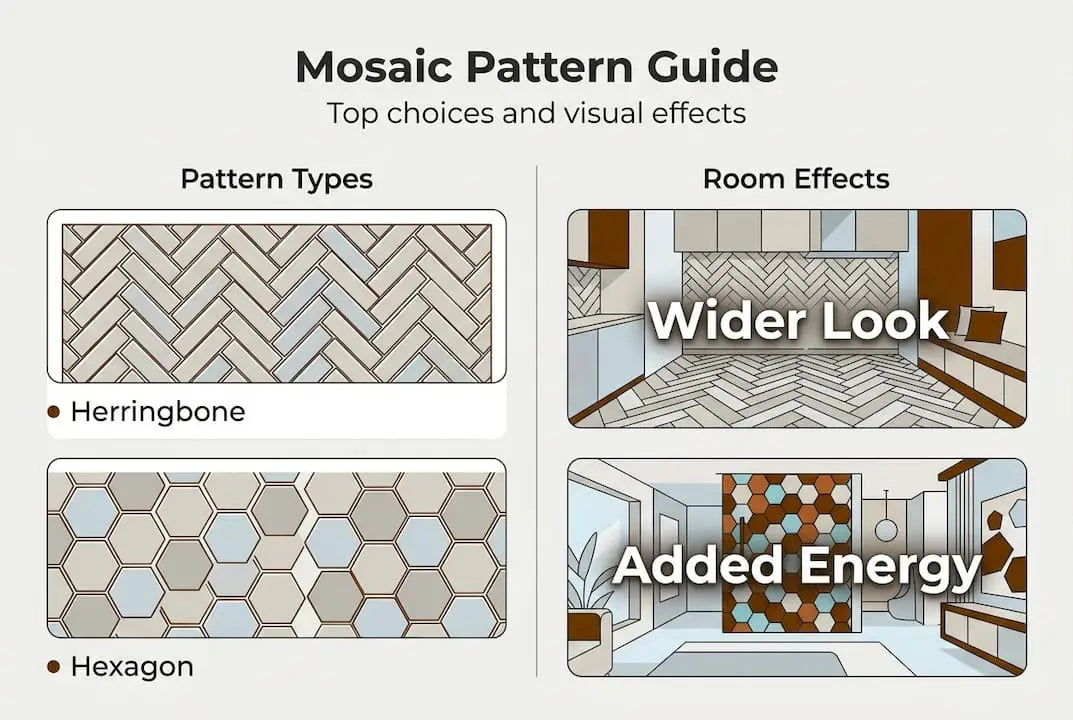
Geometric patterns suit bathrooms and kitchens because they reinforce a sense of order in functional spaces. Herringbone is a designer favorite for narrow entryways because the diagonal lines draw the eye forward, making the space feel longer. High-contrast mosaics, on the other hand, work best as accents rather than full-room treatments.
Pro Tip: If you want a room to feel larger, choose a pattern with lines that run parallel to the longest wall. This simple trick visually stretches the space without any structural changes.
For deeper inspiration on how pattern interacts with material, explore marble pattern ideas or browse top tile patterns that professional designers rely on most.
Choosing the right mosaic pattern for your space
Every good pattern decision starts with two questions: How big is the space, and what is it used for? A spa bathroom calls for something calming and cohesive. A kitchen backsplash can handle a little more personality. A high-traffic entryway needs a pattern that’s visually interesting but not exhausting to look at every day.
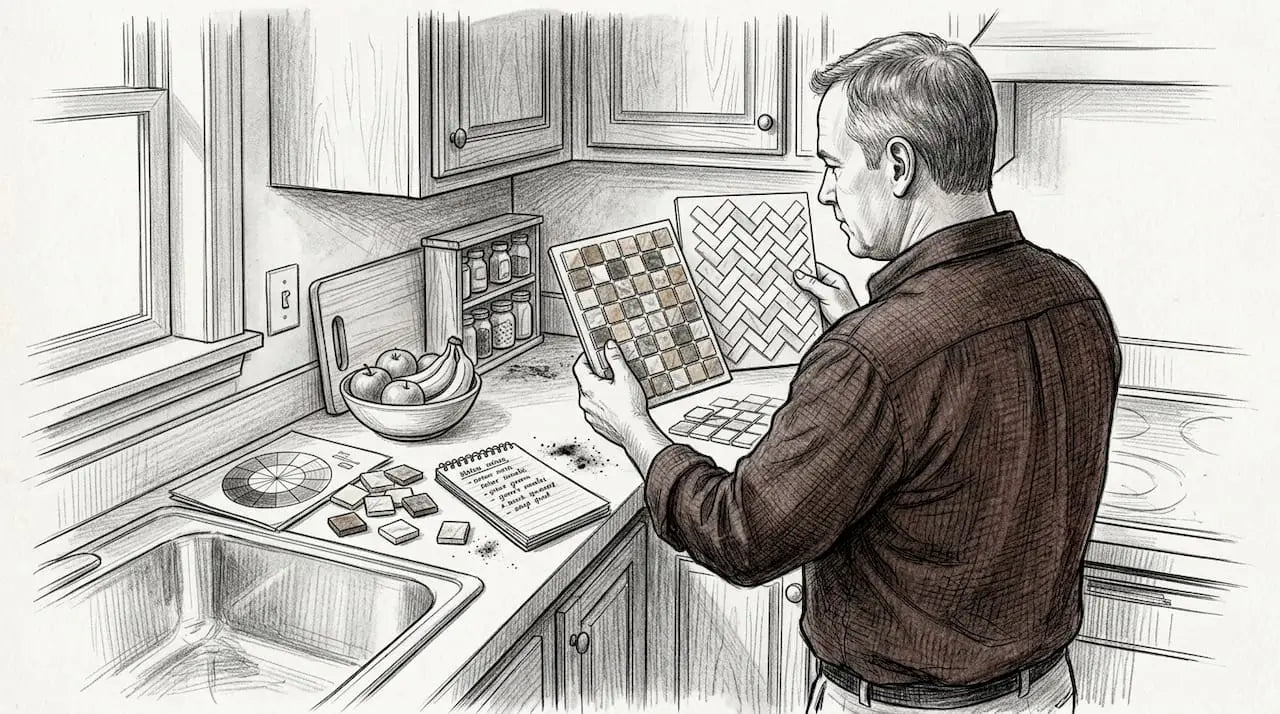
Here’s a side-by-side comparison to help you decide:
| Factor | High-contrast pattern | Soft, tonal pattern |
|---|---|---|
| Small rooms | Avoid, feels cramped | Ideal, opens the space |
| High-traffic areas | Use sparingly as accents | Better for daily visual comfort |
| Modern interiors | Strong fit | Works with warm neutrals |
| Traditional interiors | Use with caution | Natural fit |
| Maintenance | More grout lines visible | Easier to keep clean |
When selecting a mosaic pattern, follow these steps in order:
- Measure and assess the space. Note the square footage, ceiling height, and natural light levels.
- Define the room’s function. A bathroom, kitchen, and entryway each have different visual and practical demands.
- Choose a dominant pattern. Pick one pattern as the hero and let everything else support it.
- Select your material. Natural stone, glass, and ceramic each carry different visual weight and maintenance needs.
- Test with samples. Always view tile samples in the actual space under real lighting before ordering in bulk.
Small-scale high-contrast mosaics overwhelm small or busy spaces because the grout lines multiply the visual noise. Mixing multiple bold patterns or too many tile types without a unifying element creates the same problem at a larger scale.
Pro Tip: Limit yourself to one bold pattern per room. If your floor is making a statement, let the walls stay quiet. Balance is what makes a design feel intentional rather than accidental.
For room-specific guidance, check out how to pick floor tiles for kitchens and how to match tile patterns flawlessly across adjacent surfaces.
Popular mosaic pattern types and when to use them
Knowing the names and strengths of the most common mosaic patterns gives you a real advantage when planning a project. Here are the patterns you’ll see most often and where each one performs best:
- Herringbone: Interlocking rectangles set at 45-degree angles. Ideal for hallways, entryways, and shower floors where you want movement and direction.
- Chevron: Similar to herringbone but with angled cuts that form a continuous zigzag. Great for feature walls and backsplashes where you want energy without chaos.
- Basketweave: Alternating horizontal and vertical pairs of tiles. A bathroom classic that feels both traditional and refined.
- Arabesque: Lantern-shaped tiles with curved edges. Best used on feature walls, niches, or as a single accent row to add elegance.
- Linear stacked: Tiles aligned in straight horizontal or vertical rows. Clean and modern, perfect for kitchen backsplashes and shower surrounds.
Natural stone versions of these patterns carry a warmth and depth that ceramic simply cannot replicate. As Martha Stewart notes, natural stone delivers timelessness while glossy ceramic trends toward uniformity, which can feel dated faster. That said, small mosaics in any material require more grout, which means more cleaning effort over time.
For a closer look at how these patterns translate into finished projects, the custom mosaic design guide walks through real-world applications. You can also explore stone mosaic patterns to see how material and pattern work together.
Mistakes to avoid with mosaic patterns
Even experienced designers make pattern mistakes. Knowing the most common ones ahead of time saves you from costly reinstalls and design regrets.
Here are the top mistakes to avoid:
- Using high-contrast small mosaics in tight spaces. The combination of small tile size and strong color contrast multiplies grout lines and creates visual noise that makes rooms feel smaller and busier.
- Mixing unrelated patterns without a unifying element. Two bold patterns can coexist if they share a color, scale, or material. Without that thread, the result feels accidental.
- Ignoring maintenance realities. Small mosaics mean more grout joints, and more grout joints mean more scrubbing. In a kitchen or high-traffic bath, that adds up fast.
- Treating pattern as an afterthought. Pattern should be part of the initial design concept, not something chosen after the layout is set. It affects everything from grout color to tile quantity.
- Scaling the wrong direction. Large-scale patterns in tiny rooms feel overwhelming. Very small patterns in large, open spaces can disappear entirely and lose their impact.
“Avoid multiple bold patterns or mixing too many tile types without cohesion. Visual busyness from grout lines and contrast is the most common reason mosaic designs feel off.”
If you’re planning a DIY installation, the backsplash mosaic workflow covers the practical steps in detail. For custom work, the custom tile mosaic workflow explains how to take a pattern concept from idea to finished surface.
Applying mosaic patterns: Inspiration for real-world projects
Theory is useful, but seeing how patterns translate into actual rooms is where the ideas really click. Here are three project scenarios that show pattern choices in action.
- Kitchen backsplash with a geometric accent band. Use a simple linear stacked pattern for the main field, then introduce a single row of herringbone or chevron as an accent band just above the countertop. This adds visual interest without overwhelming the space. Keep the colors tonal so the pattern does the work, not the contrast.
- Herringbone mosaic entryway. A marble herringbone floor in a foyer immediately signals craftsmanship and intention. The diagonal lines draw guests forward and make even a modest-sized entry feel dynamic. Pair it with plain walls to let the floor breathe.
- Spa-like bathroom with natural stone motifs. Choose a soft basketweave or arabesque pattern in travertine or marble for the shower floor and a feature wall niche. The organic variation in natural stone adds texture without relying on bold color contrast, which keeps the mood calm and luxurious.
As Martha Stewart’s design guidance reinforces, bold patterns work best as accents rather than full-room treatments. Reserve your statement pattern for one surface and let the rest of the room support it.
Pro Tip: In a bathroom, use your boldest pattern on the floor rather than the walls. Floors are viewed from above and at a distance, which lets the pattern read clearly without feeling like it’s closing in on you.
For more ideas on how natural stone mosaics work across kitchens and baths, explore the full guide on types of stone mosaics.
Bring your mosaic vision to life with Surfaces Galore
You now have a solid foundation for making pattern decisions that elevate your space rather than complicate it. The next step is finding the right tiles to bring those patterns to life.
At Surfaces Galore, we specialize in premium natural stone mosaics, including marble, travertine, and decorative pieces that work beautifully across every pattern type covered in this article. As a direct importer based in Anaheim, California, we ship nationwide to homeowners, designers, and contractors who want authentic quality at honest prices. Whether you’re planning a herringbone entryway or a custom spa bath, our team can help you match the right material to your pattern vision. Start by exploring our resources on choosing tile patterns or reach out directly to discuss your project.
Frequently asked questions
How do I choose the best mosaic pattern for a small bathroom?
Stick to simpler, lighter, tonal patterns that reduce visual noise. Small-scale high-contrast mosaics overwhelm tight spaces because the grout lines and color contrast make the room feel busier and smaller.
Are bold patterned mosaics durable in kitchens and entryways?
Bold patterns are durable when installed correctly, but use them as accents rather than full-room treatments. Bold patterns risk clutter when applied to every surface in a high-traffic space.
What materials are best for timeless mosaic patterns?
Natural stone is the top choice for longevity and classic appeal. Designers consistently prefer natural stone over glossy ceramic because it ages gracefully and never feels tied to a single trend.
Why should I avoid mixing different mosaic patterns?
Without a shared color, scale, or material to tie them together, mixing multiple bold patterns creates visual chaos that undermines the cohesion of your entire design.

Leave a comment