
Marble Antiquing: Transform Spaces with Vintage Finishes

TL;DR:
- Antiqued marble offers a textured, vintage appearance that adds warmth and character to interiors.
- Techniques like etching, tumbling, brushing, and chemical patination create its aged look.
- It is ideal for high-traffic areas, providing durability, slip resistance, and a timeless, lived-in feel.
Antiqued marble is one of those finishes that gets dismissed as old-fashioned right up until the moment you see it in a beautifully designed space. Then everything changes. Far from being a relic of the past, antiqued marble has quietly become one of the most requested finishes among interior designers and homeowners who want warmth, character, and something that feels genuinely lived-in. If you’ve been curious about what marble antiquing actually means, how it’s done, and whether it belongs in your next project, this guide walks you through every step with clarity and confidence.
Table of Contents
- What does marble antiquing mean?
- How is an antiqued marble finish created?
- Comparing antiqued marble to other finishes
- How to use antiqued marble in your home or project
- The overlooked power of imperfection in modern design
- Ready to embrace antiqued marble? Start your project with us
- Frequently asked questions
Key Takeaways
| Point | Details |
|---|---|
| Distinct look | Marble antiquing gives stone a vintage, textured charm unlike polished finishes. |
| Versatile techniques | Several methods such as etching and tumbling achieve unique antiqued effects. |
| On-trend style | Designers and homeowners are using antiqued marble for warmth and timeless elegance. |
| Practical applications | Antiqued marble works well in high-traffic areas like kitchens, bathrooms, and living spaces. |
| Care tips | Routine care and quick maintenance preserve the unique antique finish for years. |
What does marble antiquing mean?
Marble antiquing is a finishing process that gives new marble a weathered, vintage appearance. It’s not about using old or damaged stone. It’s about applying specific techniques to fresh marble so that it looks and feels like it has decades of beautiful history behind it. The result is a surface with a muted, soft sheen, subtle texture, and a classic patina that polished marble simply cannot replicate.
To understand antiquing, it helps to compare it to the two other finishes you’ve likely heard about. Polished marble has that mirror-bright surface that reflects light dramatically. Honed marble is matte and smooth, with a contemporary, understated look. Antiqued marble sits in its own category. It has texture you can feel underfoot or with your fingertips, and its visual depth comes from the way light scatters across its slightly uneven surface rather than bouncing off it.
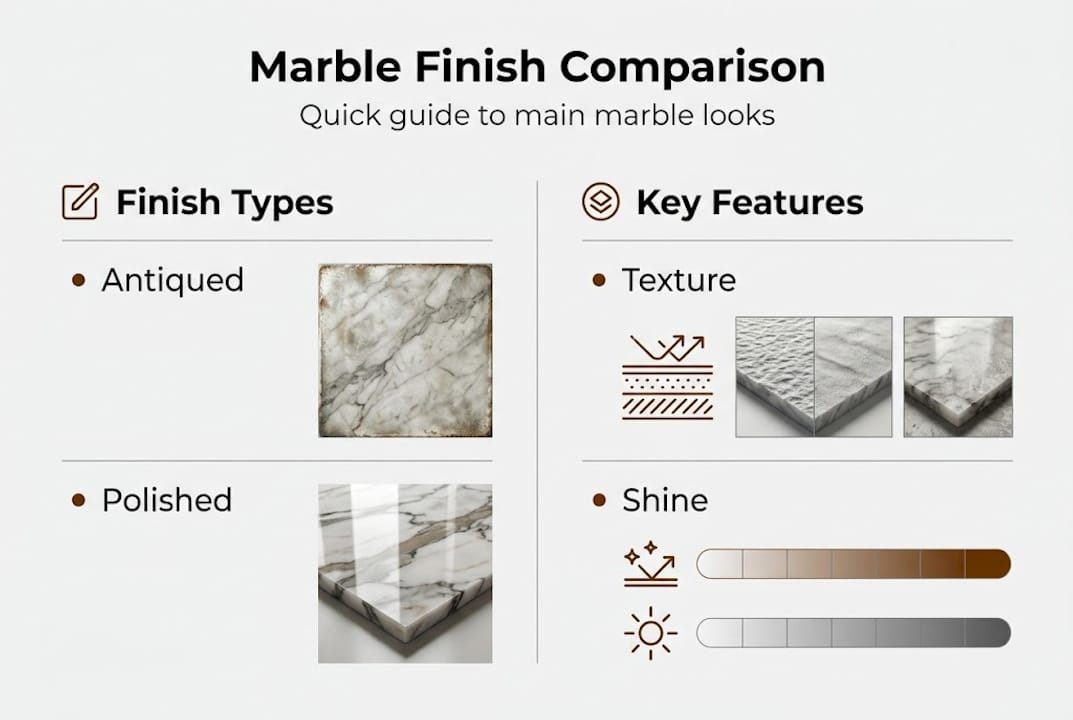
As noted in a 2026 guide, antiqued marble finishes create a tactile, vintage look preferred in modern luxury homes. That preference isn’t accidental. Designers choose antiqued marble when they want a space to feel warm, grounded, and timeless rather than cold or overly formal.
Here’s a quick breakdown of what sets antiqued marble apart:
- Texture: Slightly rough or brushed surface compared to the smoothness of honed or polished stone
- Sheen: Low, diffused glow rather than a high-gloss reflection
- Color depth: Natural veining appears richer and more dimensional
- Feel: Tactile and organic, not slippery underfoot
- Character: Each tile or slab looks slightly unique, adding visual interest
| Feature | Antiqued | Polished | Honed |
|---|---|---|---|
| Surface texture | Textured | Smooth | Smooth |
| Sheen level | Low/matte | High gloss | Matte |
| Slip resistance | Higher | Lower | Medium |
| Visual warmth | High | Low | Medium |
“Antiqued marble doesn’t look like a mistake. It looks like a choice. And that distinction is everything in design.”
Common applications include flooring in entryways and living rooms, bathroom walls and floors, kitchen countertops, and fireplace surrounds. Anywhere you want texture and warmth to do the heavy lifting, antiqued marble delivers.
How is an antiqued marble finish created?
Defining marble antiquing leads naturally to the next question: how is this distinct look actually achieved? The answer involves a handful of well-established techniques, each producing a slightly different result.
The four most common processes are etching, tumbling, brushing, and chemical patination. Understanding each one helps you make a smarter choice when sourcing your stone.
- Etching uses mild acids or abrasive tools to wear down the surface of the marble slightly, dulling its shine and creating a softened, aged appearance. Marble etching methods like this are among the most widely used techniques for achieving an antique effect on new stone.
- Tumbling involves placing marble pieces in a drum with abrasive material and rotating them until the edges chip and round naturally. This mimics centuries of wear and is especially popular for smaller tiles and mosaics.
- Brushing uses wire or abrasive brushes to roughen the surface texture without dramatically altering the stone’s color. The result is a slightly raised grain that catches light beautifully.
- Chemical patination applies specific solutions to the marble surface to accelerate the natural aging process. Patina care tips confirm that patina can develop naturally over time or be introduced intentionally through chemical treatments, giving you control over the final look.
The typical sequence for a professional antiquing job runs like this: surface preparation and cleaning, mechanical or chemical finishing, buffing to even out the texture, and finally applying a penetrating sealant to protect the result.
Choosing the right process depends on where the marble will be used. Flooring in high-traffic areas benefits most from brushing or tumbling because both increase slip resistance. Wall applications or decorative pieces can handle more delicate chemical patination for a refined, artistic effect.
Pro Tip: If you’re attempting any light DIY antiquing at home, always test your chosen method on a spare tile or an inconspicuous corner first. Marble reacts differently depending on its mineral composition, and what works beautifully on one variety may look uneven on another.
Comparing antiqued marble to other finishes
Understanding the methods is important, but it’s also useful to compare antiqued marble with other popular finishes side by side. This is where many homeowners and designers make their final decision.
As marble polishing guide research confirms, antiqued, polished, and honed marbles each serve distinct design needs and wear differently over time. There is no universally superior finish. The right choice depends entirely on your space, your lifestyle, and the mood you want to create.
| Finish | Best for | Slip resistance | Stain tolerance | Maintenance |
|---|---|---|---|---|
| Antiqued | Cozy, high-traffic, relaxed spaces | High | Medium | Moderate |
| Polished | Formal, elegant, low-traffic areas | Low | Lower | Higher |
| Honed | Contemporary, minimalist interiors | Medium | Medium | Moderate |
Here’s how each finish plays out in real-life scenarios:
Antiqued marble:
- Works beautifully in family bathrooms, kitchen floors, and entryways
- Hides everyday scuffs and minor wear better than polished stone
- Adds warmth to open-plan living areas
- Slight texture makes it safer in wet areas
Polished marble:
- Ideal for formal dining rooms, hotel lobbies, and statement walls
- Requires more frequent sealing and careful maintenance
- Shows fingerprints, water spots, and scratches more readily
Honed marble:
- Great for contemporary kitchens and minimalist bathrooms
- Easier to maintain than polished but less forgiving than antiqued
- Lacks the tactile depth of antiqued stone
For anyone exploring classic marble finishes for the first time, antiqued marble often surprises people with how practical it is. Its textured surface genuinely performs better in spaces where life actually happens.
How to use antiqued marble in your home or project
With a clear comparison in hand, let’s focus on inspiring ways to incorporate antiqued marble into real-life spaces. The good news is that this finish is remarkably versatile.
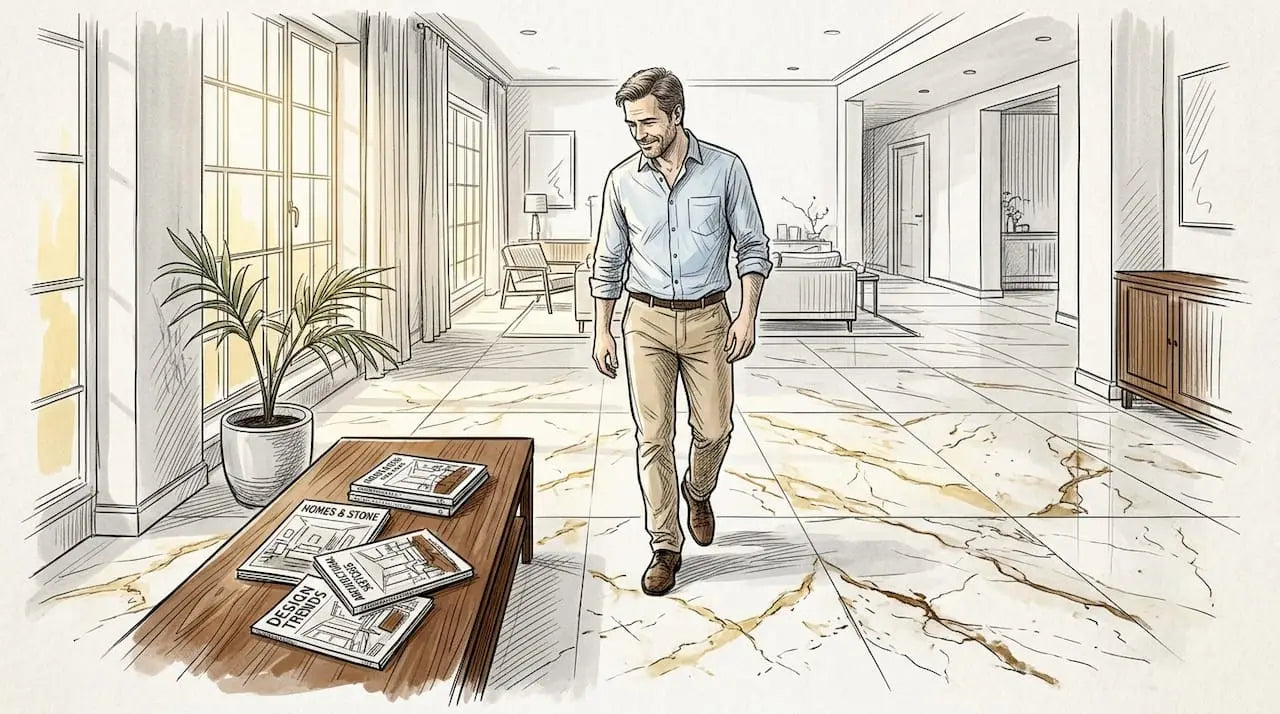
According to 2026 marble design trends, antiqued marble is a top trend for bathrooms, kitchen islands, and large-format tiled floors. Designers are also using it for fireplace surrounds, outdoor terraces, and accent walls where the texture adds visual drama without overwhelming the room.
Here are some of the most impactful ways to use it:
- Large-format flooring: Oversized antiqued marble tiles in an entryway or living room create an immediate sense of grandeur with an approachable, warm feel
- Kitchen backsplashes: The textured surface catches kitchen light beautifully and hides splashes better than polished alternatives
- Bathroom floors: Slip resistance makes antiqued marble a practical and stylish choice for wet areas
- Fireplace surrounds: The patina effect amplifies the cozy atmosphere around a hearth
- Tabletops and countertops: Antiqued marble counters feel less precious and more livable than polished versions
Color selection matters too. Warmer tones like cream, beige, and gold-veined varieties feel especially at home in relaxed, traditional, or Mediterranean-inspired spaces. Cooler grays and whites work well in transitional or modern interiors where you want texture without warmth.
Pro Tip: In open-plan living spaces, use antiqued marble flooring to anchor the entire room. Its natural variation creates a cohesive look that ties together different furniture zones without needing rugs or dividers.
For care, troubleshooting antiqued marble guidance shows that proper cleaning and prompt spill management keep antiqued surfaces looking beautiful for decades. Use a pH-neutral cleaner, blot spills immediately, and reseal every one to two years depending on traffic.
The overlooked power of imperfection in modern design
Here’s something the design industry doesn’t say loudly enough: the obsession with flawless, mirror-perfect surfaces has peaked. The most interesting spaces being designed right now embrace imperfection as a feature, not a flaw.
Antiqued marble is a perfect example. Its appeal isn’t despite its worn, textured surface. It’s because of it. When a material shows signs of age, it signals authenticity. It tells a story. Top designers increasingly seek out stone with history and character because it creates spaces that feel collected and considered rather than assembled from a catalog.
What’s genuinely surprising is that antiqued marble often looks better with age and wear. Minor scuffs blend into the existing patina. New wear marks add to the character rather than detracting from it. Polished marble, by contrast, shows every scratch as a failure.
For anyone exploring modern marble uses, the shift toward imperfect, textured finishes isn’t a retreat from luxury. It’s a redefinition of it. The question isn’t whether the polished, perfect look will return as the default. It’s whether it was ever as timeless as we thought.
Ready to embrace antiqued marble? Start your project with us
If this guide has you thinking seriously about antiqued marble for your next project, you’re in the right place.
At Surfaces Galore, we carry an extensive SurfacesGalore selection of premium antiqued marble tiles, slabs, and mosaics sourced directly from top quarries worldwide. Whether you’re designing a cozy bathroom, a grand entryway, or a statement kitchen island, our team can help you find the right stone, finish, and format for your vision. We ship nationwide and work directly with homeowners, designers, and contractors. Reach out today and let us help you bring the warmth and timeless character of antiqued marble into your space.
Frequently asked questions
Is marble antiquing the same as using old or salvaged marble?
No. Antiquing is a surface treatment applied to new marble to give it an aged, vintage appearance, rather than relying on reclaimed or salvaged material.
Can you antique marble yourself, or is it best left to professionals?
Professional application is recommended for consistent, long-lasting results, though small DIY projects on spare tiles are possible with the right tools and careful testing.
Does antiqued marble require special care?
Proper care preserves the antique finish beautifully. Use a pH-neutral cleaner, blot spills quickly, and reseal the surface every one to two years to prevent staining.
Where does antiqued marble look best?
Antiqued marble excels in top trend areas like kitchens, bathrooms, and high-traffic entryways, where its patina adds both practical slip resistance and timeless visual character.

Leave a comment