

What is marble sealer? Protect your marble surfaces

Marble looks tough, but it’s actually one of the most porous natural stones you can install in your home. A single glass of red wine left on an unsealed marble countertop can leave a permanent stain within minutes. The good news? Sealers reduce water absorption by over 90% based on ASTM testing, which means the right sealer is the single most effective thing you can do to protect your investment. This guide walks you through what marble sealer is, how it works, which type fits your project, and how to apply it correctly.
Table of Contents
- Why marble needs sealing: A homeowner’s perspective
- What is marble sealer and how does it work?
- Comparing penetrating and topical marble sealers
- Solvent-based vs water-based marble sealers: Longevity and safety
- Application best practices: Getting optimal marble protection
- Expert insights, edge cases, and common myths: What most homeowners miss
- Take your marble surfaces to the next level
- Frequently asked questions
Key Takeaways
| Point | Details |
|---|---|
| Sealing is essential | All marble surfaces benefit from sealing to resist stains and keep their beauty over time. |
| Penetrating is preferred | Experts recommend penetrating sealers for durable, invisible protection that maintains marble’s natural look. |
| Choose based on use | Solvent-based sealers are best for outdoors, while water-based are safer for DIY indoor jobs. |
| Regular maintenance matters | Reapply sealer every 6 to 24 months and test marble regularly for best results. |
Why marble needs sealing: A homeowner’s perspective
Marble forms naturally over millions of years under heat and pressure, and that process leaves it full of microscopic pores. Those pores are invisible to the naked eye, but they act like tiny sponges the moment a liquid touches the surface. Coffee, cooking oil, and even plain water can work their way in fast.
When marble is left unsealed, the consequences show up quickly:
- Red wine and juice leave deep, dark stains that are nearly impossible to remove
- Water rings from glasses and vases become permanent fixtures on countertops
- Kitchen grease soaks in and darkens the stone over time
- Bathroom moisture causes discoloration and can encourage mold growth in grout lines
A marble sealer is a protective product applied to marble surfaces to reduce porosity, repel water, oil, and stains while generally preserving the natural appearance. Think of it as an invisible barrier that buys you time to wipe up spills before they become permanent problems.
Sealing marble is not optional if you want it to look good for decades. It’s the most cost-effective maintenance step you can take, and it directly protects your home’s resale value.
Proper sealing marble tiles is especially important in kitchens, bathrooms, and entryways where spills and foot traffic are constant. Pair sealing with consistent [marble maintenance tips](https://surfacesgalore.com/blogs/news/marble maintenance protect luxury surfaces) and your stone will stay beautiful for years.
What is marble sealer and how does it work?
At its core, a marble sealer fills or coats those microscopic pores so liquids can’t penetrate as easily. The marble sealer acts as a shield, preventing water, oil, and staining agents from reaching deep into the stone. Most quality sealers do this without adding a visible film or changing the color of your marble.
Here’s what a good sealer actually does for your marble:
- Slows liquid absorption so you have time to wipe up spills
- Reduces staining from oils, dyes, and minerals in water
- Preserves the natural look without adding gloss or changing texture
- Protects grout lines in tiled installations from moisture and mold
Pro Tip: A sealer buys you time, not immunity. If you spill red wine on sealed marble and walk away for an hour, you may still end up with a stain. Wipe spills immediately, every time.
Understanding marble etching explained is also important here because sealing and etching are two different problems. Sealers protect against stains, not against the chemical reaction that acids cause on the stone’s surface. The marble sealer science behind penetrating formulas involves silane or siloxane molecules bonding with calcium in the stone, creating a hydrophobic barrier that repels water and oil. Consistent [marble maintenance techniques](https://surfacesgalore.com/blogs/news/marble maintenance protect luxury surfaces) alongside sealing give you the best long-term results.
Comparing penetrating and topical marble sealers
Not all sealers work the same way. The two main categories are penetrating sealers and topical sealers, and the difference matters a lot for how your marble looks and performs over time.
Penetrating sealers soak into marble pores, chemically bond with the stone’s calcium content, and form a hydrophobic and oleophobic barrier deep inside. They are vapor-permeable, meaning moisture can still escape from the stone, and they leave no surface film. Your marble looks exactly the same after application.
Topical sealers form a surface film, which can add sheen or enhance color, but they wear faster, can peel over time, and may trap moisture beneath the surface. They also change the feel of the stone underfoot or underhand.
| Feature | Penetrating sealer | Topical sealer |
|---|---|---|
| Application method | Soaks into pores | Sits on surface |
| Visible change | None | Adds sheen or gloss |
| Vapor permeability | Yes | No |
| Durability | 2 to 5 years | 1 to 2 years |
| Peeling risk | None | Moderate to high |
| Best use | Most indoor marble | Decorative or accent pieces |
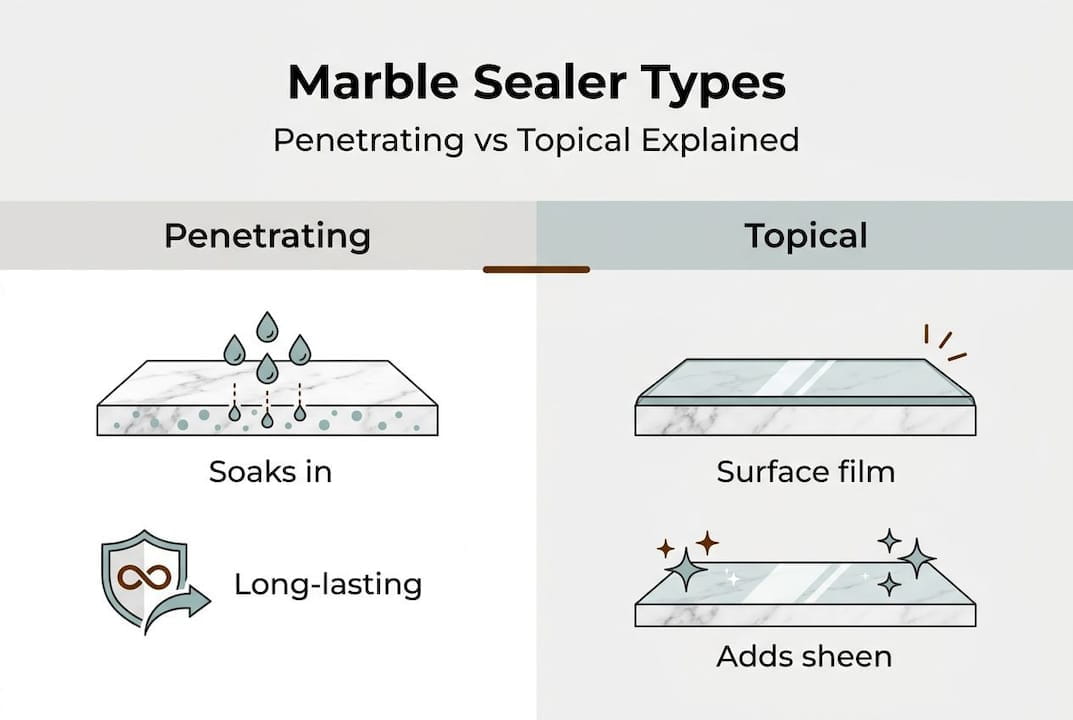
For most homeowners, penetrating sealers are the clear choice. They protect without altering aesthetics, and they last longer with less maintenance.
Pro Tip: Only choose a topical sealer if you specifically want a color boost or extra sheen on a decorative piece. For kitchen countertops, bathroom floors, or any high-use surface, stick with penetrating.
If you have outdoor marble sealer use in mind, penetrating formulas with siloxane chemistry are especially important for freeze-thaw resistance. And no matter which type you choose, consistent habits on [how to maintain marble sealer](https://surfacesgalore.com/blogs/news/marble maintenance protect luxury surfaces) will extend its life significantly.
Solvent-based vs water-based marble sealers: Longevity and safety
Once you’ve decided on a penetrating sealer, you still have one more choice: solvent-based or water-based. This decision affects how long the sealer lasts, how safe it is to apply indoors, and how easy the job is for a DIYer.
Solvent-based sealers penetrate deeper, offer longer protection of 2 to 5 years, but come with higher VOCs and stronger odors. Water-based formulas have lower odor and VOC levels, are much more DIY-friendly, but typically need reapplication every 1 to 3 years.
| Feature | Solvent-based | Water-based |
|---|---|---|
| Protection duration | 2 to 5 years | 1 to 3 years |
| VOC level | High | Low |
| Odor | Strong | Mild |
| Best application context | Exterior, high-traffic | Indoor kitchens, baths |
| DIY-friendly | Less so | Yes |
Key considerations when choosing:
- Indoor kitchens and bathrooms are best served by water-based sealers for safety and ease
- Exterior marble exposed to freeze-thaw cycles benefits from solvent-based formulas with deeper penetration
- Busy entryways may warrant solvent-based for longer intervals between reapplication
- Ventilation matters with solvent-based products, so plan accordingly
For [marble floor installation](https://surfacesgalore.com/blogs/news/marble floor installation tips essential guide) projects, matching the sealer type to the environment is just as important as the installation itself. The same logic applies to [marble shower sealing](https://surfacesgalore.com/blogs/news/marble shower installation workflow guide), where moisture exposure is constant and the right sealer choice makes a real difference.
Application best practices: Getting optimal marble protection
Choosing the right sealer is only half the job. How you apply it determines whether you get full protection or leave gaps that let stains through.
Follow these steps for a proper application:
- Clean the marble thoroughly using a pH-neutral cleaner. Remove all dirt, grease, and residue.
- Let the surface dry completely. Even slight moisture can block sealer penetration.
- Test porosity first. Drop a small amount of water on the surface. If it absorbs quickly or darkens the stone, the marble is ready to seal.
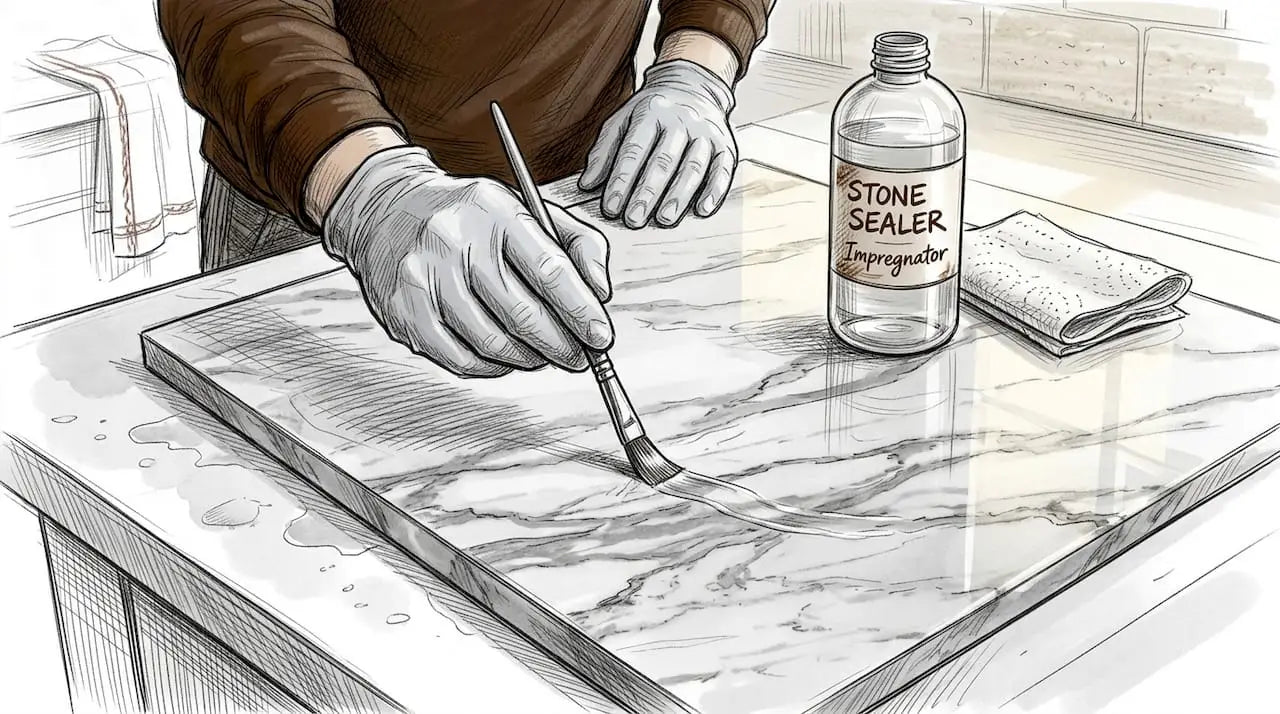
- Apply the sealer evenly using a clean cloth, foam applicator, or brush. Work in small sections.
- Let it dwell for the time specified on the product label, usually 5 to 15 minutes.
- Wipe off excess sealer before it dries on the surface. Dried excess can leave a hazy residue.
- Apply a second coat if the first coat absorbed quickly, which indicates high porosity.
- Allow full cure time before exposing the surface to water or foot traffic.
Apply on a clean, dry surface with 1 to 2 coats, wipe excess, and reapply every 6 to 24 months based on traffic and porosity. Large commercial or whole-home installations are best handled by a professional, but countertops and small bathroom floors are very manageable as DIY projects.
Pro Tip: Combine your sealing routine with pH-neutral cleaners for daily care and always wipe spills immediately. Sealer plus good habits equals marble that looks new for decades. For extra guidance, check out troubleshooting marble issues and cleaning marble flooring naturally. When your marble starts to look dull, [marble polishing advice](https://surfacesgalore.com/blogs/news/marble polishing durability shine) can restore the shine before you reseal. Smart stain protection with marble starts at installation and continues with every cleaning.
Expert insights, edge cases, and common myths: What most homeowners miss
Most homeowners seal their marble once and assume they’re done forever. That’s one of the most common and costly mistakes in marble care.
Here’s what experienced installers and stone care experts consistently recommend:
- Use breathable penetrating sealers for the vast majority of indoor marble surfaces
- Avoid “permanent” sealer claims. Permanent sealers claiming 25 years are largely unverified compared to established brands with proven track records
- High-traffic areas like entryways and kitchen countertops may need resealing every 6 to 12 months
- Exterior marble in climates with freezing winters needs solvent-based siloxane formulas for freeze-thaw protection
Penetrating sealers are preferred by experts for marble because they provide breathable protection without altering aesthetics. Topical sealers are occasionally useful for decorative pieces where sheen is desired, but they’re not the right call for functional surfaces.
Sealers are not a force field. They slow stain penetration and buy you cleanup time, but combining sealers with pH-neutral cleaners and prompt wiping is what actually keeps marble looking pristine long-term.
Pro Tip: Test your marble monthly by dropping a small amount of water on the surface. If it soaks in or darkens the stone within a few minutes, it’s time to reseal. Don’t wait for a stain to tell you.
For projects like a marble countertop installation guide](https://surfacesgalore.com/blogs/news/marble countertop installation elegant results guide), sealing should be part of the plan from day one, not an afterthought. And revisiting [why seal marble tiles periodically keeps the habit front of mind.
Take your marble surfaces to the next level
You now have a solid foundation for protecting your marble with the right sealer, the right technique, and the right maintenance habits. But knowing what to do and having the right resources to do it are two different things.
At Surfaces Galore, we work with homeowners, designers, and contractors across the U.S. every day, and we know that beautiful marble starts with quality stone and smart care. Our marble sealing solutions and expert guides are built to help you get the most out of every surface. Whether you’re just getting started or looking to refresh an existing installation, our resources on why seal marble tiles and [marble maintenance tips](https://surfacesgalore.com/blogs/news/marble maintenance protect luxury surfaces) give you everything you need to keep your marble looking its best for years to come.
Frequently asked questions
How often should I reapply marble sealer?
Depending on traffic and marble porosity, reapplication every 6 to 24 months is recommended for optimal protection. High-traffic areas like kitchen countertops may need attention on the shorter end of that range.
How can I tell if my marble needs to be resealed?
Drop water on the surface. If it darkens or quickly absorbs into the stone, it’s time to reseal. Sealed marble will bead water on the surface instead.
Can sealing marble prevent etching from acidic spills?
No. Sealers slow stain penetration but can’t prevent etching from acids. Lemon juice, vinegar, and wine can still etch the surface chemically, so prompt cleanup is always essential.
Are marble sealers safe for kitchens and bathrooms?
Water-based sealers are preferred indoors due to lower odor and VOC levels, making them a safe and practical choice for kitchens and bathrooms. Always ensure adequate ventilation during application regardless of formula.
What is the difference between penetrating and topical marble sealers?
Penetrating sealers soak into marble pores and bond chemically, providing invisible, breathable protection. Topical sealers form a surface film that can alter the look and feel of the stone and are less durable over time.
Leave a comment