

What is onyx stone? Characteristics, uses, and care

TL;DR:
- Onyx is a calcite-based, translucent stone best suited for low-traffic, statement areas.
- It is fragile, softer, and less durable than marble and granite, requiring careful installation.
- Ideal uses include backlit walls, bathroom vanities, and decorative accents, not heavy-use surfaces.
Onyx stone stops people in their tracks. That dramatic, glowing translucency and bold veining make it one of the most visually striking natural stones available for home renovations. But most homeowners who fall in love with its look don’t realize that onyx behaves very differently from marble or granite, and using it in the wrong spot can lead to costly regrets. This guide covers everything you need to know: what onyx actually is, where it works best, how it stacks up against other popular stones, and how to keep it looking flawless for years to come.
Table of Contents
- What is onyx stone? Origins and characteristics
- Where onyx works best in the home
- Onyx stone vs. marble and granite: A comparison
- Installation and care tips for onyx stone
- A designer’s take: When and why to choose onyx
- Ready to use onyx stone in your next project?
- Frequently asked questions
Key Takeaways
| Point | Details |
|---|---|
| Striking visual appeal | Onyx stone offers unmatched beauty and visual drama, especially when backlit. |
| Best for low-traffic areas | Use onyx in locations like vanities and accent walls, not for main countertops or heavy-foot-traffic floors. |
| Special care required | Onyx needs proper installation and gentle maintenance to preserve its delicate surface. |
| Unique vs. other stones | Onyx is softer and more translucent than granite or marble, making it more suitable for decorative features. |
What is onyx stone? Origins and characteristics
Onyx is a natural stone, but it’s not in the same family as granite. It forms from calcite, the same mineral found in marble and travertine, but through a completely different process. Onyx develops when water rich in dissolved minerals slowly deposits thin layers of calcite over thousands of years, often inside caves or around hot springs. Those layers build up to create the stone’s signature banding and, most remarkably, its translucency.
That translucency is what sets onyx apart from almost every other stone used in renovations. Light can actually pass through it. When you backlight an onyx slab, the stone glows from within, revealing swirling patterns of cream, honey, green, black, and rust that look almost alive. No other natural stone delivers that effect quite like onyx does.
Here are the key physical characteristics that define onyx:
- Composition: Calcite-based, which makes it softer and more reactive to acids than granite
- Hardness: Rates 3 on the Mohs scale, significantly softer than marble (3 to 5) and granite (6 to 7)
- Translucency: Unique among common renovation stones; allows light to pass through thin slabs
- Color range: Cream, white, honey, green, black, rust, and multicolor banded varieties
- Veining: Bold, dramatic, and highly variable from slab to slab
- Fragility: More prone to cracking and chipping than marble or granite
Because of its softness, onyx’s physical characteristics require careful planning before installation. Slabs are typically cut to 2cm thickness for wall applications and 3cm for horizontal surfaces like countertops, where extra support is needed. When choosing stone for bathrooms, onyx can be a stunning choice, but only when you understand its limitations going in.
Pro Tip: Always ask your supplier whether the onyx slab has been resin or mesh backed. This reinforcement process fills natural fissures and dramatically reduces the risk of cracking during cutting and installation.
The visual payoff of onyx is genuinely unmatched. A backlit onyx feature wall in a bathroom or behind a bar creates an effect that no porcelain or engineered stone can replicate. But that beauty comes with real trade-offs that you need to weigh carefully.
Where onyx works best in the home
Onyx is a statement material. It’s not designed to take a beating every day, and the projects where it truly shines are ones that prioritize visual impact over heavy-duty function.
The best applications for onyx in home renovations include:
- Backlit feature walls: The ultimate use case. Onyx glows beautifully when LED panels are installed behind it, making it perfect for living room accent walls or spa-style shower surrounds.
- Bathroom vanity tops: Low daily traffic and controlled moisture make bathrooms one of the safest places for onyx counters.
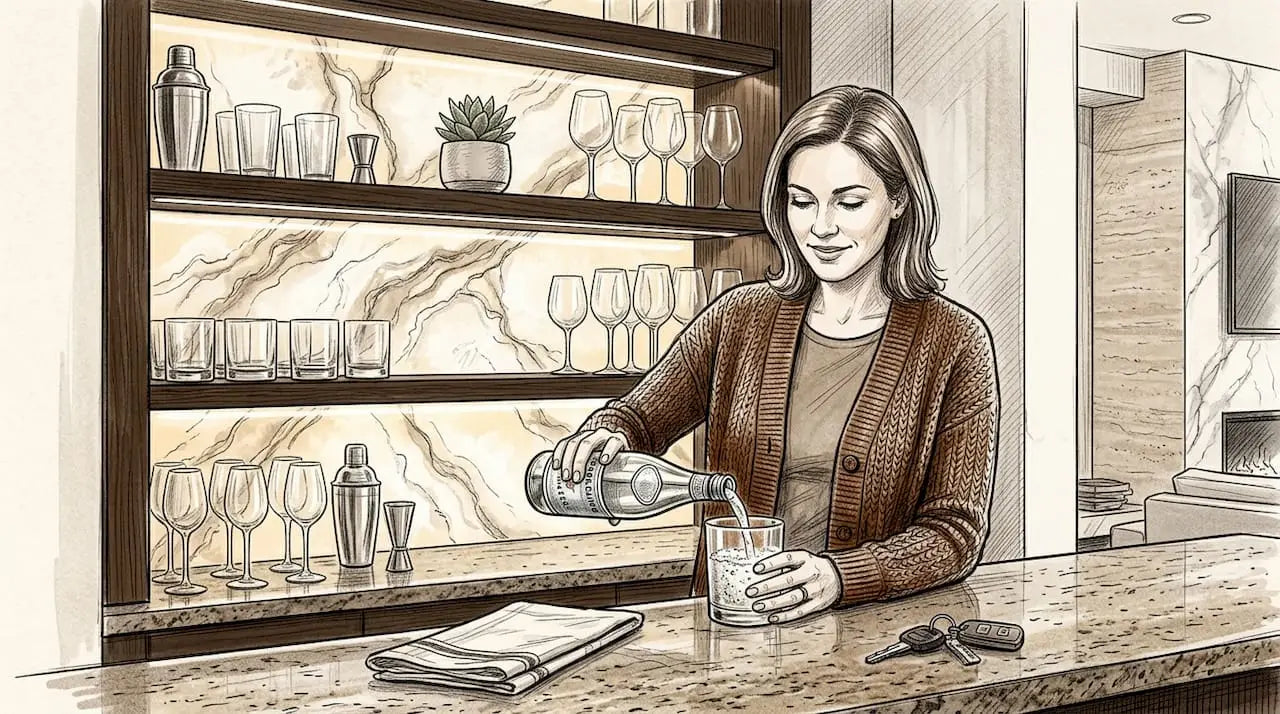
- Bar tops: A bar sees lighter use than a kitchen counter, and onyx creates a luxurious focal point in a home bar or entertainment area.
- Backsplashes: Vertical surfaces face far less mechanical stress, so onyx backsplashes are both practical and visually dramatic.
- Accent pieces: Fireplace surrounds, decorative wall panels, and tabletops in low-use areas are all excellent candidates.
As a general rule, onyx is ideal for low-traffic applications and should be avoided anywhere heavy use or moisture are constant factors. That means main kitchen countertops and entryway floors are poor choices. A kitchen counter gets daily exposure to acidic foods, heavy pots, and constant wiping with cleaning products. Onyx will etch, scratch, and stain far faster than granite or even marble in those conditions.
“Best for low-traffic, high-impact installations.”
Entryway floors are another common mistake. Grit tracked in on shoes acts like sandpaper on soft calcite-based stone, and the foot traffic volume will dull and damage onyx quickly. For high-traffic flooring, explore stone tile looks for luxury results that offer more durability without sacrificing style.
Pro Tip: Always confirm that your onyx tiles or slabs are resin or mesh backed before purchase. This backing adds structural strength and is especially important for larger format pieces used on walls or vanity tops. If you’re also considering [natural stone countertops](https://surfacesgalore.com/blogs/news/why natural stone countertops) in other areas of your home, pairing onyx accents with more durable stones like granite or quartzite is a smart design strategy.
Onyx stone vs. marble and granite: A comparison
Many homeowners group onyx, marble, and granite together as “luxury natural stones,” but they behave very differently in real-world use. Understanding those differences helps you put the right stone in the right place.
| Feature | Onyx | Marble | Granite |
|---|---|---|---|
| Hardness (Mohs) | 3 | 3 to 5 | 6 to 7 |
| Durability | Low | Moderate | High |
| Translucency | Yes | No | No |
| Best uses | Walls, vanities, bar tops | Counters, floors, baths | Counters, floors, outdoor |
| Acid resistance | Poor | Poor | Good |
| Visual drama | Very high | High | Moderate |
| Cost (installed) | High to very high | Moderate to high | Moderate |
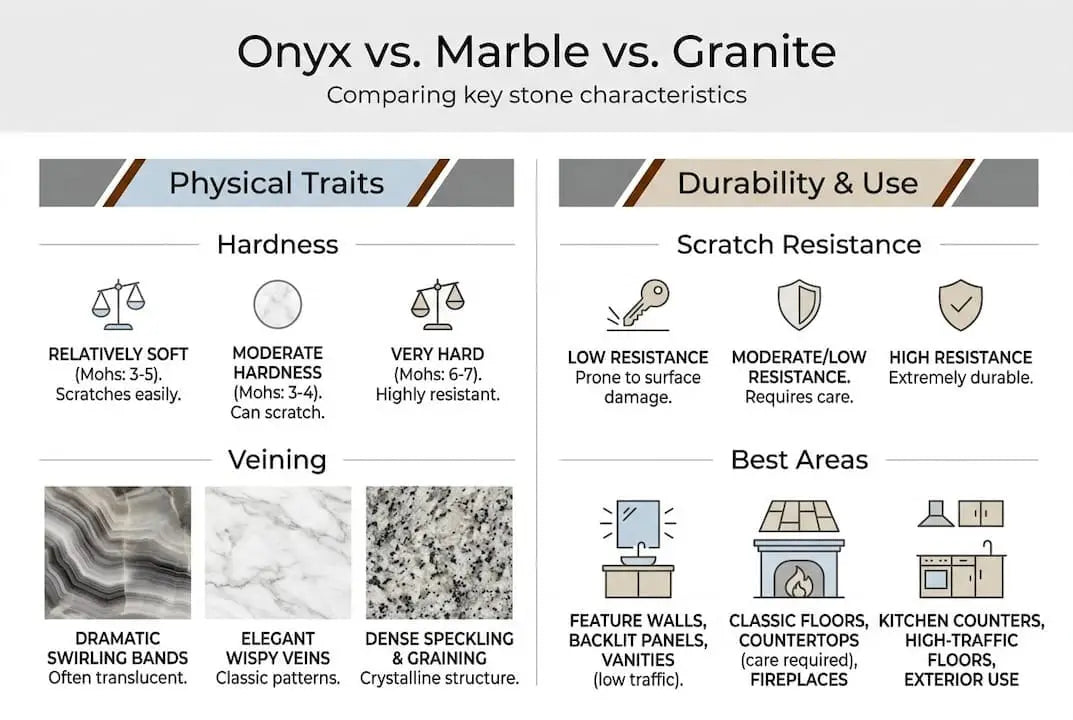
The onyx strengths and weaknesses compared to other stones come down to one core trade-off: onyx wins on visual impact and loses on durability. Marble is also a calcite-based stone, so it shares onyx’s sensitivity to acids, but marble is harder and better suited for countertops and floors. Granite is the workhorse of natural stone. It resists acids, scratches, and heat far better than either onyx or marble.
Here’s where the common misconceptions come in:
- Many people assume onyx is just a fancier marble. It’s not. The formation process, translucency, and fragility are all distinct.
- Some buyers expect onyx to perform like granite because it looks bold and substantial. It won’t.
- Onyx veining is often more dramatic than marble, but that doesn’t make it stronger.
If you’re weighing the advantages of marble countertops against onyx for a bathroom vanity, marble is the safer bet for everyday use. But if you want a backlit wall that becomes the centerpiece of a room, onyx has no equal. For a deeper look at how premium stones compare across different project types, premium tile comparisons can help you narrow down your options.
Installation and care tips for onyx stone
Onyx rewards careful planning and punishes shortcuts. Getting the installation right from the start is the single most important factor in how long your onyx surfaces will look beautiful.
Follow these steps for a successful onyx installation:
- Choose backed slabs. Always select onyx that has been resin or mesh backed before installation. This reinforcement fills natural voids in the stone and prevents cracking during cutting and transport.
- Use a wet saw with a diamond blade. Dry cutting creates vibration and heat that can fracture onyx. A wet saw minimizes both risks.
- Build proper support. Horizontal onyx surfaces need a solid substrate beneath them. Use a full plywood or cement board base, not just tile adhesive over drywall.
- Apply a penetrating sealer before grouting. Onyx is porous and will absorb grout stains instantly if not sealed first. Use a sealer rated for calcite-based stones.
- Seal again after grouting. A second coat of sealer locks out moisture and staining agents once the installation is complete.
- Hire an experienced stone installer. Onyx is not a beginner material. A contractor who has only worked with granite may not have the handling experience onyx requires.
For ongoing maintenance, the rules are simple but strict. Wipe spills immediately, especially anything acidic like citrus juice, wine, or vinegar. Use only pH-neutral cleaners formulated for natural stone. Reseal onyx surfaces every 6 to 12 months depending on use. For detailed guidance, marble and onyx maintenance covers the full process, and cleaning luxury flooring offers natural cleaning methods that are safe for calcite-based stones.
Pro Tip: Never use vinegar, lemon juice, bleach, or abrasive scrubbing pads on onyx. These will etch the surface permanently, leaving dull, rough patches that no amount of polishing can fully reverse.
A designer’s take: When and why to choose onyx
Here’s something most buying guides won’t tell you: the biggest mistake people make with onyx isn’t choosing the wrong thickness or skipping the sealer. It’s choosing onyx for the wrong reason. When someone picks onyx because it’s the most dramatic option in the showroom, without thinking through how the space actually functions, they almost always end up disappointed.
Onyx is a material for statement pieces, not everyday surfaces. Think of it the way you’d think about a piece of art. You hang art where it can be seen and appreciated, not where it gets bumped, scratched, and ignored. A backlit onyx wall in a luxury bathroom or a glowing bar top in a home entertainment room is onyx at its best.
The other thing most guides skip entirely is lighting. Onyx without backlighting is still beautiful, but onyx with backlighting is transformative. The right LED setup can make the same slab look completely different depending on the time of day or the mood you want to create. That flexibility is genuinely rare in any building material.
Our honest take: Onyx is for wow-factor, not workhorse surfaces. When you use it with that mindset, it delivers every time.
Ready to use onyx stone in your next project?
If onyx has caught your eye, you’re not alone. It’s one of the most requested materials we work with at Surfaces Galore, and for good reason. The key is pairing that visual ambition with the right product and the right placement.
At Surfaces Galore, we carry a curated selection of premium natural stones, including onyx options that are already backed and ready for installation. Whether you’re planning a backlit feature wall, a spa-style vanity, or a show-stopping bar top, our team can help you find the right slab, finish, and thickness for your project. Explore onyx options and browse our full natural stone collection to get started. We ship nationwide and work directly with homeowners, designers, and contractors.
Frequently asked questions
Is onyx stone suitable for kitchen countertops?
Onyx is not recommended for high-traffic kitchen countertops due to its fragility and higher risk of etching and damage compared to granite or marble. Kitchens are better served by harder, more acid-resistant stones.
How should onyx stone be maintained?
Onyx stone should be regularly sealed every 6 to 12 months, kept dry, and cleaned with pH-neutral products, avoiding all acids and abrasives that can permanently etch the surface.
What makes onyx stone unique compared to other stones?
Onyx is prized for its dramatic veining and translucency, allowing light to pass through the stone and creating a glowing effect when backlit that no other common renovation stone can replicate.
Where is onyx stone most commonly used in renovations?
Onyx is best used for backlit walls and vanities, bar tops, backsplashes, and other low-traffic statement areas where its visual impact can be fully appreciated without the risk of heavy daily wear.
Leave a comment