

Why choose large format tiles: style and low maintenance

TL;DR:
- Large format tiles create a seamless, upscale look that visually expands spaces.
- Proper substrate preparation and professional installation are essential to prevent cracking or lippage.
- They offer low maintenance, durability, and a natural aesthetic, but may not suit uneven or curved surfaces.
Most homeowners assume smaller tiles are the safer, more practical choice. That assumption is costing people beautiful kitchens and bathrooms every day. Large format tiles (LFT) have surged in popularity precisely because they flip that logic on its head, delivering a cleaner look, easier upkeep, and a luxury feel that smaller tiles simply cannot match at scale. Whether you’re planning a full bathroom renovation or a kitchen floor upgrade, understanding what makes large format tiles different will change how you approach the project. This guide walks you through the real benefits, the honest challenges, and the decisions that separate a stunning result from an expensive regret.
Table of Contents
- What makes large format tiles unique?
- Aesthetic advantages: Modern style and premium feel
- Practical benefits: Low maintenance, durability, and easy cleaning
- When NOT to choose large format tiles: Key challenges and solutions
- The real value: What most guides miss about large format tiles
- Ready to transform your home with large format tiles?
- Frequently asked questions
Key Takeaways
| Point | Details |
|---|---|
| Seamless upscale look | Large format tiles create wide, uninterrupted surfaces that modernize any space. |
| Low maintenance | Fewer grout joints mean easier cleaning and longer-lasting beauty. |
| Consider surface prep | Proper floor leveling and expert installation are crucial for best results. |
| Not for every scenario | Large format tiles aren’t ideal for uneven substrates or highly curved layouts. |
What makes large format tiles unique?
The term “large format tile” refers to any tile with at least one side measuring 15 inches or more, though today’s most popular options run from 24x24 inches all the way up to dramatic 48x96 inch slabs. The tile industry has pushed these dimensions steadily upward as manufacturing technology improved, and natural stone options like marble and travertine have followed that trend beautifully.
What sets LFT apart isn’t just size. It’s what size does to a room. Fewer tiles mean fewer grout lines, and fewer grout lines mean your eye travels across the floor or wall without interruption. That uninterrupted surface is the foundation of the sleek, high-end look you see in luxury hotels and designer showrooms. For a deeper breakdown of how dimensions affect your project, tile sizes explained covers the full spectrum.
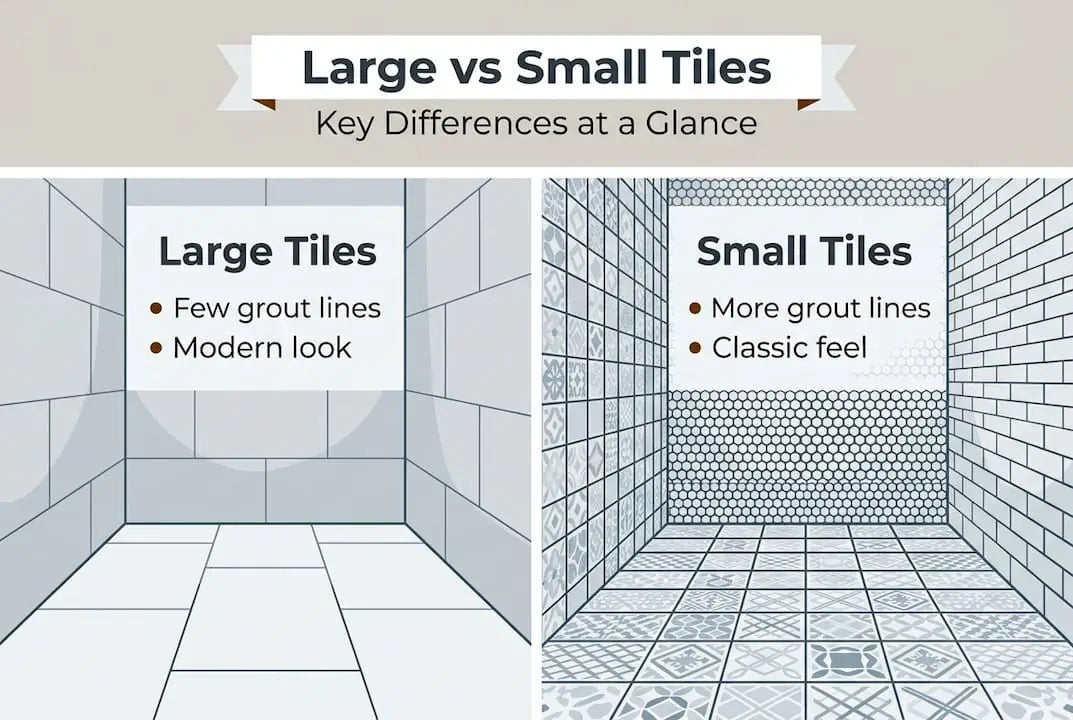
Here’s a quick comparison to put the differences in perspective:
| Feature | Large format tiles | Small format tiles |
|---|---|---|
| Typical size | 24x24 in and above | Under 15 in per side |
| Grout lines | Minimal | Many |
| Visual impact | Seamless, expansive | Detailed, textured |
| Best application | Open floors, feature walls | Wet areas, curves, mosaics |
| Installation complexity | Higher (flat substrate required) | Lower |
Key material options for large format tiles include:
- Marble: Timeless veining, premium feel, works in both classic and modern spaces
- Travertine: Warm, earthy tones with natural texture variations
- Porcelain: Durable and versatile, often mimics natural stone
- Limestone: Subtle and sophisticated, great for understated luxury
As large tiles vs. small tiles notes, LFT excels in seamless luxury and modern spaces, while small tiles remain the better choice for intricate designs, wet grip surfaces, and curved installations. Knowing this distinction upfront saves you from choosing the wrong tile for the wrong room.
Aesthetic advantages: Modern style and premium feel
Large format tiles do something remarkable to a room’s proportions. Because the eye reads fewer breaks in the surface, spaces feel larger and more open, even when the square footage hasn’t changed. A 10x10 bathroom tiled with 24x24 marble tiles looks noticeably bigger than the same room covered in 4x4 ceramic squares. That’s not an illusion. It’s geometry working in your favor.
The luxury associations are real too. Premium stone aesthetics and durability are among the top reasons homeowners choose large format tiles, and it’s easy to see why. Natural stone in large slabs shows off the full character of the material: long veining patterns in marble, the warm pitting of travertine, the subtle movement of limestone. You simply can’t appreciate those qualities in a 4-inch tile.
“Large format tiles shift a room from functional to architectural. The surface becomes a design statement, not just a background.” — Interior design industry observation
The design flexibility is broader than most people expect. LFT works equally well for minimalist spaces where a clean, continuous surface is the whole point, and for grand, classical interiors where oversized stone tiles feel appropriately bold. If you’re planning a bathroom project, the wall tile workflow guide walks through how to sequence decisions for the best outcome.
Pro Tip: When choosing colors for large format tiles, lean toward lighter tones with subtle veining in smaller rooms. Bold, dramatic patterns work best in larger spaces where the full tile can be appreciated without visual overload. Check out marble texture options for a practical look at how different finishes read in real rooms.
Key aesthetic benefits at a glance:
- Visual continuity: Fewer grout lines create an uninterrupted surface that reads as one cohesive element
- Upscale impression: Large natural stone tiles signal quality and craftsmanship immediately
- Design versatility: Works for modern minimalism, classic elegance, and everything in between
- Material showcase: Larger tiles display the natural character of stone more fully
- Trend alignment: Tile trends for 2025 and beyond consistently feature oversized formats as a top choice
Practical benefits: Low maintenance, durability, and easy cleaning
Style matters, but so does what happens after the installation crew leaves. This is where large format tiles really pull ahead for busy homeowners.
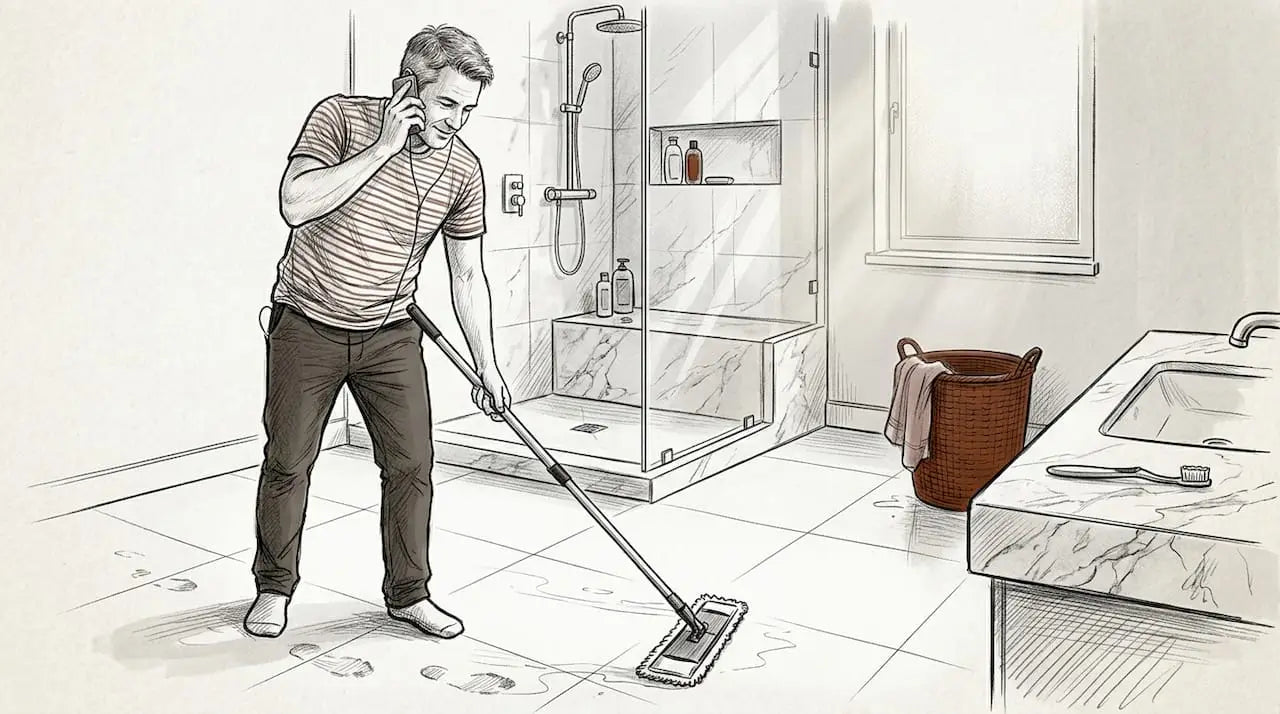
The cleaning advantage is straightforward. Grout lines collect dirt, soap scum, and moisture. The more grout lines you have, the more surface area requires scrubbing. A floor tiled with 24x24 inch tiles has a fraction of the grout compared to the same floor in 4x4 tiles. Less grout means less cleaning time, less staining risk, and a floor that looks fresh with a simple mop rather than a grout brush.
Natural stone tiles, when properly sealed, resist moisture and daily wear exceptionally well. Marble and travertine have been used in high-traffic spaces for centuries, and modern sealing products make them even more resilient. For guidance on selecting the right tile for your specific room, picking floor tiles covers the key decision points.
Here’s a direct comparison on maintenance:
| Factor | Large format tiles | Small format tiles |
|---|---|---|
| Grout surface area | Very low | High |
| Cleaning frequency | Less often | More often |
| Stain risk | Lower | Higher |
| Durability with proper install | Excellent | Good |
| Long-term cost | Lower (less upkeep) | Moderate to high |
As installation experts note, the higher upfront installation rigor pays off through longevity and low maintenance over the life of the floor. Quality installation is the investment that makes the maintenance savings real.
How to keep large format tiles looking their best:
- Seal natural stone tiles before use and reseal every 1 to 2 years depending on traffic
- Clean with a pH-neutral cleaner to avoid etching stone surfaces
- Wipe up spills quickly, especially acidic liquids like lemon juice or wine on marble
- Use a soft mop rather than abrasive scrubbers on polished surfaces
- Inspect grout lines annually and regrout any cracked sections before moisture gets underneath
When installed correctly, large format tiles rarely need replacement. The combination of durable material and minimal grout makes them one of the most cost-effective long-term flooring choices available.
When NOT to choose large format tiles: Key challenges and solutions
Honesty matters here. Large format tiles are not the right choice for every situation, and knowing the exceptions protects your budget and your project outcome.
The biggest issue is substrate flatness. Large tiles bridge small dips in a subfloor rather than conforming to them, which means any unevenness gets amplified rather than hidden. Movement joints every 20 to 25 feet are required, and the substrate must be flat to within 1/8 inch over 10 feet. Skipping this step is the most common cause of cracked tiles and lippage (the visible edge mismatch between adjacent tiles).
A critical statistic: substrate flatness and 95% mortar coverage are the two factors most linked to LFT installation failures. Poor prep is the root cause of most problems, not the tile itself.
Pro Tip: Before committing to large format tiles, lay a long straightedge across your existing floor in multiple directions. If you see gaps larger than 1/8 inch, plan for floor leveling compound before tile work begins. This step alone prevents the majority of LFT failures.
Scenarios where large format tiles are less suitable:
- Severely uneven floors: Amplifies imperfections rather than hiding them
- Curved surfaces: LFT cannot flex or cut to tight curves without significant waste
- Complex mosaic patterns: Small format tiles give you the detail control LFT cannot
- Very small wet areas with slip concerns: Smaller tiles with more grout lines offer better grip texture
- Budget-constrained projects with DIY labor: LFT needs professional installation for reliable results
For accurate planning before you start, accurate tile measuring walks through the math, and the tile design workflow helps you map out your layout decisions before a single tile is cut.
The good news is that most of these challenges have solutions. Floor leveling, proper movement joints, and professional installation address the majority of LFT concerns before they become problems.
The real value: What most guides miss about large format tiles
Most articles on large format tiles treat the decision as a simple pros and cons list. Pick the bigger tile for a modern look, pick the smaller tile for curves. That framing misses the point entirely.
The real value of large format tiles comes from how they bring design intent and daily function together in the same surface. When you walk into a kitchen or bathroom every morning, the floor and walls aren’t decoration. They’re the foundation of how the room feels. A well-chosen, well-installed large format tile in natural stone does something no paint color or fixture can replicate. It grounds the room.
In our experience, homeowner regret almost never comes from choosing large format tiles. It comes from cutting corners on substrate prep or hiring the cheapest labor available. The tile gets blamed, but the installation was the problem. See stylish tile ideas for real examples of what intentional material and layout choices look like in finished spaces.
The formula for getting it right is straightforward: choose the right material for your lifestyle, invest in proper substrate preparation, and work with installers who have genuine LFT experience. When those three things align, large format tiles stop being a flooring choice and start being a long-term investment in how your home looks and functions every day.
Ready to transform your home with large format tiles?
If this guide has helped clarify your thinking, the next step is seeing what’s actually available in premium natural stone formats. At SurfacesGalore, we import marble, travertine, and other natural stone tiles directly, which means better quality at prices that don’t require a designer budget.
Our team works with homeowners, contractors, and designers across the country to match the right tile to the right project. Whether you’re drawn to the warmth of travertine or the drama of veined marble, the travertine luxury guide is a great place to start building your vision. Browse our collections online or reach out for personalized project guidance. We ship nationwide and love helping people get this decision right.
Frequently asked questions
Are large format tiles suitable for small bathrooms?
Yes, LFT can visually expand small bathrooms by minimizing grout lines and creating a seamless surface, but the floor must be flat and stable for a flawless result.
Do large format tiles crack more easily?
Not with proper installation. Substrate flatness and 95% mortar coverage are the critical factors, and when both are done correctly, LFT performs as well as or better than small tiles in daily use areas.
Is installing large format tile a DIY-friendly project?
Generally, no. The weight of the material, the need for a perfectly flat surface, and the requirement for movement joints every 20 to 25 feet make professional installation the smarter choice for most homeowners.
What grout line width works best with large format tiles?
A thin, consistent grout line of 1/8 inch or less creates the cleanest and most seamless look, though you should always follow the tile manufacturer’s specific recommendations for your material.
Recommended
- How to Choose Tile Patterns for Gorgeous Interiors– SurfacesGalore
- How to Pick Floor Tiles for Kitchens and Bathrooms– SurfacesGalore
- Master Bathroom Wall Tile Workflow for Elegance– SurfacesGalore
- Marble Tile Sizing Guide for Lasting Home Elegance– SurfacesGalore
- Modern flooring trends: styles, materials & tips for 2026
Leave a comment